
There are few travel assumptions more dangerous than believing a seat number tells the whole story. Row 1 sounds glamorous. Seat 1A sounds like the aviation equivalent of a velvet rope. Add 1B beside it, and many travelers would picture champagne, extra legroom, and the smug peace of knowing everyone else must shuffle past while you sit there like royalty.
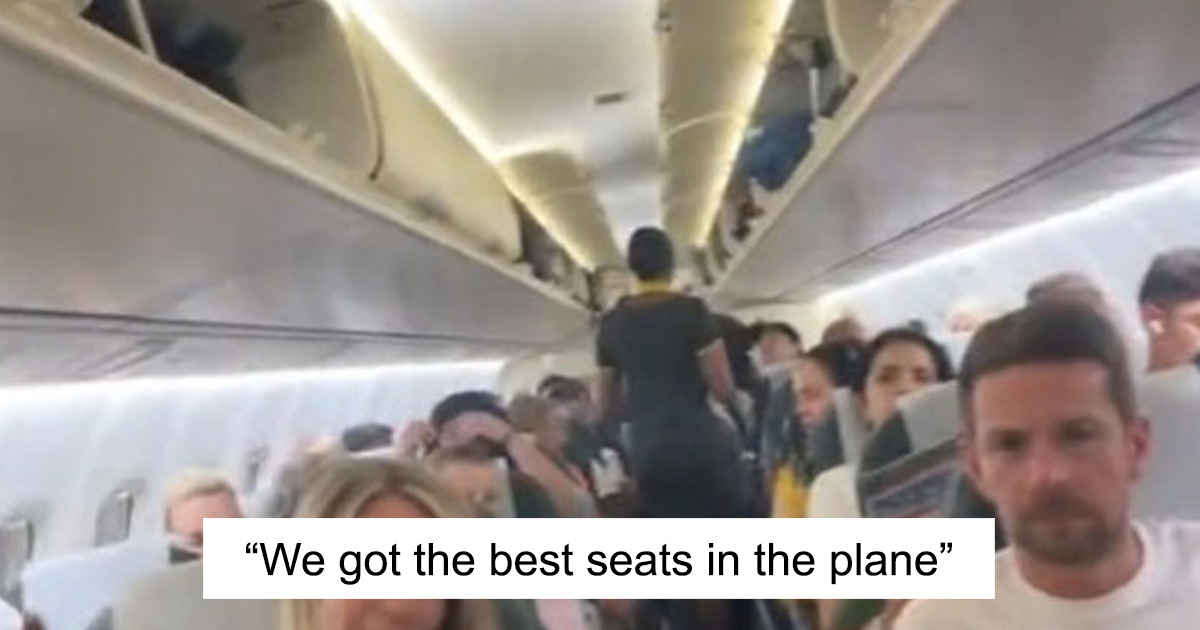
That is exactly why the viral plane-seat mishap involving Caroline Stanbury, known from The Real Housewives of Dubai, and her husband, former soccer player Sergio Carrallo, became such delicious internet fuel. The couple reportedly booked seats 1A and 1B, expecting prime real estate. Instead, they boarded and discovered the cruel little twist: their seats did not recline, faced the rest of the cabin, and turned them into an accidental panel discussion nobody asked to attend.
The moment was funny because it was painfully relatable. Most travelers have had some version of this experience: choosing what looks like the best airplane seat online, only to discover a missing window, a wall where your feet should go, a tray table trapped in the armrest, or a lavatory line forming beside your elbow like a miniature airport terminal.
The Viral Seat Mishap: What Actually Happened?
According to entertainment and travel coverage, Stanbury and Carrallo shared their awkward seating surprise in a TikTok video. The joke was simple: their assistant booked 1A and 1B, assuming they were the best seats on the plane. On many aircraft, that logic would not be ridiculous. Seat 1A is often treated like a trophy seat, especially in first class, business class, or premium cabins.
But on this particular regional aircraft, the front-row setup was not the luxury fantasy the seat numbers suggested. The seats reportedly faced backward toward the rest of the passengers, and Carrallo pointed out that the seats did not recline. The camera flip made the moment go viral because it revealed the full comedy of the situation: instead of enjoying privacy, they were facing a cabin full of strangers like they were about to answer questions after a TED Talk.
The reaction online was instant. Viewers joked that the couple looked like they were hosting a Q&A, judging a talent show, or sitting in a school assembly where everyone else had been forced to attend. It was not a disaster in any real sense. Nobody was harmed. The plane still went where it needed to go. But in the tiny theater of air travel, where comfort, ego, and personal space all fight for one armrest, it was a perfect comedy scene.
Why Seat 1A Has Such a Powerful Reputation
Seat 1A has become legendary because, on many planes, it really can be excellent. It usually means a window seat at the very front of a cabin. In premium cabins, it may offer early service, quick deplaning, overhead-bin access, and fewer people walking past. For travelers who hate waiting in the aisle while everyone performs the ancient ritual of retrieving a backpack from row 32, the front row can feel like freedom.
Travel studies and frequent-flyer discussions often show that window seats near the front of the plane are highly desirable. Bulkhead window seats are especially popular because there is no seatback in front of you and, therefore, no stranger reclining into your laptop, lunch, or emotional stability.
But the key word is can. Seat 1A can be brilliant. Seat 1A can also be a trap wearing a fancy name tag. Airplane comfort depends on the aircraft model, airline configuration, route, cabin class, and even whether the seat is near a galley, lavatory, exit, or bulkhead. In other words, 1A is not a guarantee. It is a clue, and clues require investigation.
The Bulkhead Seat Problem: More Space, More Surprises
Many first-row seats are bulkhead seats, meaning they sit directly behind a wall, partition, curtain, galley, or cabin divider. Bulkhead seats can be great because no passenger in front of you can recline into your knees. They often feel more open, and they can make it easier to get in and out of the row.
However, bulkhead seats come with trade-offs. You may not have under-seat storage during takeoff and landing because there is no seat in front of you. Your tray table and entertainment screen may be stored inside the armrest, making the seat feel narrower. Your personal item may need to go overhead, which is deeply annoying if your headphones, snacks, charger, and emergency chocolate are inside it.
There is also the activity issue. Front rows can be close to the galley, lavatory, boarding door, or crew workspace. That means light, noise, foot traffic, carts, conversation, and the occasional passenger hovering beside you while waiting for the bathroom. Nothing ruins the illusion of premium comfort like trying to nap while someone’s belt buckle is six inches from your shoulder.
Why Some Seats Do Not Recline
Non-reclining seats are not always a mistake. They often exist for safety, space, or mechanical reasons. Seats near emergency exits, bulkheads, galleys, walls, and aircraft doors may have limited or no recline. On smaller regional aircraft, the cabin layout can be especially unusual because every inch must serve a purpose.
This is why a seat map alone can be misleading. A row may look spacious on a booking screen, but that little rectangle does not always show the real-life experience. It may not tell you that the seat faces backward, has fixed armrests, lacks storage, sits beside a cold draft, or turns you into the unofficial greeter for every boarding passenger.
In the Stanbury-Carrallo case, the no-recline issue was part of the comedy. The couple believed they had a premium spot, then discovered they had a front-row seat to everyone else’s facial expressions. In a normal economy row, a lack of recline is irritating. In a rear-facing row staring at the cabin, it becomes performance art.
Regional Aircraft Can Have Quirky Layouts
The couple were reportedly flying on a regional airline aircraft, and that detail matters. Regional planes, especially turboprops used for shorter routes, may have cabin designs that differ from the larger jets many travelers know. Some board from the rear. Some have compact galleys. Some have unusual front-row arrangements. Some may include rear-facing seats because of aircraft structure, balance, safety design, or operational layout.
Travelers used to big U.S. domestic jets may assume row 1 always means a familiar front-cabin experience. But on smaller aircraft, row 1 may not behave like row 1 on a Boeing 737, Airbus A320, or wide-body international jet. The lesson is simple: seat numbers are not universal. They are more like hotel room numbers. Room 101 could be a suite, or it could be beside the ice machine.
The Internet Loved It Because Everyone Has Been There
The reason this story traveled so far is not just celebrity curiosity. It is the universal pleasure of watching someone make a harmless luxury miscalculation. The couple did not do anything terrible. They simply trusted the magic of a seat number. That made the moment funny rather than mean.
Most travelers have experienced the disappointment of a seat that looked better online. Maybe you paid extra for a window seat and got a wall. Maybe you chose the last row because it looked quiet, then discovered it did not recline and was next to the lavatory. Maybe you selected an exit row for legroom and then realized your bag had to go overhead and your seat cushion felt designed by someone angry at spines.
Air travel is full of tiny humiliations. You remove your shoes for security. You panic-buy a $9 bottle of water. You forget which pocket has your passport. Then, after all that, the seat you carefully selected becomes the punchline. The Stanbury and Carrallo clip captured that exact feeling, only with a celebrity filter and better lighting.
How To Avoid Booking the Wrong “Best Seat”
Check the Aircraft Type Before Choosing
Before selecting a seat, look at the aircraft model on your booking page. A seat that is excellent on one aircraft can be awkward on another. Even the same airline may use multiple layouts for the same plane family. If you see a regional turboprop, smaller jet, or unfamiliar aircraft, slow down before assuming the first row is the winner.
Use Seat Maps, But Do Not Trust Them Blindly
Seat maps are helpful, but they are not perfect. Airline maps may show location and availability, while third-party seat tools may add warnings about recline, storage, missing windows, or galley noise. Still, aircraft configurations change. Treat seat maps as a strong starting point, not a legally binding promise from the comfort gods.
Look for Red Flags: Bulkhead, Galley, Lavatory, Exit Row
Words like bulkhead, exit row, galley, and lavatory should not automatically scare you away, but they should make you ask better questions. Bulkhead may mean extra knee room but no under-seat storage. Exit row may mean legroom but added responsibility. Galley proximity may mean faster snacks but more noise. Lavatory proximity may mean convenience but also a steady parade of passengers doing the “I hope nobody notices I am waiting” shuffle.
Search the Specific Seat Number
If comfort matters, search the airline, aircraft, and seat number together. For example: airline name + aircraft type + seat 1A. Frequent flyers often discuss specific seats in forums, reviews, videos, and travel blogs. A few minutes of research can save you from spending an entire flight wondering why your knees, bag, and dignity are all in separate locations.
Do Not Assume Paid Seats Are Better
Some airlines charge for preferred seats because they are near the front, not because they are more comfortable. A paid seat may help you deplane faster but still have limited recline, reduced width, no under-seat storage, or high foot traffic. “Preferred” can mean preferred by the airline’s revenue department, not necessarily preferred by your lower back.
What Is Actually the Best Seat on a Plane?
The honest answer is: it depends on the traveler. The best airplane seat for a nervous flyer may be over the wing, where movement can feel less dramatic. The best seat for a tight connection may be an aisle seat near the front. The best seat for a sleeper may be a window away from lavatories. The best seat for a tall traveler may be an exit row or bulkhead, depending on the aircraft. The best seat for a parent may be near the front, near a bassinet position, or near the lavatory, depending on the child’s age and the length of the flight.
There is no single best seat because passengers want different things. Some people want legroom. Some want quiet. Some want to get off quickly. Some want a view. Some want to avoid being touched by the beverage cart. Some simply want a place where nobody asks them to switch seats after they have already emotionally bonded with the window.
That is what makes the 1A and 1B story so useful. It reminds travelers that prestige and comfort are not always the same. A seat can be first on the map and last in your heart.
The Celebrity Angle: Why It Felt Extra Funny
Celebrity travel content is often polished to the point of absurdity. Private lounges, designer luggage, glowing airport selfies, luxury resorts, and captions about being “so blessed” can make travel look like a perfume commercial with boarding passes. This moment worked because it broke that illusion. Suddenly, the glamorous couple was dealing with the same ridiculous travel logic as everyone else.
There is something refreshing about seeing a famous couple realize, in real time, that the “best seats” are not best at all. It is not cruel humor; it is equalizing humor. The airplane does not care how many followers you have. The seat either reclines or it does not. The cabin either faces you or it does not. The armrest either moves or it stays locked in place like it has taken a vow.
In that sense, the couple handled the moment well. They laughed, filmed it, and let the internet laugh with them. That is the best possible response to a travel fail. Once the aircraft door closes, you can either rage silently at the seat map or turn the situation into a story. They chose the story, and the story did what good travel stories do: it made everyone else check their next seat assignment twice.
of Travel Experience: What This Seat Fail Teaches Regular Passengers
Anyone who flies often learns that the plane seat lottery has a personality. Sometimes it is generous. Sometimes it is petty. Sometimes it gives you an empty middle seat and restores your belief in civilization. Other times, it places you beside the lavatory on a night flight and asks you to become spiritually stronger.
The biggest experience-based lesson from the 1A and 1B incident is that travelers should define comfort before choosing a seat. Many people click the first row because it looks important. But comfort is specific. Do you need to sleep? Choose a window away from bathrooms and galleys. Do you need to work? Avoid bulkhead seats where tray tables may be smaller, awkward, or stored in the armrest. Do you need quick access to your bag? Avoid rows where everything must go overhead. Do you get claustrophobic? Aisle seats may beat window seats, even if the view is lovely.
Another practical lesson: regional flights deserve extra attention. On short-haul routes, travelers often think, “It is only an hour; how bad can it be?” This is a dangerous sentence. An hour in a strange seat can feel longer than a three-hour flight in a comfortable one. Smaller aircraft may board differently, store bags differently, and have layouts that look surprising if you normally fly larger jets. A few minutes of research can prevent a lot of squirming.
There is also an etiquette lesson. If your seat turns out badly, try not to make the crew responsible for physics. Flight attendants did not personally design the aircraft. Gate agents did not install the bulkhead. The person scanning boarding passes did not wake up hoping you would lose recline. Ask politely if a better seat is available, but accept that full flights offer limited miracles.
Experienced travelers also learn to pack for seat uncertainty. Keep must-have items in a small pouch that can be pulled out before takeoff: earbuds, charger, medication, tissues, a snack, lip balm, and anything else you do not want trapped overhead. This matters especially in bulkhead or front-row seats where bags may need to be stowed away.
Finally, every traveler should remember that a bad seat can become a good story. The Stanbury and Carrallo situation was awkward, but it was also harmless, funny, and memorable. Travel rarely goes perfectly. Flights delay, seats disappoint, overhead bins fill, and someone always brings a tuna sandwich into a sealed metal tube. The trick is to prepare well, laugh when possible, and never assume 1A is royalty until you have checked the map.
Conclusion: The Best Seat Is the One You Understand Before Boarding
The viral 1A and 1B plane-seat fail is more than a celebrity travel blooper. It is a reminder that airplane seating is a world of fine print disguised as tiny squares on a screen. Row 1 may be excellent, but it may also mean no recline, no storage, awkward angles, extra attention, and a full cabin staring back at you like you are about to announce bingo numbers.
For travelers, the takeaway is simple: never book by seat number alone. Check the aircraft type, review the seat map, look for bulkhead or exit-row notes, and think about what comfort actually means for your trip. The best seats on the plane are not always the ones closest to the front. Sometimes they are the ones that let you stretch, sleep, store your bag, avoid the bathroom line, and arrive with your sense of humor intact.
Note: This article was written from a synthesis of reputable entertainment, aviation, airline, and travel sources, including coverage of the viral celebrity seat incident, airline seat-selection guidance, regional aircraft information, and frequent-flyer seating analysis. No source links are embedded so the HTML remains clean for publication.














