
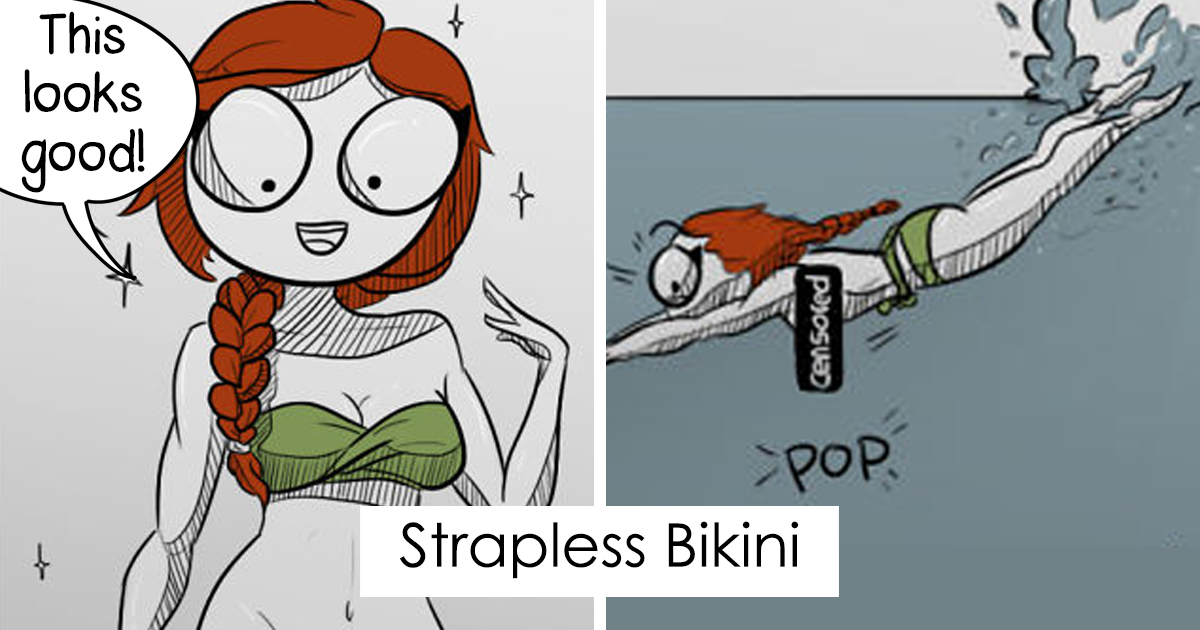
Some people survive medical school with coffee. Some survive it with color-coded flashcards, three highlighters, and the emotional stability of a hospital vending machine. And then there are the rare brave souls who look at all that chaos and think, “You know what this needs? A punchline.” That is exactly why the story behind 26 comics by a medical student who never had the guts to become a comic artist, but finally dared to feels so charming, relatable, and oddly inspiring.
The artist known online as Amy Revives first caught attention for creating funny, honest, and slightly awkward comics about everyday life, student stress, social anxiety, identity, and the wonderfully strange thoughts that sneak into the brain when no one asked them to. What made the comics stand out was not glossy perfection. It was the opposite: the sense that someone was drawing before they had “permission” to be good. That is often where the best creative work begins.
In an internet culture packed with hyper-polished portfolios, Amy’s early comics felt refreshingly human. The lines were simple. The humor was clean and quick. The themes were familiar: procrastination, overthinking, low-energy days, weird social moments, and the small victories of simply trying. For readers, especially students and young creatives, the comics said something comforting: you do not need to become fearless before you start. Sometimes you start while your fear is sitting next to you, loudly eating chips.
Who Is Amy Revives?
Amy Revives is widely known as a medical student from the Netherlands who began sharing comics online after years of wanting to draw but hesitating to call herself a comic artist. Her background in medicine adds an interesting layer to her work. Medical training is famously demanding, structured, and serious. Comics, on the other hand, are playful, visual, flexible, and wonderfully unserious when they want to be. Put the two together, and you get a creator who understands both pressure and humor.
Her early comic collection became popular because it did not pretend life was grand and cinematic every day. Instead, it focused on little emotional glitches: the inner critic that will not clock out, the strange gap between ambition and energy, the social panic of sending a message, and the eternal battle between “I should study” and “I have suddenly become deeply interested in reorganizing my desk drawer.”
Why These 26 Comics Connected With Readers
The appeal of these comics is not complicated, and that is part of their magic. They are short, readable, and instantly recognizable. A reader can glance at one panel and think, “That is me. That is painfully me. Has this artist been hiding under my bed with a sketchbook?”
1. The Humor Feels Personal, Not Forced
Good webcomics do not need to scream for attention. Amy’s humor works because it grows out of ordinary experience. The jokes are not built around shock value or complicated references. They are built around small truths: being tired, feeling awkward, wanting to improve, and not always knowing how to exist gracefully in public.
2. The Art Style Makes the Emotions Easy to Read
Simple comic art can be surprisingly powerful. A tiny facial expression, a hunched posture, or one dramatic pause can say more than a paragraph of explanation. In medical school, students learn to observe carefully. That habit may quietly shape the way a medical student draws people: noticing body language, discomfort, hesitation, and the emotional meaning behind small gestures.
3. The Comics Turn Anxiety Into Something Shareable
Stress becomes heavier when it feels private. Comics can make it visible without turning it into a lecture. When readers see a silly version of a familiar worry, the worry becomes a little less lonely. That does not magically solve everything, of course, but it does give the brain a tiny window to breathe.
The Power of Graphic Medicine
Amy Revives may be known for relatable humor, but her story also fits into a much larger conversation: graphic medicine. Graphic medicine is the use of comics and visual storytelling to explore health care, illness, medical training, patient experience, ethics, empathy, and communication. It has become increasingly respected in medical education because comics can capture things that standard textbooks often flatten.
A textbook can explain a symptom. A comic can show what it feels like to sit in a waiting room with that symptom while pretending not to be scared. A lecture can describe burnout. A comic can draw a student staring at a laptop at 2 a.m., surrounded by notes, snacks, and existential fog. Both forms matter, but comics have a special talent for making invisible experiences visible.
Medical schools and humanities programs have explored comics as tools for reflection, empathy, observation, and communication. The reason is simple: doctors do not only treat lab values. They treat people with stories, fears, family drama, confusing symptoms, and sometimes very strong opinions found on the internet at 3 a.m. Visual storytelling helps future clinicians practice looking closely, listening carefully, and noticing what might otherwise be missed.
Why A Medical Student Becoming A Comic Artist Matters
There is a quiet cultural pressure that tells serious students to have serious hobbies. Medicine, law, engineering, financethese paths often reward discipline, certainty, and achievement. Drawing silly comics may look “extra” from the outside. But creative work is not a decoration placed on top of a real life. It can be part of how a person processes that life.
For a medical student, comics can become a release valve. They can turn frustration into humor, confusion into a story, and daily stress into something other people can laugh with. The act of creating also restores a sense of identity. Instead of being only a student, only a future doctor, or only a tired person carrying three notebooks and one suspiciously old granola bar, the creator becomes someone who makes things.
That matters. Creative identity can protect the parts of a person that school and work sometimes flatten. It says, “I am more than my grades, more than my schedule, and more than the next exam.” That message is useful not only for medical students but for anyone who has ever postponed a dream because they were afraid of being bad at it first.
The Fear Of Starting Is Often Bigger Than The Work Itself
The title of the comic collection contains its own little drama: never had the guts. Anyone who has wanted to make art understands that sentence. The fear is rarely just about drawing. It is about being seen trying. It is about posting something imperfect. It is about imagining strangers judging your linework, your jokes, your timing, your spelling, your soul, and possibly your choice of font.
But the internet also rewards honesty. Readers are not always looking for flawless art. Often, they are looking for recognition. They want to feel that someone else has noticed the same absurd little corners of life. In that sense, Amy’s courage is not only artistic. It is emotional. She allowed the work to exist before it became perfect.
What Makes The Comics SEO-Friendly And Shareable?
From a content perspective, this kind of comic collection is highly shareable because it combines visual entertainment with personal storytelling. The title includes several strong emotional hooks: medical student, comic artist, never had the guts, and finally dared to. Those phrases create curiosity before the reader even sees the first panel.
The topic also connects with multiple search interests: medical student life, funny comics, relatable webcomics, graphic medicine, student burnout, creative courage, and beginner artists. That range gives the article broad appeal. A student may click because of the medical angle. An artist may click because of the fear-of-starting angle. A casual reader may click because 26 comics sounds like a pleasant scroll with zero homework attached. Beautiful.
Lessons Beginner Artists Can Learn From Amy Revives
Start Before Your Style Is Settled
Many beginners wait for a perfect style before sharing their work. The problem is that style usually appears through making work, not before it. Amy’s early comments about her style still developing made the comics feel more honest, not less professional. Readers enjoy watching growth.
Use Your Real Life As Material
You do not need dragons, spaceships, or a 900-page fantasy map to make good comics. Your real life is already strange enough. A medical student has hospital hallways, exams, study fatigue, awkward conversations, and emotional whiplash. A non-medical student has deadlines, family group chats, grocery store confusion, and the spiritual crisis of choosing a password. Material is everywhere.
Keep The Format Easy To Enjoy
Short comics work well online because they respect the reader’s time. A strong setup, a clear emotional beat, and a quick payoff can make a comic memorable. Not every comic needs to be deep. Sometimes the best panel is simply a tiny character losing a battle against laundry.
Let Humor Carry A Little Truth
The most relatable comics often contain a small truth wearing a clown nose. They make readers laugh first, then think, “Actually, yes, I do avoid my responsibilities by pretending to research productivity systems.” Humor lowers the wall between creator and reader.
Why Medical Students Need Creative Outlets
Medical training can be intense. Students often face long study hours, high expectations, emotional encounters, and pressure to perform well in both academic and clinical settings. Creative outlets such as drawing, writing, music, theater, and visual storytelling can give students a place to reflect without turning every feeling into a formal essay titled “My Professional Development Journey,” which sounds like something a printer would jam on purpose.
Art does not replace support, rest, mentorship, or healthy school systems. But it can help students stay connected to themselves. It gives shape to experiences that are hard to explain. It can also build empathy by encouraging the artist to view a scene from multiple perspectives: the patient, the student, the doctor, the family member, and even the poor cafeteria sandwich that has seen too much.
How Comics Help Readers Feel Less Alone
One of the greatest strengths of webcomics is emotional compression. A comic can take a complicated feeling and shrink it into four panels without losing the truth. That is why people share relatable comics so quickly. Sharing a comic can be easier than writing, “Hello, I am overwhelmed, awkward, ambitious, tired, hopeful, and unsure whether my personality is still loading.”
For students, especially those in demanding fields, these comics can feel like a friendly nod from across the room. They do not offer fake motivation. They do not say, “Wake up at 4 a.m. and become unstoppable.” They say, “You are human. Humans are weird. Let’s laugh and continue.” Honestly, that is sometimes the better speech.
The Bigger Message: You Are Allowed To Be More Than One Thing
The story of a medical student daring to become a comic artist is not just about comics. It is about permission. Many people quietly believe they must choose one identity and behave accordingly. If you are a medical student, be serious. If you are an artist, be bold. If you are a beginner, be invisible until you are impressive. None of these rules are useful.
A person can study medicine and draw comics. A future cardiologist can make jokes about daily life. A high-achieving student can also be uncertain, playful, and creatively messy. In fact, those combinations often make the work more interesting. The tension between seriousness and silliness gives Amy’s comics their personality.
Experiences Related To The Topic: What This Story Feels Like In Real Life
Anyone who has ever wanted to create something will recognize the emotional path behind these comics. At first, the idea lives quietly in the background. You see other people posting art, writing essays, making videos, or launching projects, and you think, “I could maybe do that.” Then the second thought arrives wearing steel-toed boots: “But what if I am terrible?” That thought is very dramatic for someone who has produced exactly zero finished comics.
The beginner stage is uncomfortable because taste develops faster than skill. You know what good art looks like, which means you can also see every awkward line in your own work. The hands look like confused noodles. The facial expressions look like potatoes experiencing legal trouble. The joke that felt brilliant at midnight suddenly seems like it was written by a sleepy chair. Still, this stage is not evidence of failure. It is the entry fee.
For a medical student, the emotional conflict can be even sharper. Time is limited. Energy is expensive. There may be a voice saying, “Shouldn’t you be studying?” That voice is not always wrong, but it is not always wise either. A person cannot live on productivity alone. Creative work can become a small room inside a busy life where the student is not being graded, evaluated, corrected, or compared. In that room, the point is not to be perfect. The point is to make something honest enough to exist.
Posting the first few comics can feel like walking onto a stage while carrying your own nervous system in a paper bag. But the response is often surprising. People do not usually connect with the flawless parts first. They connect with the human parts. They like the panel where the character overthinks a tiny message. They laugh at the joke about procrastination because they too have once cleaned an entire room to avoid one email. They understand the tired student with big dreams and limited battery life.
That is the experience at the center of Amy Revives’ story: daring does not always look heroic. Sometimes it looks like uploading a comic even though the style is still inconsistent. Sometimes it looks like admitting you are still learning. Sometimes it looks like making art between lectures, exams, and life’s thousand small interruptions. The courage is not in waiting until fear disappears. The courage is in drawing while fear is still standing there, offering unhelpful commentary.
For readers, the takeaway is simple but powerful. You do not need to quit your serious path to honor your creative one. You do not need to become a full-time artist to start making art. You do not need everyone’s approval to share something meaningful. A small comic, a tiny sketch, or one honest joke can become the beginning of a creative identity. And if the first attempt looks slightly wobbly? Good. Wobbly means alive.
Conclusion
26 Comics By A Medical Student Who Never Had The Guts To Become A Comic Artist, But Finally Dared To is more than a catchy title. It is a reminder that creativity often begins in hesitation. Amy Revives’ comics became loved not because they were polished into cold perfection, but because they felt warm, funny, vulnerable, and real. They show how a medical student can use humor to process daily pressure, connect with readers, and build a creative voice one panel at a time.
In a world that constantly tells people to specialize, optimize, and look impressive while doing it, this story offers a better idea: start messy, stay curious, and let your work grow in public. Whether you are a student, an artist, a health care worker, or someone who has been hiding a dream in the back drawer of your brain, these comics carry one friendly message: you are allowed to try before you feel ready.
Note: This article is a fully rewritten, original editorial synthesized from publicly available information about Amy Revives, medical student comics, graphic medicine, medical humanities, creative wellness, and visual storytelling in health care education.














