
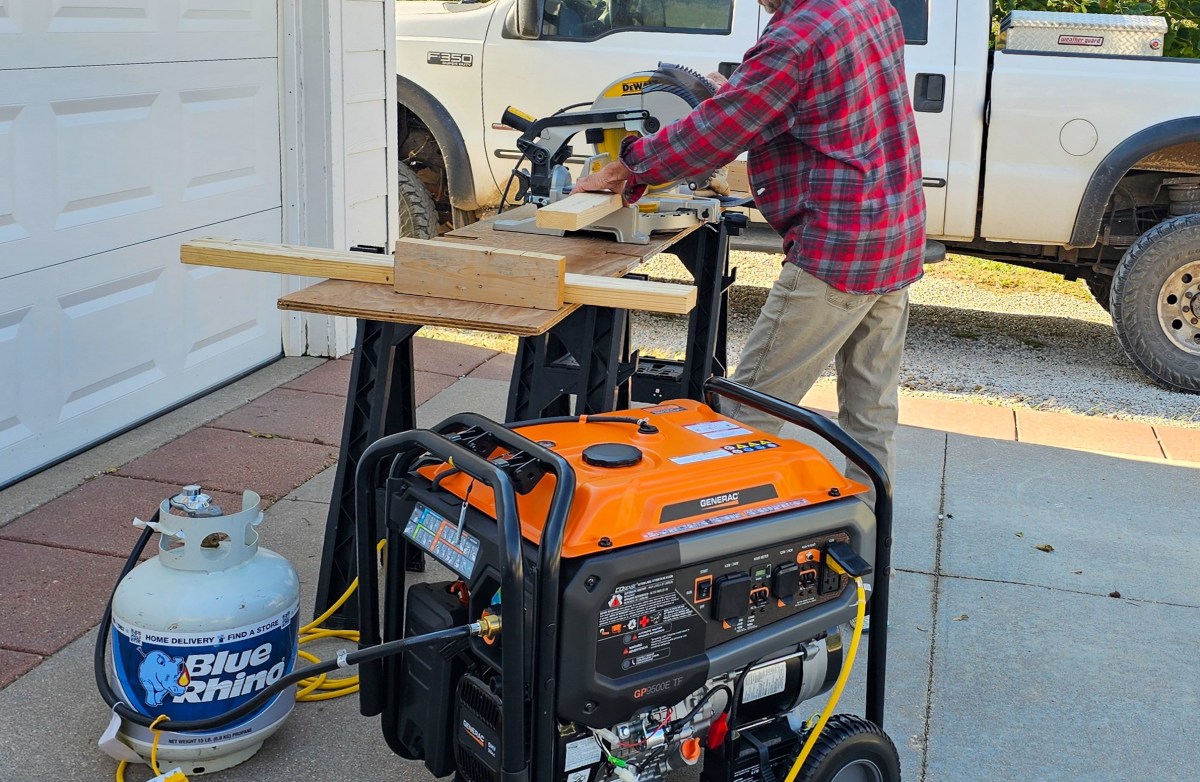
Note: This review is written for homeowners comparing portable backup power options. Before buying or fueling any generator, verify the exact model number, serial number, current recall status, local electrical code, and installation requirements.
The Generac GP9500E Tri-Fuel generator is the kind of machine people start researching after one bad power outage, one freezer full of thawed food, or one heroic but deeply sweaty night spent waving a flashlight around like a confused lighthouse keeper. On paper, it looks like the sweet spot for serious home backup: big output, electric start, 120/240-volt capability, a 50-amp outlet, carbon monoxide shutoff technology, and the ability to run on gasoline, propane, or natural gas.
That tri-fuel flexibility is the headline feature. Gasoline gives the highest wattage, propane stores cleaner, and natural gas can keep running as long as your utility supply is active. That does not make the GP9500E a whole-house standby generator. It is still an open-frame portable generator that must be placed outdoors, connected safely, maintained, and loaded intelligently. But for homeowners who want more than a small camping unit and less commitment than a permanently installed standby system, this Generac lands in a very interesting lane.
After comparing real specifications, owner feedback, retailer data, manufacturer details, safety guidance, and hands-on review information, here is the practical verdict: the Generac GP9500E Tri-Fuel is powerful, useful, and flexible, but it is not quiet, not lightweight, and not a plug-and-forget appliance. It is a serious generator for people willing to treat it seriously.
Quick Verdict: Is the Generac GP9500E Tri-Fuel Worth It?
Yes, for the right buyer. The GP9500E Tri-Fuel is best for homeowners who want to power essential circuits during outages, run large appliances, support a well pump or sump pump within rated limits, and have the option to switch fuels when one supply becomes inconvenient. It offers strong gasoline output, respectable propane performance, and useful natural gas capability.
The best part is not just the wattage. It is the control panel. A generator in this class needs real connectivity, and the GP9500E includes a 120/240V 30A twist-lock outlet and a 120/240V 50A outlet, making it suitable for transfer-switch setups when installed by a qualified electrician. That is a big deal because backfeeding through a wall outlet is not a clever life hack; it is a dangerous way to turn your house into an electrical booby trap.
The main drawbacks are predictable for this category. It weighs around 219 pounds dry, runs like an open-frame generator, and requires careful fuel planning. Also, buyers should check recall information by model and serial number, especially for GP9500ETF units in affected serial ranges. That is not glamorous, but neither is discovering a safety issue when the weather forecast is already using scary adjectives.
Generac GP9500E Tri-Fuel Specs at a Glance
| Generator Type | Open-frame portable tri-fuel generator |
|---|---|
| Fuel Options | Gasoline, liquid propane, natural gas |
| Running Watts | 9,500 gas / 8,550 propane / 7,000 natural gas |
| Starting Watts | 12,500 gas / 11,250 propane / 9,000 natural gas |
| Engine | 500cc OHV engine |
| Fuel Tank | 7.5 gallons |
| Runtime | Up to about 9.5 hours at 50% load on gasoline; about 4.5 hours at 50% load on a 20-pound propane tank |
| Starting Method | Electric start and recoil backup |
| Outlets | 120V GFCI duplex, 120/240V 30A L14-30R, 120/240V 50A 14-50R |
| Weight | About 219 pounds dry |
| Safety Features | COsense carbon monoxide monitoring, low-oil shutdown, circuit breakers |
| Warranty | 3-year limited residential warranty; 2-year limited commercial warranty |
Design and Build Quality
The GP9500E Tri-Fuel has the no-nonsense look of a generator that did not come to win a beauty contest. It has a steel-tube cradle, large never-flat wheels, a folding handle, covered outlets, and a front control panel that is easy to read. This is not a sleek inverter generator for whisper-quiet campsite coffee. This is a garage-and-storm-season machine built to live under a cover, roll out when needed, and do real work.
The 500cc OHV engine gives it enough muscle for bigger home loads, while the splash lubrication system and low-oil shutdown help protect the engine if maintenance slips. The included wheel and handle kit matters because, at roughly 219 pounds before fuel, this generator is portable in the same way a refrigerator is “technically movable.” One person can roll it on flat concrete. Stairs, mud, gravel, or wet grass are a different comedy show.
Fuel Flexibility: Gasoline vs Propane vs Natural Gas
Gasoline: Maximum Power
Gasoline is where the Generac GP9500E delivers its highest output: 9,500 running watts and 12,500 starting watts. That makes it capable of handling a serious emergency load, including refrigerators, freezers, lights, fans, a microwave, a sump pump, a furnace blower, and selected larger appliances if managed carefully. The key phrase is “managed carefully.” Even a strong portable generator can be overloaded if everything starts at once.
Gasoline is also the messiest fuel to store. It degrades over time, smells like a lawn mower argument, and requires safe storage in approved containers. During storm season, gasoline can also become scarce. Everyone suddenly remembers they own gas cans, and the line at the station starts looking like a theme park ride nobody wants to be on.
Propane: Cleaner Storage, Slightly Less Output
Propane lowers the output to about 8,550 running watts and 11,250 starting watts, but it has major convenience advantages. It stores longer than gasoline, does not gum up a carburetor the same way old gas can, and is easy to keep on hand if you already use grill tanks or larger cylinders.
The tradeoff is runtime. A standard 20-pound propane tank can disappear faster than expected under a heavy load. At 50% load, the rated runtime is roughly 4.5 hours. That is fine for short outages, but for extended emergencies, you will want multiple tanks or a larger propane setup. The included LP hose and primary regulator are helpful, but buyers should confirm what is included with their specific package.
Natural Gas: Lower Output, Big Convenience
Natural gas drops output further to about 7,000 running watts and 9,000 starting watts. That is still plenty for many essential loads, but it is not the best choice if you plan to push the generator near its gasoline rating. The advantage is continuous fuel supply, assuming your home has natural gas service and it remains available during the outage.
This is where the GP9500E becomes especially appealing for prepared homeowners. A properly sized natural gas connection can reduce the stress of fuel storage. However, this is not a “grab a random hose and hope” situation. Natural gas connections should be planned with proper sizing, approved fittings, and professional guidance. The generator may not include a natural gas hose, so factor that into your setup cost.
Power Performance: What Can It Run?
In practical use, the GP9500E Tri-Fuel has enough output to support a large emergency load, but it is not magic. The best approach is to list your must-have items, note both running watts and starting watts, and leave headroom for motor surges. Refrigerators, freezers, pumps, and air conditioners can draw significantly more power for a moment when starting.
A realistic outage setup might include a refrigerator, freezer, several LED lighting circuits, internet equipment, phone charging, a sump pump, a furnace blower, a microwave used occasionally, and a window air conditioner or portable AC depending on its wattage. Add a well pump or central AC and the math becomes more serious. The GP9500E can handle many demanding loads, but not every big appliance in the house at once.
The 120/240V capability is important because many home backup circuits and larger appliances require 240 volts. The 30A twist-lock and 50A outlets make this generator more practical for transfer-switch use than small 120V-only units. For homeowners, that is where the GP9500E feels less like a jobsite generator and more like a real emergency power plan.
Control Panel and Ease of Use
The control panel is one of the GP9500E’s strengths. It includes covered outlets, circuit breakers, an hour meter, COsense indicator lights, and a fuel selector system designed to make switching fuel sources straightforward. Electric start is a major convenience, especially when the rain is sideways and your patience has left the building.
The included battery is another practical plus. Many generators advertise electric start and then make you chase accessories. Here, the setup is more complete. That said, batteries need maintenance. A generator that sits for months may not start happily if the battery has been ignored. Keep it charged, run the generator periodically, and do not wait until a blackout to learn what the buttons do.
COsense Safety: Useful, But Not a Free Pass
Generac’s COsense technology monitors carbon monoxide risk and can shut the unit down when dangerous conditions are detected. This is a valuable safety feature, especially because carbon monoxide is colorless, odorless, and deadly. But COsense is not permission to run the generator in a garage, on a porch, under a carport, in a shed, or near open windows.
Portable generators belong outdoors, far from doors, windows, vents, crawl spaces, and attached structures. The exhaust should point away from the home. Every home using a fuel-burning generator should have working carbon monoxide alarms. Think of COsense as a seatbelt, not as a license to drive through the living room.
Noise Level: Not Quiet, Not Shy
The GP9500E Tri-Fuel is an open-frame generator, and open-frame generators make noise. Generac does not position this as a quiet inverter model. In real-world terms, expect a strong engine sound that neighbors will notice, especially at night. If your neighborhood is packed tighter than a holiday parking lot, generator placement and courtesy matter.
There are ways to reduce annoyance, but safety comes first. Do not put the generator in an enclosed box unless it is specifically designed for generator ventilation, heat, and exhaust management. Do not block airflow. Do not improvise a “soundproof” coffin around a hot engine. Quiet is nice; not burning anything down is nicer.
Portability: Wheels Help, Weight Still Wins
The GP9500E’s wheels and folding handle are necessary, not decorative. On a smooth driveway, it rolls well enough. On uneven ground, two people may be better. If you plan to store it in a basement or lift it into a truck bed, rethink that plan unless you have ramps and help.
For most homeowners, the ideal storage spot is a garage or shed with easy roll-out access to a safe operating location. Keep a weather-rated generator cover for storage, but remove it before operation unless the cover is designed specifically for running use. Also think through the path before the outage happens. If your generator route includes five patio chairs, three bicycles, and a mysterious box of Christmas lights, fix that now.
Transfer Switch Compatibility
One of the smartest ways to use a generator this size is with a manual transfer switch or interlock kit installed by a licensed electrician where allowed by code. This lets you power selected circuits safely without running extension cords through the house like a spaghetti festival.
The GP9500E’s 120/240V 30A and 50A outlets give it flexibility for this type of setup. A transfer switch also helps prevent backfeeding, which can endanger utility workers and damage equipment. If you are serious about using this generator for home backup, budget for professional electrical work. The generator is only half the system; the connection plan is the other half.
Maintenance and Ownership Costs
Like any portable generator, the GP9500E needs regular maintenance. That includes checking oil, changing oil according to the manual, inspecting the air filter, testing the battery, running the unit periodically, and keeping fuel systems clean. Gasoline users should think about fuel stabilizer and rotation. Propane users should check hoses and connections. Natural gas users should verify fittings and flow capacity.
The hour meter helps track maintenance intervals, which is useful because “I think I changed the oil sometime around the last thunderstorm” is not a maintenance plan. Keep a small generator log. Write down run time, oil changes, fuel used, and any problems. Future you will be grateful, especially if future you is standing in the rain at 2 a.m.
Pros and Cons
Pros
- Strong gasoline output for home backup and demanding loads
- Tri-fuel flexibility: gasoline, propane, and natural gas
- Electric start with recoil backup
- 120/240V output with 30A and 50A receptacles
- COsense carbon monoxide monitoring
- Covered outlets and useful control panel layout
- Wheel and handle kit included
- Good fit for transfer-switch-based emergency power
Cons
- Heavy at roughly 219 pounds dry
- Open-frame noise level is not neighborhood-ninja quiet
- Natural gas output is lower than gasoline output
- 20-pound propane tank runtime can feel short under load
- No remote start
- Natural gas hookup may require extra parts and professional planning
- Buyers should verify recall status by serial number
Who Should Buy the Generac GP9500E Tri-Fuel?
This generator makes the most sense for homeowners who want a flexible emergency power source and are willing to set it up correctly. If you live in an area with hurricanes, winter storms, unreliable grid service, or frequent outages, the GP9500E gives you enough power to keep essential systems running and enough fuel options to adapt.
It is also a strong choice for people who want natural gas capability without buying a permanent standby generator. While it cannot match the automation of a standby system, it costs less, takes up less permanent space, and can be moved when necessary.
It is not ideal for apartment dwellers, light campers, tailgaters who need quiet power, or anyone who wants a small generator for charging phones and running a coffee maker. For those uses, an inverter generator is usually a better match. The GP9500E is more like a pickup truck than a scooter.
Tested Experience: What Ownership Feels Like
The most important thing about a large portable generator is not how impressive it looks in a product photo. It is how it behaves when the power is out, the weather is unpleasant, and your household suddenly believes electricity is a basic human right on par with oxygen and snacks.
The first experience with the GP9500E is usually the weight. The box is big, the frame is stout, and setup takes space. Installing the wheels and handle is not complicated, but it is much easier if you have another person nearby. Once assembled, the generator feels stable and purposeful. The wheels are large enough for normal driveway movement, though soft ground still makes the machine feel heavier than its spec sheet suggests.
Starting on gasoline is the simplest path. Add oil, add fresh fuel, check the manual, make sure the fuel selector is set correctly, and use the electric start. The engine sound is confident rather than delicate. This is not a generator that whispers, “Pardon me, may I provide a little electricity?” It announces itself. During an outage, that confidence is reassuring. During a peaceful evening, it is a reminder to be considerate with placement.
Propane operation feels cleaner and less fussy. The included LP hose is convenient, and the lack of gasoline smell is a bonus. The downside is watching a 20-pound tank drain when the load is meaningful. For short outages, propane is pleasant. For long outages, one tank is not enough. A practical owner should keep multiple tanks or consider a larger cylinder arrangement where safe and legal.
Natural gas is the most attractive long-outage fuel, but only if the home connection is planned correctly. The lower wattage means you should be more selective with loads, but the convenience is excellent. With natural gas, the generator becomes less about fuel runs and more about load management. That is a trade many homeowners will gladly accept.
Load behavior is where this generator earns its keep. It has enough surge capacity to handle common appliance startups, but the smartest approach is staged loading. Start the generator, let it stabilize, then add major loads one at a time. Do not start by asking it to power the entire house, the garage fridge, the well pump, the microwave, and your teenager’s gaming setup at the exact same second. The generator may be strong, but it is not a wizard.
The 50A outlet is a major confidence booster for serious backup planning. With a proper transfer switch or interlock system, the GP9500E feels far more organized than an extension-cord-only setup. Lights come on, the refrigerator stays cold, and life becomes dramatically less medieval. Still, you must choose circuits wisely. A generator this size can make an outage comfortable, but it does not turn a portable unit into a utility company.
Maintenance experience is typical for a large portable generator. You need space, oil, a funnel, clean fuel, and a habit of checking things before storm season. The hour meter is genuinely helpful because it removes guesswork. Running the unit periodically also builds confidence. The worst time to learn generator operation is when the neighborhood is dark and everyone is asking whether the Wi-Fi is back.
In everyday ownership, the GP9500E Tri-Fuel feels like a serious preparedness tool. It rewards planning. If you set up fuel storage, safe placement, transfer equipment, maintenance supplies, and a load plan in advance, it can make outages manageable. If you buy it, park it in the corner, ignore it for a year, and expect it to save the day without preparation, it will still be a generatorbut you will be the weak link in the circuit.
Final Verdict
The Generac GP9500E Tri-Fuel generator is one of the more compelling portable backup options for homeowners who want meaningful power and flexible fuel choices. Its strongest advantages are clear: high gasoline output, useful propane capability, natural gas compatibility, electric start, 120/240V outlets, COsense safety technology, and transfer-switch-friendly connectivity.
Its weaknesses are equally clear. It is heavy, loud, and demanding enough that casual users may underestimate it. It requires safe outdoor placement, careful load planning, regular maintenance, and proper electrical connection if used for home circuits. The propane runtime on a 20-pound tank is limited, and natural gas reduces available wattage. Buyers should also check current recall information by serial number before use.
Overall, the GP9500E Tri-Fuel is a strong buy for storm-prone households, rural homes, and anyone who wants a portable generator that can handle more than a fridge and a lamp. Treat it like serious equipment, not a giant phone charger, and it can be a reliable part of a smart home backup plan.














