
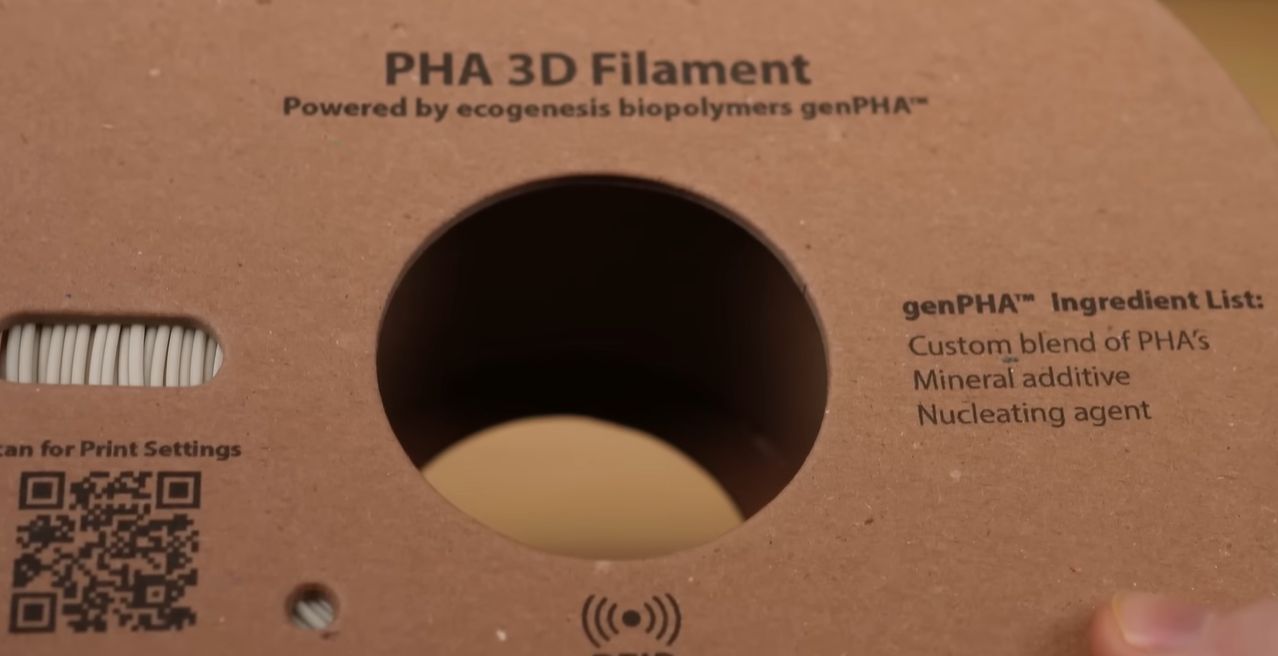
PLA has been the friendly golden retriever of desktop 3D printing for years. It is easy to print, widely available, relatively inexpensive, and forgiving enough that even a slightly confused slicer profile can usually produce something that looks like the thing you meant to print. But PLA also has a marketing problem hiding under its shiny surface: people often call it “biodegradable” as if an abandoned Benchy will politely dissolve under a tomato plant by next Thursday. In reality, PLA generally needs controlled industrial composting conditions to break down efficiently.
That gap between reputation and reality is why PHA filament is becoming interesting. PHA, short for polyhydroxyalkanoate, is a family of bio-based polyesters produced by microorganisms. In simpler terms, bacteria can make it, nature knows how to deal with it, and 3D printing nerds are now asking the obvious question: can we feed it into an FDM printer without sacrificing our sanity?
The answer is promising, but not magical. PHA filament could become a serious alternative to PLA for makers, schools, designers, and product developers who care about end-of-life impact. However, it prints differently, costs more, and demands more attention to moisture, cooling, and bed adhesion. It is not “PLA with a halo.” It is its own material, with its own personalityand occasionally, that personality needs a dry box and a stern talking-to.
What Is PHA Filament?
PHA refers to a broad group of polyesters made naturally by many microorganisms as carbon and energy storage materials. Different PHA formulations can behave differently, which is important because “PHA filament” is not one single recipe. Some filaments are pure PHA or mostly PHA. Others are PLA/PHA blends, where the PHA improves toughness, flexibility, or biodegradability while PLA keeps the material familiar for everyday printers.
For FDM 3D printing, PHA is attractive because it can be processed as a thermoplastic. That means it can soften, flow through a nozzle, and solidify into layers like the materials desktop printers already use. The difference is that PHA’s biodegradation profile can be more impressive than PLA’s, especially outside carefully managed industrial composting systems.
PLA is usually made from fermented plant sugars and has earned its place as the default beginner filament. PHA is also bio-based, but it comes from microbial production rather than the lactic acid pathway used for PLA. That distinction matters because PHA can be more readily broken down by naturally occurring microorganisms in a broader range of environments, depending on the formulation and conditions.
Why Makers Are Looking Beyond PLA
PLA is popular for good reasons. It prints at relatively low temperatures, does not usually require an enclosure, produces sharp details, and has low warping compared with ABS or nylon. A typical PLA profile may use a nozzle temperature around 190–220°C and a heated bed around 50–60°C. For decorative models, classroom projects, prototypes, cosplay props, and test prints, PLA is still extremely useful.
The problem begins after the print fails, cracks, becomes obsolete, or joins the legendary Drawer of Forgotten Prototypes. PLA is bio-based, but bio-based does not automatically mean it disappears harmlessly in a backyard compost pile, landfill, river, or ocean. Many PLA products are designed for industrial composting, where temperature, humidity, oxygen, and microbial activity are controlled. A normal home compost bin is more like a casual neighborhood barbecue: warm sometimes, damp sometimes, organized never.
For a hobby that can generate failed prints, purge towers, support structures, rafts, brims, calibration cubes, and tiny plastic spaghetti monsters, material choice matters. PHA enters the conversation because it may reduce the long-term persistence of discarded plastic in environments where PLA performs more like a conventional plastic than its green reputation suggests.
PHA vs PLA: The Big Differences
1. Biodegradability
The headline advantage of PHA is biodegradability. PHA materials are generally recognized for breaking down through microbial activity more readily than PLA in natural or composting environments. That does not mean you should toss failed prints into the woods like eco-confetti. Responsible disposal still matters. But if a PHA item accidentally enters the environment, it may have a better chance of being metabolized by microorganisms over time.
PLA, by contrast, is often compostable mainly under industrial conditions. It may remain largely intact for long periods in typical soil, home compost, or landfill conditions. This is why many sustainability discussions now separate three terms that people often mix together: bio-based, biodegradable, and compostable. PLA is bio-based and industrially compostable in many cases. PHA can be bio-based and more broadly biodegradable, depending on formulation.
2. Printability
PLA is easier. There, we said it. PLA is the microwave popcorn of 3D printing: not gourmet, but reliable, fast, and usually good enough for movie night. PHA can print well, but it may require more tuning. Some PLA/PHA blends print almost like regular PLA, while purer PHA materials may require cooler beds, strong part cooling, controlled first layers, and careful calibration.
This is where beginners must pay attention. A PLA/PHA blend may use familiar settings such as a 200–220°C nozzle and a 50–65°C bed. Some pure PHA filaments, however, may prefer a room-temperature bed, heavy cooling after the first layer, and slower or carefully managed speeds. Always start with the filament manufacturer’s profile rather than assuming your favorite PLA settings will work. PHA does not enjoy being treated like PLA in a fake mustache.
3. Heat Resistance and Toughness
PLA is stiff and prints beautifully, but it can soften in warm environments. A PLA phone mount left in a hot car may become a modern art installation titled “Regret, in Three Layers.” PHA formulations vary widely, but some blends are designed to improve toughness, flexibility, impact resistance, or heat behavior compared with standard PLA.
That said, PHA is not automatically stronger than PLA in every case. Material properties depend on the exact polymer, additives, crystallinity, print temperature, cooling, layer adhesion, and annealing behavior. For engineering parts, users should test the actual filament under the expected load, temperature, and environment instead of trusting the label. “Eco-friendly” is not a substitute for a tensile test.
4. Moisture Sensitivity
PHA can be more sensitive to moisture than PLA. Wet filament may cause popping, stringing, weak layers, rough surfaces, bubbles, and inconsistent extrusion. If your print sounds like breakfast cereal in the nozzle, the filament probably needs drying.
For best results, store PHA in a sealed container with desiccant and consider using a filament dryer before printing. Dry storage is good practice for PLA too, but with PHA it becomes closer to a requirement. Think of it as giving your filament a tiny spa day before asking it to become a functional bracket.
Best Use Cases for PHA Filament
PHA filament makes the most sense when sustainability and short-to-medium service life matter. It is especially interesting for prototypes, educational models, packaging concepts, disposable jigs, design samples, art pieces, agricultural tools, biodegradable planters, temporary fixtures, and research projects.
Schools and makerspaces may also find PHA appealing because students often create many test prints. If the learning process produces a mountain of failed frogs, low-poly dinosaurs, and calibration cubes, a more biodegradable material can reduce the environmental guilt cloud hovering over the printer farm.
PHA is also worth exploring for companies developing consumer products where end-of-life matters. A designer making sample packaging, cosmetic mockups, or compostable product concepts may prefer PHA because it aligns better with sustainability messaging than conventional PLA. However, any environmental claim should be specific, accurate, and supported by testing. “Biodegradable” without context is too vague for serious product communication.
Where PHA Still Struggles
The biggest barrier is cost. PLA benefits from mature supply chains, huge demand, and many manufacturers. PHA production is growing, but it is not yet as cheap or universally available. That means PHA filament may cost more per spool, come in fewer colors, and have fewer polished slicer profiles.
The second challenge is consistency. Because PHA can refer to different polymers and blends, one brand’s PHA filament may behave very differently from another. A PLA/PHA blend may feel beginner-friendly, while a purer PHA material may require unusual settings. Users need to read datasheets, run temperature towers, test flow rate, and print small parts before launching a 22-hour dragon with wings, horns, and financial consequences.
The third issue is disposal infrastructure. Even if PHA is more biodegradable than PLA, responsible end-of-life handling still depends on local waste systems. Home composting may work for some formulations under some conditions, but not every printed object will disappear quickly or completely. Thick walls, high infill, pigments, additives, and environmental temperature can all affect degradation speed.
Recommended Printing Approach for PHA
Start With a Small Test Print
Do not begin with a giant vase, cosplay helmet, or 400-gram articulated sea monster. Start with a small calibration cube, temperature tower, or simple bracket. Watch the first layer closely. PHA can be picky about adhesion, and some formulations behave better with a brim or raft.
Dry the Filament
If the spool has been open for a while, dry it before serious printing. Moisture can ruin surface finish and layer strength. Store the spool in an airtight container with fresh desiccant. For frequent use, printing directly from a dry box can improve consistency.
Use Cooling Intelligently
PLA usually likes strong cooling, and many PHA materials also benefit from aggressive part cooling after the first layer. However, settings depend on the specific formulation. Some pure PHA users report success with a cold bed and high fan speed, while PLA/PHA blends may behave more like standard PLA with moderate bed heat.
Calibrate Flow and Retraction
PHA can string if the temperature is too high or the filament is wet. Tune retraction, travel speed, and temperature. If the walls look blobby, reduce flow slightly or run a proper extrusion multiplier calibration. If layer adhesion is poor, increase temperature gradually or slow the print down.
PHA as a PLA Alternative: Should You Switch?
If you print mostly decorative models, PLA is still the most convenient option. It is cheap, colorful, well-supported, and easy to tune. For beginners, PLA remains the best first filament because it lets users focus on bed leveling, slicer basics, and not accidentally printing a 900% scale keychain.
However, if sustainability is a priority, PHA deserves attention. It may be the better choice for temporary objects, educational environments, environmental design work, and prototypes where end-of-life impact matters. PHA is not ready to replace PLA everywhere, but it could replace PLA in many places where convenience and cost are not the only priorities.
The best near-term path may be PLA/PHA blends. These materials can offer a practical bridge between familiar PLA behavior and improved environmental characteristics. As PHA production scales and filament manufacturers refine formulas, purer PHA filaments may become easier to print and more affordable.
Environmental Claims Need Honesty
PHA is exciting, but the 3D printing community should avoid turning it into the next overhyped miracle material. A biodegradable filament is still a material that required feedstock, fermentation, processing, extrusion, packaging, shipping, electricity, and human decision-making. The greenest print is often the one you do not print unnecessarily.
Good sustainability practice means printing with purpose, reducing supports, optimizing infill, using durable materials when durability prevents replacement, recycling where possible, and choosing biodegradable materials when biodegradation is genuinely relevant. PHA can help, but it does not give anyone a license to print disposable junk by the kilogram.
Practical Experience Notes: Printing With PHA Filament
When approaching PHA filament for the first time, the best mindset is curiosity mixed with patience. PLA lets you get away with lazy habits. PHA notices everything. It notices moisture. It notices bed temperature. It notices whether your cooling fan is doing its job or merely spinning for moral support. The first practical lesson is to treat the filament as a material worth testing, not as a drop-in PLA clone.
A good starting experience is to load the spool only after drying it and then print a temperature tower. Watch for three things: surface gloss, stringing, and layer bonding. If the print becomes glossy and stringy at higher temperatures, step down. If layers split or corners look weak, step up slightly or reduce speed. PHA can have a narrower happy zone than PLA, so small changes matter. A 5°C adjustment may make the difference between “beautiful eco-prototype” and “spaghetti sculpture with ambition.”
First-layer behavior is usually the next surprise. PLA often rewards a warm bed and a confident squish. Some PHA blends tolerate similar conditions, but purer PHA materials may prefer less bed heat or even a cold build plate. Too much heat can encourage deformation or make removal difficult. For larger parts, a brim can be useful because it helps anchor edges while the material cools and crystallizes. If corners lift, do not immediately blast the bed hotter like you would with ABS. With PHA, the fix may be better cooling, a different build surface, a brim, or a slower first layer.
Supports are another area where PHA asks for tuning. If supports fuse too strongly, increase interface distance or reduce support density. If overhangs sag, improve cooling and slow the outer walls. Because some PHA filaments can be less forgiving than PLA, clean geometry matters. Rounded corners, chamfers, and moderate overhangs often print better than thin spikes and dramatic unsupported ledges. Your model design should help the filament succeed instead of daring it to fail.
One practical advantage is that PHA can feel more purposeful than PLA for temporary projects. Seedling markers, concept packaging, classroom models, design samples, and short-life prototypes all make sense. For parts expected to live outdoors for years, carry heavy loads, or survive high heat, test carefully before trusting PHA. Biodegradability is a benefit when you want the object to have an end-of-life pathway. It is not a benefit when you need a permanent structural part.
The final experience-based takeaway is simple: PHA rewards disciplined printing. Dry the spool, read the datasheet, run small tests, tune cooling, and record settings. Once dialed in, PHA can produce attractive, useful prints while offering a more convincing sustainability story than standard PLA. It may not replace PLA overnight, but it gives makers a smarter option when the question is not just “Can I print this?” but “What happens after I am done with it?”
Conclusion
PHA filament is one of the most interesting candidates for the next chapter of desktop 3D printing materials. PLA will not vanish anytime soon. It is too useful, too cheap, and too deeply woven into slicer profiles, beginner kits, and maker muscle memory. But PLA’s environmental reputation has always needed a footnote, and that footnote is getting harder to ignore.
PHA offers a stronger sustainability argument because it is bio-based and can biodegrade more readily in a wider range of conditions, depending on the specific formulation. It also brings real printing challenges: moisture sensitivity, variable settings, cost, availability, and the need for careful tuning. For casual users, PLA remains the easiest choice. For environmentally minded makers, educators, designers, and product developers, PHA is worth serious experimentation.
The future may not be “PHA replaces PLA.” A more realistic future is smarter material selection: PLA for durable low-cost prototypes, PETG or engineering polymers for functional parts, and PHA for prints where biodegradability and responsible end-of-life design matter. That is not as catchy as a marketing slogan, but it is much more usefuland far less likely to end with a drawer full of eternal plastic frogs.
SEO Tags
Note: This article synthesizes current technical, academic, and 3D-printing industry information about PHA, PLA, biodegradability, and FDM filament behavior, written as original web-ready content without source-link markup.













