
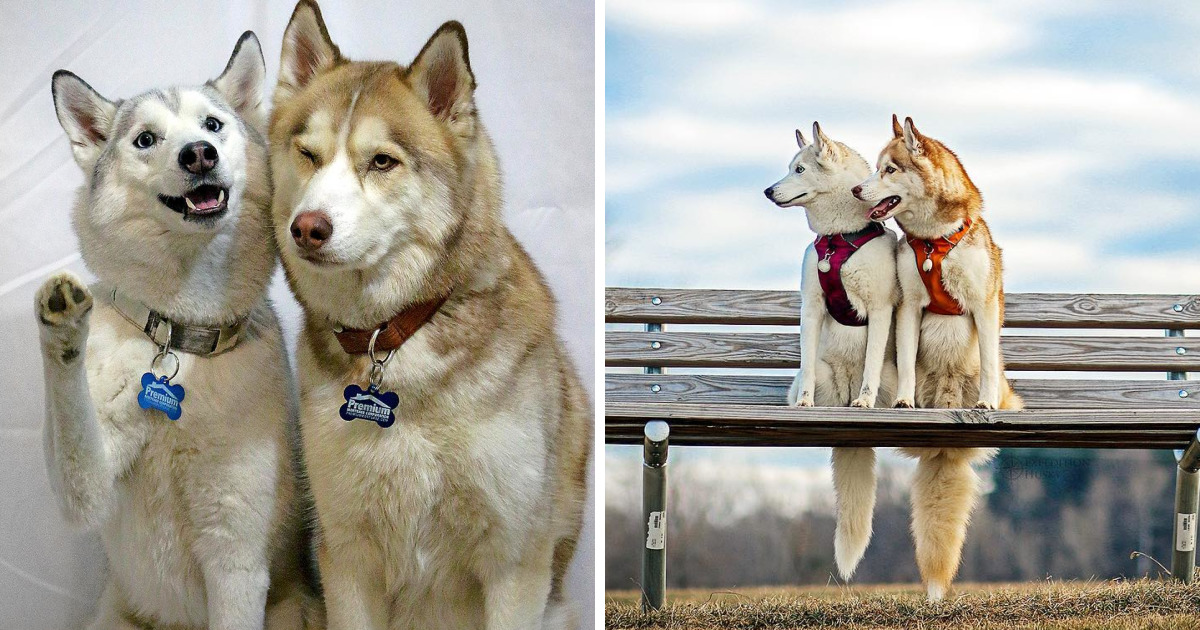
Clinical depression has a way of turning ordinary life into a locked room. The dishes become mountains. Text messages feel like tax audits. Getting out of bed requires the emotional stamina of climbing Denali in flip-flops. And then, in my case, came two blue-eyed, snow-coated chaos machines: my beautiful huskies.
They did not arrive with tiny therapist badges. They did not say, “Let’s process your core wounds,” although one of them did howl at my laundry basket with impressive emotional range. But they gave me something depression had quietly stolen: routine, movement, companionship, purpose, laughter, and a reason to step outside when every part of me wanted to disappear under a blanket like a sad burrito.
This is not a story about dogs magically curing clinical depression. Depression is a real medical condition that can affect mood, thinking, sleep, appetite, energy, and daily functioning. Professional care matters. Therapy, medication, lifestyle changes, and support networks can all play important roles in recovery. But for many people, the human-animal bond becomes part of the bridge back to life. For me, that bridge had paws, fur, dramatic sighs, and a shocking commitment to shedding on black clothing.
Understanding Clinical Depression: More Than “Feeling Sad”
Clinical depression, also called major depressive disorder, is not the same as having a bad week or needing a vacation. It can bring persistent sadness, loss of interest, fatigue, sleep changes, difficulty concentrating, feelings of worthlessness, and sometimes thoughts that life is not worth living. It can make the simplest tasks feel strangely impossible.
One of the cruelest tricks depression plays is isolation. It convinces you that you are a burden, that nobody wants to hear from you, and that staying alone is safer. The problem is that isolation often makes symptoms worse. Human beings are wired for connection, and while pets do not replace professional treatment or human relationships, they can provide a steady form of companionship when people feel hard to reach.
My huskies did not ask me to explain myself. They did not need a polished version of me. They accepted “today I can only sit on the floor” as a perfectly reasonable lifestyle choice, especially if sitting on the floor involved ear scratches.
Why Huskies Were the Unlikely Heroes I Needed
Siberian Huskies are not low-maintenance décor. They are athletic, intelligent, vocal, stubborn, affectionate, mischievous, and powered by a mysterious internal battery that apparently charges during thunderstorms and human exhaustion. The American Kennel Club describes Siberian Huskies as active working dogs that need regular exercise and thrive when they have a function to perform. Translation: if you do not give a husky a job, the husky may assign itself one, such as “professional couch excavator.”
At first, this sounded like the worst possible match for depression. I could barely motivate myself to brush my hair; how was I supposed to manage a breed that treats a 20-minute walk like a light appetizer?
But that was exactly why they helped. Depression made me shrink. Huskies made shrinking impossible. They needed food, water, grooming, play, training, vet visits, and outdoor time. Their needs were not negotiable. Their love was soft, but their schedule was firm.
The Healing Power of Routine
Depression can flatten time. Morning, afternoon, and night blur into one gray loop. A dog breaks that loop with practical demands. Breakfast must happen. Walks must happen. The water bowl must be refilled. Someone must investigate why the husky is suddenly silent, because silence usually means a sock has entered witness protection.
That routine became my first ladder. I did not wake up thinking, “Today I will rebuild my life.” That goal was too large and too shiny. I woke up thinking, “The dogs need breakfast.” Then, “They need a walk.” Then, “I am already wearing shoes, so I might as well keep going.”
Small actions matter because depression often improves through repeated, manageable steps. My huskies helped me build momentum without asking me to believe in myself first. I only had to believe that they needed me, and that was enough to begin.
How Dog Walking Helped Me Move Again
Exercise is frequently recommended as one helpful tool for managing depression and anxiety. It is not a moral test, and it is not a replacement for medical care, but physical activity can support mood, sleep, stress regulation, and overall health. For me, dog walking was exercise disguised as obligation.
If someone had said, “Go outside and power-walk for your mental health,” I would have stared at them like they had suggested I knit a parachute. But when my huskies bounced by the door with the enthusiasm of furry motivational speakers, I had a reason to move.
At first, the walks were tiny
In the beginning, we walked to the end of the street and back. That was it. No inspirational montage. No sunrise yoga. Just me, two huskies, and a nervous hope that nobody would ask how I was doing.
Then the walks grew. Around the block. Through the park. Down a trail. Eventually, I noticed something strange: I was breathing deeper. I was sleeping a little better. I recognized neighbors. I learned which houses had squirrels, which was also the information my huskies considered most valuable.
Movement became a meeting with the world
Walking dogs pulled me into sunlight, weather, seasons, and small conversations. A stranger would say, “Beautiful dogs,” and for a few seconds I was not “a depressed person.” I was the human attached to two majestic snow wolves who were trying to sniff a mailbox with the seriousness of forensic investigators.
Companionship Without Judgment
One of the most healing things about dogs is their emotional simplicity. They do not demand that you explain why you are crying. They do not offer suspiciously cheerful advice like, “Have you tried being positive?” They simply stay.
My huskies stayed through the bad mornings, the quiet afternoons, and the nights when my thoughts became too loud. One would lie against my legs; the other would rest his chin on the couch and stare as if supervising my continued existence. It was ridiculous and profound at the same time.
That kind of presence does not erase depression, but it can interrupt the feeling of being completely alone. The American Psychiatric Association has highlighted how many pet owners experience their animals as calming, stress-reducing, and supportive of physical activity. Many people know this in their bones before they ever read the research: a dog’s steady breathing beside you can make the room feel less hostile.
Purpose: The Antidote to Disappearing
Depression often whispers, “Nothing you do matters.” Caring for huskies argued back every day.
If I did not get up, they did not eat. If I did not open the door, they did not walk. If I did not brush them, my house became a winter-themed crime scene. Their dependence on me was not a burden in the way depression tried to frame it. It was a thread connecting me to responsibility, affection, and the future.
Purpose does not always arrive as a grand calling. Sometimes it arrives as a dog bowl. Sometimes it has muddy paws. Sometimes it wakes you up by singing the ancient husky song of its people directly into your face.
Laughter Returned Before Happiness Did
One thing nobody told me about recovery is that laughter may come back before happiness. My huskies made that happen.
They argued with sirens. They hid treats in places that made no engineering sense. They looked personally betrayed by bath time. One learned to open a cabinet and proudly presented me with a bag of rice like he had hunted it on the tundra. Another once refused to come inside because a leaf had offended him.
These moments were small sparks. At first, I only smiled for a second. Then I laughed. Then I started telling friends about the latest husky drama. Those stories became tiny bridges back to people.
The Social Side of Dog Ownership
Depression can make socializing feel exhausting, but dogs create low-pressure connections. People at parks asked my huskies’ names before they asked mine. That was perfect. I could talk about the dogs when I was not ready to talk about myself.
Over time, those casual exchanges helped me feel visible again. I met other dog owners. I chatted with neighbors. I learned that the elderly man down the street kept biscuits in his jacket pocket and that my huskies considered him a local celebrity.
Social support is an important part of mental health recovery. Dogs can encourage face-to-face interaction simply by existing in public with tails, smiles, and the occasional embarrassing attempt to chase a bird that is clearly not interested in negotiations.
What Huskies Taught Me About Recovery
1. Progress needs patience
Training a husky teaches humility. You may say “sit,” and the husky may say, “Interesting theory.” Recovery was similar. Some days I moved forward. Some days I slid backward. The key was not perfection; it was repetition.
2. Energy follows action
I often waited to feel motivated before doing anything. My dogs taught me that action can come first. Walk first, feel slightly better later. Feed them first, make breakfast for myself after. Brush one dog, then maybe shower. Tiny actions created tiny shifts.
3. Love can be practical
Love was not always dramatic. It was buying dog food, cleaning muddy paws, scheduling vaccines, and clipping leashes before sunrise. In caring for them, I practiced caring again. Eventually, that care turned back toward me.
Important Truth: Dogs Help, But They Are Not a Complete Treatment Plan
As much as I love my huskies, I would never tell someone with clinical depression to “just get a dog.” That advice is too simple and can be harmful. Dogs require money, energy, time, patience, housing stability, and support. Huskies, especially, need exercise, training, grooming, secure spaces, and a human who understands that “independent” is a polite word for “may ignore your opinion.”
Depression deserves real care. For many people, that means therapy, medication, medical evaluation, crisis support, lifestyle changes, community, and ongoing treatment. Pets can be part of healing, but they should not carry the entire weight of a person’s mental health. That is not fair to the person or the animal.
If someone is in immediate danger, having thoughts of suicide, or feels unable to stay safe, urgent help matters. In the United States, the 988 Suicide & Crisis Lifeline offers free, confidential support by call, text, or chat 24/7. Asking for help is not weakness. It is survival doing its job.
How to Let Dogs Support Mental Health in a Healthy Way
If you already have a dog, you can use that bond as part of a gentle recovery routine. Start small. A five-minute walk counts. Filling the food bowl counts. Sitting outside while your dog sniffs the same patch of grass for the emotional length of a feature film counts.
Create simple rituals: morning light with the dog, a short evening walk, weekly grooming, training games, or quiet cuddle time. These routines provide structure without demanding instant transformation.
If you do not have a dog, consider lower-pressure ways to experience the human-animal bond. Volunteer at a shelter, walk a friend’s dog, foster temporarily if your situation allows, or visit therapy animal programs where available. The goal is connection, not overwhelm.
My Beautiful Huskies Helped Me Get on My Feet Again
When I say my huskies helped me overcome clinical depression and get on my feet again, I do not mean they erased every hard day. I mean they helped me stand up when standing felt pointless. They pulled me outside. They made me laugh. They gave me a schedule, a reason, and a living reminder that love can be loud, messy, inconvenient, and saving.
They helped me notice life again: frost on grass, morning air, the kindness of strangers, the comedy of muddy pawprints, the quiet peace of a tired dog sleeping after a long walk. Depression had narrowed my world to a dark room. My huskies widened it one walk at a time.
Additional Personal Experiences: Life Lessons From Two Fluffy Survival Coaches
The first major lesson my huskies taught me was that healing does not always feel noble. Sometimes healing looks like standing in pajamas at 6:30 a.m. while a dog debates whether the perfect bathroom spot exists in this universe. Before them, mornings were my hardest time. I would wake up heavy, already tired, already disappointed in myself. But dogs do not understand existential dread as a scheduling conflict. They understand breakfast. So I got up.
That one act changed more than I expected. Once I was out of bed, I opened curtains. Once the curtains were open, light came in. Once light came in, the room felt less like a cave. I began making coffee again. Then toast. Then real meals. The dogs did not teach me nutrition with a PowerPoint presentation; they simply made the day begin.
Another experience that stayed with me happened on a cold morning walk. I was moving slowly, hood up, hoping the world would ignore me. One of my huskies suddenly stopped and leaned against my leg. Not dramatically. Not like a movie. Just a firm, warm pressure. I looked down, and he looked back with that calm dog expression that says, “I do not know what taxes are, but I am here.” I cried right there on the sidewalk. Then he tried to eat a leaf, because emotional support has limits.
There were frustrating days too. Recovery with dogs is not a greeting card. Huskies shed. Huskies pull. Huskies talk back. Huskies can turn boredom into interior design decisions you did not approve. But even the frustrating parts helped me practice problem-solving again. I researched training methods, adjusted routines, saved for better equipment, and learned to ask for help from trainers and other dog owners. Depression had made me feel powerless. Training reminded me that problems could be broken into steps.
One of the biggest changes was how my home felt. During the worst depression, my space was silent in a way that felt heavy. After the huskies, the house had rhythm: paws on the floor, water slurps, collar tags, sighs, howls, toy squeaks, and the dramatic thump of a dog collapsing after a walk as though he had personally delivered mail across Alaska. The sound of life returned before my mood fully did.
They also helped me reconnect with my body. Depression had made me treat my body like a vehicle I was annoyed to own. Walking, stretching leashes, brushing coats, carrying food bags, and breathing cold air reminded me that my body was still capable of participating in the world. I did not need to love myself perfectly to take one more step. I only needed to hold the leash and keep moving.
Perhaps the most meaningful experience was realizing that my huskies did not love some future “fixed” version of me. They loved me on the days I was quiet. They loved me when I wore the same hoodie three days in a row. They loved me when my laugh sounded rusty. Their acceptance helped me question the harsh story depression told about my worth.
Over time, I became more than the person who survived the day. I became the person who packed water for hikes, compared harnesses, learned trail etiquette, scheduled vet appointments, and took too many photos of snow-covered noses. I became someone with plans again. Not perfect plans. Not grand plans. But real ones.
My huskies did not rescue me in one cinematic moment. They rescued me in repetition. Breakfast by breakfast. Walk by walk. Laugh by laugh. They helped me get on my feet again by needing me to use them. And somewhere along the path, while they were sniffing pinecones and arguing with squirrels, I began to want to stay.
Conclusion
Clinical depression can make life feel unreachable, but recovery is often built through small, repeated acts of care. My beautiful huskies gave me routine when my days had no shape, movement when my body wanted to shut down, companionship when I felt alone, and laughter when joy felt far away. They were not a substitute for professional mental health support, but they became a powerful part of my healing.
For anyone struggling, the lesson is not that a dog fixes everything. The lesson is that connection matters. Routine matters. Gentle movement matters. Purpose matters. Love matters, even when it arrives covered in fur and steals your spot on the couch.














