
Sapo: Amazon’s futuristic grocery dream once promised shoppers they could grab avocados, oat milk, and emergency frozen pizza, then simply leave. But in its U.S. Amazon Fresh stores, the company shifted away from Just Walk Out and toward Dash Cartssmart shopping carts that still skip the checkout line while showing customers their running total in real time.
Amazon Walks Back From the Checkout-Free Grocery Fantasy
For years, Amazon’s Just Walk Out technology sounded like the retail version of a magic trick: enter the store, pick up your groceries, leave, and let sensors, cameras, artificial intelligence, and your Amazon account sort out the bill later. No cashier. No self-checkout screen scolding you about an unexpected item in the bagging area. No tiny receipt printer gasping for life.
But even the shiniest retail experiments eventually meet the same terrifying opponent: real grocery shoppers. People compare prices. They change their minds. They put bananas back in the wrong place. They want to know whether the fancy yogurt is on sale before they discover, three hours later, that their “quick stop” cost $87.42.
That is why Amazon’s move away from Just Walk Out technology in U.S. Amazon Fresh grocery stores was not simply a retreat from futuristic shopping. It was a practical reset. The company decided that its larger grocery stores needed something more visible, more interactive, and more familiar: Amazon Dash Carts.
The change marked an important moment in the evolution of cashierless shopping. Amazon was not abandoning automation entirely. Instead, it was moving the intelligence from the ceiling and shelves into the shopping cart itself. In other words, the future of grocery shopping still has sensors and computer visionbut now it also has a handlebar, a screen, and a place to put your cereal.
What Was Amazon’s Just Walk Out Technology?
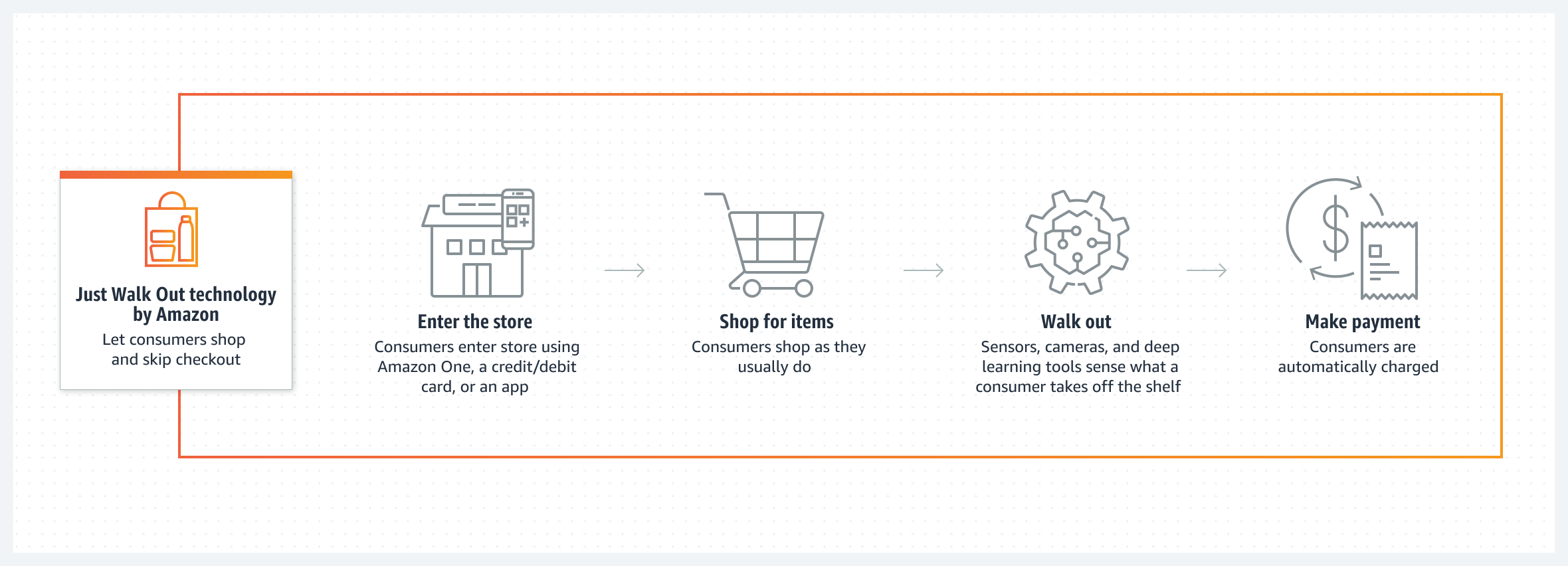
Just Walk Out technology was Amazon’s bold attempt to remove the traditional checkout process from physical retail. The system used a mix of cameras, shelf sensors, computer vision, artificial intelligence, and account-based payment to identify what shoppers picked up and what they returned. After leaving the store, customers received a digital receipt.
The idea first gained attention through Amazon Go convenience stores, where shoppers could grab a sandwich, drink, or snack and walk out without stopping at a register. In smaller-format stores, the experience made sense. A customer might buy a salad, a sparkling water, and a cookie they insisted was “for later.” The number of items was limited, the trip was short, and the checkout-free concept felt smooth.
But full grocery stores are a different beast. Grocery shopping is not just “grab and go.” It is “grab, compare, sniff the melon, return the melon, reconsider life choices, buy three kinds of cheese, and then remember dish soap.” That complexity made Just Walk Out harder to scale in larger Amazon Fresh stores.
Amazon said customers liked skipping checkout lines, but they also wanted more control during the trip. They wanted to see their spending as they shopped, find nearby products and deals, view savings, and understand their receipt before they left the store. That feedback pointed directly toward Dash Carts.
Why Amazon Fresh Moved to Dash Carts
The big reason Amazon moved toward Dash Carts is simple: grocery shoppers want convenience, but they also want visibility. A completely invisible checkout sounds exciting until you realize you cannot easily track the price of everything in your cart.
With grocery prices still a concern for many households, real-time spending matters. A shopper buying lunch in a convenience store may not worry about every penny. A parent filling a cart with produce, meat, snacks, cleaning supplies, and the mysterious items children sneak in near the cereal aisle absolutely does.
Dash Carts Show the Running Total
Amazon Dash Carts let shoppers scan and weigh items as they place them in the cart. The cart’s built-in screen shows a real-time receipt, so customers can see what they are buying, how much they are spending, and whether a deal or promotion applies. That small screen solves a very human problem: the fear that your grocery total is quietly turning into a car payment.
Dash Carts Still Skip the Checkout Line
Dash Carts are not a return to old-school checkout. Shoppers can still avoid the cashier line by using a dedicated Dash Cart lane. The cart handles the transaction, and the customer receives a digital receipt. The difference is that the process feels less mysterious. The shopper participates in the checkout experience as it happens, rather than trusting an invisible system to figure it out later.
Dash Carts Fit Larger Grocery Trips Better
For larger-format grocery stores, smart carts offer a middle ground between full cashierless automation and traditional checkout. They keep the speed advantage while giving shoppers a familiar tool: the cart. Instead of turning the entire store into a giant sensor-powered puzzle, Amazon can concentrate technology in the cart itself.
Just Walk Out Is Not Completely Gone
Despite headlines suggesting Amazon’s cashierless dream had been tossed into the discount bin, Just Walk Out technology did not disappear. Amazon continued using the system in Amazon Go stores and select smaller locations, while also offering it to third-party retailers such as stadiums, airports, campuses, and convenience-style shops.
That distinction is important. Just Walk Out may be less practical for a large grocery store where customers buy dozens of items, but it can still be useful in high-speed retail environments. Think of a sports stadium during halftime. Nobody wants to spend the entire third quarter waiting to buy nachos. In that setting, grab-and-go technology can be genuinely valuable.
Amazon’s strategy suggests that the company learned where the technology works best. Small stores with limited assortments? Great fit. Large supermarkets with produce scales, coupons, substitutions, and shoppers debating seven pasta shapes? Not so simple.
The Bigger Grocery Problem Amazon Is Trying to Solve
Amazon’s grocery business has always been more complicated than its online retail machine. Selling books, headphones, and phone chargers online is one thing. Selling ripe bananas, fresh salmon, frozen waffles, and same-day dinner ingredients is another. Groceries are low-margin, operationally demanding, and deeply tied to local shopping habits.
Amazon acquired Whole Foods Market in 2017, giving it a strong position in premium grocery. It later launched Amazon Fresh stores to reach a broader customer base with a more conventional supermarket format. But Amazon Fresh struggled to find a clear identity in a crowded market dominated by Walmart, Kroger, Costco, Target, Aldi, and regional grocery chains.
The company paused some Fresh store expansion, remodeled stores, adjusted pricing, expanded delivery options, and tested new formats. The move from Just Walk Out to Dash Carts fits into that broader grocery reset. It shows Amazon shifting from “look at this amazing technology” to “does this actually make grocery shopping better?” That is a healthier question, even if it is less glamorous.
Retail Basics Still Matter
Customers may enjoy futuristic checkout, but they still care most about price, product selection, freshness, store layout, parking, delivery reliability, and whether the avocados are edible before next Thursday. Technology can improve the experience, but it cannot replace the basics.
That is the real lesson behind Amazon’s decision. A grocery store is not a tech demo. It is a weekly ritual. If the milk is overpriced or the produce section feels confusing, no amount of ceiling-mounted artificial intelligence will save the day.
Dash Carts vs. Just Walk Out: What Is the Difference?
Both Dash Carts and Just Walk Out are designed to reduce checkout friction, but they approach the problem differently.
Just Walk Out
Just Walk Out puts most of the intelligence into the store environment. Cameras, sensors, and software track products as customers shop. The shopper does not scan every item. The system builds a virtual cart and charges the account after the customer exits.
The advantage is a highly seamless experience. The disadvantage is that it can feel like shopping inside a very polite surveillance spaceship. It also gives shoppers less real-time feedback about their total.
Dash Carts
Dash Carts move the experience into the cart. Shoppers scan items, weigh produce, view totals, check deals, and then exit through a Dash Cart lane. The shopper is more involved, but also more informed.
The advantage is transparency. Customers can see what is happening before they leave. The disadvantage is that the experience still requires scanning and interaction, so it is not as invisible as Just Walk Out.
In practical terms, Dash Carts are less magical but more useful. And in grocery retail, useful usually beats magical. Magic does not help much when you are trying to stay under a weekly food budget.
What This Means for Shoppers
For shoppers, Amazon’s switch to Dash Carts means the checkout-free experience becomes more understandable. Customers can still move quickly through the store, but they no longer have to wait until after the trip to know exactly what they bought and how much they spent.
That is especially helpful for families, budget-conscious shoppers, and anyone who has ever gone into a grocery store for “just a few things” and emerged with a cart that suggests they are hosting a neighborhood festival.
Dash Carts also make deals more visible. If Amazon wants shoppers to notice discounts, promotions, and Prime-related savings, a cart screen is a direct communication channel. It can guide shoppers, display totals, and provide a clearer sense of control.
However, not every customer will love the change. Some people prefer traditional checkout. Others may find smart carts unnecessary or awkward. And some shoppers simply want to buy bread without feeling like they are beta-testing a robot roommate.
What This Means for Retail Technology
Amazon’s decision sends a message to the wider retail industry: automation must earn its place. A technology cannot succeed just because it sounds impressive in a keynote presentation. It has to solve a real customer problem at a reasonable cost.
Cashierless shopping still has a future, but that future may look different depending on the store format. Small convenience stores, airport shops, office markets, and stadium stores are natural homes for Just Walk Out-style systems. Large grocery stores may be better served by smart carts, self-checkout improvements, mobile scan-and-go tools, or hybrid models.
Retailers are learning that the best checkout system is not always the one with the most artificial intelligence. It is the one customers understand, trust, and use without needing a tutorial long enough to qualify for college credit.
Was Just Walk Out a Failure?
Calling Just Walk Out a total failure would be too simple. It proved that checkout-free retail could work in certain environments. It pushed competitors to rethink store design. It gave Amazon valuable data about physical shopping behavior. And it remains active in specific formats where speed matters more than full-cart grocery planning.
But in U.S. Amazon Fresh supermarkets, Just Walk Out appears to have been the wrong tool for the job. Grocery stores are messy, emotional, price-sensitive places. Customers do not just want to leave quickly. They want confidence while they shop.
Dash Carts represent a more grounded version of the same ambition. They still reduce friction, but they also show the receipt, display the total, and let customers stay in control. That is less sci-fi, but probably more supermarket-friendly.
The Human Side of “Frictionless” Shopping
Retailers love the word “frictionless,” but not all friction is bad. Some friction reassures customers. Seeing a price, confirming a discount, reviewing a cart, and knowing when payment happens are all small moments of trust.
Just Walk Out removed many of those moments. That was the point, of course. But in a grocery setting, the absence of friction sometimes created a new kind of anxiety. Was the item counted correctly? Did the coupon apply? What did the final receipt include? Why did the grocery trip feel like leaving a hotel minibar?
Dash Carts restore some of that reassurance. They make the invisible visible. The shopper can watch the cart update in real time. That may not sound revolutionary, but it matters. In grocery shopping, trust is built one scanned box of crackers at a time.
Related Experiences: What Shopping With Dash Carts Feels Like
Using a Dash Cart feels less like entering the future and more like using a shopping cart that went to community college for computer science. You begin by signing in, usually through the Amazon app or store code, then place bags in the cart and start shopping. As items go in, you scan them. For produce, the cart can help with weighing. The screen keeps a visible list of purchases and shows the running total.
The biggest benefit is psychological. Traditional grocery shopping has a delayed reveal: you shop first and discover the damage at checkout. A Dash Cart turns the trip into a live budget tracker. If your cart total climbs too fast, you can make decisions before reaching the exit. Maybe the artisanal salsa goes back. Maybe the name-brand cereal becomes store brand. Maybe the $9 cold brew concentrate remains because, emotionally, it is medicine.
The cart also changes how shoppers think about deals. Instead of hunting for savings across shelf tags, app pages, and receipts, customers can see promotions closer to the moment of purchase. That makes the shopping trip feel more interactive. It is not quite a personal grocery assistant, but it is closer than a regular cart, which mostly contributes one wobbly wheel and emotional stress.
There are trade-offs. Some shoppers may find scanning every item annoying, especially during a large weekly grocery run. A missed scan can interrupt the flow. Produce lookup can still feel slower than simply placing items in a basket. And the cart itself may feel bulky to people who are used to quick trips with a handbasket.
Still, the experience makes sense for customers who want speed without surrendering control. It is especially useful for smaller-to-medium grocery trips, lunch runs, and shopping lists where budget awareness matters. The cart gives enough automation to avoid the checkout line, but not so much automation that shoppers feel disconnected from the transaction.
In a way, Dash Carts are Amazon’s admission that the best retail technology does not have to disappear into the ceiling. Sometimes it should sit right in front of the shopper, showing the total, confirming the items, and quietly reminding everyone that the extra tub of ice cream is absolutely visible. Whether that is helpful or judgmental depends on the shopper.
The broader experience also reflects where grocery innovation is heading. Customers want convenience, but they do not want confusion. They want speed, but they also want proof. They want fewer lines, but not fewer choices. Dash Carts may not be the final form of supermarket checkout, but they are a practical bridge between traditional shopping and fully automated retail.
For Amazon, that bridge matters. The company built its reputation on reducing friction online. In physical grocery, the challenge is harder because shoppers touch, compare, question, substitute, and wander. A smart cart respects that behavior better than a fully invisible checkout system. It lets people shop like people, not like perfectly optimized robots moving through a laboratory.
That may be the most important lesson from Amazon’s grocery pivot. The future of shopping is not necessarily about removing every step. It is about removing the steps customers dislike while keeping the ones that help them feel informed. Checkout lines are annoying. Surprise totals are also annoying. Dash Carts try to solve both problems at once, which is why Amazon chose them for its Fresh grocery reset.
Conclusion: Amazon Chooses Practical Over Magical
Amazon’s decision to move away from Just Walk Out technology in U.S. Amazon Fresh grocery stores and lean into Dash Carts is not the death of cashierless shopping. It is a sign that cashierless shopping has to adapt to the reality of grocery behavior.
Just Walk Out remains impressive, especially in smaller stores where speed is the top priority. But in full grocery stores, shoppers need more than invisible checkout. They need real-time totals, deal visibility, receipt clarity, and confidence that their cart is not secretly plotting against their bank account.
Dash Carts may not produce the same futuristic “wow” moment as simply walking out of a store, but they offer something more valuable: practical convenience. They reduce checkout friction while keeping shoppers informed. In the supermarket world, that is a pretty good trade.
Amazon’s grocery journey has been full of experiments, resets, remodels, and strategy shifts. Some ideas have worked better than others. But the move from Just Walk Out to Dash Carts shows a company learning a classic retail lesson the hard way: technology is only powerful when customers actually want to use it.
Note: This article synthesizes information from Amazon announcements and reputable U.S. retail, technology, grocery, and business reporting, including coverage of Amazon Fresh, Just Walk Out, Dash Carts, cashierless checkout, and Amazon’s broader grocery strategy.














