
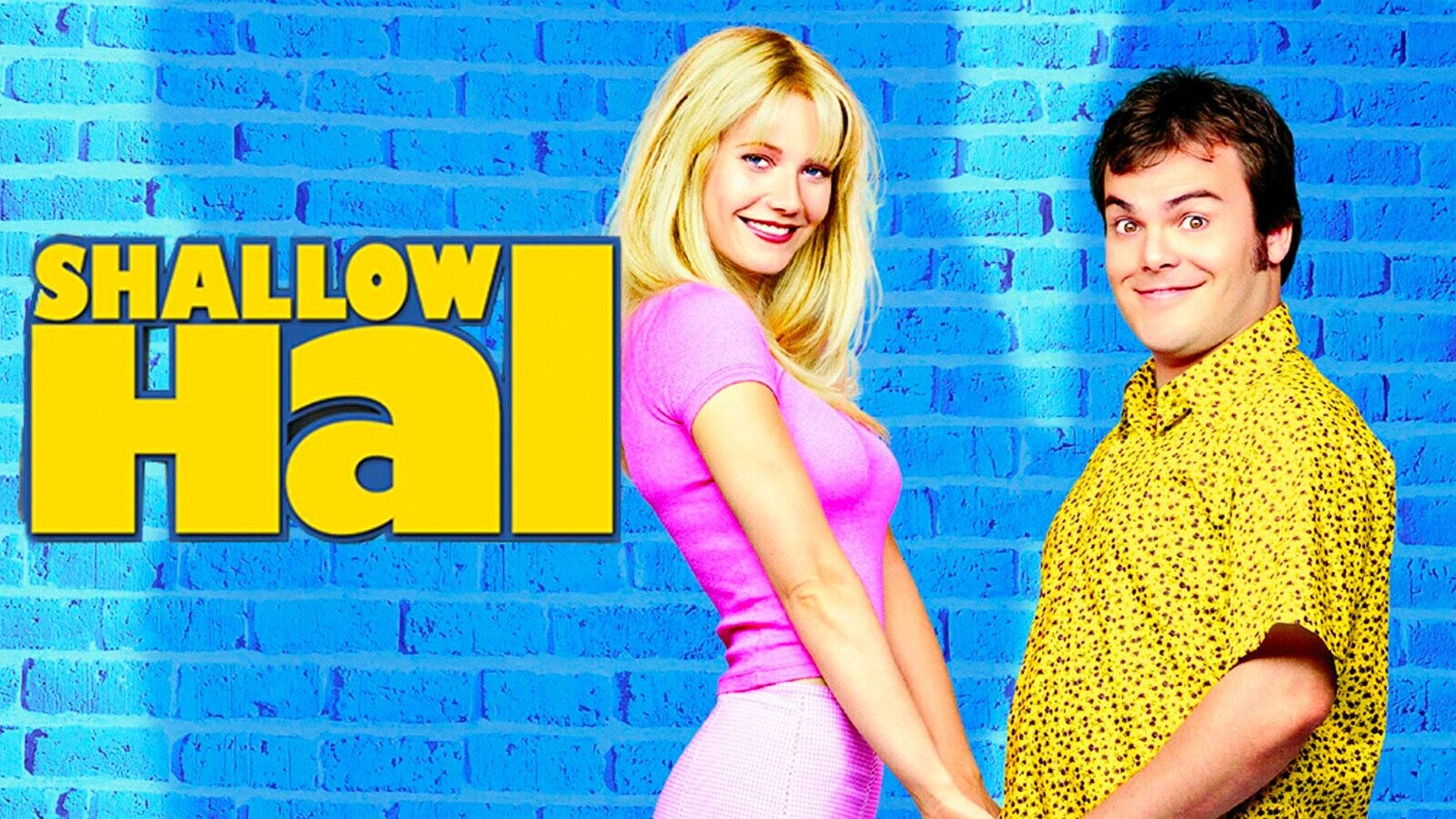
Some movies age like fine wine. Others age like a carton of milk left in a hot car with the windows up. Shallow Hal, the 2001 romantic comedy starring Jack Black and Gwyneth Paltrow, belongs firmly in the second category. Once marketed as a sweet lesson about “inner beauty,” the film now looks less like a charming fable and more like a time capsule of early-2000s body shaming wrapped in a laugh track and a fat suit.
For years, most criticism of Shallow Hal focused on Paltrow’s role as Rosemary, a kindhearted woman whose body is treated as both punchline and moral test. But then Ivy Snitzer, the real-life body double used for close-up shots of Rosemary’s arms, torso, and thighs, began speaking publicly about what happened after the movie. Suddenly, the conversation became much harder to dismiss as “just a comedy.”
Snitzer’s story does not simply make Shallow Hal look outdated. It exposes the human cost behind a movie that asked audiences to laugh at fatness while insisting it was actually celebrating inner beauty. That is quite a trick. Not a good trick, but a trick.
What Was ‘Shallow Hal’ Supposed to Be About?
Shallow Hal follows Hal Larson, played by Jack Black, a man trained by his dying father to value women almost entirely by their looks. After a hypnosis-style encounter with motivational speaker Tony Robbins, Hal begins seeing people’s “inner beauty” reflected as outer beauty. He falls in love with Rosemary, played by Gwyneth Paltrow, whom he sees as thin and conventionally glamorous. Everyone else sees Rosemary as a much larger woman.
On paper, that premise wants to say something noble: stop judging people by appearance. Unfortunately, the film keeps stepping on its own message with giant clown shoes. Instead of simply showing Hal’s shallow perspective as foolish, the movie repeatedly uses Rosemary’s body as the joke. Chairs break. Canoes sink. Food gags pile up. The camera lingers in ways that make the audience complicit in the mockery.
The result is a film that wants credit for being kind while behaving like the meanest kid in the cafeteria. It says, “Beauty is on the inside,” then elbow-nudges the audience every time Rosemary eats, sits, moves, or exists in a body larger than Hollywood’s preferred sample size.
Gwyneth Paltrow’s Fat Suit Became the Center of the Controversy
Much of the original buzz around Shallow Hal involved Gwyneth Paltrow wearing a fat suit. The transformation was treated like a bold acting challenge, the kind of thing Hollywood loves to reward with interviews, magazine features, and very serious discussions about “bravery.” But the conversation already sounded uncomfortable even in 2001.
Paltrow later described how people reacted differently to her when she wore the suit in public. She said strangers avoided eye contact and treated her dismissively. That observation could have sparked a sharper cultural conversation about weight bias. Instead, the film largely turned that bias into comedy material.
That is the central contradiction. The movie seemed aware that larger people are treated poorly, yet it used that poor treatment as entertainment. It noticed the cruelty and then sold tickets to it.
The Problem With “It Had Good Intentions”
Defenders of Shallow Hal often argue that the movie meant well. Maybe it did. But “meaning well” is not a magic eraser. A comedy can intend to promote kindness and still reinforce harmful stereotypes. In fact, that is often how questionable movies survive for so long: they hide behind a greeting card message while doing the opposite in practice.
Shallow Hal tells viewers not to judge bodies. Yet its humor depends on the assumption that Rosemary’s body is shocking, embarrassing, excessive, and inherently funny. That is not a mixed message. That is a message that got stuck in traffic, panicked, and drove into a mailbox.
Who Is Ivy Snitzer?
Ivy Snitzer was a 20-year-old aspiring actress when she worked as Gwyneth Paltrow’s body double in Shallow Hal. Paltrow wore the fat suit for scenes involving her face, while Snitzer’s body was used for certain close-ups. At the time, Snitzer was excited to be part of a major studio comedy. She has said the cast and crew treated her well on set, and she did not initially experience the job as traumatic.
That detail matters because it prevents the story from becoming too simple. Snitzer did not describe the set as a cartoon villain factory. She did not say Jack Black cackled in a cape while Gwyneth Paltrow kicked over a salad bar. Her account is more complicated, and therefore more revealing.
The real damage came later, when the film was released, promoted, watched by millions, and discussed by strangers who felt entitled to comment on her body. Snitzer went from being a young performer doing a job to becoming part of a national joke she had not fully understood she was entering.
What Ivy Snitzer Said About Life After the Movie
Years after Shallow Hal, Snitzer opened up about the impact of the film’s release on her mental and physical health. She described struggling with body image, disordered eating, and the painful realization that the world often viewed her body through the same cruel lens the movie claimed to challenge.
According to her interviews, the experience did not instantly destroy her self-esteem. Instead, it worked more like a slow leak. The comments, the assumptions, the promotional circus, and the cultural message around the film all added pressure. People sent diet pills. Casting opportunities became strange and limiting. The industry seemed interested in her body as a symbol, a prop, or a joke, but not in her as a full performer.
Snitzer later underwent weight-loss surgery, experienced serious complications, and became severely malnourished. Her account is not a neat Hollywood cautionary tale with swelling music and a tidy lesson in the final scene. It is messy, frightening, and painfully human. It also forces viewers to reconsider the distance between “harmless entertainment” and the culture that entertainment helps reinforce.
The Cruelest Twist: Being Treated Better While Unwell
One of the most disturbing parts of Snitzer’s story is her observation that when she became extremely thin because of serious health complications, people treated her better. That says more about society than one movie ever could. It suggests that thinness is so heavily rewarded that even visible illness can be mistaken for success.
This is where Shallow Hal stops being merely an awkward old comedy and becomes part of a bigger cultural problem. The film did not invent weight stigma. It did not personally manufacture every nasty comment ever made about fat people. But it did participate in a long tradition of treating larger bodies as public property: available for jokes, judgment, advice, pity, and unsolicited commentary.
Why the Movie Feels Even Worse Now
To be fair, many early-2000s comedies look rough today. That era had a suspicious amount of confidence for a decade that gave us low-rise jeans, frosted tips, and jokes that aged like unrefrigerated shrimp. But Shallow Hal stands out because it was not simply edgy or careless. It wanted moral credit.
The movie asks viewers to believe that Hal becomes a better person when he sees Rosemary as beautiful. But the story never fully escapes the idea that her actual body must be hidden, corrected, or laughed at. The “beautiful” Rosemary is Paltrow as audiences already knew her: thin, blond, glowing, safely acceptable. The “real” Rosemary becomes a test of Hal’s character and a source of physical comedy.
That structure creates a painful implication: Rosemary is worthy of love because a man has been magically prevented from seeing her clearly. Not exactly the romantic fantasy Hollywood thought it was serving. More like a compliment with a mousetrap inside.
Body Image, Media, and the Damage of “Just Jokes”
Movies shape culture not because viewers obey them like instruction manuals, but because they repeat familiar messages until those messages feel normal. When a film repeatedly presents a larger body as funny, inconvenient, undesirable, or deceptive, it reinforces ideas many viewers already encounter in school, dating, family life, advertising, healthcare, and workplace settings.
Research and advocacy organizations have long warned that weight stigma can contribute to body dissatisfaction, anxiety, disordered eating, and avoidance of medical care. Media does not act alone, but it is part of the atmosphere people breathe. A joke about a chair breaking may last three seconds on screen. For someone watching at home in a similar body, the message can linger much longer.
This is why Snitzer’s account matters. It transforms an abstract debate about representation into a concrete story about a real person. The body used to create the joke belonged to someone. She had ambitions, a family, a future, insecurities, humor, talent, and pain. She was not a visual effect. She was not a lesson for Hal. She was not a punchline wearing shoes.
Did ‘Shallow Hal’ Have Any Redeeming Qualities?
It is possible to admit that Shallow Hal has moments of warmth. Jack Black brings a goofy sweetness to many roles, and the film occasionally tries to poke fun at male superficiality. Some viewers remember it fondly because they saw the intended message more than the execution. Others saw Rosemary as one of the few larger romantic leads in a mainstream comedy, even if the representation came wrapped in problems.
That tension is important. Cultural criticism does not require pretending that every flawed movie is 113 minutes of pure villainy. The more useful question is not, “Can anyone still enjoy this?” It is, “What are we enjoying, and who paid the price for it?”
In the case of Shallow Hal, the price looks higher now than it did in 2001. The laughs are not floating in a vacuum. They are attached to real social attitudes, real industry practices, and at least one body double who later had to make sense of being turned into a symbol she never asked to become.
Why Ivy Snitzer’s Story Changed the Conversation
Before Snitzer spoke publicly, criticism of Shallow Hal could be brushed aside as modern oversensitivity, the internet’s favorite imaginary monster. But her story is not a think piece invented in a basement by someone allergic to fun. It is lived experience from a woman who was physically involved in making the movie.
Her reflections complicate the usual Hollywood defense. She has said she does not simply hate the film or the people involved. She remembers positive moments from the set. She can hold pride, regret, humor, sadness, and distance at the same time. That maturity makes her account more powerful, not less.
Snitzer’s story also reveals how entertainment can affect people after the cameras stop rolling. The industry often treats body doubles, extras, and background performers as invisible labor. They help create the illusion, then disappear. But sometimes the illusion follows them home.
Hollywood’s Long Love Affair With Fat Suits
The fat suit has been one of Hollywood’s laziest shortcuts. Instead of casting larger actors in complex roles, studios have often dressed thin actors in prosthetics and called it transformation. The result usually attracts attention for the actor’s “bravery” while actual fat performers remain undercast, stereotyped, or excluded.
The problem is not simply that prosthetics exist. Movies use makeup, costumes, and effects all the time. The problem is the pattern: fatness is frequently treated as a disguise, a joke, a tragedy, a before-picture, or a moral obstacle. Thin actors get to put the body on, receive applause, and take it off. People who live in larger bodies do not get to unzip social stigma at the end of the workday.
Shallow Hal is now one of the clearest examples of why that pattern feels so dated. The film wanted the emotional authority of fat experience without fully centering fat people as human beings. It borrowed the image, softened it with a lesson, and hoped nobody would look too closely at the receipt.
What Modern Audiences Can Learn From This Mess
The point of revisiting Shallow Hal is not to hold a trial for every person who laughed in 2001. Culture changes. People learn. Comedy evolves. Also, many of us once made fashion choices involving cargo shorts and optimism, so humility is advised.
The better lesson is that stories have consequences. Representation is not just about visibility. It is about context, agency, and dignity. A character can be visible and still be mocked. A body can be on screen and still be reduced. A movie can preach kindness and still train audiences to laugh at someone’s pain.
Snitzer’s experience reminds writers, filmmakers, editors, and viewers to ask sharper questions. Who is the joke for? Who is the joke about? Does the character have a life beyond the gag? Are larger bodies allowed romance, intelligence, sexuality, anger, ambition, and flaws unrelated to weight? Or are they dragged on screen only when a thin protagonist needs a lesson?
Personal Experiences and Reflections Related to the Topic
Watching the renewed conversation around Shallow Hal feels uncomfortably familiar because many people have seen some version of this dynamic in everyday life. Maybe it was not a Hollywood set. Maybe it was a school hallway, a family dinner, a doctor’s office, a workplace wellness challenge, or a group chat where someone thought cruelty became acceptable if it arrived wearing a joke hat.
One common experience is the way people talk about bodies as if the person inside them has temporarily stepped out of the room. Someone loses weight and suddenly everyone becomes a public relations team. Someone gains weight and the silence gets weird, heavy, and full of judgment. Compliments can become traps. Concern can become control. “You look great” can sometimes mean “You look smaller,” and that message lands with the subtlety of a piano falling down an elevator shaft.
This is why Snitzer’s story resonates beyond one movie. It captures the exhausting reality of being observed instead of known. Many people understand what it feels like to have their body treated as a topic before their personality gets a chance to enter the conversation. They know the small calculations: which chair looks sturdy, which outfit will attract fewer comments, which room will require emotional armor, which old photo someone might bring up as evidence in the never-ending trial of appearance.
There is also a strange grief in realizing that a movie you once enjoyed may have hurt people. That does not mean your younger self was evil for laughing. It means your older self has better tools. Growth often feels like rewatching something and noticing the floorboards creak. The house is still there, but now you know where not to step.
For writers and content creators, the Shallow Hal conversation is a useful warning. Humor is powerful, but it is not automatically harmless. A joke can challenge cruelty, or it can launder cruelty through charm. The difference is craft. The difference is empathy. The difference is whether the person being joked about could reasonably sit in the audience and feel recognized rather than cornered.
For viewers, the lesson may be simpler: listen when the people closest to the story start talking. Ivy Snitzer did not ask audiences to erase the movie from history. Her account asks for something more difficult and more useful. It asks us to see the full person behind the image, to understand how a comedy can ripple through a life, and to stop pretending that “just a joke” is a universal permission slip.
In that sense, Shallow Hal has accidentally become more instructive than it ever intended. Not because it taught us to see inner beauty, but because it showed how easily a culture can praise kindness while practicing humiliation. The movie wanted Hal to look deeper. Decades later, Ivy Snitzer’s story asks the rest of us to do the same.
Conclusion: The Joke Was Never as Harmless as Hollywood Thought
Shallow Hal may have been sold as a feel-good romantic comedy, but its legacy is far more complicated. The film’s message about inner beauty collapses under the weight of its own jokes, and Ivy Snitzer’s later reflections make that collapse impossible to ignore. Her story adds a human voice to a debate that might otherwise remain stuck in abstract arguments about political correctness, nostalgia, and comedy.
The uncomfortable truth is that Shallow Hal did not fail because audiences today are humorless. It failed because its compassion was conditional, its representation was compromised, and its jokes punched in the wrong direction. Gwyneth Paltrow’s fat suit may have drawn the headlines, but Ivy Snitzer’s experience gives the conversation its moral center.
Revisiting the movie now is not about banning the past. It is about learning from it. If Hollywood wants to tell stories about beauty, love, and acceptance, it has to do more than dress thin actors in prosthetics and call the result empathy. It has to let people in all kinds of bodies be characters, not lessons; romantic leads, not punchlines; human beings, not props in someone else’s personal growth montage.
That is the real legacy of this conversation. The worst thing about Shallow Hal is not simply that it aged badly. It is that someone else had to live with the parts audiences were encouraged to laugh at.
Note: This article discusses body image, weight stigma, and eating disorder-related experiences. It is intended for cultural analysis and should not be treated as medical advice.














