
Note: This article is based on publicly available information from U.S. Navy, NAVSEA, Department of Defense, DARPA, Oak Ridge National Laboratory-related reporting, and major defense manufacturing sources. It is written for general informational and editorial use.
A submarine usually sounds like the kind of thing that should be forged in secret, welded by experts, tested for years, and whispered about only in rooms with no windows. So the phrase 3D-printed sub feels a little like saying “microwave Thanksgiving turkey” or “budget-friendly aircraft carrier.” Interesting? Yes. Slightly alarming? Also yes.
But the U.S. Navy’s experiment with a 3D-printed submersible hull is not a science-fair gimmick with a propeller taped to the back. It points to a serious shift in naval technology: faster manufacturing, lower costs, modular design, and a future fleet where manned submarines, unmanned underwater vehicles, and printed replacement parts work together like a very expensive underwater orchestra.
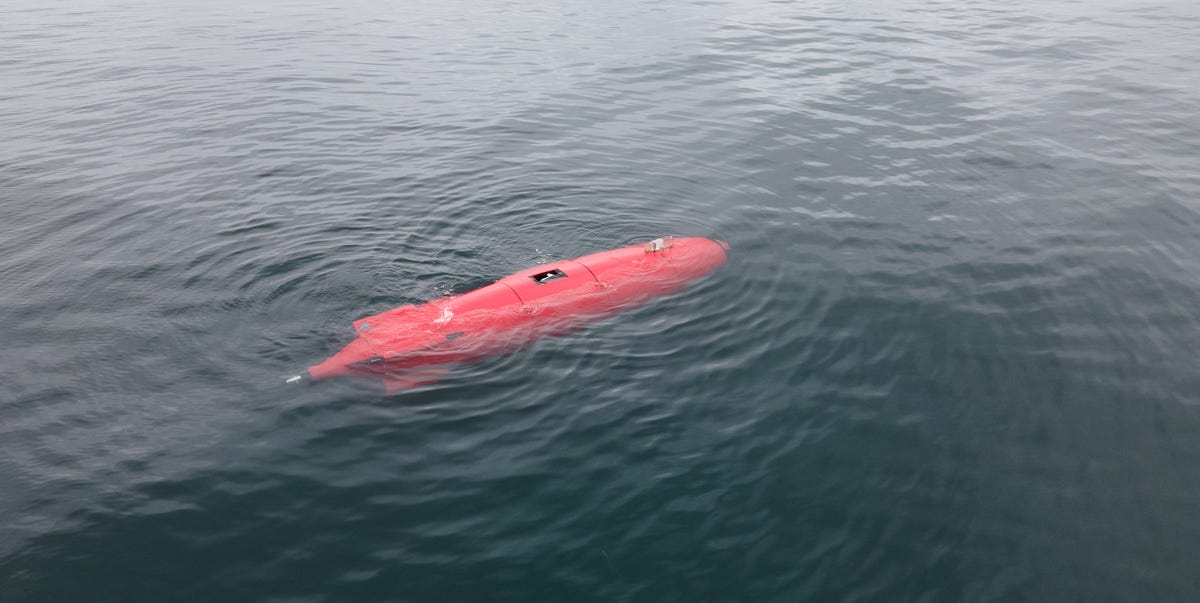
The headline-grabbing project was the Optionally Manned Technology Demonstrator, a roughly 30-foot submersible hull modeled after a SEAL Delivery Vehicle. Created through a partnership involving the U.S. Navy’s Disruptive Technology Laboratory and Oak Ridge National Laboratory’s large-scale additive manufacturing capability, the prototype showed that a naval asset could move from digital design to physical hull much faster than traditional methods. In plain English: instead of waiting months, the Navy explored whether it could print, assemble, test, and improve a mission-specific underwater vehicle in weeks.
That is a big deal. In naval warfare, speed is not just about how fast a vessel moves through the water. It is also about how quickly a force can design, build, repair, adapt, and deploy. A 3D-printed submarine hull may not replace the Navy’s nuclear-powered attack submarines anytime soon, but it may help reshape the way the Navy thinks about special operations vehicles, unmanned systems, spare parts, and the industrial base behind all of them.
What Is the 3D-Printed Sub?
The Navy’s 3D-printed submersible concept was not a full-size attack submarine with a crew, reactor, galley, bunks, and someone complaining about the coffee. It was a proof-of-concept hull designed to demonstrate what additive manufacturing could do for underwater platforms.
The vehicle, known as the Optionally Manned Technology Demonstrator, was inspired by SEAL Delivery Vehicles, which are used to move Navy SEALs and their equipment underwater during special operations. Traditional hulls for these kinds of systems can take months to fabricate and may cost hundreds of thousands of dollars. The printed demonstrator showed that a large carbon-fiber-reinforced composite structure could be produced in sections, assembled, and refined much more quickly.
The project used large-format additive manufacturing, often described as Big Area Additive Manufacturing, or BAAM. Unlike the desktop printer that slowly creates a tiny plastic dragon for someone’s gaming shelf, BAAM is built for large industrial parts. It lays down reinforced material layer by layer, creating big structures that can later be machined, finished, bonded, tested, and integrated into a larger system.
Why the Navy Cares About 3D Printing
The Navy has a problem that is not glamorous, but it is absolutely central to military power: manufacturing is hard. Ships and submarines contain thousands of parts. Some are highly specialized. Some come from suppliers that no longer exist. Some require long lead times. Some are needed yesterday, preferably before lunch.
Traditional defense manufacturing depends on tooling, casting, machining, certified vendors, complex logistics, and long procurement cycles. That system can produce extraordinary machines, but it is not always nimble. Additive manufacturing offers a different option: create a part directly from a digital model, reduce tooling requirements, print closer to the point of need, and iterate faster.
For submarines, this matters even more. The undersea environment is unforgiving. Pressure, corrosion, vibration, stealth requirements, limited space, and safety standards all conspire to make every component a tiny engineering drama. If 3D printing can produce qualified parts for submarines, it can help reduce bottlenecks across one of the Navy’s most demanding domains.
The Submarine Industrial Base Needs Help
The U.S. submarine industrial base is under heavy pressure. The Navy must maintain existing submarines, build new Virginia-class attack submarines, develop the Columbia-class ballistic missile submarine, and support future AUKUS-related undersea commitments with Australia and the United Kingdom. That is a lot of metal, welding, engineering, skilled labor, and calendar anxiety.
Additive manufacturing is not a magic wand. It will not instantly create more shipbuilders or turn a warehouse into a submarine yard overnight. But it can relieve pressure in specific areas. If a hard-to-source valve, bracket, manifold, pipe fitting, or housing can be printed, qualified, and installed faster than ordering it through a traditional supply chain, the Navy gains time. In defense, time saved can mean readiness gained.
This is why the 3D-printed submersible hull matters beyond the hull itself. It is a symbol of a larger idea: the Navy wants manufacturing to become more flexible, more distributed, and less dependent on slow-moving supply chains. The ocean may be deep, but the parts backlog can feel deeper.
From Printed Hulls to Printed Parts
The Navy’s additive manufacturing work has expanded far beyond one experimental submersible. In recent years, Navy ships and facilities have tested polymer printers, metal printers, hybrid manufacturing systems, and certified technical data packages for parts that sailors can produce in controlled environments.
One notable example is the installation of a polymer-based 3D printer aboard the Virginia-class submarine USS New Hampshire. That printer was intended to help sailors create approved parts, tools, fixtures, temporary replacements, and quality-of-life items. It was not there so the crew could print novelty chess pieces during downtime, although morale is important. It was there to improve self-sustainment while deployed.
The Navy has also installed metal additive manufacturing capability aboard surface ships, including systems able to print stainless steel components. Onboard metal printing is particularly important because it brings industrial-level repair potential closer to the fleet. A ship operating far from a major depot may not be able to wait weeks for a replacement part. A certified print-and-machine workflow could keep systems running and reduce dependence on long logistics chains.
Why a 3D-Printed Hull Is Different
Printing a small replacement part is impressive. Printing a 30-foot underwater hull is a different beast entirely. A hull must deal with hydrodynamics, structural loading, pressure, sealing, buoyancy, acoustic concerns, and real-world handling. It has to be more than “large.” It has to be useful.
The Navy’s 3D-printed submersible hull was built in multiple composite sections. That modular approach is important because it suggests future vehicles could be tailored to different missions. Need a sensor platform? Modify the payload area. Need a logistics carrier? Adjust the internal layout. Need something expendable enough to take risks but capable enough to matter? Additive manufacturing may help make that trade-off possible.
This does not mean the Navy will casually print submarines like coupons. Qualification remains difficult. Printed materials must be tested for strength, fatigue, water intrusion, temperature effects, chemical stability, and long-term performance. Undersea systems cannot afford surprises. In submarines, “oops” is not a maintenance strategy.
The Rise of Unmanned Underwater Vehicles
The 3D-printed sub story fits into a larger trend: the Navy is moving toward a hybrid fleet of manned and unmanned systems. Large submarines will remain essential, but unmanned underwater vehicles, or UUVs, are becoming more important for surveillance, sensing, seabed operations, mine warfare, payload delivery, communications support, and missions considered too dull, dirty, distant, or dangerous for humans.
The Navy’s Orca Extra Large Unmanned Undersea Vehicle is one high-profile example. Orca is designed for long-range autonomous missions and can carry modular payloads. DARPA’s Manta Ray program points in a similar direction, exploring long-duration unmanned underwater vehicles that can operate with less dependence on ports and manned support vessels. These systems show where the undersea world is headed: more autonomy, more endurance, more modular payloads, and fewer sailors placed in unnecessary danger.
Now connect that to additive manufacturing. If the Navy can design and produce certain unmanned underwater vehicles faster, modify them for specific missions, and repair them with printed components, the future fleet becomes more adaptable. Instead of building every undersea vehicle as a precious one-off artifact, the Navy could move toward families of modular systems that evolve over time.
Speed Is the Secret Weapon
The most exciting part of the 3D-printed sub is not that it was printed. It is that it was printed quickly. In military technology, the side that learns faster often gains an advantage. Rapid prototyping allows engineers to test a design, discover problems, make changes, and try again before a traditional program has finished scheduling its next meeting.
For special operations, this flexibility could be especially valuable. Missions vary. Terrain varies. Payloads vary. Launch and recovery requirements vary. A one-size-fits-all underwater vehicle may be useful, but a rapidly adaptable vehicle could be better. Additive manufacturing gives designers a way to experiment with shapes, internal structures, access panels, mounts, and mission-specific features without building expensive tooling each time.
This is where 3D printing shines. It does not merely copy traditional manufacturing. It allows engineers to rethink design. Complex internal channels, lightweight lattice structures, integrated mounts, curved geometries, and consolidated components become easier to produce. In a submarine or UUV, where space and weight are precious, that design freedom can be more than convenient. It can be mission-enabling.
The Cost Question
Defense technology is famous for making ordinary objects sound expensive. A bolt becomes a “precision mechanical fastening solution.” A toolbox becomes a “mobile maintenance readiness kit.” So when a technology promises major cost reduction, people pay attention.
The original 3D-printed submersible hull project suggested dramatic savings compared with traditional fabrication for similar proof-of-concept hulls. The real-world cost of future systems will depend on materials, certification, finishing, sensors, propulsion, batteries, software, testing, and the usual defense-program confetti. Still, the core point remains: reducing tooling, labor hours, waste, and lead time can change the economics of naval experimentation.
Lower cost does not always mean cheap. It means the Navy may be able to test more ideas. More prototypes can lead to better designs. Better designs can lead to more effective systems. And more effective systems can give commanders options they did not previously have.
What Could 3D-Printed Underwater Vehicles Do?
A future 3D-printed underwater vehicle could serve many roles, depending on size, endurance, sensors, and payload. Some may act as underwater scouts, mapping areas before a manned submarine enters. Others could carry supplies to special operations teams. Some might deploy sensors on the seabed, inspect infrastructure, assist mine countermeasures, or operate as decoys to complicate an adversary’s tracking picture.
The most realistic near-term use is probably not a fully printed combat submarine. It is a combination of printed structures, printed parts, and printed mission modules integrated into broader undersea systems. A pressure hull, fairing, payload bay, bracket, duct, control surface, or maintenance part can all matter. In the underwater world, even a small component can determine whether a vehicle launches, returns, or becomes an expensive artificial reef.
The Challenges Are Very Real
It is tempting to turn 3D printing into a superhero technology wearing a cape made of carbon fiber. But the Navy’s future will not be printed without obstacles.
Material Qualification
Undersea parts must survive pressure, saltwater, fatigue, vibration, and time. Materials that work in a lab may behave differently after months in a harsh maritime environment. The Navy must prove that printed materials can meet strict standards.
Cybersecurity
3D printing depends on digital design files. Those files must be protected. If an adversary alters a design, steals it, or inserts a subtle flaw, the result could be dangerous. Additive manufacturing is not just a manufacturing issue; it is also a cybersecurity issue.
Certification and Trust
The Navy cannot install critical parts based on vibes. Every approved part needs documentation, traceability, inspection, and testing. Certification can be slow, but it is essential. The goal is not to print fast and hope. The goal is to print fast and know.
Workforce Training
Printers do not replace skilled people. They require skilled people. Sailors, engineers, machinists, inspectors, and logisticians must understand the machines, materials, software, and standards. The future fleet needs both advanced tools and humans who know what they are doing.
Why This Could Change Naval Strategy
The Navy’s future challenge is not simply to build bigger ships. It is to build a more resilient force. That means platforms that can adapt, supply chains that can recover, and manufacturing networks that do not collapse when one supplier or shipping lane hits trouble.
3D printing supports that goal by making production more distributed. A part could be produced at a shipyard, depot, forward maintenance site, or eventually aboard a ship, provided the process is certified and secure. For the submarine force, this could reduce delays during maintenance and improve availability. For unmanned systems, it could accelerate experimentation and deployment.
Imagine a future undersea force where nuclear submarines remain the stealthy heavy hitters, while unmanned vehicles extend their reach. Some UUVs scout ahead. Some sit quietly on the seabed. Some deliver sensors. Some act as communication nodes. Some are recovered and upgraded. Others are cheap enough to be expendable. Behind all of them is a manufacturing system that can print, repair, and modify components at a pace traditional procurement struggles to match.
That is why the 3D-printed sub matters. It is not just a vessel. It is a preview of a manufacturing philosophy.
Experience Section: What This Technology Feels Like in Practice
To understand why the 3D-printed sub feels so important, picture the old way of building a specialized underwater vehicle. Engineers finalize a design. Tooling is created. Suppliers are contacted. Parts are fabricated. A schedule stretches. A cost estimate swells. Someone updates a spreadsheet with the emotional energy of a man watching paint dry in slow motion. Months later, a prototype appears. Then testing begins, problems emerge, and the cycle starts again.
Now imagine a more agile experience. A Navy team identifies a mission need: a small submersible with a particular payload bay, a specific launch profile, and a hull optimized for a new operating environment. Engineers adjust the digital model. The structure is divided into printable sections. A large-format printer begins building the hull layer by layer. While the print runs, other teams work on propulsion, sensors, batteries, control software, and testing procedures. The result is not instant, but it is dramatically faster than starting from scratch with traditional tooling.
The experience would feel less like ordering a custom ship and more like running a rapid engineering campaign. Designers could gather feedback from operators early. Operators could say, “This hatch is awkward,” “This mount blocks access,” or “That payload bay needs another six inches,” and the design team could respond quickly. In a traditional manufacturing cycle, those changes might be painful. In an additive workflow, they may be manageable.
For sailors, the experience could be equally practical. A crew at sea discovers that a non-critical but annoying component has failed. In the past, the fix might involve waiting for a part, improvising a temporary solution, or cannibalizing another system. With approved onboard printing, the crew could produce a certified replacement or temporary component from a digital technical data package. That does not sound as dramatic as a submarine chase, but readiness is built from thousands of small victories.
For shipyard workers, additive manufacturing changes the rhythm of problem-solving. Instead of asking only, “Where can we buy this?” teams can ask, “Can we produce this safely, locally, and faster?” That shift encourages engineering creativity. It also helps preserve institutional knowledge because digital models, print parameters, inspection data, and lessons learned can become part of a repeatable process.
For the Navy as a whole, the emotional experience is probably a mix of excitement and caution. Excitement because printing underwater vehicles and mission-ready parts could reduce delays, cut costs, and open new design possibilities. Caution because the sea is merciless, and military systems must work when failure is not an option. A printed submersible cannot be treated like a novelty gadget. It must earn trust through testing, certification, and operational performance.
That balance is healthy. The future of naval 3D printing should not be hype. It should be disciplined experimentation. Print the prototype. Test it. Break it. Learn from it. Print a better one. Repeat until the technology is no longer surprising, just useful. That is the moment when the 3D-printed sub stops being a cool headline and becomes part of how the Navy builds power under the sea.
Conclusion: The Future May Be Printed, But It Still Has to Float
The 3D-printed sub could be the Navy’s future because it represents more than a single prototype. It represents a faster, more flexible way to design and sustain undersea systems. As the Navy invests in unmanned underwater vehicles, hybrid fleets, distributed logistics, and stronger submarine readiness, additive manufacturing offers a practical tool for reducing delays and expanding options.
No, the Navy is not about to print a nuclear submarine next to a desk fan and call it a day. The engineering demands are far too serious. But printed hulls, printed parts, printed mission modules, and printed repair solutions are already moving from “interesting experiment” toward operational reality. The ocean is still one of the hardest places on Earth to operate. If 3D printing helps the Navy build, repair, and adapt faster beneath the waves, then this strange-sounding technology may become one of the most important tools in the future fleet.
In other words, the next big leap in naval power may not begin with a shipyard crane. It may begin with a printer nozzle, a digital model, and an engineer brave enough to ask, “What if we just printed the thing?”














