
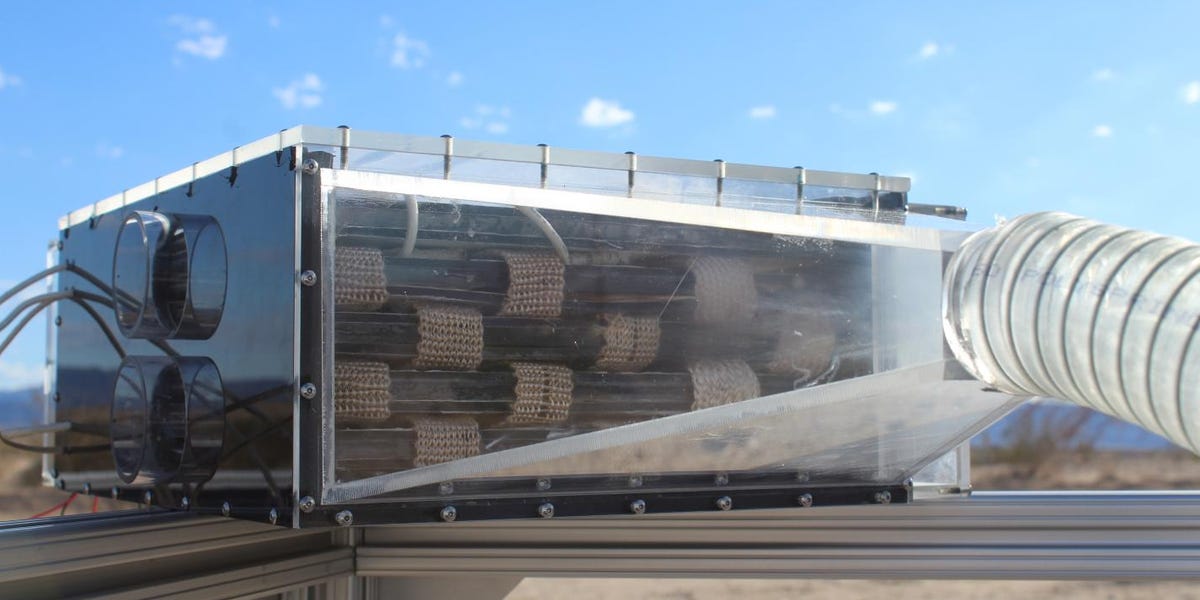
“Harvester Turns Water Into Air” sounds like a magician got confused halfway through the trick. In reality, the most exciting technology in this space does the opposite: it turns water hidden in air into usable liquid. The phrase may be backward, but the science is very real, very useful, and surprisingly elegant. Atmospheric water harvesting is the process of capturing water vapor from the air and converting it into drinkable or usable water. Think of it as persuading humidity to stop floating around like a lazy houseguest and finally become something productive.
For decades, humans have collected water from fog, dew, rain barrels, and condensation. But modern water harvesters go further. Instead of waiting for clouds to behave, researchers are designing materials that grab individual water molecules from dry air, hold them, and then release them when triggered by sunlight, heat, pressure, or even ultrasonic vibration. These devices are not meant to replace rivers, reservoirs, or municipal systems overnight. But for deserts, disaster zones, remote homes, farms, military posts, and water-stressed communities, they could become a valuable new tool in the clean-water toolbox.
What Is an Atmospheric Water Harvester?
An atmospheric water harvester is a device that extracts moisture from the surrounding air. The air does not need to look misty or tropical. Even dry desert air contains some water vapor. The challenge is that this vapor is spread out, like glitter after a kindergarten craft project. Capturing it takes clever materials, smart engineering, and enough energy efficiency to make the whole process worthwhile.
Traditional atmospheric water generators often cool humid air until water condenses, much like droplets forming on a cold glass of iced tea. That works well in humid climates, but it can be energy-hungry and less effective in dry regions. Newer systems use sorbents, which are materials that attract and hold water molecules. These sorbents may include metal-organic frameworks, hydrogels, salts, silica gels, or composite materials designed to drink from the air without needing a straw.
How a Harvester Pulls Water From Air
Step 1: Capture Water Vapor
The first job of a harvester is adsorption or absorption. In adsorption, water molecules stick to the surface of a material. In absorption, they move into the material itself. Either way, the goal is the same: collect moisture that would otherwise drift through the atmosphere unnoticed.
Metal-organic frameworks, often called MOFs, are especially interesting because they contain tiny pores with enormous internal surface area. A small amount of MOF can expose a vast molecular “parking lot” for water molecules. Hydrogels work differently. They act more like thirsty sponges, often combining polymers with moisture-loving salts such as lithium chloride. When air passes over or sits near these materials, water vapor is drawn in.
Step 2: Release the Water
Once the material captures enough moisture, the system must release it. Many designs use solar heat. The sun warms the sorbent, water vapor is driven out, and the vapor is directed toward a cooler surface where it condenses into liquid. Other systems use electricity, waste heat, pressure changes, or newer mechanical techniques. One promising research direction uses ultrasonic waves to shake water loose from the material, dramatically speeding up the release process.
Step 3: Condense, Filter, and Mineralize
Harvested water is not automatically ready for a fancy reusable bottle. It must be condensed, collected, filtered, and often mineralized. Good systems include screens, carbon filtration, antimicrobial protection, and mineral cartridges to improve taste and safety. The goal is not merely to make water appear; it is to make water people can trust.
The Science Behind “Water From Thin Air”
The atmosphere is part of the planet’s water cycle. Water evaporates from oceans, lakes, soil, plants, and even puddles that seem to disappear after a hot afternoon. That vapor moves through the air, condenses into clouds or dew, and eventually falls as precipitation. Atmospheric water harvesting simply interrupts this cycle at the vapor stage.
Here is the key idea: air can hold water vapor even when it feels dry. Relative humidity tells us how close the air is to holding the maximum water vapor possible at a certain temperature. Warm air can hold more moisture than cold air, which is why a muggy summer day can feel like walking through soup. But even at low relative humidity, some water is still present. Advanced harvesters are designed to capture that small but meaningful amount.
Metal-Organic Frameworks: Tiny Pores, Big Promise
MOFs are among the headline stars of atmospheric water harvesting. These crystalline materials are built from metal nodes connected by organic linkers. That sounds like something a chemistry professor would say right before assigning homework, but the practical meaning is simple: MOFs can be engineered with precise pore sizes and chemical properties. Scientists can tune them to attract water at low humidity and release it with relatively modest energy.
Researchers have tested MOF-based harvesters in desert conditions, showing that they can collect water even when relative humidity is very low. This matters because many places that need water most are not blessed with lush, steamy air. A harvester that only works in Florida humidity is helpful, but a harvester that works in arid regions is potentially life-changing.
Some MOF systems use passive solar energy. At night or during cooler periods, the material captures water vapor. During the day, sunlight warms the material and releases the captured water. The vapor then condenses into liquid. The whole cycle is conceptually simple, but making it durable, affordable, scalable, and safe is the difficult part. Science, as usual, refuses to be a vending machine.
Hydrogels: The Sponge-Like Rival
Hydrogels are another promising family of materials. These soft, water-loving networks can absorb large amounts of moisture. In atmospheric water harvesting, researchers often combine hydrogels with hygroscopic salts. Hygroscopic is just a grand scientific way of saying “really good at pulling water from the air.”
Recent hydrogel systems have shown better durability than earlier versions. That is important because a device that works beautifully for a few weeks and then falls apart is not a solution; it is a very expensive science fair trophy. The newest hydrogel research focuses on preventing material degradation, improving collection cycles, reducing cost, and making the harvested water safe for drinking.
Hydrogels may be especially useful because many ingredients are relatively inexpensive compared with exotic materials. However, they still face challenges. Salts can leak. Polymers can degrade. Metal surfaces can corrode. Condensers must stay clean. The path from laboratory performance to a rugged product sitting outside a rural home is long, dusty, and full of engineering potholes.
Ultrasonic Extraction: Shaking Water Loose
One of the most fascinating recent ideas is using ultrasonic vibration to release water from a harvesting material. Instead of waiting hours for heat to evaporate the captured moisture, a vibrating component can help push water out more quickly. Picture a dog shaking off after a bath, but with much better manners and a peer-reviewed paper.
This approach could make atmospheric water harvesting faster and more energy efficient, especially when paired with solar power or small electrical systems. It also tackles one of the big bottlenecks in sorbent-based devices: release time. Capturing water is only half the job. If the device cannot recover that water efficiently, the system becomes a molecular storage closet rather than a practical water source.
Where Water Harvesters Could Be Used
Remote Homes and Off-Grid Communities
For people living far from municipal water infrastructure, water harvesters could provide supplemental drinking water. They are not likely to supply every household need, such as showers, laundry, and irrigation, at least not in small consumer formats. But producing a few liters of clean drinking water per day could still be meaningful where bottled water is expensive or wells are unreliable.
Disaster Relief
After hurricanes, floods, earthquakes, and wildfires, water systems can be damaged or contaminated. Portable atmospheric water harvesters could help emergency teams provide localized drinking water when roads are blocked or bottled supplies are delayed. The best disaster tools are rugged, simple, and quick to deploy. A harvester that needs delicate maintenance during a crisis is about as helpful as a screen door on a submarine.
Agriculture and Greenhouses
Water harvesters may also support small-scale agriculture, seedling nurseries, and greenhouse systems. In farming, every liter matters, but agriculture uses enormous volumes of water. Atmospheric harvesting is more realistic as a targeted supplement than a replacement for irrigation canals or groundwater. It may help high-value crops, remote greenhouses, or sensor-controlled systems where precision matters.
Industrial and Data Center Applications
Industries such as semiconductor manufacturing, cooling systems, and data centers need reliable water. Atmospheric water harvesting could provide specialized water streams in certain locations, especially when paired with renewable energy or waste heat. However, industrial adoption depends on cost, scale, water purity, maintenance, and local climate. Engineers do not adopt technology because it sounds cool; they adopt it when the spreadsheet stops frowning.
Benefits of Atmospheric Water Harvesting
The biggest benefit is decentralization. Instead of depending entirely on pipes, trucks, wells, or desalination plants, a community could generate some water where it is needed. This can improve resilience. If one source fails, another source remains available.
Another benefit is climate flexibility. Unlike fog collectors, which need fog, or rain barrels, which need rain, sorbent-based systems can work under a wider range of conditions. Some are designed specifically for dry air. Solar-powered versions may also operate in remote areas without a traditional electrical grid.
Atmospheric water harvesting also avoids some of the environmental challenges of desalination. Desalination can be extremely useful, but it often requires seawater access, significant energy, and brine disposal. Air-based harvesting does not produce brine. That does not make it magically impact-free, but it gives it a different environmental profile.
The Big Challenges Nobody Should Ignore
Energy Use
Water vapor is not eager to become liquid on command. Cooling air, heating sorbents, moving fans, and running condensers all require energy. The best systems reduce this burden through passive solar heat, efficient materials, smart cycling, and improved extraction methods.
Output Limits
Small harvesters usually produce drinking-water quantities, not household-water quantities. A family may need hundreds of liters per day for full domestic use, but many devices produce liters, not barrels. This does not make them useless; it simply means marketing claims should wear adult supervision.
Water Quality
Air can contain dust, smoke, volatile compounds, microbes, and pollutants. Harvested water must be protected from contamination. Good design includes filtration, sanitation, safe materials, mineral balancing, and regular maintenance. “It came from the air” is not the same as “it is automatically pure.”
Durability and Maintenance
Outdoor devices face heat, cold, dust, insects, corrosion, UV radiation, and the occasional curious raccoon. Materials must survive hundreds or thousands of capture-release cycles. Filters need replacement. Condensation surfaces need cleaning. A real-world harvester must be less like a lab princess and more like a pickup truck.
Is This Technology Ready for Everyone?
The answer is: partly. Commercial atmospheric water products already exist, especially solar-powered panels and electrically powered generators. Research prototypes are advancing quickly, and some systems have been field-tested in harsh climates. But the technology is still evolving. Costs must fall. Daily yields must rise. Maintenance must become easier. Standards for water quality and performance must become clearer.
The most realistic near-term role for atmospheric water harvesting is supplemental water. It can support drinking water needs, emergency response, remote operations, and specific industrial uses. It is not a silver bullet for global water scarcity. Silver bullets are mostly useful for werewolves, and the water crisis is not a werewolf. It is a massive infrastructure, climate, policy, and equity challenge.
Practical Experience: What Living With a Water Harvester Might Feel Like
From a user-experience point of view, a water harvester would feel less like owning a faucet and more like owning a solar battery that produces water instead of electricity. You would learn its rhythm. On humid nights, the tank might fill faster. During hot, dry stretches, production could drop. After dusty weather, you might check filters or wipe surfaces. The machine would quietly teach you that water is not just something that comes from a tap; it is something moving invisibly through the air around you.
Imagine a small off-grid cabin in the Southwest. The owner installs a solar-powered atmospheric water harvester near the south-facing side of the house. At first, everyone treats it like a miracle box. Visitors ask the same question: “So it just makes water?” The answer is yes, but with a polite footnote. It collects vapor, releases it, condenses it, filters it, and stores it. That is not magic. That is engineering wearing a cape.
After a few weeks, the novelty becomes routine. Each morning, the owner checks the storage level the way people check a phone battery. On better days, there is enough water for coffee, cooking, and drinking bottles. On weaker days, the harvester contributes less, and backup water remains necessary. The experience builds awareness. Weather apps become more interesting. Humidity is no longer just a hair enemy; it is production data.
Maintenance would matter. Filters would need changing. The collection tank would need cleaning. Mineral cartridges might need replacement to improve taste. If the device uses fans, they would collect dust. If it uses passive solar heating, placement would matter. Shade from a tree, roofline, or badly parked RV could reduce output. A harvester is not a “set it and forget it forever” appliance. It is more like a garden: generous when cared for, disappointing when ignored.
The taste of harvested water could also surprise people. Freshly condensed water can taste flat because it lacks minerals. Many systems add minerals back, both for taste and suitability. Without mineralization, the water may remind users of distilled water: clean but slightly boring, like a salad with no dressing. Proper finishing makes the final product more familiar and enjoyable.
In community settings, the experience changes again. A school, clinic, or emergency shelter using water harvesters could treat them as resilience equipment. Children could learn the water cycle by watching a real device collect invisible vapor. Nurses could rely on a local supply for basic drinking needs. Emergency teams could deploy units where bottled water deliveries are slow. The emotional effect may be as important as the technical one: people feel safer when water production is visible, local, and understandable.
The best experience would come from honest expectations. A water harvester should not be sold as a miracle that ends drought. It should be presented as a smart supplemental system that turns atmospheric moisture into useful water under the right conditions. When expectations match reality, the technology feels impressive. When hype gets too loud, even good engineering can look disappointing. The future of water harvesting will depend not only on better materials, but also on better communication.
Conclusion
“Harvester Turns Water Into Air” may sound backward, but it points toward one of the most forward-looking ideas in water technology: pulling usable water from the atmosphere. Modern atmospheric water harvesters use MOFs, hydrogels, salts, solar heat, condensation systems, and even ultrasonic vibration to capture and release moisture from air. The technology is real, promising, and improving quickly.
Still, the smartest view is balanced. Water harvesters will not replace rivers, aquifers, reservoirs, conservation, recycling, or strong public infrastructure. But they can add resilience where traditional water supplies are weak, expensive, damaged, or unavailable. In a hotter, thirstier world, the ability to collect water from air is more than a neat trick. It is a practical reminder that innovation often begins by noticing what has been floating around us all along.
Note: This article is based on real atmospheric water harvesting research and current developments from U.S. universities, scientific publications, water technology organizations, and public science resources. It is written for web publication in a fully rewritten, reader-friendly SEO style.













