
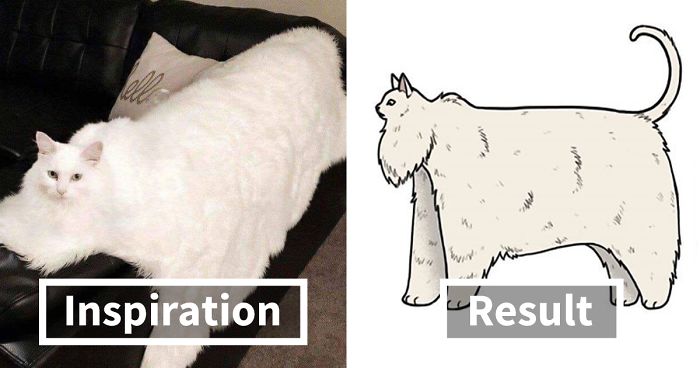
Every so often, the internet gives us a gift so oddly specific that it feels engineered in a laboratory by sleep-deprived cat lovers. One day it is a dog sitting at a strange angle. The next, it is a cat whose ears line up perfectly with something behind it, making the poor little furball look like it has evolved into a mythological forest creature. Most of us laugh, share it, and move on. Ben Hed, the artist behind the beloved Brutus and Pixie comics, does something much more dangerous: he asks, “What if that weird animal illusion were real?”
That question became the spark behind a wildly popular Pet Foolery art project in which Hed reimagined animals from viral photos as actual fantasy-like creatures. The result was a parade of adorable oddballs: antler cats, caterpillar dogs, strange fluffy hybrids, and the kind of imaginary pets that make you whisper, “I know this is impossible, but where do I adopt one?”
The project caught massive attention because it sits at the perfect crossroads of internet culture: cute animals, optical illusions, comic-style storytelling, and the warm, slightly chaotic charm that fans already associate with Pixie and Brutus. It is funny, wholesome, clever, and just strange enough to make your brain tap the brakes.
Who Is Ben Hed, the Artist Behind Pet Foolery?
Ben Hed is the creator of Pet Foolery, the online comic brand best known for Pixie and Brutus, a series about a tiny, innocent kitten and a large, scarred retired military dog. Their friendship became a fan favorite because it combines visual comedy with emotional contrast: Pixie is all sunshine, curiosity, and tiny paws; Brutus is intimidating, protective, and clearly the type of dog who has seen things no squeaky toy should ever know about.
On WEBTOON, Pixie and Brutus is described as a story about the unlikely friendship between a joyful kitten and a huge scar-faced retired military dog. That simple setup explains a lot of the series’ appeal. The comedy comes from opposites. The heart comes from protection, trust, and the slow softening of a character who looks like he could guard a military base but melts around one small kitten.
Hed has said through his Patreon page that illustration went from a side job into full-time work after the first Pixie and Brutus comic drew overwhelming support. That detail matters because it shows how modern comic artists can build entire careers outside traditional newspaper syndication. A strong idea, a recognizable style, and a loyal online audience can now turn a personal art account into a creative business.
How Viral Animal Photos Became Imaginary Creatures
The reimagined animal series began with a wonderfully simple idea. Hed looked at funny animal illusions online and transformed them into creatures that appeared to exist on purpose. Instead of treating a strange photo as a one-second joke, he used it as a design prompt.
That is what makes the project so satisfying. A viral animal photo usually depends on accidental timing: a cat standing in front of antlers, a dog photographed at a weird angle, or two animals overlapping in a way that briefly breaks your understanding of biology. Hed’s illustrations ask viewers to suspend disbelief and imagine that the accident is not an accident at all. What if the cat really did have antlers? What if the dog really did have a long caterpillar-like body? What if nature had a silly mode and forgot to turn it off?
This is where the artist’s comic instincts shine. The drawings are not just copied versions of the photos. They are reinterpretations. Hed keeps the visual joke, then adds personality, expression, and creature design. The result feels like a mini world-building exercise, as if each viral photo were a leaked page from a secret encyclopedia of animals that live behind the refrigerator.
Why People Love the Brutus and Pixie Style
The popularity of Brutus and Pixie comics is not just about cute animals. Cute animals are everywhere online. You can barely open a social app without being emotionally ambushed by a puppy blinking like it just discovered taxes. What makes Hed’s work stand out is the way he turns animals into characters with readable emotions, clear relationships, and punchlines that do not require a ten-panel explanation.
Pixie and Brutus work because the characters are instantly understandable. Pixie represents innocence and enthusiasm. Brutus represents strength, experience, and reluctant tenderness. Together, they create a reliable emotional rhythm: Pixie wanders into chaos, Brutus notices the chaos, Brutus quietly prevents disaster, and readers feel like the world is slightly less terrible for thirty seconds.
The viral-photo reimagining project borrows that same emotional clarity. The imaginary animals are weird, but they are not creepy. They feel like pets from a parallel universe where evolution had a sense of humor and maybe access to too much caffeine. Viewers can laugh at the absurdity while still feeling affection for the creature.
The Internet’s Perfect Recipe: Cute, Weird, and Shareable
Online audiences reward content that is easy to understand quickly but interesting enough to share. Hed’s reimagined animals fit that formula beautifully. You do not need to read a long backstory to enjoy an antler cat. You see it, your brain says “cat,” then “wait, antlers,” then “I would protect this woodland goblin with my life.” That entire emotional journey takes about two seconds.
Research on social media use helps explain why this kind of content spreads. Pew Research Center reports that Instagram remains widely used in the United States, especially among younger adults. Visual-first platforms reward images that communicate instantly, and animal comics are ideal for that environment because they do not rely heavily on context, language, or niche cultural knowledge.
Humor also plays a major role. The American Psychological Association has highlighted research showing that funny memes can help people feel calmer and more content during stressful times. That does not mean an antler cat is a medical treatment, obviously. Please do not replace therapy with a fictional deer-kitten. But it does explain why wholesome, funny, low-pressure content often feels like a tiny mental snack during a chaotic day.
What Makes the Reimagined Animals So Clever?
1. They Preserve the Original Joke
The funniest part of an optical illusion photo is the moment of confusion. Hed keeps that “double take” energy alive. The viewer can still recognize the original kind of joke: an animal appears to be something it is not. But the illustration adds a new layer by making the illusion intentional.
2. They Turn Accidents Into Design
A viral photo is usually accidental. A good illustration is deliberate. Hed bridges the two by taking random visual coincidences and treating them like creature concepts. This gives the drawings a polished, playful quality while preserving the spontaneous charm of the source material.
3. They Feel Like Characters, Not Just Gags
A weaker version of the idea would simply redraw the photo. Hed goes further by giving the animals expressions and body language. That is why the imaginary creatures feel alive. They look like they might have names, habits, favorite snacks, and at least one deeply concerning behavior involving houseplants.
4. They Invite Audience Participation
The concept naturally makes people want to comment. Which creature is the funniest? Which one would make the best pet? Which one would destroy your apartment by Tuesday? Fans can engage without needing expert knowledge. The barrier to entry is delightfully low: enjoy animals, enjoy weirdness, proceed.
From Webcomics to a Full Creative Brand
Pet Foolery is more than one viral series. Hed has also used WEBTOON for both Pixie and Brutus and broader Pet Foolery comics. His Patreon shows a strong community around his work, with members supporting access to exclusive posts. This multi-platform presence is important because modern webcomic success rarely depends on one website alone.
Artists today often build ecosystems. Instagram introduces the work. WEBTOON organizes it for readers who want episodes. Patreon supports the creator directly. Fan communities spread the characters. Entertainment sites highlight especially popular posts. Together, those pieces create a loop: new viewers discover the art, become fans, follow the creator, and share the next post.
In Hed’s case, the loop works especially well because his content is emotionally consistent. Whether he is drawing Pixie, Brutus, dinosaurs, fantasy creatures, or reimagined viral animals, the tone is recognizable: funny, warm, expressive, and just odd enough to keep people alert.
Why Animal Comics Keep Winning Online
Animal comics have a long history, from newspaper strips to animated shorts to modern webcomics. The reason is simple: animals let artists exaggerate human behavior without making it feel too heavy. A grumpy dog can express loyalty. A tiny kitten can express innocence. A weird imaginary creature can express the pure confusion of being alive on the internet.
Animal characters also cross age and cultural boundaries more easily than many human-centered jokes. A reader does not need to know a celebrity scandal, a political debate, or the latest slang to understand a nervous cat or a protective dog. That makes animal comics highly shareable for broad audiences.
Hed’s work benefits from that universality while still feeling personal. His creatures are simple enough to understand immediately, but detailed enough to reward a second look. That balance is difficult. Too simple, and the art becomes forgettable. Too complicated, and the joke gets buried. Pet Foolery usually lands right in the sweet spot.
The Role of Wholesomeness in Pet Foolery’s Success
A major reason fans respond to Pet Foolery comics is their emotional safety. The internet can be loud, cynical, and exhausting. A comic about a kitten and a protective dog offers a small refuge. The reimagined animal illustrations do something similar. They are not trying to shock the viewer or start an argument. They are simply strange, cute, and funny.
That wholesome quality should not be mistaken for laziness. Making gentle humor work is harder than it looks. Mean jokes often create instant reactions. Sweet jokes need timing, character, and charm. Hed’s comics often succeed because they are built around affection rather than mockery.
Even when the animals look ridiculous, the art does not feel cruel. The imaginary creatures are celebrated, not mocked. That is a big part of why fans like them. They are little weirdos, yes, but they are our little weirdos.
Specific Examples That Show the Idea Works
One standout example from the reimagined series is the antler cat, which became a favorite among viewers. The concept is instantly funny because cats already act like tiny forest rulers. Add antlers, and suddenly the cat looks like it should be guarding an enchanted clearing while judging your footwear.
Another memorable idea is the caterpillar-like dog. Dogs are already masters of strange sleeping positions and impossible body shapes. Anyone who has watched a dog melt halfway off a couch knows that canine anatomy is more of a suggestion than a law. Turning that visual confusion into an actual creature feels absurd, but somehow believable.
These examples work because they amplify something familiar. Cats do seem mysterious. Dogs do seem physically impossible at times. Hed’s drawings take those everyday pet observations and push them into fantasy without losing the original animal charm.
What Creators Can Learn From This Viral Art Project
There is a useful lesson here for artists, bloggers, and content creators: originality does not always mean inventing something from nothing. Sometimes it means noticing a familiar thing from a better angle. Hed did not invent viral animal photos or optical illusions. He transformed them through style, character design, and humor.
The project also shows the value of a strong creative identity. Many artists could draw a funny animal. Fewer could draw one in a way that immediately feels connected to an existing world and audience. Because fans already know Pet Foolery as a home for expressive animal comedy, the reimagined creatures feel like a natural extension rather than a random experiment.
For SEO and digital publishing, this is also a reminder that niche topics can perform well when they combine recognizable names with a clear curiosity hook. “The author of Brutus and Pixie reimagines viral animal photos” works because it gives readers three reasons to click: a known creator, animals, and a strange transformation.
Why Almost 500K People Liking It Makes Sense
The near-half-million reaction figure is not surprising when you consider the ingredients. Pet Foolery already had a large fan base. The concept was visually immediate. The animals were cute. The illusions were funny. The artwork was polished. The tone was positive. That is basically the internet equivalent of putting pizza, puppies, and a cozy blanket into one post.
Large engagement numbers also reflect how social platforms reward emotional speed. If a post makes viewers smile instantly, they are more likely to like it, save it, comment on it, or send it to a friend. Hed’s reimagined animals do not ask for much. They simply appear, look delightfully impossible, and let the viewer enjoy the joke.
That ease is powerful. In a feed full of arguments, ads, updates, and doom-scroll material, a funny imaginary pet feels refreshing. It is not demanding. It does not require homework. It just says, “Here is a cat with antlers. You’re welcome.”
Final Thoughts
Ben Hed’s reimagined viral animal illustrations prove why Brutus and Pixie fans keep returning to Pet Foolery. The project is clever without being smug, cute without being boring, and weird without losing warmth. It takes the accidental magic of viral animal photos and turns it into intentional comic art.
More importantly, it shows how a strong artist can transform everyday internet silliness into something memorable. A random photo may get a quick laugh, but a thoughtful illustration can give that laugh a second life. Hed’s imaginary creatures feel like they wandered out of the internet’s dream journal, tracked mud across the living room, and somehow got adopted anyway.
For readers, the appeal is simple: these animals are impossible, but the joy they create is very real. And honestly, if an antler cat ever becomes available, the waiting list is going to be a disaster.
Personal Experiences and Reflections on Viral Animal Art
One of the funniest things about viral animal content is how quickly it becomes part of everyday conversation. Someone sends a strange cat photo in a group chat, and suddenly five people who were supposed to be discussing dinner plans are debating whether the cat looks like a wizard, a woodland spirit, or a tiny landlord demanding rent in tuna. That is the magic behind projects like Ben Hed’s reimagined animals: they give people a shared little moment of harmless absurdity.
Many readers have probably had the same experience with pet photos. You take one innocent picture of your dog, only to realize later that the angle makes him look like he has three legs, two heads, or the emotional burden of a retired detective. Cats are even better at this. They sit behind plants and become jungle beasts. They poke their heads through blankets and become fuzzy dumplings. They stare from dark hallways like unpaid actors in a haunted house movie.
What Hed does is capture that exact feeling and polish it into art. He understands that the internet does not only love perfect pet photos. In fact, perfection can be boring. A beautifully posed animal portrait may get admiration, but a weird accidental illusion gets laughter, comments, and emotional attachment. People remember the strange ones. The blurry dog. The cat with “wings.” The horse that looks like two horses having a meeting. The photo that makes everyone zoom in and say, “Wait, what am I looking at?”
That is why this topic connects so strongly with everyday online life. Viral animal photos are democratic comedy. You do not need an expensive camera or a professional studio. You need timing, luck, and an animal willing to behave like a cryptid for half a second. Anyone with a pet has the potential to accidentally create a masterpiece of visual nonsense.
There is also something comforting about seeing an artist turn these accidental moments into imaginative creatures. It suggests that creativity can start anywhere. A funny photo can become a comic. A visual mistake can become a character. A random thought while cooking food or running errands can become a series followed by millions. That is encouraging for artists and writers because it removes some of the pressure to wait for a grand, dramatic idea. Sometimes the best ideas arrive wearing paws and looking confused.
For fans of Pixie and Brutus comics, this project also feels like an expansion of the same emotional universe. Pet Foolery has always been good at making animals feel expressive and relatable. The viral-photo creatures may not be part of the main Pixie and Brutus storyline, but they share the same spirit: affectionate, funny, and lightly chaotic. They remind us that animals do not need to speak in order to become characters. A raised eyebrow, a tilted head, or a weird silhouette can do a surprising amount of storytelling.
From a reader’s perspective, the best part is how low-stress the content feels. There is no complicated lore to memorize. No villain arc. No twenty-minute explanation video titled “The Antler Cat Timeline Explained.” You can simply enjoy the image, laugh, and move on with your day a little happier than before. That small emotional lift is not trivial. In a digital world overflowing with heavy headlines and endless notifications, a silly animal drawing can feel like opening a window.
Creators can learn from this by paying attention to what people naturally share. The most engaging content often begins with a simple emotional reaction: surprise, amusement, tenderness, curiosity. Hed’s reimagined animals hit all four. They surprise us because they look impossible. They amuse us because the concept is ridiculous. They feel tender because they are still animals. And they spark curiosity because we want to compare the drawing to the original illusion.
That combination is why the project earned so much love online. It is not just “cute animal art.” It is a smart remix of internet behavior, visual humor, and character design. It respects the quick-hit nature of social media while still offering enough craft to feel worth saving. In other words, it is snackable content with actual seasoning.
And maybe that is the larger lesson: the internet is at its best when it helps people turn tiny moments of weird joy into shared creativity. Ben Hed took viral animal photos and gave them a second life as imaginary creatures. Fans responded because the idea was simple, funny, and full of heart. Somewhere out there, another pet is currently standing in front of a lamp, a chair, or a houseplant in exactly the wrong way. With luck, it may become the next great mythical beast of the group chat.













