
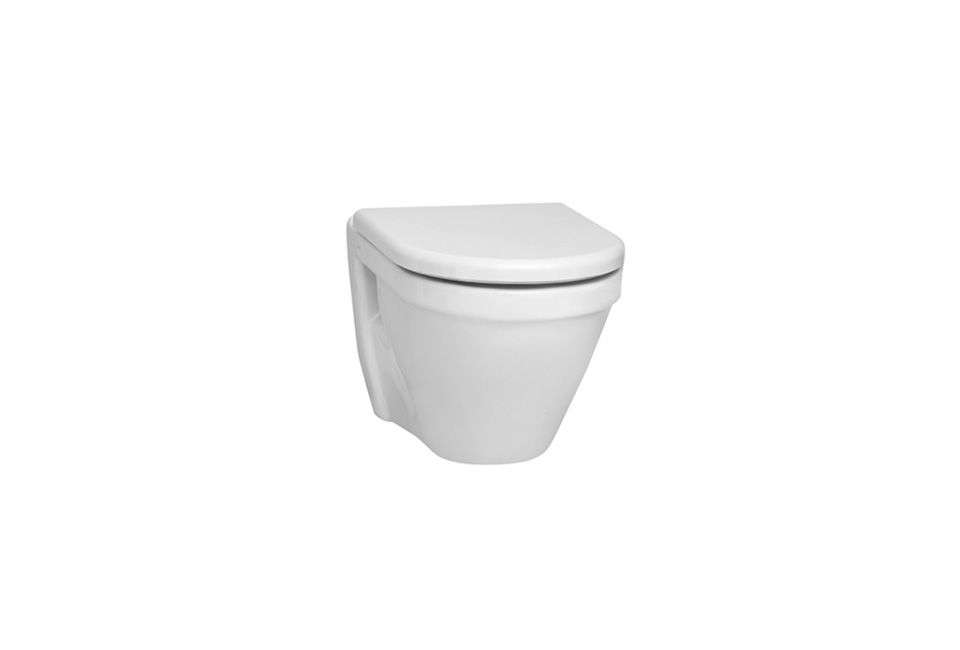
If a bathroom could wear a tailored suit, the Vitra wall-mounted ceramic toilet would be the crisp white shirt, polished shoes, and “yes, I absolutely planned this” confidence. It is sleek, modern, practical, and just dramatic enough to make a guest pause and say, “Wait… where is the tank?” That is the whole charm of a wall-hung toilet: the bowl floats above the floor, the tank hides inside the wall, and the bathroom instantly looks cleaner, larger, and more expensive than it probably was before demolition day.
VitrA, often styled as Vitra in search queries, is known for contemporary bathroom ceramics, rimless toilet designs, concealed installation systems, and minimalist European-inspired sanitaryware. A Vitra wall-mounted ceramic toilet is typically chosen by homeowners, designers, contractors, and hospitality projects that want a modern bathroom without the bulky silhouette of a floor-mounted toilet. It is not just about looking fancy. It can improve floor cleaning, save visual space, support flexible mounting height, and pair beautifully with concealed cistern systems and designer flush plates.
But before you declare your old toilet “emotionally unavailable” and start shopping, it helps to understand what makes this type of toilet different, where it shines, and what to plan before installation.
What Is a Vitra Wall-Mounted Ceramic Toilet?
A Vitra wall-mounted ceramic toilet is a toilet bowl made from durable ceramic or vitreous china that attaches to a concealed carrier frame inside the wall instead of resting on the floor. The tank, also called a concealed cistern, is installed behind the finished wall. Only the bowl and flush plate remain visible.
This style is common in luxury hotels, modern apartments, boutique commercial spaces, and compact residential bathrooms where every inch matters. Compared with a traditional two-piece toilet, a wall-hung model has a lighter profile. The open space beneath the bowl makes the room feel less crowded and allows a mop, vacuum, or cleaning cloth to glide underneath without performing bathroom gymnastics.
Depending on the VitrA collection, models may include features such as a rimless bowl, hidden fixation, soft-close seat compatibility, bidet-function options, compact projection, or a clean white ceramic finish. Some older Vitra product listings describe wall-mounted ceramic toilets from the S50 collection with a 6-liter dual-flush setup, while current VitrA ranges include modern wall-hung designs such as Sento, Zentrum, Metropole, Integra, and M-Line-style options in different markets.
Why Wall-Mounted Toilets Are Having a Design Moment
The wall-mounted toilet is no longer the mysterious object found only in European hotels where the shower controls are also a riddle. In American bathroom remodeling, wall-hung toilets are increasingly popular because they solve three common problems: limited space, difficult cleaning, and visually heavy fixtures.
They Make Small Bathrooms Feel Bigger
A traditional toilet occupies floor area with both the bowl and tank. A wall-hung toilet removes the visible tank and lifts the bowl off the floor. The actual plumbing still exists, of course, but it is tucked behind the wall like a stagehand in a very clean theater production.
This matters in powder rooms, guest bathrooms, narrow urban apartments, and en suites where designers are trying to create a spa-like look without expanding the footprint. The uninterrupted floor surface creates the illusion of more room, and in small bathrooms, illusion is not cheating; it is interior design.
They Are Easier to Clean Around
One of the biggest daily advantages of a Vitra wall hung toilet is cleaning. With no base bolted to the floor, there are fewer curves, seams, and awkward corners where dust, hair, and mysterious bathroom debris gather for their annual convention.
A suspended ceramic toilet bowl allows easier access underneath. Many VitrA wall-mounted models also use streamlined exterior shapes, so wiping the bowl takes less effort. If you choose a rimless or Rim-ex-style bowl, the inside may also be easier to rinse and maintain because there is no traditional rim channel hiding buildup.
They Look Calm, Clean, and Architectural
Bathrooms are usually small rooms filled with necessary objects: sinks, faucets, mirrors, storage, towels, shampoo bottles, toothbrushes, and that one lotion no one remembers buying. A wall-mounted toilet reduces visual clutter. Its clean ceramic form and concealed tank give the room a more intentional, architectural feel.
Pair a Vitra wall-mounted ceramic toilet with large-format tile, floating vanity, matte black or brushed nickel fixtures, and a simple flush plate, and suddenly your bathroom looks less like a utility zone and more like a design magazine spread that also happens to contain plumbing.
Key Features of a Vitra Wall-Mounted Ceramic Toilet
Vitra wall-mounted toilets vary by collection and market, but several features appear frequently across modern VitrA bathroom products. Understanding these features helps you compare models more confidently.
Ceramic or Vitreous China Construction
The ceramic body is one of the main reasons homeowners choose VitrA. Ceramic sanitaryware is durable, nonporous when properly glazed, easy to clean, and resistant to everyday bathroom moisture. A glossy white finish remains the most common choice because it matches nearly every bathroom style, from minimalist white-on-white to moody stone tile.
Wall-Hung Installation
Instead of standing on the floor, the toilet attaches to a strong carrier frame hidden inside the wall. This frame supports the bowl and connects it to the water supply, drain, and concealed tank. The finished result looks simple, but the hidden structure is doing serious work behind the scenes.
Concealed Cistern Compatibility
A wall-mounted toilet needs a concealed cistern and carrier system. Some Vitra models may be paired with VitrA concealed frames, while some product listings reference compatibility with Geberit in-wall tank and carrier systems. Compatibility should always be verified before purchase because the bowl, carrier, flush plate, and rough-in conditions must work together.
Rimless or Rim-Ex Bowl Design
Many modern VitrA wall-hung toilets include rimless technology, sometimes marketed as Rim-ex. A rimless toilet bowl eliminates the traditional enclosed rim where mineral deposits and germs can hide. Instead, water is directed around the bowl in a more open, easier-to-clean design. For homeowners who clean their own bathrooms, this feature deserves applause, possibly a standing ovation.
Hidden Fixation
Some VitrA wall-hung models use hidden fixation, meaning the mounting hardware is concealed for a cleaner exterior appearance. This improves the minimalist look and reduces visible nooks around the toilet body.
Optional Soft-Close Seat
Depending on the specific model and package, the seat may be included or sold separately. Some older listings note that the included seat is not soft-closing, while many newer wall-hung toilet packages offer slim soft-close seats as an option. A soft-close seat is worth considering because it prevents slamming, protects the ceramic, and saves households from the midnight thunderclap of a dropped toilet lid.
Benefits of Choosing a Vitra Wall-Mounted Ceramic Toilet
1. Better Bathroom Hygiene
A toilet that is easier to clean is usually a toilet that stays cleaner. The suspended bowl design gives better access to the floor. Rimless bowl options reduce hidden interior channels. Smooth ceramic surfaces wipe down quickly. For families, rental properties, guest bathrooms, and commercial settings, this combination can make routine maintenance simpler.
2. Space-Saving Performance
Wall-mounted toilets are especially useful in small bathrooms because the tank is inside the wall and the bowl can have a compact projection. Even when the actual framing depth must be considered, the visible part of the room often feels more open. In powder rooms, that extra sense of space can be the difference between “charming” and “please reverse carefully.”
3. Adjustable Seat Height
During installation, the carrier frame can often be set to achieve a preferred bowl height. This gives more flexibility than many standard floor-mounted toilets. Taller users may appreciate a higher seat, while households with specific accessibility needs can plan the height more carefully with a licensed installer.
4. Modern Design Flexibility
A Vitra wall-mounted ceramic toilet works well with contemporary, transitional, Scandinavian, Japandi, industrial, and hotel-inspired bathrooms. Because the tank disappears into the wall, the visible design becomes simpler. Flush plates are available in different finishes, allowing the toilet area to coordinate with faucets, shower trim, towel bars, and cabinet hardware.
5. Water-Efficient Flush Options
Many concealed cistern systems offer dual-flush operation, commonly with a full flush for solid waste and a reduced flush for liquid waste. In the United States, high-efficiency toilets are often discussed around the 1.28 gallons-per-flush benchmark, while some dual-flush systems use lower reduced-flush volumes. When selecting a Vitra wall-hung toilet, buyers should check the specific cistern and bowl combination for flush volume, performance, and local code compliance.
Installation Considerations Before You Buy
A wall-mounted toilet is not a simple swap for a standard floor-mounted toilet. It is more like changing from a bicycle to a motorcycle: still transportation, but the installation conversation gets more serious.
Check the Wall Structure
The carrier frame must be installed securely inside a wall or pre-wall system. The wall must accommodate the frame, concealed tank, drain connection, and water supply. In new construction, this is easier to plan. In remodeling, your contractor may need to open the wall, move plumbing, reinforce framing, or adjust the waste line.
Confirm Bowl and Carrier Compatibility
Do not assume every wall-hung bowl fits every in-wall tank. Before ordering, confirm the product code, bolt spacing, outlet configuration, flush volume, and compatible carrier frame. If using a Geberit system, confirm that the Vitra bowl is listed or known to be compatible with the specific carrier model.
Plan for Access to Internal Parts
With quality concealed systems, routine access to internal parts is typically through the flush plate opening. That means the tank is hidden, not buried forever like a time capsule of regret. Still, installation must be done correctly so future maintenance is practical.
Budget for More Than the Bowl
The ceramic bowl is only one part of the system. A complete installation may require the wall-hung toilet bowl, seat, concealed carrier frame, cistern, flush plate, supply line, drain adjustments, wall finishing, tile work, and professional labor. The final cost can be higher than a standard toilet replacement, but the design payoff can also be much higher.
Vitra Wall-Mounted Ceramic Toilet vs. Standard Floor-Mounted Toilet
A standard floor-mounted toilet is easier and usually cheaper to install, especially when replacing an existing toilet with the same rough-in. It is familiar, widely available, and simple to service. For many bathrooms, it remains the practical choice.
A Vitra wall-mounted ceramic toilet, however, is better for homeowners who want a cleaner look, easier floor maintenance, flexible mounting height, and a more open bathroom design. It is ideal when you are already renovating, opening walls, replacing tile, or building from scratch. If your bathroom remodel is already in “we have removed everything but our optimism” mode, adding an in-wall toilet system may be easier to justify.
Design Ideas for Styling a Vitra Wall-Hung Toilet
Minimalist White Bathroom
Pair a glossy white Vitra toilet with white wall tile, a floating vanity, and a chrome or white flush plate. This creates a bright, hotel-clean look that works well in small bathrooms.
Warm Modern Bathroom
Use wood-look cabinetry, beige stone tile, brushed nickel fixtures, and a slim white ceramic toilet. The wall-mounted form keeps the space modern while the warm materials prevent it from feeling clinical.
Bold Contemporary Powder Room
In a small powder room, try dark tile or dramatic wallpaper above wainscoting. A white Vitra wall-mounted ceramic toilet adds contrast and keeps the floor visually open. Add a black, brass, or stainless flush plate for a polished finish.
Accessible Comfort Bathroom
When planned properly, a wall-hung toilet can be mounted at a comfortable height for the user. Combine it with grab bars, adequate side clearance, slip-resistant flooring, and good lighting. Always follow local accessibility requirements when designing for mobility needs.
Maintenance Tips for Long-Term Performance
Maintaining a Vitra wall-mounted ceramic toilet is straightforward when the installation is correct. Clean the ceramic bowl with non-abrasive bathroom cleaner and avoid harsh tools that could scratch the glaze. Wipe the exterior regularly, especially around the seat hinges and underside of the bowl.
If the toilet has a rimless design, cleaning may be easier, but it still needs routine care. Mineral deposits can form in hard-water areas, so occasional descaling may be necessary. If the flush weakens, water runs continuously, or the flush plate feels loose, inspect the concealed cistern components through the access panel or call a plumber familiar with in-wall systems.
Also check the seat hardware from time to time. Wall-hung toilets often look so seamless that people forget they are still hardworking fixtures. A little maintenance keeps the “floating throne” floating gracefully.
Common Mistakes to Avoid
Buying the Bowl Without the System
A wall-hung ceramic toilet bowl alone is not enough. You need a compatible carrier, concealed cistern, flush plate, and installation hardware. Buying only the bowl is like buying a steering wheel and calling it a car.
Ignoring Wall Depth
Some carrier systems are designed for 2×4 walls, while others require 2×6 walls or pre-wall construction. Measure before you order. Better yet, have your contractor confirm the wall conditions.
Choosing Style Over Serviceability
A beautiful bathroom still needs practical maintenance access. Select a reputable concealed cistern system, install it according to instructions, and keep product documents for future repairs.
Skipping Professional Installation
Experienced DIY homeowners may handle parts of a bathroom remodel, but wall-hung toilets involve structural support, drainage, water supply, and finished-wall coordination. A licensed plumber or qualified contractor is strongly recommended.
Who Should Choose a Vitra Wall-Mounted Ceramic Toilet?
A Vitra wall-mounted ceramic toilet is a strong fit for homeowners who value modern design, easy cleaning, and premium bathroom details. It is especially worthwhile for full remodels, new construction, compact bathrooms, luxury en suites, boutique rentals, and commercial restrooms where appearance and hygiene matter.
It may not be the best choice for a quick low-budget replacement, a bathroom where walls cannot be opened, or a project where labor costs must stay minimal. But for the right remodel, it can be one of those upgrades that quietly improves the entire room every single day.
Real-Life Experience: Living With a Vitra Wall-Mounted Ceramic Toilet
The first thing people usually notice after installing a Vitra wall-mounted ceramic toilet is not the flush, the ceramic, or even the brand. It is the floor. Suddenly, the bathroom floor looks bigger. The tile pattern continues under the bowl without interruption, and the room feels calmer. This is especially noticeable in a narrow bathroom where a traditional toilet base used to visually chop the floor into awkward little zones.
In daily use, the biggest practical improvement is cleaning. With a standard toilet, cleaning around the base can feel like negotiating with a stubborn piece of porcelain furniture. Dust collects behind it. Mop heads bump into it. The caulk line around the bottom slowly becomes the place where bathroom ambition goes to die. With a wall-mounted toilet, the underside is open. A quick pass with a mop or cloth is usually enough. For busy households, that small convenience becomes surprisingly valuable.
The hidden tank also changes the mood of the room. Without a bulky tank behind the seat, the toilet feels less dominant. Guests may not comment directly, but they often notice that the bathroom feels “clean” or “modern.” That reaction comes from the simplified shape. The wall-hung bowl does its job without announcing itself like a porcelain marching band.
There are a few realities to respect. Installation is the serious part. The wall must be opened, the carrier must be level and secure, and the finished height must be planned before tile goes up. This is not the moment to guess. A half-inch mistake can become very annoying when the bathroom is finished and everyone suddenly has opinions about seat height. Working with a plumber who understands concealed cisterns is worth it.
Another experience-related point: the flush plate matters more than expected. Since it is the only visible part of the tank system, it becomes a design detail. A basic white plate blends in quietly, while a brushed metal or matte black plate can coordinate with faucets and cabinet pulls. It is a small rectangle, yes, but in a minimalist bathroom, small rectangles have responsibilities.
Comfort depends on the installation height and seat choice. A slim soft-close seat improves the overall feel, especially in a primary bathroom. If the model comes with a standard seat, upgrading may be worthwhile. Nobody remodels a bathroom hoping to hear a toilet seat slam like a courtroom gavel.
Maintenance is usually simple, but homeowners should keep the documentation for the concealed cistern and carrier. The bowl may say Vitra, while the hidden system may be VitrA, Geberit, or another compatible in-wall unit. Knowing the exact parts helps later if a fill valve, flush valve, gasket, or actuator component needs replacement.
Overall, the experience of living with a Vitra wall-mounted ceramic toilet is less about showing off and more about small daily improvements. The bathroom looks better. The floor cleans faster. The fixture feels intentional. And every time someone asks where the tank is, you get to smile like a person with excellent taste and a wall full of plumbing secrets.
Conclusion
The Vitra Wall-Mounted Ceramic Toilet is a smart choice for homeowners and designers who want a bathroom that feels modern, open, hygienic, and refined. Its suspended ceramic bowl, concealed tank setup, rimless design options, and clean architectural style make it a standout alternative to traditional floor-mounted toilets.
It does require more planning than a basic toilet replacement. You need the correct carrier, cistern, flush plate, wall structure, and professional installation. But when done properly, the result is a bathroom fixture that looks elegant, saves visual space, simplifies cleaning, and adds long-term design value. In other words, it is not just a toilet. It is a small bathroom revolution with excellent posture.










