
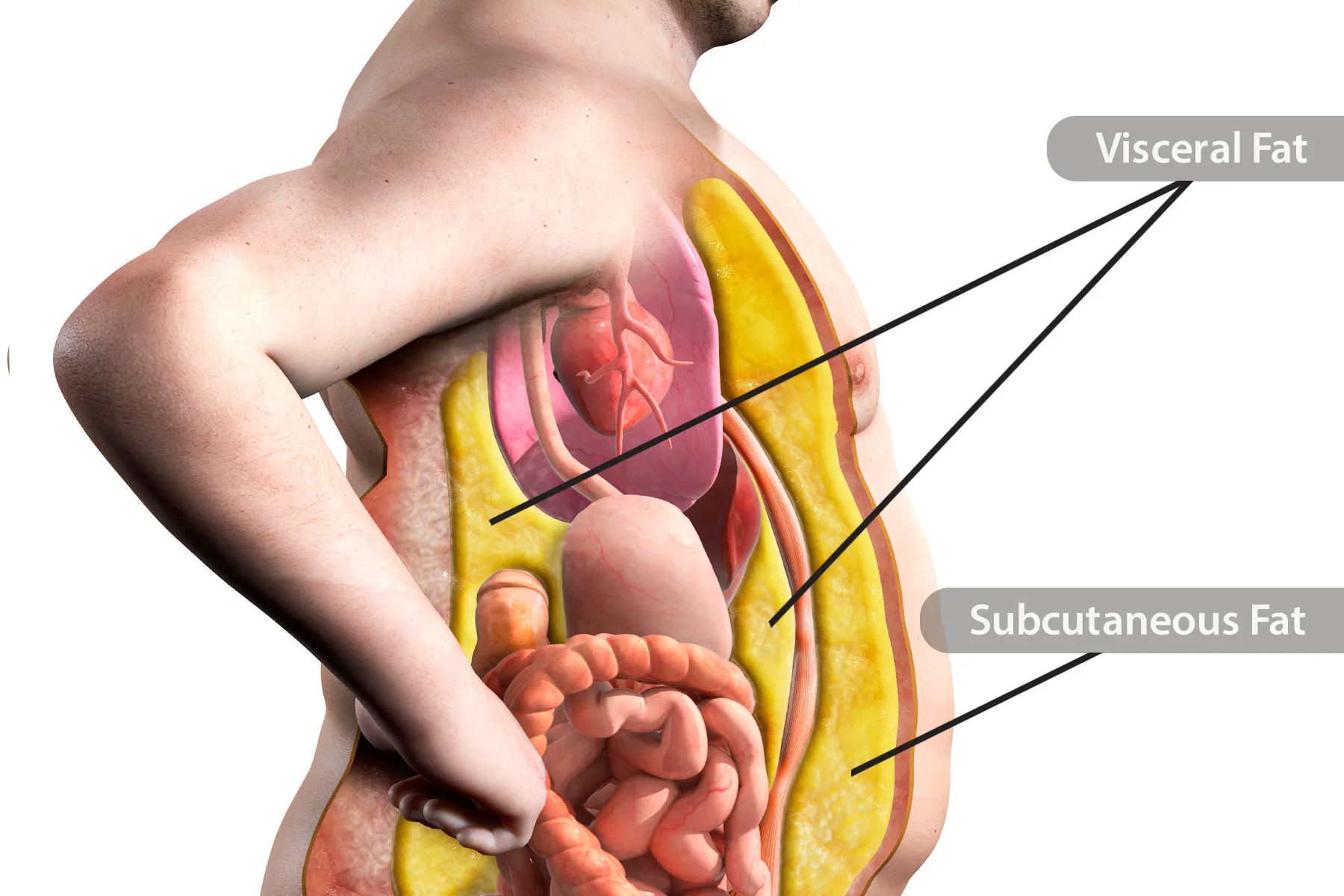
You can pinch the soft fat beneath your skin, notice when your jeans feel snug, and watch the bathroom scale deliver its tiny digital verdict. But some of the most medically important body fat stays out of sight. It sits deep inside the abdomen, wrapping around organs such as the liver, intestines, and pancreas like an unwanted houseguest who has quietly moved into the best room.
This hidden tissue is called visceral fat. Unlike subcutaneous fatthe layer directly beneath the skinvisceral fat is metabolically active. In excess, it is associated with inflammation, insulin resistance, abnormal cholesterol levels, high blood pressure, fatty liver disease, type 2 diabetes, and cardiovascular disease.
The frustrating part is that a person does not need to “look overweight” to carry an unhealthy amount. Someone may have a normal body mass index, wear an average clothing size, and still store substantial fat around the internal organs. That is why understanding body composition and waist size can reveal health risks that weight alone may miss.
What Is Visceral Fat?
Body fat is not one uniform substance stored in one convenient location. It occupies several compartments, and those compartments behave differently.
Subcutaneous fat
Subcutaneous fat lies immediately beneath the skin. It is the soft tissue you can usually pinch around the stomach, hips, thighs, or upper arms. This fat stores energy, cushions the body, helps regulate temperature, and produces hormones. Excess subcutaneous fat can still affect health, but it is generally considered less metabolically harmful than excess visceral fat.
Visceral fat
Visceral fat is stored inside the abdominal cavity. It fills spaces between organs and may accumulate around the liver, pancreas, stomach, and intestines. Because it is behind the abdominal wall, you cannot grab it with your fingers or accurately judge it by looking in a mirror.
A certain amount of visceral fat is normal and protective. Problems arise when the amount becomes excessive. At that point, the tissue does more than store spare calories. It communicates with the rest of the body through hormones, fatty acids, and inflammatory signals.
Ectopic fat
Related to visceral fat is ectopic fat, meaning fat stored in places not designed to hold large amounts of it. Examples include fat deposited within the liver, pancreas, skeletal muscle, or around the heart. These deposits may interfere with normal organ function and contribute to metabolic disease.
Why Hidden Abdominal Fat Can Be So Dangerous
Visceral fat is sometimes described as an endocrine organ because it releases biologically active substances. Think of it less as silent padding and more as a noisy chemical factory operating beside vital organs.
It promotes chronic inflammation
Excess visceral fat can release inflammatory molecules into circulation. This does not usually cause the dramatic swelling or pain associated with an injured ankle. Instead, it contributes to persistent, low-grade inflammation.
Over time, that inflammatory environment may damage blood vessels, interfere with metabolic signaling, and contribute to plaque formation in the arteries. The process is gradual, which is precisely why it is easy to ignore. There may be no flashing dashboard light until several risk factors have already appeared.
It contributes to insulin resistance
Insulin helps move glucose from the bloodstream into cells, where it can be used for energy. With insulin resistance, muscle, fat, and liver cells do not respond to insulin as efficiently as they should. The pancreas compensates by producing more of it.
Visceral fat is strongly associated with this process. Fatty acids and inflammatory signals released from abdominal fat can disrupt insulin action, particularly in the liver. Blood sugar may gradually rise, increasing the likelihood of prediabetes and eventually type 2 diabetes.
It affects cholesterol and triglycerides
Excess visceral fat can alter how the liver handles fats. People with abdominal obesity commonly develop higher triglycerides, lower levels of protective HDL cholesterol, and an increase in harmful cholesterol particles.
Even when a standard cholesterol result does not look alarming, the overall combination of abdominal fat, elevated blood pressure, abnormal blood sugar, and high triglycerides may indicate substantial cardiometabolic risk.
It may increase cardiovascular risk despite a normal BMI
Body mass index compares weight with height, but it cannot tell whether that weight comes from muscle, bone, subcutaneous fat, or visceral fat. It also says nothing about where fat is stored.
Consequently, two people with the same BMI may have very different health profiles. One may carry more fat around the hips and thighs, while the other stores it deep in the abdomen. Research consistently suggests that central fat distribution is more closely associated with heart and metabolic problems than weight alone.
It is connected with fatty liver disease
Visceral obesity and metabolic dysfunction often travel with fat accumulation in the liver. Metabolic dysfunction-associated steatotic liver disease may initially produce no obvious symptoms, but it can progress to liver inflammation, scarring, and advanced liver disease in some people.
A larger waist, high triglycerides, insulin resistance, and elevated liver enzymes can be clues, although normal liver enzymes do not rule out the condition.
It may play a role in cancer risk
Excess body fat is associated with increased risk for multiple cancers. Researchers are particularly interested in visceral fat because of its links with inflammation, altered insulin signaling, and hormonal changes. These biological effects may help create conditions that support the development or progression of certain cancers.
This does not mean that abdominal fat guarantees cancer. It means fat distribution may be one component of a much larger risk picture involving genetics, age, environment, lifestyle, and other medical conditions.
Who Is More Likely to Accumulate Visceral Fat?
Anyone can develop excess visceral fat, but several factors affect where the body prefers to store energy.
Age and hormonal changes
Fat distribution frequently changes with age. Adults may lose muscle, become less active, and burn fewer calories than they did when younger. After menopause, declining estrogen levels are often accompanied by a shift from lower-body fat storage toward the abdomen.
Men are also more likely to store fat centrally, particularly during middle age. The classic “apple-shaped” body is more strongly associated with visceral fat than a “pear-shaped” pattern in which more fat is stored around the hips and thighs.
Genetics
Genes influence appetite, metabolism, hormone activity, body shape, and fat distribution. Some people naturally store a larger proportion of excess energy in the abdominal cavity. Genetics may load the dice, but daily habits still influence how often those dice are rolled.
Physical inactivity
A sedentary lifestyle makes it easier to lose muscle and accumulate abdominal fat, especially when calorie intake consistently exceeds energy needs. Long periods of sitting may also contribute to poor blood sugar control even in people who complete an occasional workout.
Dietary patterns
No single food travels directly to the abdomen wearing a tiny address label. However, regularly consuming more calories than the body uses promotes fat storage. Sugary drinks, refined carbohydrates, frequent oversized portions, alcohol, and heavily processed foods can make an energy surplus particularly easy to achieve.
Insufficient sleep
Short or irregular sleep can affect hunger, appetite, stress hormones, insulin sensitivity, and food choices. A tired brain is rarely famous for requesting grilled salmon and a brisk evening walk. It is more likely to demand a frosted pastry and control of the television remote.
Chronic stress
Stress does not automatically create belly fat, but long-term stress may affect sleep, eating behavior, alcohol use, physical activity, and hormonal signaling. For some people, these changes encourage central fat accumulation.
Can You Have Dangerous Visceral Fat Without Obesity?
Yes. A person can have a weight categorized as “normal” while carrying relatively little muscle and a higher percentage of body fat, including visceral fat. This pattern is sometimes casually called “skinny fat,” although that term can be stigmatizing and medically imprecise.
The more useful concept is normal-weight central obesity. People with this body composition may be overlooked because neither the scale nor BMI raises an immediate alarm. Yet their waist measurement, blood pressure, glucose, triglycerides, or liver health may tell a different story.
This is also why health cannot be determined from photographs. A flat-looking stomach does not guarantee metabolic health, and a soft abdomen does not automatically mean a person is ill. Appearance is a remarkably unreliable laboratory test.
How to Estimate Your Visceral Fat
Measure your waist circumference
Waist circumference is not a perfect measurement of visceral fat, but it is inexpensive and useful for screening. In the United States, a waist larger than 35 inches in many women or 40 inches in many men is commonly associated with increased health risk.
These are not universal diagnostic boundaries. Risk may increase at lower waist measurements in some racial and ethnic populations, and interpretation may differ with age, height, pregnancy, body composition, and medical history.
To measure your waist:
- Stand upright with your abdomen relaxed.
- Place a flexible tape around your middle, generally just above the hip bones.
- Keep the tape level and snug without compressing the skin.
- Exhale normally and record the measurement.
- Repeat the process to confirm the result.
Look beyond the tape measure
A clinician may also evaluate blood pressure, fasting glucose, A1C, triglycerides, HDL cholesterol, liver enzymes, family history, sleep symptoms, medications, and physical activity. Together, these provide a more meaningful picture than any single measurement.
Medical imaging
CT and MRI scans can distinguish visceral fat from subcutaneous fat with much greater precision. Certain body-composition scans can also estimate abdominal fat. However, imaging is not routinely ordered solely to measure visceral fat because of cost, availability, and, in the case of CT, radiation exposure.
Sometimes excess abdominal or liver fat is noticed incidentally on imaging performed for another medical reason. That finding can be a useful prompt for a broader metabolic evaluation.
How to Reduce Visceral Fat Safely
The good news is that visceral fat often responds to sustainable changes in nutrition, exercise, sleep, and overall weight. You cannot command your body to burn fat from one exact location, but reducing total body fat commonly reduces the visceral compartment as well.
Combine aerobic activity with strength training
Brisk walking, cycling, swimming, jogging, dancing, and similar aerobic activities can help reduce total and abdominal fat. U.S. physical activity guidance recommends that most adults work toward at least 150 minutes of moderate-intensity aerobic activity each week, along with muscle-strengthening activities on two or more days.
Strength training is especially valuable because muscle supports glucose control, physical function, and long-term weight management. Sit-ups may strengthen abdominal muscles, but they do not selectively melt visceral fat. Sadly, the human body has not installed a “burn fat here” button.
Build meals around minimally processed foods
A useful eating pattern emphasizes vegetables, fruits, beans, whole grains, lean or plant-based proteins, nuts, seeds, and unsaturated fats. Mediterranean-style and DASH-style eating plans are practical examples.
Fiber-rich foods improve fullness and can support blood sugar and cholesterol management. Protein helps preserve muscle during weight loss. There is no need to ban every enjoyable food, but foods high in added sugar, refined starch, saturated fat, or calories should not occupy the starring role at every meal.
Pay attention to beverages
Soda, sweetened coffee, energy drinks, juice beverages, and alcohol can deliver substantial calories without producing the fullness of solid food. Replacing some of these drinks with water, unsweetened tea, or other low-calorie options is often a painless place to beginwell, relatively painless. The caramel syrup may send a farewell card.
Aim for gradual, maintainable weight loss
For people with overweight or obesity, losing approximately 5% to 10% of starting weight can improve blood pressure, glucose regulation, triglycerides, and other health markers. Benefits may occur even before someone reaches a culturally defined “ideal” weight.
Crash diets can produce muscle loss, nutritional deficiencies, gallstones, and rapid regain. A slower plan that can survive birthdays, business trips, and Tuesdays is generally more useful.
Protect your sleep
Most adults should regularly obtain at least seven hours of sleep, although individual needs vary. A consistent sleep schedule, reduced late-night screen exposure, a dark bedroom, and evaluation for persistent snoring or daytime sleepiness can support metabolic health.
Manage stress without demanding perfection
Stress-management techniques do not need to involve a mountain retreat or an expensive collection of scented candles. Walking, breathing exercises, social connection, hobbies, counseling, time outdoors, and realistic boundaries can all help.
Discuss medical treatment when appropriate
Some people benefit from prescription weight-management medication or metabolic and bariatric surgery. These treatments are not shortcuts, moral failures, or universal solutions. They are medical options that should be selected with a qualified clinician based on health history, treatment goals, expected benefits, side effects, and long-term follow-up needs.
Real-World Experiences: When Hidden Fat Becomes Visible Through Health Data
The following experiences are illustrative composites based on patterns commonly encountered in health care. They are not accounts of specific identifiable individuals.
The “normal weight” office worker
Daniel had weighed roughly the same since college. At 42, his BMI still fell within the standard normal range, so he assumed his health was excellent. His diet was mostly takeout, his workday involved ten hours in a chair, and exercise meant searching the parking lot for his car.
During a routine physical, his clinician measured his waist and found that it had increased significantly even though his weight had barely changed. Blood tests showed high triglycerides, a low HDL level, and an A1C in the prediabetes range. An ultrasound ordered after abnormal liver enzymes also suggested excess liver fat.
The experience surprised him because he did not fit his mental image of someone at metabolic risk. Instead of pursuing aggressive weight loss, he focused on body composition and daily habits. He walked after lunch and dinner, lifted weights twice a week, reduced sugary drinks, and began taking leftovers to work rather than ordering fast food.
Six months later, the scale had moved only modestly. His waist, however, was smaller, his strength had improved, and several laboratory values were moving in a healthier direction. The lesson was not that weight was meaningless. It was that weight had been only one chapter of the story.
The midlife body-composition shift
Maria noticed that her clothes fit differently after menopause. Her overall weight had increased by only a few pounds, yet more of it seemed concentrated around her middle. She initially blamed herself for losing discipline, which turned every meal into a courtroom drama.
Her clinician explained that hormonal changes, aging, reduced activity, sleep disruption, and gradual muscle loss can all influence fat distribution. The conversation replaced shame with a practical plan.
Maria began with three weekly walks and two short resistance sessions using bands at home. She added protein to breakfast, included vegetables at lunch and dinner, and stopped treating sleep as the leftover portion of her day. Progress was uneven. Some weeks went beautifully; others featured travel, family demands, and a heroic quantity of birthday cake.
Over time, her waist measurement decreased and her blood pressure improved. More importantly, she felt stronger. Her experience showed that managing visceral fat is rarely a dramatic before-and-after montage. It is usually a series of ordinary decisions repeated often enough to matter.
The person who trained hard but overlooked recovery
Alex exercised intensely on weekends but slept five hours on many weeknights and relied on sweet coffee drinks for energy. Because he completed punishing workouts, he assumed they canceled everything else. His expanding waistline and rising blood sugar disagreed.
Rather than adding another brutal exercise session, he spread activity across the week, included strength training, improved his sleep schedule, and replaced several liquid-calorie habits. His plan became less impressive on social media but considerably more effective in real life.
These examples share a central message: visceral fat is not a character flaw. It is a biological risk factor influenced by many forces, including age, genetics, environment, sleep, stress, nutrition, activity, medications, and health conditions. Progress begins with useful informationnot punishment.
Conclusion
The fat that presents the greatest health concern may not be the fat you can see or pinch. Excess visceral fat sits deep within the abdomen and is associated with inflammation, insulin resistance, fatty liver disease, type 2 diabetes, abnormal blood lipids, high blood pressure, cardiovascular disease, and other chronic health problems.
BMI can provide useful population-level information, but it does not reveal fat distribution. Waist circumference, metabolic blood tests, blood pressure, health history, and, when medically appropriate, imaging can provide a more complete assessment.
There is no special exercise, detox drink, or vibrating belt that removes only visceral fat. The most reliable approach combines regular aerobic movement, strength training, nutritious foods, appropriate portions, adequate sleep, stress management, and professional treatment when needed. The goal is not to chase a perfect waistline. It is to improve the internal conditions that allow the heart, liver, blood vessels, and metabolism to function well.













