
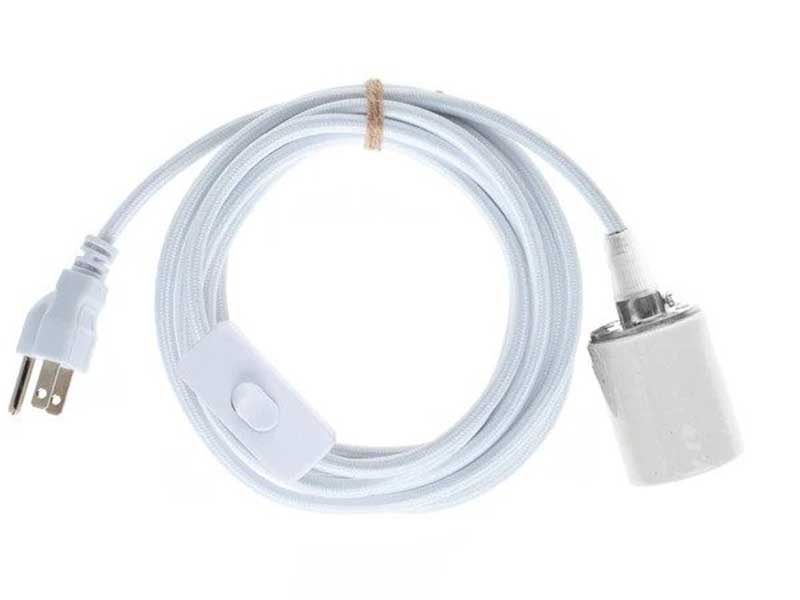
A porcelain plug-in pendant light is proof that good lighting does not always require an electrician, drywall dust, or a weekend spent staring suspiciously at a junction box. With a ceramic shade, a long cord, and a regular wall plug, this little fixture can bring focused light, handmade character, and serious personality to a room without turning your home into a construction zone.
Whether you are renting an apartment, refreshing a bedroom corner, creating a reading nook, or trying to make your kitchen feel less like a place where cereal is eaten directly over the sink, a plug-in pendant can be an easy upgrade. Porcelain versions are especially appealing because they combine the practical function of a hanging lamp with the warm, slightly imperfect charm of fired ceramic.
This guide explains how to choose, place, style, and safely use a porcelain plug-in pendant light. It also covers bulb selection, hanging height, cord management, and the real-life lessons people tend to learn after living with one for a while.
What Is a Porcelain Plug-In Pendant Light?
A porcelain plug-in pendant light is a hanging light fixture powered by a standard wall outlet rather than hardwired into the ceiling. It typically includes a porcelain shade or socket housing, a fabric-covered or plastic electrical cord, a plug, a socket, and sometimes an inline switch or dimmer.
Unlike a traditional ceiling pendant, it does not need to connect directly to your home’s electrical wiring. Instead, the cord runs from the pendant to a wall outlet, allowing the fixture to be suspended from a ceiling hook, wall bracket, beam, or another appropriately secure support point.
That simple difference makes plug-in pendant lighting especially useful for renters, dorm rooms, older homes with limited ceiling wiring, and spaces where a hardwired fixture would be expensive or inconvenient. Portable luminaires can include chain-hung pendant applications, which is why a well-made plug-in pendant should be treated as a real lighting fixture rather than a decorative cord with a bulb dangling from it.
Why Porcelain Makes a Pendant Light Feel Special
Porcelain is not just “ceramic wearing a tuxedo.” It is a refined material valued for its smooth finish, durability, and ability to look both vintage and modern depending on its shape and glaze. A white porcelain pendant can feel crisp and Scandinavian. A speckled clay-style finish can lean rustic. A glossy cobalt blue shade can look like it wandered out of a very stylish European café.
Porcelain is fired at high temperatures and can become dense and nonporous through vitrification. In practical terms, that means a quality porcelain shade is usually easy to dust, visually substantial, and less likely to look cheap after a few years of use.
Its visual strength is also its emotional strength. Metal pendants can feel industrial. Glass pendants can feel airy. Fabric pendants can feel soft. Porcelain has a little more presence. It catches light gently, creates texture in neutral rooms, and looks intentional even when the rest of the room is still negotiating with a pile of laundry.
Where a Porcelain Plug-In Pendant Light Works Best
Bedroom Nightstand Alternative
One of the smartest uses for a porcelain plug-in pendant is beside the bed. Instead of sacrificing nightstand space to a table lamp, hang a pendant on each side of the bed. This creates a boutique-hotel effect while keeping room for books, water, skin-care products, and the mysterious collection of charging cables that appears in every bedroom.
Choose a small porcelain shade with a warm LED bulb. Hang it low enough to be useful for reading, but high enough that you will not bump your forehead into it during a half-awake search for your phone.
Reading Nook or Lounge Corner
A plug-in pendant can turn an unused corner into a place that looks like it has a purpose. Hang one above a lounge chair, a small side table, or a window bench. The downward pool of light helps define the area, which makes even a modest apartment feel more layered and thoughtfully designed.
Interior designers often use pendant lighting to make larger rooms feel more intimate and human-scaled. In smaller spaces, the same principle works beautifully: a hanging light gives the eye a visual destination without taking up floor space.
Kitchen Counter or Breakfast Nook
A porcelain plug-in pendant can work near a breakfast table, coffee bar, or kitchen corner where hardwired lighting is unavailable. It is not usually the right choice for the center of a busy kitchen island unless the cord can be routed safely and neatly, but it can be excellent for adding task lighting to a smaller zone.
For kitchen counters and tables, many lighting guides recommend placing pendants roughly 30 to 36 inches above the surface. That range helps provide useful light while preserving sight lines across the room.
Entryway or Hallway Accent
In an entryway, a porcelain plug-in pendant can make a basic console table feel more welcoming. Pair it with a mirror, a tray for keys, and a small piece of artwork. Suddenly, the space says “welcome home” instead of “please avoid tripping over the shoes.”
Use a compact shade in hallways so the pendant does not become an obstacle. In open areas, keep the bottom of the fixture at least seven feet above the floor whenever possible.
Studio Apartment Zones
In a studio apartment, lighting can act like invisible architecture. A pendant over a chair suggests a reading zone. A pendant beside the bed creates a sleeping zone. A pendant above a small dining table says, “Yes, I do own a table, and no, it is not merely a laptop storage platform.”
Using several layers of lightingambient, task, and accentcan make a room more functional and more relaxing than relying on one overhead fixture alone.
How to Choose the Right Porcelain Plug-In Pendant Light
Start With the Shade Shape
The shape of the porcelain shade changes both the look and the quality of the light. A wide, open-bottom shade directs more light downward and works well for reading, food prep, and desks. A dome-shaped shade can create a focused pool of light. A narrow cone adds a more industrial or café-inspired look. A globe-like porcelain shade softens the glow and works nicely in bedrooms or relaxed living spaces.
Consider what you want the light to do before choosing what you want it to look like. A pendant over a reading chair needs useful illumination. A pendant above a decorative shelf can be gentler and more atmospheric.
Choose a Finish That Matches the Room’s Personality
Glossy white porcelain is timeless and easy to coordinate with nearly anything. Matte black porcelain gives a room more drama. Speckled finishes introduce handcrafted texture. Colored porcelain works particularly well when the room is otherwise neutral and needs one lively focal point.
For a quiet, minimal room, look for simple forms and natural tones. For a vintage-inspired room, consider scalloped shades, milk-glass-style silhouettes, or enamel-like finishes. For a modern kitchen or office, a clean cylindrical or dome shape can make the pendant look polished without becoming overly formal.
Pay Attention to Cord Length
A plug-in pendant is only as flexible as its cord. Measure from the outlet to the planned hanging point before ordering. Then add enough slack for a clean route along the wall or ceiling. A cord that barely reaches is not “minimalist.” It is simply stressed, and now everyone in the room is stressed too.
Look for a cord long enough to reach without relying on an extension cord. If you do need an extension cord temporarily, follow the manufacturer’s instructions and avoid routing cords under rugs, through doorways, under furniture, or across walkways. The U.S. Consumer Product Safety Commission warns that covered, pinched, or permanently misplaced cords can overheat or become damaged.
Check the Plug, Switch, and Safety Markings
Choose a pendant with a properly rated plug, intact cord insulation, and clear instructions. A switch placed along the cord can be especially convenient near a bed or reading chair. For a fixture that will be used frequently, a cord-mounted dimmer can make the pendant far more versatile.
Look for appropriate safety certification from a recognized testing organization and avoid products with damaged plugs, loose sockets, cracked porcelain, or suspiciously thin cords. The pendant may look handmade, but “looks like it was assembled during a thunderstorm” is not the aesthetic you are chasing.
Choosing the Best Bulb for a Porcelain Pendant
The bulb is not an afterthought. It determines brightness, color, heat, and whether the pendant feels cozy or accidentally clinical.
Warm White Bulbs for Relaxed Spaces
For bedrooms, living rooms, dining areas, and reading corners, a warm white LED bulb around 2700K to 3000K usually produces the most inviting glow. Lower Kelvin numbers create warmer, more yellow-toned light, while higher Kelvin ratings appear cooler and bluer.
Brighter Bulbs for Task Lighting
For desks, kitchen counters, or craft tables, use a brighter LED bulb with enough lumens for the task. A pendant used primarily for ambient lighting may need only a modest bulb, while a pendant used for focused work needs more output. Lighting retailers commonly suggest higher equivalent wattage for task lighting and lower output for ambient lighting.
Dimmable LEDs for Maximum Flexibility
A dimmable LED bulb can transform one pendant from a bright reading light into a soft evening glow. However, the bulb and dimmer must be compatible. Not all LED bulbs are dimmable, and mismatched bulb-and-dimmer combinations can flicker, flash, or refuse to dim gracefully.
How to Hang a Plug-In Pendant Light Without Making It Look Temporary
The secret is planning the cord route before you hang anything. First, identify the outlet. Then decide where the pendant should land. Finally, map the cord path so it follows the wall or ceiling intentionally rather than drifting across the room like it has lost its GPS signal.
Use a ceiling hook or wall-mounted hook rated for the fixture’s weight. Make sure the mounting point is appropriate for the ceiling or wall material. Lightweight porcelain pendants may require only a secure hook, but heavier fixtures may need stronger support or professional installation advice.
For a cleaner look, guide the cord in a straight or gently curved path using removable cord clips designed for electrical cords. Keep the line visually deliberate. A cord running vertically down a wall can look architectural. A cord zigzagging across the ceiling usually looks like a bad decision made at 11:47 p.m.
Porcelain Plug-In Pendant Light Styling Ideas
Modern Minimalist
Use a smooth white porcelain pendant with a white or black cord. Pair it with pale wood, linen curtains, and simple furniture. Keep the bulb warm, not icy blue. The result should feel calm, not like a very clean dental office.
Vintage Café Look
Choose a fluted or dome-shaped porcelain shade, a twisted fabric cord, and an Edison-style LED bulb. Hang it above a small table, bar cart, or coffee station. Add framed art, a plant, and a mug collection you are willing to defend emotionally.
Soft Cottage Style
A cream, pale green, or speckled porcelain shade works beautifully with wood furniture, floral textiles, woven baskets, and antique brass accents. Keep the pendant low over a reading chair or small table to make the space feel warm and lived-in.
Industrial-Modern Mix
Use black porcelain, a dark braided cord, and a clear LED filament bulb. Balance the harder edges with warm wood, soft textiles, or a small rug. This style works well in lofts, home offices, and kitchens that need a little visual contrast.
Common Mistakes to Avoid
The first mistake is choosing a pendant only because it photographs beautifully. A tiny shade may look charming online but provide almost no useful light. The second is hanging it too high. If the pendant is intended to illuminate a chair, desk, or table, it should actually send light there instead of glowing politely near the ceiling.
Another common mistake is ignoring glare. An exposed bulb may look dramatic, but it can be harsh at eye level. A porcelain shade with a slightly deeper profile often helps direct the light where you need it while shielding your eyes from the bulb.
Finally, never treat cord safety as a styling detail. Do not hide the cord under a rug, pinch it behind furniture, staple it into place, or route it across a doorway. A beautiful pendant should improve the room, not create a hazard disguised as decor.
Real-World Experiences With a Porcelain Plug-In Pendant Light
Living with a porcelain plug-in pendant light tends to reveal something quickly: the fixture is less about lighting a whole room and more about making one part of the room feel intentional. People often buy one because they want a prettier lamp. A few days later, they realize they have accidentally created a favorite place to sit.
In bedrooms, the most noticeable difference is usually the reclaimed nightstand space. A hanging porcelain pendant frees the tabletop from a bulky lamp base, which sounds minor until you suddenly have room for a book, water glass, phone charger, and the tiny pile of receipts that apparently needs its own dedicated habitat. The light also feels more balanced when matching pendants are placed on both sides of a bed, even if the rest of the room is not perfectly symmetrical.
Many users discover that the right bulb matters more than expected. A cool, bright bulb can make a porcelain shade look sharp and modern, but it may feel too harsh before bed. Switching to a warm 2700K LED often makes the same fixture feel calmer and more expensive. The porcelain itself helps because it reflects a soft, gentle glow rather than disappearing into the background.
Another common lesson is that cord placement determines whether the pendant looks intentional or improvised. A cord that follows a clean path along a wall or ceiling can look almost like part of the architecture. A cord that droops across an open wall can make even a beautiful fixture feel temporary. People who take ten extra minutes to measure, test the hanging point, and use cord clips usually end up much happier with the finished result.
In rental homes, porcelain plug-in pendants are especially satisfying because they create visual drama without requiring permanent electrical work. A renter can add a ceiling hook where permitted, plug in the fixture, and transform a plain corner before the lease ends. When it is time to move, the pendant comes along. That portability can make a small investment feel worthwhile because the light can be reused in a bedroom, office, apartment, or future home.
There is also a surprisingly practical emotional benefit. Overhead lighting tends to make a whole room feel “on.” A pendant creates a smaller circle of light, which makes evening routines feel slower and more relaxed. It can signal that work is finished, reading has begun, or dinner is happening at an actual table instead of beside a laptop.
Of course, the fixture is not magic. A single pendant will not solve a dark room with no other lighting. It works best as part of a layered setup that includes ambient light, task light, and perhaps a small accent lamp. But as a focused source of warmth and character, a porcelain plug-in pendant often does far more than its modest size suggests.
The best real-world outcome is not simply that the room becomes brighter. It is that the room becomes more usable. A chair becomes a reading nook. A corner becomes a destination. A bedside becomes less cluttered. And a plain wall outlet becomes the beginning of a much better lighting plan.
Final Thoughts
A porcelain plug-in pendant light is one of the easiest ways to add style, function, and warmth without committing to a major renovation. It works especially well for renters, small homes, bedrooms, reading corners, studio apartments, and spaces where you want focused light without losing floor or table space.
Choose a shade that fits the room, use a warm LED bulb for relaxing areas, hang the fixture at a practical height, and route the cord safely. With those basics in place, a simple porcelain pendant can feel less like a temporary lighting solution and more like the small design decision that makes the whole room click.













