
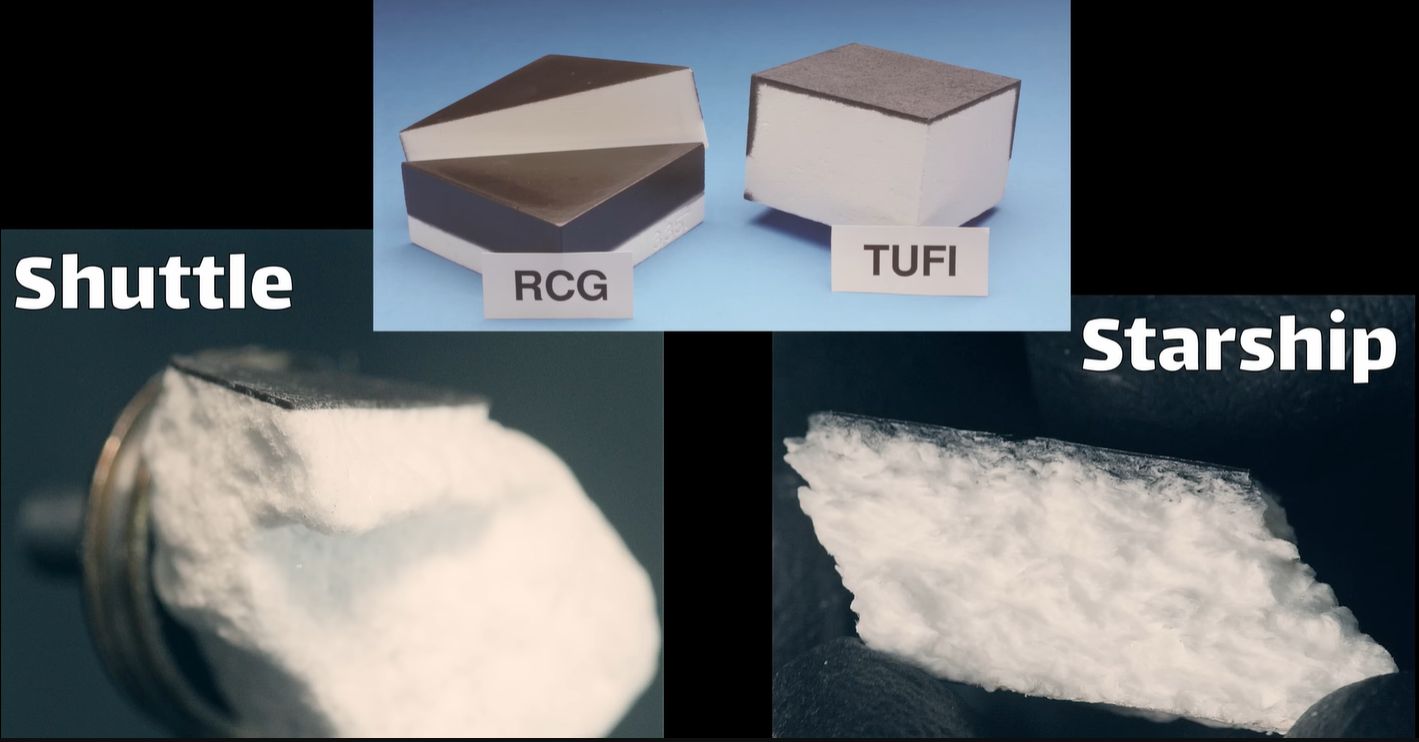
SpaceX Starship and NASA’s Space Shuttle both have a very dramatic job interview question: “Can you fall from space, punch through a blowtorch made of air, and still look presentable afterward?” The answer depends heavily on thermal protection tiles, those dark, unglamorous little pieces of engineering that stand between a spacecraft and a very expensive barbecue.
At first glance, SpaceX thermal tiles and Space Shuttle tiles seem like cousins. Both protect reusable spacecraft from the brutal heat of atmospheric reentry. Both use ceramic insulation concepts. Both are black on the hottest windward areas. And both have inspired the same nervous question from space fans: “Wait, did one just fall off?”
But under the surface, the two systems are surprisingly different. The Space Shuttle’s thermal protection system was a carefully tailored suit made for a winged aluminum orbiter. SpaceX’s Starship heat shield is more like mass-produced armor for a stainless-steel skyscraper that wants to fly again and again with minimal fuss. Same problem, different era, different vehicle, different maintenance philosophyand a very different appetite for trial-and-error testing.
The Big Picture: Same Enemy, Different Vehicles
The enemy is not technically “friction,” although that word gets invited to every reentry explanation like a cousin who brings potato salad. During hypersonic reentry, the spacecraft compresses air so violently that temperatures soar. The vehicle must keep that heat away from its structure, tanks, wiring, flaps, crew areas, and anything else that prefers not to become soup.
The Space Shuttle orbiter was a reusable spaceplane. It launched attached to an external tank and solid rocket boosters, reached orbit, then returned as a hypersonic glider. Its aluminum structure needed serious insulation because aluminum loses strength quickly when heated. The Shuttle used a complex thermal protection system, including black high-temperature reusable surface insulation tiles, white low-temperature tiles, flexible insulation blankets, and reinforced carbon-carbon panels on the nose cap and wing leading edges.
Starship is a very different beast. It is a stainless-steel upper stage designed to launch on the Super Heavy booster, reenter belly-first, use flaps for control, flip, and land vertically. Stainless steel tolerates heat better than aluminum, but the windward side still needs a serious heat shield. SpaceX has therefore covered large areas of Starship with thousands of black hexagonal ceramic tiles.
So the simplest answer is this: Shuttle tiles were part of a highly customized thermal protection suit for a winged orbiter, while SpaceX thermal tiles are part of a standardized, rapidly replaceable, industrial-scale heat shield for a stainless-steel reusable rocket.
Material Differences: Silica Heritage vs. Modern Proprietary Tiles
The Shuttle’s famous black tiles were largely made from silica fibers. NASA’s LI-900 material, used across much of the orbiter’s lower surface, had a bulk density of 9 pounds per cubic foot and was about 94 percent air by volume. That sounds less like a spacecraft material and more like the world’s most overqualified packing peanut. Yet this airy structure was the magic: it conducted heat very poorly, keeping the orbiter’s skin cool while the outer surface glowed hot.
Space Shuttle tiles could survive severe thermal shock. A classic demonstration showed that a tile could be heated to extreme temperatures and still be handled at the corners shortly afterward, because heat did not travel quickly through the material. This was wonderful for insulation, but it came with a catch: the tiles were fragile. They were brilliant at resisting heat, less brilliant at being bumped, gouged, soaked, mishandled, or treated like ordinary hardware.
SpaceX has not publicly released every detail of Starship’s tile composition, and that matters. Anyone claiming to know the full recipe should probably also be selling moon cheese from a trench coat. Publicly available information points to ceramic, silica-based, high-temperature tiles, but the exact formulation, coatings, attachment method details, and tile evolution remain partly proprietary.
The key difference is not simply “old ceramic versus new ceramic.” It is design philosophy. NASA’s Shuttle tiles were optimized tile-by-tile for a specific orbiter shape and thermal map. SpaceX appears to be optimizing for manufacturability, repeatability, replacement speed, and field learning. The tile is not just a material; it is a production system.
Shape and Layout: Squares vs. Hexagons
One of the most visible differences is shape. Shuttle tiles were generally square or rectangular, with many unique sizes and thicknesses. NASA used different tile types depending on location and expected heating. Some high-temperature tiles were roughly 6 inches square, while low-temperature tiles were often larger. Thickness varied by heat load. The result was a spacecraft covered in a mosaic where many pieces were individually shaped for their exact position.
Starship’s tiles are famous for their hexagonal pattern. The hexagon is not just there because engineers secretly love honeybees, although honestly, who can blame them? A hexagonal layout helps avoid long straight gaps where hot plasma could potentially find a clean path inward. In 2019, Elon Musk noted that the hexagonal shape offered no straight path for hot gas to accelerate through the gaps. That is a simple idea with serious consequences.
Hexagons also support standardization. A large rocket like Starship needs a lot of tiles, and SpaceX wants to build vehicles at high cadence. A standardized tile geometry can help simplify manufacturing, inventory, installation, inspection, and replacement. The Shuttle, by contrast, was more like a handmade tuxedo. Starship is trying to become a factory-made heat shield jacketstill fancy, but hopefully available in bulk.
Attachment: Bonded Shuttle Tiles vs. Starship’s Mechanical Approach
Space Shuttle tiles were bonded to the orbiter using a silicone adhesive and a strain isolator pad, often made from Nomex felt. This pad helped the tile “float” slightly, reducing damage from vibration and structural movement. It was a carefully engineered solution for attaching fragile ceramic insulation to a lightweight airframe.
Starship tiles are attached to a stainless-steel structure using mechanical attachment features, commonly described publicly as pins or studs. This is a major practical difference. A bonded tile system can work extremely well, but it can also create maintenance headaches when thousands of tiles must be inspected, repaired, waterproofed, or replaced. Mechanical attachment, if perfected, can make tile replacement faster and more repeatable.
That “if perfected” is doing a full gym workout in the previous sentence. Starship’s flight tests have shown that attachment, sealing, vibration, acoustic loads, and reentry heating are all part of one angry orchestra. It is not enough for a tile to survive heat in a lab. It must survive launch vibration, cryogenic tanking cycles, flexing steel, aerodynamic pressure, shock waves, and plasma flow. Basically, the tile has to survive a bad day in every possible climate.
Thermal Protection Architecture: Shuttle Was a Mixed System
The Space Shuttle did not rely only on tiles. Its hottest leading-edge areas used reinforced carbon-carbon, or RCC. The nose cap and wing leading edges saw some of the most extreme heating, so they needed a material that could handle temperatures around 3,000 degrees Fahrenheit. The wing leading edges had RCC panels, with insulation behind them to protect the structure from heat radiating inward.
This mixed architecture made sense for a winged orbiter. The Shuttle’s wings, nose, belly, upper surfaces, engine area, and control surfaces all experienced different thermal environments. NASA matched materials to local conditions: black tiles below, white tiles and blankets above, RCC on leading edges, and flexible blankets where heating was moderate.
Starship also uses a thermal protection system rather than just “tiles everywhere,” but its public identity is dominated by the black hexagonal heat shield tiles on the windward side. The vehicle’s stainless-steel body changes the equation. Steel is heavier than aluminum, but it can tolerate higher temperatures, has useful cryogenic properties, and can simplify manufacturing. That allows SpaceX to think differently about where insulation is essential and where the bare structure can tolerate the environment.
Maintenance Philosophy: Shuttle Refurbishment vs. Rapid Reuse
This may be the biggest difference of all. The Shuttle was reusable, but it was not aircraft-like in turnaround. Its thermal protection system required extensive inspection and maintenance after each flight. NASA technicians checked tiles, repaired damage, replaced worn units, inspected RCC panels, and documented problems with tremendous care. The Shuttle was a reusable spacecraft, yesbut it was also a maintenance diva with a PhD.
Starship’s goal is more aggressive: rapid reuse with little refurbishment. SpaceX wants a vehicle that can land, be checked, refueled, and fly again far more often than the Shuttle ever did. That ambition puts enormous pressure on the tile system. A heat shield that works once is impressive. A heat shield that works repeatedly with minimal touch labor is revolutionary.
This is why Starship’s tile differences are not merely academic. If SpaceX can create a heat shield that needs only quick inspection and occasional tile replacement, Starship could change launch economics. If every reentry requires lengthy tile work, then Starship may still be powerful, but its airline-like reuse dream becomes harder.
Testing Style: NASA Certification vs. SpaceX Iteration
NASA developed the Shuttle under a traditional aerospace model with extensive analysis, ground testing, certification, and formal qualification. That does not mean the Shuttle was perfectly understood from day one. Early tile development was extremely difficult, and NASA had to solve problems involving tile strength, bonding, waterproofing, aerodynamic loads, and complex local flow fields.
SpaceX uses a more public, iterative testing style. Starship flight tests have intentionally pushed hardware into real reentry conditions, sometimes with missing tiles, modified tiles, or experimental heat shield layouts. Flight 4 in June 2024 was a turning point because Starship survived peak heating and achieved a controlled splashdown despite visible damage. Later flights continued to test heat shield changes, including upgraded tiles and experiments designed to measure how the system behaves under brutal real-world conditions.
This approach can look chaotic from the outside. A flap chars, tiles shed, plasma glows, the livestream gets spicy, and somewhere an engineer says, “Great data.” But that is the point. SpaceX is learning by flying full-scale vehicles through the actual environment. The Shuttle program also learned from flight, but Starship’s development culture makes the learning loop faster and much more visible.
Risk Lessons: Columbia Still Matters
No serious discussion of spacecraft thermal protection can ignore Space Shuttle Columbia. In 2003, foam from the external tank struck Columbia’s left wing during launch, damaging the reinforced carbon-carbon leading edge. During reentry, superheated gas entered the wing and destroyed the orbiter, killing all seven astronauts aboard.
That tragedy was not simply a “tile problem,” and it was not caused by ordinary belly tiles popping off. It involved impact damage to the leading-edge thermal protection system and deeper organizational failures in risk assessment. Still, Columbia remains a permanent reminder that thermal protection is not decorative. A small breach in the wrong place can become catastrophic.
For Starship, the lesson is clear: the heat shield must be robust not just thermally, but operationally. It must handle ascent debris, vibration, acoustic loads, installation variation, missing or cracked tiles, gap heating, structural flexing, and inspection uncertainty. The vehicle may be uncrewed during testing, but future ambitions include cargo, lunar missions, and eventually human spaceflight. Thermal protection cannot be “mostly fine” when people are onboard.
How Starship’s Stainless Steel Changes the Game
The Shuttle’s aluminum structure was one reason its insulation requirements were so strict. Aluminum is light, which is great for flight, but it is not a fan of high temperatures. The tiles had to keep the underlying structure within safe limits.
Starship’s stainless steel body gives SpaceX more thermal margin. Stainless steel is heavier, but it is cheaper, easier to fabricate at large scale, strong at cryogenic temperatures, and more tolerant of heat. This does not eliminate the need for tiles on the windward side, but it changes the consequences of heat leakage and structural heating.
Think of it like oven mitts. The Shuttle’s aluminum skin needed a very delicate, highly customized mitt. Starship’s steel skin is more like a cast-iron pan: still too hot to grab barehanded, but less likely to lose its personality at temperatures that would make aluminum deeply reconsider its career choices.
Which System Is Better?
That depends on what “better” means. The Space Shuttle’s thermal protection system was an extraordinary achievement. It enabled a winged spacecraft to return from orbit and fly again. It operated across 135 missions and pushed reusable spacecraft technology far beyond anything that came before it.
But it was also labor-intensive, fragile, and expensive to maintain. The Shuttle’s tiles were not designed for the kind of rapid, industrial reuse SpaceX wants. They belonged to a vehicle designed in the 1970s, built around the requirements and assumptions of its time.
Starship’s thermal tiles are not yet proven at Shuttle-level operational maturity. SpaceX is still learning how to keep tiles attached, sealed, and reusable through repeated flights. But the system is designed around modern manufacturing, standardized geometry, mechanical replacement, stainless-steel structure, and aggressive reusability goals.
In other words, the Shuttle system was proven but maintenance-heavy. Starship’s system is promising but still being beaten into shape by physics, flight tests, and a lot of ceramic humility.
Specific Examples of the Differences
1. Tile Geometry
Shuttle tiles were often square or custom-shaped. Starship tiles are mostly hexagonal, helping reduce straight-line gap paths and supporting mass production.
2. Vehicle Structure
The Shuttle protected an aluminum spaceplane. Starship protects a stainless-steel rocket stage. That difference changes thermal margins, attachment strategies, and maintenance assumptions.
3. Leading-Edge Protection
The Shuttle used reinforced carbon-carbon on the nose and wing leading edges. Starship does not have Shuttle-style wings, but it does have flaps and high-heating regions that demand careful tile and structural design.
4. Maintenance
Shuttle refurbishment required extensive inspection and repair. Starship is being developed for rapid reuse, which means the tiles must be easier to install, inspect, and replace.
5. Development Culture
NASA’s Shuttle TPS matured through formal development, certification, and decades of operations. SpaceX is evolving Starship’s TPS through rapid full-scale flight testing, including intentionally experimental reentry conditions.
Experience Notes: What Watching Starship Tiles Teaches Us
One of the most fascinating experiences for space watchers is realizing that thermal tiles are not glamorous until something goes wrong. Engines get the thunder. Boosters get the flame. Launch towers get the dramatic nicknames. Tiles quietly sit there looking like a ceramic bathroom renovation from the future. Then reentry begins, plasma wraps around the vehicle, and suddenly every missing tile becomes the main character.
Watching Starship test flights has made many people appreciate the brutal honesty of flight data. A heat shield can look perfect in the assembly bay, pass ground checks, and still behave differently once the vehicle shakes through launch, chills with cryogenic propellant, flexes under pressure, and slams into the atmosphere at hypersonic speed. Reentry is not one test; it is every test stacked on top of each other while moving faster than a rifle bullet and glowing like a dragon sneeze.
The Shuttle era teaches a different experience: respect for maintenance discipline. Shuttle tiles were inspected with care because each tile mattered. Technicians understood that reusability was not magic. It was work. It was documentation, repair, replacement, waterproofing, scanning, and judgment. Spaceflight fans sometimes talk about reusable rockets as if they are airplanes waiting at Gate 12. The Shuttle reminds us that a reusable spacecraft can be reusable and still demand enormous labor after landing.
Starship is exciting because SpaceX is trying to compress that labor. The dream is not simply to survive reentry. The dream is to survive reentry, land, inspect the vehicle quickly, replace only what is necessary, and fly again. That is much harder than building a heat shield that works once. It requires tiles that are strong enough for launch, insulating enough for reentry, cheap enough for mass production, and simple enough for fast operations.
Another practical lesson is that shape matters. The hexagonal tile layout may look like a design flourish, but it reflects serious thinking about plasma paths, expansion gaps, and manufacturing. The Shuttle’s custom tile map represented another kind of brilliance: tailoring every area to its local heat load. Starship’s hexagons represent a newer obsession: standardize everything that can be standardized, because a Mars rocket cannot afford boutique tile drama every Tuesday.
For readers, the best way to understand the difference is to stop asking, “Are Starship tiles better than Shuttle tiles?” and start asking, “Better for what vehicle and what operating model?” The Shuttle needed to bring a winged orbiter home safely. Starship needs to make reentry routine for a huge reusable launch system. Those are related goals, not identical ones.
So the next time a Starship video shows glowing plasma, missing tiles, or a scorched flap, remember: this is not just spectacle. It is the painful education of a new thermal protection system. The Shuttle wrote the first great reusable heat-shield textbook. SpaceX is now scribbling in the margins, adding hexagons, stainless steel, factory production, and a very bold note that says: “Make it fly again faster.”
Conclusion: Similar Concept, Very Different Philosophy
SpaceX thermal tiles and Space Shuttle tiles share a family resemblance, but they are not twins. The Shuttle’s system was a complex, customized thermal protection architecture built around a reusable aluminum spaceplane. It used silica tiles, blankets, and reinforced carbon-carbon panels to survive reentry, but it required careful inspection and extensive maintenance.
Starship’s heat shield is being built for a different future: mass production, standardized hexagonal tiles, mechanical replacement, stainless-steel structure, and rapid reuse. It is still evolving, and SpaceX has not yet proven that Starship can repeatedly return from orbit with minimal refurbishment. But the ambition is unmistakable. The Shuttle proved reusable spacecraft could survive reentry. Starship is trying to prove they can survive reentry often enough, cheaply enough, and quickly enough to change how humanity uses space.
That is the real difference. Shuttle tiles were designed to bring a remarkable spacecraft home. SpaceX thermal tiles are being designed to make coming home feel almost routine. In spaceflight, “routine” is one of the hardest words in the dictionary.














