
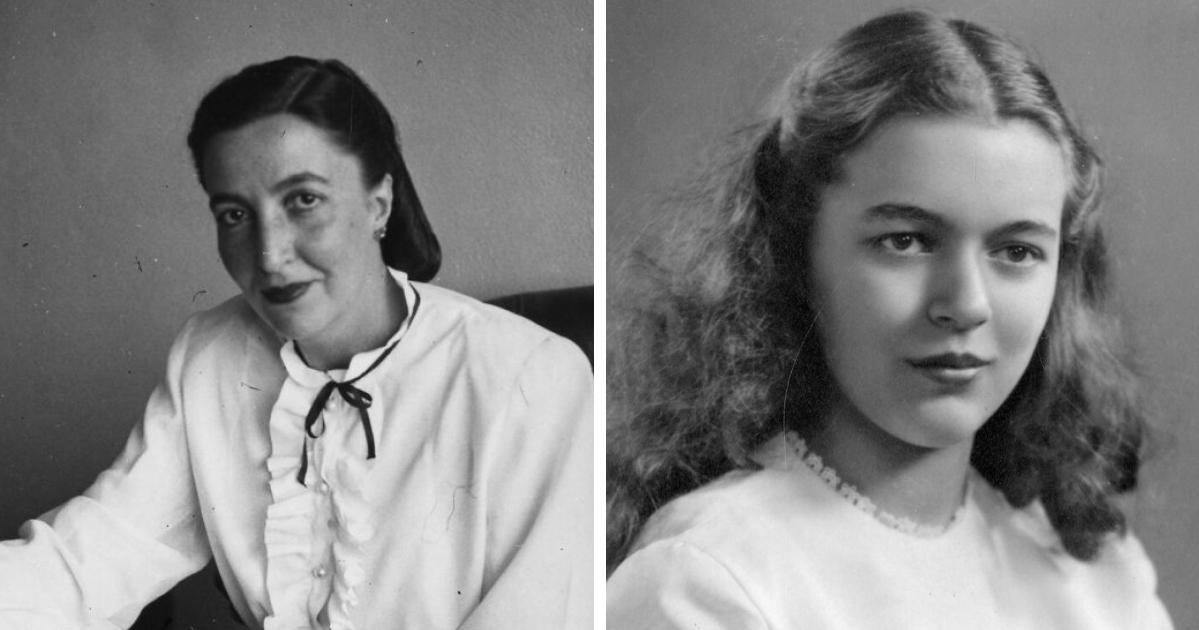
Science history is often taught like a very serious family photo in which half the people were mysteriously cropped out. You know the type: stern men, impressive beards, lots of equations, zero acknowledgment of the women whose ideas, experiments, calculations, and fieldwork changed the world. This article puts those women back in the frame. Not as side notes, not as “also-rans,” and definitely not as trivia-night bait, but as central figures in the story of discovery.
Think of each scientist here as a portrait. In one image, you might see a lab coat dusted with chalk, a telescope pointed toward a rebellious sky, or a microscope waiting beside a handwritten notebook. In another, you might see the expression of someone who had to be twice as prepared to receive half the credit. Together, these portraits reveal something bigger than individual brilliance: they show how women in science helped build modern physics, chemistry, astronomy, medicine, genetics, computing, environmental science, and space exploration.
From ancient Alexandria to the age of CRISPR and mRNA, these 31 women revolutionized science in ways that still shape our daily lives. Some became famous. Some should have been. All of them deserve a better spotlight.
Why Portraits Matter in the History of Women in Science
A portrait does more than show a face. It captures context: the tools, the posture, the setting, the mood. When we look at portraits of women scientists, we are not just admiring a person; we are reading a visual argument against the old myth that science was built only by men. A portrait of Marie Curie is never just Marie Curie. It is also a picture of persistence in a field that did not expect women to lead it. A portrait of Katherine Johnson is not simply a likeness of a mathematician. It is a reminder that behind every dramatic rocket launch was a mountain of invisible mental labor.
That is what makes this topic so powerful for readers and for search engines alike: it joins biography, STEM history, women’s history, and visual storytelling in one compelling narrative. These stories are educational, human, and surprisingly cinematic. Science, it turns out, has always had great characters. It just needed a better gallery wall.
31 Women Who Revolutionized Science
The Early Trailblazers Who Refused to Stay in the Background
- Hypatia Picture a scholar in late antique Alexandria, teaching mathematics and astronomy with calm authority while political chaos swirls outside. Hypatia became one of history’s earliest known women associated with advanced scientific thought, and her legacy still represents intellectual courage under pressure.
- Maria Sibylla Merian In her portrait, you can almost imagine butterflies refusing to sit still. Merian transformed natural history by observing insect metamorphosis directly, replacing folklore with evidence and showing that patient looking can be a scientific revolution all by itself.
- Caroline Herschel She began in her brother William’s astronomical orbit, then carved out her own constellation. Herschel discovered comets, helped catalog stars, and proved that a woman with a telescope could change the map of the heavens.
- Mary Anning If a portrait could smell like wet cliffs and old stone, hers would. Anning’s fossil finds along the English coast helped transform paleontology and reshape scientific understanding of prehistoric life, even while institutions often treated her as an outsider.
- Ada Lovelace Her portrait belongs beside gears, notes, and the future. Lovelace saw that a machine like Charles Babbage’s Analytical Engine could do more than calculate numbers; it could manipulate symbols. That insight helped make her the patron saint of modern computing.
- Ellen Swallow Richards With one hand in chemistry and the other in public health, Richards turned science toward daily life. She advanced sanitary science and environmental thinking in America, showing that clean water and healthy homes were scientific issues, not domestic footnotes.
The Women Who Rewired Physics, Chemistry, and Genetics
- Marie Curie Few scientific portraits are more iconic: focused eyes, dark dress, and a mind blazing brighter than radium. Curie pioneered research on radioactivity, discovered polonium and radium, and became a symbol of relentless scientific discipline.
- Lise Meitner Her portrait should come with a caption that says, “Explained the split, missed the trophy.” Meitner helped explain nuclear fission, giving physics one of its most consequential breakthroughs, even though history took far too long to fully credit her role.
- Emmy Noether Noether’s portrait may not shout drama, but her mathematics changed modern physics at its foundations. Noether’s theorem linked symmetries to conservation laws, which is the sort of sentence that makes physicists sit up straighter and reach for better coffee.
- Alice Ball Young, brilliant, and gone too soon, Ball improved chaulmoogra oil into a more usable treatment for leprosy. Her portrait belongs in every chemistry classroom as proof that elegant laboratory work can carry enormous human consequences.
- Maria Goeppert Mayer In a scientific portrait, she belongs near a chalkboard filled with elegant logic. Goeppert Mayer developed the nuclear shell model, helping explain atomic structure and becoming one of the few women ever awarded the Nobel Prize in Physics.
- Barbara McClintock McClintock often appears in photographs with corn, which sounds wholesome until you remember she used maize genetics to discover transposable elements, or “jumping genes.” She saw motion in the genome long before the field was ready to believe her.
- Rosalind Franklin Franklin’s portrait is practically inseparable from the geometry of light and shadow. Her X-ray diffraction work was crucial to understanding DNA’s structure, and her later research on viruses showed the depth of a career too often reduced to one famous image.
- Chien-Shiung Wu If precision had a face, it might look like Wu in the lab. Her experimental work on parity violation changed physics, proving that nature does not always obey the symmetries scientists once assumed were universal.
- Dorothy Crowfoot Hodgkin In the portrait of a scientist who can “see” molecules, you would expect concentration so intense it practically bends the air. Hodgkin used X-ray crystallography to reveal structures such as penicillin and vitamin B12, making the invisible newly understandable.
- Gertrude Elion Elion’s portrait belongs among medicine bottles and lab benches because she helped develop life-saving drugs through rational drug design. Her work influenced treatments for leukemia and other diseases, proving chemistry can be both precise and compassionate.
- Rosalyn Yalow Yalow helped develop radioimmunoassay, a technique so sensitive it transformed how scientists measure tiny biological substances. Her story is a reminder that one brilliant measurement tool can change medicine for generations.
The Women Who Changed How We Understand the Sky, Space, and Computation
- Cecilia Payne-Gaposchkin Her portrait belongs beside starlight and data tables. Payne-Gaposchkin showed that stars are made mostly of hydrogen and helium, a finding that overturned assumptions and fundamentally changed astronomy.
- Grace Hopper A portrait of Hopper almost demands a grin, because she made computing both more powerful and more human-readable. By advancing compiler technology, she helped move programming closer to language and farther from machine grunt work.
- Katherine Johnson Johnson’s portrait deserves a launch soundtrack. Her mathematical work helped chart trajectories for early U.S. space missions, turning abstract equations into the kind of precision that gets astronauts home alive.
- Dorothy Vaughan In her portrait, you should see leadership and adaptation. Vaughan rose from the era of human computers into the age of programming, helping teams transition into machine-based computation without losing the brilliance of the people behind the numbers.
- Mary Jackson Jackson’s portrait belongs near wind tunnels and engineering drawings. She became one of NASA’s pioneering engineers and also pushed for institutional change, proving that scientific progress and workplace progress are often part of the same fight.
- Margaret Hamilton A portrait of Hamilton should include code stacked almost as tall as the legend itself. Her software leadership on Apollo guidance systems helped make lunar missions more reliable and helped legitimize software engineering as a discipline.
- Vera Rubin Rubin looked at galaxies and found a mystery the universe could not hide. Her work on galactic rotation helped provide evidence for dark matter, which is a wonderfully humbling way of saying, “Most of the cosmos is still playing hard to get.”
- Sally Ride Ride’s portrait is part astronaut cool, part scientific clarity. As the first American woman in space, she changed who the public could imagine in a flight suit and later worked tirelessly to expand science education.
- Mae Jemison Physician, engineer, astronaut, educator: Jemison’s portrait resists being boxed in. As the first Black woman in space, she expanded the visual language of American science and linked STEM ambition with cultural imagination.
- Donna Strickland Strickland’s work in laser physics sounds technical until you realize it helps enable powerful ultrashort laser pulses used in research and medicine. Her portrait represents the modern physicist at work: exacting, inventive, and impossible to overlook.
The Women Who Changed Life Sciences, Medicine, and the Planet’s Future
- Rachel Carson Carson’s portrait is never just literary; it is scientific and moral. By exposing the environmental damage of indiscriminate pesticide use, she helped ignite the modern environmental movement and changed how the public thinks about ecology.
- Jane Goodall Goodall’s portrait, often framed by forest and chimpanzees, changed the human-animal boundary in the public mind. Her long-term field research transformed primatology and deepened scientific understanding of animal behavior and social life.
- Marie Maynard Daly Daly broke barriers as the first Black American woman to earn a Ph.D. in chemistry and made important contributions to biochemistry, including research related to cholesterol, sugar metabolism, and heart health. Her portrait belongs in every story about representation in science.
- Patricia Bath Bath’s portrait should hang in a bright clinic hallway because her work literally helped people see. An ophthalmologist, inventor, and advocate for health equity, she developed the Laserphaco probe and pushed eye care toward greater access and innovation.
- Tu Youyou Tu’s portrait carries the quiet authority of someone who followed evidence through both traditional knowledge and modern science. Her work on artemisinin changed malaria treatment and saved countless lives across the globe.
- Jennifer Doudna Doudna’s portrait belongs in the age of gene editing, where one discovery can redraw the future of biology. Her work on CRISPR-Cas9 helped create a powerful tool for rewriting DNA with extraordinary precision.
- Katalin Karikó If resilience were a laboratory instrument, Karikó would have invented that too. Her decades of work on mRNA laid essential groundwork for the development of mRNA vaccines, showing how persistence in basic science can suddenly become world-changing.
What These Portraits Reveal About Scientific Progress
Look across all 31 portraits and a pattern emerges. These women did not revolutionize science in one single way. Some made headline discoveries. Others built methods, tools, or calculations that made later breakthroughs possible. Some worked in field boots, some in hospital corridors, some in observatories, and some in machine rooms humming with early computers. Their stories cut across every myth that science moves forward through lone geniuses who fit one narrow mold.
They also reveal another truth: recognition is not distributed as neatly as talent. Many of these women were underestimated, underfunded, excluded from formal positions, or remembered too late. Yet the science lasted. That is the beauty of evidence. It eventually outs stubborn prejudice. Not always quickly, unfortunately. History can move like an old desktop computer on too many open tabs. But it moves.
The Experience of Seeing Science Through These Women’s Stories
There is a particular kind of experience that happens when you move through the stories of women in science as though you were walking through a portrait gallery. It feels different from memorizing facts for a test or skimming a timeline of discoveries. A portrait-based journey slows you down. You do not just learn what someone discovered; you begin to wonder what it cost, what it took, what resistance sat just outside the frame, and what private determination made the public achievement possible.
Start with the early figures and the experience is almost uncanny. Hypatia feels impossibly distant in time and immediately familiar in spirit: a scholar defending the life of the mind in a noisy world. Maria Sibylla Merian feels like the patron saint of careful observation, the kind of person who reminds us that science often begins with paying better attention. Mary Anning adds grit, weather, and class barriers to the picture. Suddenly, science is not a polished museum display. It is mud on boots, ink on fingers, and a mind stubborn enough to keep going.
Then the experience shifts as you move into the laboratory era. Marie Curie’s image carries almost mythic weight, but the longer you stay with her story, the more human she becomes: disciplined, exhausted, brilliant, and utterly unwilling to let convention decide the limits of her work. Lise Meitner and Rosalind Franklin change the emotional tone again. Their stories introduce a sharper feeling, the ache of seeing how scientific credit can be unevenly assigned. Reading about them is intellectually exciting, yes, but it also carries a clear emotional charge. You leave with admiration and a little righteous irritation, which, frankly, is sometimes the correct response to history.
The portraits from the age of computing and space exploration create yet another experience: velocity. Grace Hopper, Katherine Johnson, Dorothy Vaughan, Mary Jackson, Sally Ride, and Mae Jemison all seem to belong to a future that kept arriving in bursts. Their stories feel modern in a particularly thrilling way because they sit at the intersection of mathematics, engineering, national ambition, and representation. When you encounter them together, you understand that the story of American innovation is incomplete without the women who calculated trajectories, wrote code, tested systems, and expanded who could be seen in high-stakes scientific spaces.
The most moving experience may come near the end, with women whose work still touches everyday life. Rachel Carson changes how you see a backyard, a river, or a pesticide label. Patricia Bath changes how you think about invention and access to care. Jennifer Doudna and Katalin Karikó make the present feel freshly connected to the long arc of scientific progress. Their portraits do not belong to a sealed-off past. They spill directly into debates about public health, ethics, innovation, and the future of medicine.
That is what makes this topic so memorable. These are not just portraits of individual success. They are portraits of science becoming broader, smarter, and more honest about who builds knowledge. By the time you finish the gallery, you are not simply better informed. You are reoriented. You see science less as a marble hall of untouchable geniuses and more as a human project shaped by persistence, collaboration, courage, and people who kept working even when the frame was too small to hold them.
Conclusion
The history of women in science is not a niche topic tucked politely into the margins of STEM history. It is STEM history. These 31 women changed how humanity understands atoms, stars, DNA, disease, ecosystems, software, and space travel. Their portraits remind us that discovery has always had more faces than the textbooks admitted.
And maybe that is the most revolutionary lesson of all: when we widen the frame, science does not become less rigorous. It becomes more accurate, more inspiring, and far more interesting. Which is a nice way of saying the full story was better all along.













