
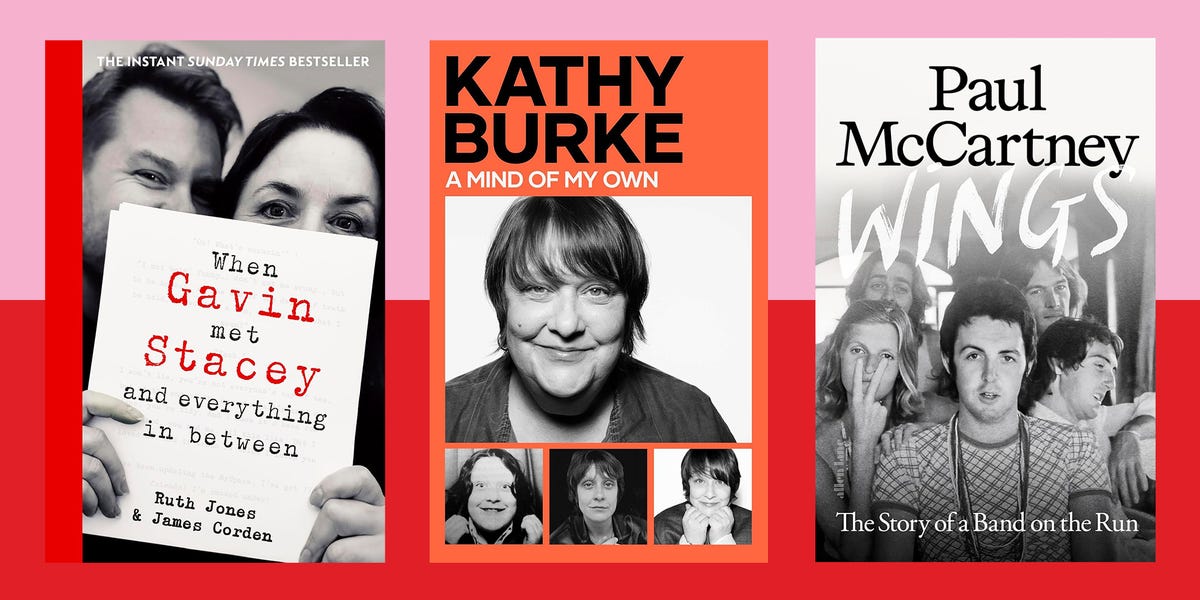
Celebrity memoirs used to arrive with the subtlety of a red-carpet wave: glamorous, polished, and just vague enough to keep the lawyers relaxed. Not anymore. The best celebrity memoirs to read right now are funnier, messier, sharper, and more revealing than the old “then I became famous and everyone clapped” formula. Today’s strongest star stories dig into class, grief, addiction, creativity, family, reinvention, and the strange business of becoming a public person while still having to remember where you left your keys.
That is why Kathy Burke’s A Mind of My Own feels so refreshing. It is funny, frank, and allergic to showbiz nonsense. On the music side, Paul McCartney’s Wings: The Story of a Band on the Run gives readers a sprawling, image-rich look at the post-Beatles band that critics once underestimated and fans never stopped defending. Put them together, and you get the current mood of celebrity autobiography: less airbrushed legend, more lived-in truth.
Whether you want a Hollywood confession, a rock-and-roll survival tale, a comic voice with bite, or a family story with a famous name attached, these memoirs prove that celebrity books can be more than gossip with a hard cover. Sometimes they are cultural history. Sometimes they are therapy with better lighting. And occasionally, they are both.
Why celebrity memoirs are having such a rich moment
The modern celebrity memoir works because readers are no longer satisfied with a highlight reel. We already have interviews, podcasts, fan pages, documentaries, and enough social media posts to wallpaper the moon. A good memoir has to offer something deeper: a private logic behind the public image.
The best recent memoirs do not simply say, “Here is what happened.” They ask, “What did fame cost? What did success hide? What did childhood teach me before anyone knew my name?” That is why books by actors, musicians, comedians, and cultural icons now sit comfortably beside literary memoirs. The famous name gets your attention; the voice keeps you reading.
Kathy Burke’s A Mind of My Own: funny, blunt, and beautifully human
Kathy Burke has always had the rare gift of making honesty sound entertaining rather than performative. In A Mind of My Own, her voice is exactly what fans would hope for: direct, unsentimental, wickedly funny, and emotionally alert. The memoir traces her path from a working-class childhood in Islington to the Anna Scher Theatre and then into a career as an actor, writer, director, and one of Britain’s most distinctive comic personalities.
What makes Burke’s autobiography stand out is not just the famous names or the career milestones. It is the texture. She writes about class without turning it into a lecture, pain without polishing it into inspirational wallpaper, and show business without pretending it is populated entirely by geniuses in scarves. Her humor has teeth, but it also has warmth. That combination makes the book feel like a conversation with someone who has seen everything, judged most of it accurately, and still knows how to laugh.
Who should read it?
Read A Mind of My Own if you like celebrity memoirs that sound unmistakably like the person who wrote them. Fans of comedy, British television, working-class life stories, and frank autobiographies will find plenty to love. It is especially good for readers who want a memoir that says something real about talent, class, survival, and self-possession without putting on a sequined jacket and yelling, “Journey!” every three pages.
Paul McCartney’s Wings: The Story of a Band on the Run: the compendium for music obsessives
Strictly speaking, Wings: The Story of a Band on the Run is not a traditional celebrity memoir in the “I was born, I suffered, I bought a castle” style. It is closer to an oral history and visual compendium, built around Paul McCartney’s post-Beatles band Wings. But for anyone interested in celebrity autobiography, it absolutely belongs on the shelf.
The book revisits the 1970s years when McCartney, Linda McCartney, and Denny Laine helped build Wings into a major force. It covers the band’s rise, reinventions, tours, albums, and eventual dissolution in 1981. More importantly, it reframes a period that was once treated as an awkward postscript to Beatlemania. Instead of a footnote, Wings emerges as a story of creative recovery: a superstar choosing the risky, humbling path of becoming part of a band again.
For music fans, the appeal is obvious. There are first-hand memories, archival details, and the sense of being backstage without having to smell the backstage. For general readers, the book offers something more universal: how do you begin again after being part of something impossible to surpass?
Who should read it?
Pick up Wings if you love music history, Paul McCartney, Linda McCartney, 1970s rock culture, or beautifully assembled books that reward slow browsing. It is a coffee-table book with a pulse, a fan document with historical value, and a reminder that second acts can be loud, strange, and surprisingly victorious.
Anthony Hopkins’ We Did OK, Kid: an acting legend looks inward
Anthony Hopkins’ We Did OK, Kid is the kind of memoir that carries the weight of a long career without turning into a trophy cabinet. Hopkins writes about his difficult childhood, his complicated relationship with family, his path into theater and film, and his sobriety. The result is reflective, sometimes severe, and often unexpectedly tender.
The great pleasure of the book is seeing how a performer known for precision, control, and volcanic stillness thinks about his own life. Readers come for stories about the craft of acting and legendary roles, but the deeper pull is Hopkins’ attempt to make sense of fear, anger, discipline, and memory. It is not a bubbly memoir. Nobody is going to mistake it for a poolside comedy. But it has the intensity of a man who has spent decades studying human behavior and finally turned the instrument on himself.
Best for readers who like:
Serious actor memoirs, stories of sobriety, reflections on aging, and behind-the-scenes accounts from a performer who has spent more than half a century making silence look terrifying.
Patti Smith’s Bread of Angels: poetic, intimate, and full of ghosts
Patti Smith has never treated memoir as a celebrity exercise. For her, memory is a form of art. Bread of Angels continues the autobiographical path she began in books such as Just Kids and M Train, but this one has a wider, life-spanning feel. It moves through childhood, artistic awakening, marriage to Fred “Sonic” Smith, motherhood, grief, and the long return to writing and performing.
Smith’s memoir is not designed for readers who want neat chronology and bold subheadings like “Then I Met Bob Dylan.” Her style is lyrical, associative, and spiritual. She writes as if memory arrives in weather patterns. That may sound fancy, but the book is grounded by work, family, illness, love, and loss. It reminds us that a celebrity memoir does not have to shout secrets to feel intimate.
Why it matters
Bread of Angels is for readers who want a memoir that reads like literature. It is a book about how artists survive not only youth and fame, but also the quieter, harder decades after the myth has already formed.
Tim Curry’s Vagabond: a cult icon takes the mic
Tim Curry’s Vagabond has built-in appeal because Curry himself has built-in appeal. From The Rocky Horror Picture Show to stage work, screen roles, voice acting, and a long career of being impossible to categorize, Curry occupies a special place in pop culture: beloved by theater kids, horror fans, comedy fans, animation fans, and anyone who enjoys a performer who seems to have arrived from a better, stranger planet.
The memoir celebrates his body of work and his impact on entertainment, but it also offers a chance to hear from an artist who has often seemed both everywhere and private. That tension is part of the fun. Curry’s career has never fit into one lane, and a good memoir from him does not need to either.
Who should read it?
Fans of cult cinema, musical theater, voice acting, and performers with glorious eccentricity should put Vagabond high on the list. It is a reminder that some careers are not ladders. They are haunted staircases with excellent lighting.
Tina Knowles’ Matriarch: family, legacy, and a woman taking center stage
Tina Knowles’ Matriarch is not simply “Beyoncé’s mother wrote a book,” though that shorthand will probably follow it around like an overexcited publicist. The memoir is about Knowles’ own life: her upbringing in Galveston, her family history, motherhood, ambition, heartbreak, business, creativity, and the complex work of becoming visible in a world that often defines women through the people they care for.
The book’s strength is its sense of generational storytelling. It looks at how mothers shape daughters, how families carry both wounds and gifts, and how a woman can reclaim her own narrative after decades of being described in relation to others. Readers interested in celebrity memoirs with emotional depth will find it rewarding, especially because it expands the idea of fame. Sometimes the most revealing person in the room is not the superstar under the spotlight, but the person who helped build the room.
Lionel Richie’s Truly: charm, songs, and the long road to confidence
Lionel Richie’s Truly has the advantage of a built-in soundtrack. Even readers who do not think they know Lionel Richie probably know more Lionel Richie songs than they realize. The memoir follows his journey from Tuskegee, Alabama, through the Commodores, solo superstardom, songwriting, family life, and the ups and downs that come with decades of public affection.
The emotional hook is Richie’s transformation from shy late bloomer to global entertainer. That arc gives the book more than nostalgia. It becomes a story about confidence: how it is built, lost, performed, and rebuilt. There are personal struggles, industry stories, and reflections on the discipline behind songs that sound effortless. The man wrote love songs smooth enough to make a tax audit feel romantic, but the memoir shows the work behind the velvet.
Jeremy Renner’s My Next Breath: recovery, resilience, and the body as battleground
Jeremy Renner’s My Next Breath centers on his near-fatal snowplow accident and the recovery that followed. It is a different kind of celebrity memoir because fame is not the main event. Survival is. The book examines pain, endurance, gratitude, and the strange clarity that can arrive when the body is broken and life narrows to the next breath.
Readers who know Renner from action roles may find the contrast especially powerful. On screen, superhero stories often make recovery look like a training montage with better music. Real recovery is slower, uglier, and less cooperative. My Next Breath is compelling because it does not treat resilience as a slogan. It treats it as a daily practice.
Cameron Crowe’s The Uncool: teenage journalism and rock history up close
Cameron Crowe’s The Uncool is a memoir for anyone who ever wanted to be young, talented, awkward, and somehow backstage with Led Zeppelin. Crowe revisits his teenage years as a music journalist, including his early work for Rolling Stone, his encounters with rock icons, and the experiences that later echoed through Almost Famous.
The memoir works because Crowe does not write as a detached historian. He writes as someone who was there too early, too young, and too observant to forget the emotional weirdness of it all. The book captures the thrill of access, but also the loneliness and confusion of being near fame before fully understanding adulthood. It is not just a rock memoir; it is a coming-of-age story wearing a backstage pass.
Still worth reading: modern celebrity memoir classics
While the newest releases are exciting, several recent celebrity memoirs remain essential. Britney Spears’ The Woman in Me is a defining pop memoir about autonomy, media cruelty, and the machinery of fame. Jennette McCurdy’s I’m Glad My Mom Died is darkly funny, devastating, and one of the clearest examples of a celebrity book that transcends celebrity. Viola Davis’ Finding Me is a powerful account of poverty, trauma, craft, and self-creation. Michelle Obama’s Becoming continues to stand as a polished but personal model of public-life memoir.
Prince Harry’s Spare, Barbra Streisand’s My Name Is Barbra, Matthew Perry’s Friends, Lovers, and the Big Terrible Thing, and Lisa Marie Presley and Riley Keough’s From Here to the Great Unknown also remain important for different reasons. Some offer royal fallout. Some offer Hollywood history. Some offer addiction, grief, or family myth at close range. Together, they show how broad the celebrity memoir category has become.
How to choose the best celebrity memoir for your mood
If you want humor with honesty
Start with Kathy Burke. Her memoir has the sharpness of stand-up without the artificial rhythm of a rehearsed routine. It is perfect when you want a book that can make you laugh and then suddenly make you sit up straighter.
If you want music history
Choose Wings, Patti Smith’s Bread of Angels, Lionel Richie’s Truly, or Cameron Crowe’s The Uncool. Each book approaches music differently: band history, poetic autobiography, pop-soul reflection, and journalistic coming-of-age.
If you want emotional survival
Anthony Hopkins, Jeremy Renner, Tina Knowles, Viola Davis, and Jennette McCurdy all offer memoirs shaped by hardship and self-reckoning. These books are not always easy, but they have staying power because they refuse to reduce pain to a brand.
If you want a gift book
Wings is the obvious pick for the music obsessive who already owns three versions of the same album and insists they are “completely different.” For readers who prefer narrative over memorabilia, Kathy Burke, Anthony Hopkins, Patti Smith, and Lionel Richie are safer bets.
Reading experience: why these books feel different from ordinary celebrity coverage
Reading a strong celebrity memoir is not like scrolling through entertainment news. News gives you fragments: a quote, a controversy, a premiere outfit, a divorce headline, a tour announcement, a suspiciously cheerful Instagram caption. A memoir gives you sequence. It lets you see how one choice led to another, how a childhood fear became an adult habit, how a public triumph sometimes arrived five minutes after a private disaster.
That is the pleasure of moving from Kathy Burke to Wings, then from Anthony Hopkins to Patti Smith. You begin to notice that fame is never one story. Burke’s memoir makes the reader feel the importance of voice: not the trained voice, not the media voice, but the personal one that refuses to be tidied up. Her experience reminds us that humor can be a survival tool, a class weapon, and a way of telling the truth without asking permission from the room.
The Wings compendium creates a different kind of reading experience. It is immersive rather than confessional. You dip into images, interviews, memories, and musical history, and you start to feel the pressure surrounding McCartney after the Beatles. That pressure is almost impossible to exaggerate. Imagine leaving the most famous band in the world and then deciding, with heroic optimism or magnificent stubbornness, to start another one. Most of us get nervous changing email signatures.
Anthony Hopkins’ memoir offers the experience of sitting with a complicated elder statesman of acting. It asks for patience and rewards attention. Patti Smith’s book is more dreamlike, a memoir that encourages slow reading and rereading. Tina Knowles’ Matriarch shifts the focus from individual stardom to family architecture: who built the foundation, who paid the emotional bills, who kept the lights on before the world knew the family name?
For readers, the best way to approach these books is not to ask, “Which celebrity do I like most?” A better question is, “What kind of human story do I want tonight?” Want defiance? Read Burke. Want rebirth? Read Wings. Want artistic memory? Read Smith or Crowe. Want survival? Read Renner. Want legacy? Read Knowles. Want charm with bruises underneath? Read Richie.
The experience of reading several celebrity memoirs in a row can also sharpen your nonsense detector. You quickly learn the difference between a book that has something to say and a book that merely has a famous name on the cover. The good ones contain risk. They reveal contradictions. They let the author look imperfect. They understand that readers do not need celebrities to be flawless; we need them to be specific.
That specificity is why this genre is so satisfying right now. A funny line from Kathy Burke, a backstage detail from Wings, a grief-soaked memory from Patti Smith, or a recovery scene from Jeremy Renner can stay with you longer than a dozen glossy interviews. These books remind us that celebrity is the packaging, not the product. The real product is a life, told well enough that even readers who arrived for gossip leave with empathy.
Conclusion: the best celebrity memoirs are really stories about becoming yourself
The finest celebrity memoirs to read right now are not just about famous people being famous. They are about becoming a self under pressure. Kathy Burke’s A Mind of My Own succeeds because it is funny, frank, and unmistakably hers. Wings: The Story of a Band on the Run succeeds because it turns a famous musical chapter into a story of risk, resilience, and creative rebuilding. Around them, books by Anthony Hopkins, Patti Smith, Tim Curry, Tina Knowles, Lionel Richie, Jeremy Renner, and Cameron Crowe show the range of what celebrity autobiography can do.
Some of these memoirs will make you laugh. Some may make you wince. A few might make you want to call your mother, forgive your younger self, or finally organize your record collection. That is the magic of the genre when it works: it lets public lives become private mirrors. And if the mirror happens to come with backstage gossip, family drama, and a few excellent one-liners, well, literature has endured worse blessings.
Note: This article is an original editorial-style draft based on real public information about current and recent celebrity memoirs. Availability, editions, and pricing may vary by retailer and region.














