
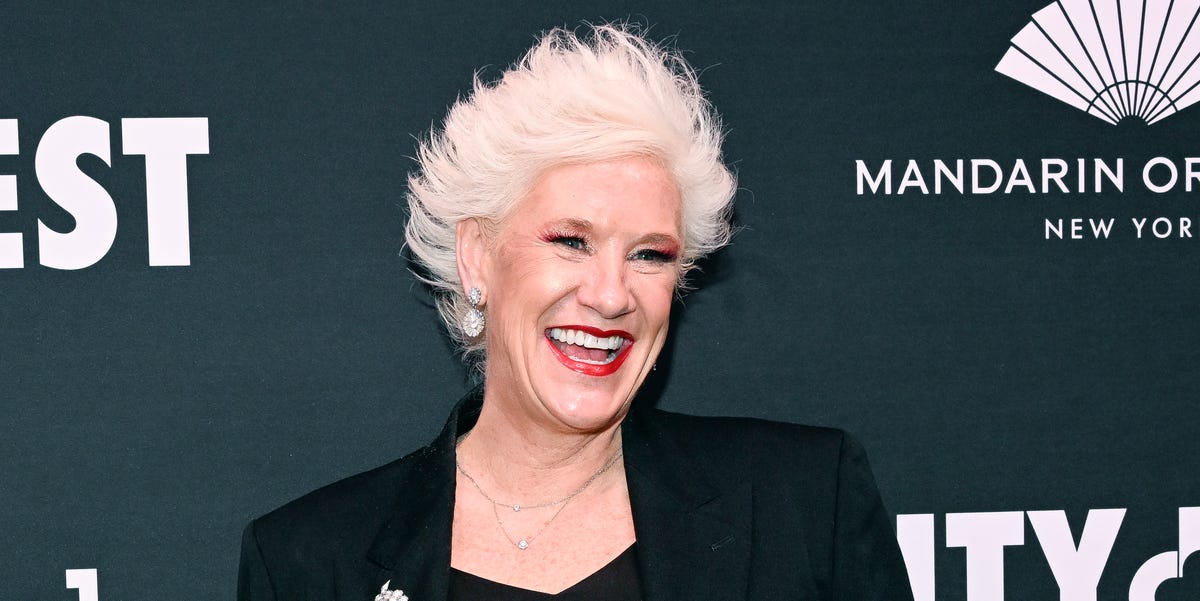
Anne Burrell was never the kind of TV personality who drifted quietly through a frame. She arrived. The platinum spikes, the booming laugh, the no-nonsense kitchen coaching, the unmistakable feeling that dinner mattered because people matteredBurrell built a career on being gloriously, unmistakably herself. So when news broke in June 2025 that the Food Network star had died at 55, the reaction was immediate: shock, grief, confusion, and a very modern avalanche of half-formed takes.
Now, months later, more official details have surfaced. And while the headlines have gotten louder, the smartest way to understand this story is actually the least dramatic one: slow down, sort confirmed facts from online noise, and follow the timeline. That is what this article does.
The short version is this: Anne Burrell died at her Brooklyn home on June 17, 2025. In July 2025, the medical examiner ruled her death a suicide caused by acute intoxication from a combination of diphenhydramine, ethanol, cetirizine, and amphetamine. In February 2026, later police reporting added that investigators found a note and journal entries in the home. At the end of March 2026, additional scene photos and video were reported publicly, renewing attention to the case. What changed was the amount of public detail. What did not change was the official ruling.
What happened on June 17, 2025
Anne Burrell died on the morning of June 17, 2025, at her home in Brooklyn, New York. She was 55. Early reports were limited, which is common in celebrity death cases during the first 24 to 72 hours. Authorities said she was found unconscious and unresponsive, and an autopsy was expected. At that stage, the public did not yet have an official cause of death.
That early uncertainty matters because it shaped the first wave of coverage. Some reports focused on the shock of the loss. Others zoomed in on the fact that Burrell had been publicly active not long before her death. For readers trying to make sense of it, the timeline felt jarring: one day a familiar television chef was in the public eye, and the next day the story had turned into an obituary.
One of the most talked-about details from those first reports was that Burrell had performed in an improv show at The Second City New York in Brooklyn the night before her death. A source later described her as being in good spirits. That detail became part of why the news felt so difficult for fans and colleagues to process. Sudden loss is always destabilizing, but sudden loss after a seemingly ordinary evening tends to hit people especially hard. It collides with our favorite human illusionthat if someone looked fine yesterday, everything must have been fine.
The official ruling on Anne Burrell’s cause of death
The biggest confirmed update came in July 2025, when the New York City medical examiner’s office ruled Burrell’s death a suicide. The cause was listed as acute intoxication due to the combined effects of diphenhydramine, ethanol, cetirizine, and amphetamine.
That language is clinical, and clinical language can sound cold. But it is important because it tells the public exactly what officials concluded without requiring guesswork. Diphenhydramine and cetirizine are antihistamines. Ethanol is alcohol. Amphetamine is a stimulant medication used in some cases to treat ADHD. The ruling did not turn the story into a mystery novel that needed internet detectives. It turned it into something sadder and more real: a loss with an official explanation, but not necessarily an emotionally satisfying one.
That distinction matters. A medical ruling answers one questionwhat officials determined caused the death. It does not answer every question people emotionally want answered, such as why someone was suffering, what private struggles may have existed, or why loved ones may not have seen this coming. Public records can be specific about substances and still tell us very little about a person’s inner life. That is one reason responsible coverage of a death like this has to leave some room for uncertainty instead of pretending every document unlocks a full explanation.
What later police records added
Months after the medical examiner’s ruling, later reporting added more detail from police materials. In February 2026, reports based on an NYPD document said investigators found a note and journal entries in Burrell’s bedroom. The same reporting said her husband, Stuart Claxton, told police that she had never attempted suicide in the past, had never spoken about it, and had shown no signs that she would do something like this.
Those details intensified public reaction for two reasons. First, any mention of a note immediately changes the emotional temperature of a story. Second, Claxton’s reported comments underscored something mental health professionals and grieving families often say after a sudden death: people do not always see what someone else is carrying. Public warmth is not proof of private ease. Professional momentum is not proof of internal peace. And a cheerful night out is not a binding contract with tomorrow.
The police materials also reportedly said Claxton noticed that the bed had been made, which was unusual, and later found Burrell on the bathroom floor near over-the-counter medications. He reportedly tried to wake her and then called 911. Those details, while painful, are part of why later coverage described the new information as significant. They gave the public a more granular picture of the scene, even if they did not change the legal or medical conclusions already on record.
Why the February 2026 report changed the conversation
It changed the conversation because it moved the story from “official cause of death announced” to “later police records reveal more context.” In media terms, that is catnip. In human terms, it is more complicated. More detail does not always equal more understanding. Sometimes it just means more intimacy with a family’s worst day.
That is why readers should be careful about the temptation to treat every new document like a missing puzzle piece that finally makes the whole picture clear. It usually does not. It simply narrows the area of uncertainty.
The newest details that emerged at the end of March 2026
At the end of March 2026, another burst of coverage arrived after additional scene photos and video were reported publicly. Those materials reportedly showed medications in the bathroom and footage of Burrell and Claxton returning home the night before her death. That reporting pulled the story back into headlines and social feeds, largely because visual evidence has a way of making an already painful story feel newly immediate.
But here is the key point: those materials did not reverse or revise the official ruling. They added imagery and chronology, not a new medical conclusion. That distinction can get lost online, where “new details” is often interpreted as “the truth has finally been discovered.” In this case, the official finding had already been made months earlier. The newer materials expanded the public record, but they did not fundamentally rewrite it.
That is also where restraint matters. Video clips and scene photos can create the illusion that viewers are qualified to decode someone’s final hours. They are not. A few seconds of elevator footage or a still image from a room cannot tell the full story of a person’s mental state, relationships, or decision-making. They can tell us what the camera saw. That is all.
What we know for sureand what we still do not
What we know for sure: Anne Burrell died on June 17, 2025, at age 55. She was found unresponsive in her Brooklyn home. In July 2025, the medical examiner ruled the death a suicide caused by acute intoxication involving diphenhydramine, ethanol, cetirizine, and amphetamine. Later police reporting said a note and journal entries were found in the home, and later-released materials added more scene detail.
What we do not know: the full private story of what Burrell was experiencing emotionally, mentally, or physically in the time leading up to her death. Public documents rarely offer that level of understanding. They are not memoirs. They are records.
That gap between official fact and emotional understanding is where the internet tends to get reckless. People rush to explain what they cannot actually know. They read body language like tea leaves. They turn fragments into theories. The more respectful response is simpler: accept the facts, acknowledge the limits, and resist the urge to manufacture meaning from someone else’s tragedy.
Why Anne Burrell mattered far beyond this headline
Any article about Burrell’s death is incomplete without a reminder of the career that made the loss resonate so widely. Burrell was more than a familiar Food Network face. She helped define a specific kind of culinary televisionhigh-skill, high-energy, slightly chaotic, and deeply teacher-driven. On Worst Cooks in America, she did not just clown around for camera time. She instructed. She pushed. She translated professional kitchen knowledge into language nervous home cooks could actually use.
She studied at the Culinary Institute of America, trained in Italian cooking, worked in New York restaurants, taught at the Institute of Culinary Education, and then became one of Food Network’s most recognizable stars. Viewers first met her through Iron Chef America, but she went on to anchor her own lane with Secrets of a Restaurant Chef and years of work across the network’s competition and teaching formats.
By the time of her death, Burrell had also recently appeared on House of Knives, one more reminder that she remained active, visible, and creatively engaged. Food Network later announced tribute programming and confirmed that a new season of Worst Cooks in America would feature her final mentor appearance. In other words, this was not just the loss of a celebrity from another era. It was the loss of a working, still-relevant television personality whose voice was very much part of the current food-TV landscape.
How colleagues, fans, and the network responded
Tributes after Burrell’s death emphasized the same qualities over and over: warmth, fierceness, generosity, humor, and a talent for teaching. Food Network described her as a one-of-a-kind talent. Colleagues remembered her as someone who did not shrink her personality to fit television. If anything, television had to adjust itself to Anne Burrell.
That is one reason the coverage has had such staying power. Burrell was not background noise in the pop-culture kitchen. She was the flame under the pan. Her style was loud, yes, but it was also deeply sincere. She made cooking feel both professional and accessible, serious and fun, exacting and joyful. That balance is harder to pull off than it looks.
Why this story has lingered in public memory
There is a particular heartbreak in losing someone whose public work was associated with comfort, celebration, and everyday ritual. Burrell was not a distant movie star whom audiences saw once every few years on a giant screen. She was part of the domestic rhythm. She appeared in kitchens, living rooms, weekend marathons, and weekday reruns. She taught viewers how to brown, season, taste, recover, and try again. For many people, she was attached to the very ordinary theater of home life: grocery lists, half-chopped onions, and the hopeful belief that tonight’s dinner might not be a total disaster.
That kind of familiarity changes the experience of grief. When a public figure dies suddenly, people do not just mourn the person they knew from headlines. They mourn the routine that person inhabited. Burrell’s death hit fans not only because it was sad, but because it interrupted a relationship built through repetition. She was there in the background while life was happeningwhile children learned to crack eggs, while couples argued about garlic, while someone reheated leftovers and watched one more episode before bed.
There is also the emotional whiplash of how stories like this unfold now. First comes the alert. Then the tribute posts. Then the official cause. Then later records. Then another round of “new details.” The result is a strange, extended mourning cycle in which grief keeps getting reopened by documentation. People think they are reading for closure, but often they are just circling the same sorrow from a different angle.
For fans, that experience can feel oddly personal. Not because they truly knew Burrell, but because she occupied a familiar corner of their lives. For colleagues, it can be even harder. The public sees a headline. Coworkers see an empty chair, a missing text, an energy that no longer walks into the room. And for loved ones, every new release of records can turn private pain into public content all over again.
That is why the most decent response is not endless theorizing. It is recognition. Recognition that someone who brought a great deal of skill, confidence, and delight to her work is gone. Recognition that public brightness and private suffering can coexist. Recognition that surviving family members are not characters in a serialized mystery but real people carrying an unimaginable loss.
It is also a reminder of something uncomfortable and important: people are often far less legible than we think they are. A successful career does not cancel distress. A smiling public appearance does not erase struggle. A funny night onstage does not guarantee safety the next morning. Those truths are hard because they remove the comforting illusion that pain always announces itself in obvious ways.
Maybe that is one reason Anne Burrell’s death has continued to resonate. It is not just the loss of a beloved chef. It is the loss of certainty. Fans want stories to behave neatly: a public figure looks vibrant, therefore life must be stable. But life is not neatly edited television. It is messy, private, unfinished, and sometimes devastatingly hard to read from the outside.
If there is any useful takeaway from the public experience of this story, it may be this: take people seriously when they say kindness matters, check in even when someone seems fine, and do not assume visibility equals invulnerability. Fame can amplify a person’s voice, but it does not make them immune to pain. Sometimes it only makes the silence around that pain harder for others to notice.
The bottom line
New details in Anne Burrell’s death have indeed emerged, but the most important facts are not new anymore. They are established. Burrell died on June 17, 2025, at 55. The official ruling in July 2025 was suicide caused by acute intoxication involving diphenhydramine, ethanol, cetirizine, and amphetamine. Later police records and scene materials added context, but they did not change the conclusion.
What remains is grief, respect, and a lasting legacy in food television. Anne Burrell built a career by making cooking feel thrilling instead of intimidating. She taught with swagger, laughed with her whole face, and made “try again” sound like a challenge worth accepting. That is a bigger story than any headline spike, and it is the one most worth remembering.
If you or someone you know is struggling or in crisis in the United States, call or text 988 for immediate support.













