
Stainless steel looks sleek, modern, and expensive right up until it starts wearing a shiny sweater made of cooking grease. One minute your fridge is giving “luxury kitchen showroom,” and the next it looks like it survived a bacon festival. The good news? Cleaning grease off stainless steel is usually much easier than people think. The trick is using the right cleaner, the right cloth, and the right amount of patiencemeaning no rage-scrubbing with steel wool like you are trying to win a medal.
In this guide, you’ll learn three effective ways to clean grease off stainless steel, from light splatters on a refrigerator door to sticky buildup on a range hood or backsplash. We’ll also cover what not to use, how to avoid streaks, and how to keep your stainless steel appliances looking sharp between deep cleans.
Why Grease Is So Annoying on Stainless Steel
Grease doesn’t just sit on the surface like an innocent little smudge. In the kitchen, airborne oil from frying and sautéing can settle onto stainless steel, then trap dust, fingerprints, and food residue. That is why a range hood, fridge handle, dishwasher front, or stainless backsplash can feel sticky even when it doesn’t look dramatically dirty.
Stainless steel is durable, but it is not invincible. Most manufacturers and cleaning experts recommend using soft microfiber cloths, mild cleaners, and wiping with the grain to reduce streaking and avoid fine scratches. That grain is the faint directional pattern in the steel. Think of it like petting a cat the right wayeveryone stays happier.
Before You Start: Two Quick Rules
1. Check whether your surface is standard or fingerprint-resistant stainless steel
Many newer appliances have a protective coating. On some coated or fingerprint-resistant finishes, acidic or harsh cleaners may not be recommended. If your appliance manual says to stick with warm water and mild soap, believe it. Your refrigerator has trust issues for a reason.
2. Always test in a small hidden spot first
Even common household cleaners can behave differently depending on the finish. Test first, especially if you plan to use vinegar, baking soda paste, or a commercial stainless steel cleaner.
Way 1: Use Dish Soap and Warm Water for Everyday Grease
Best for
Fresh grease, fingerprints, light splatters, and routine cleaning on stainless steel appliances.
What you need
Gather a bowl of warm water, a few drops of grease-cutting dish soap, one damp microfiber cloth, and one dry microfiber cloth. That’s it. No chemistry degree required.
How to do it
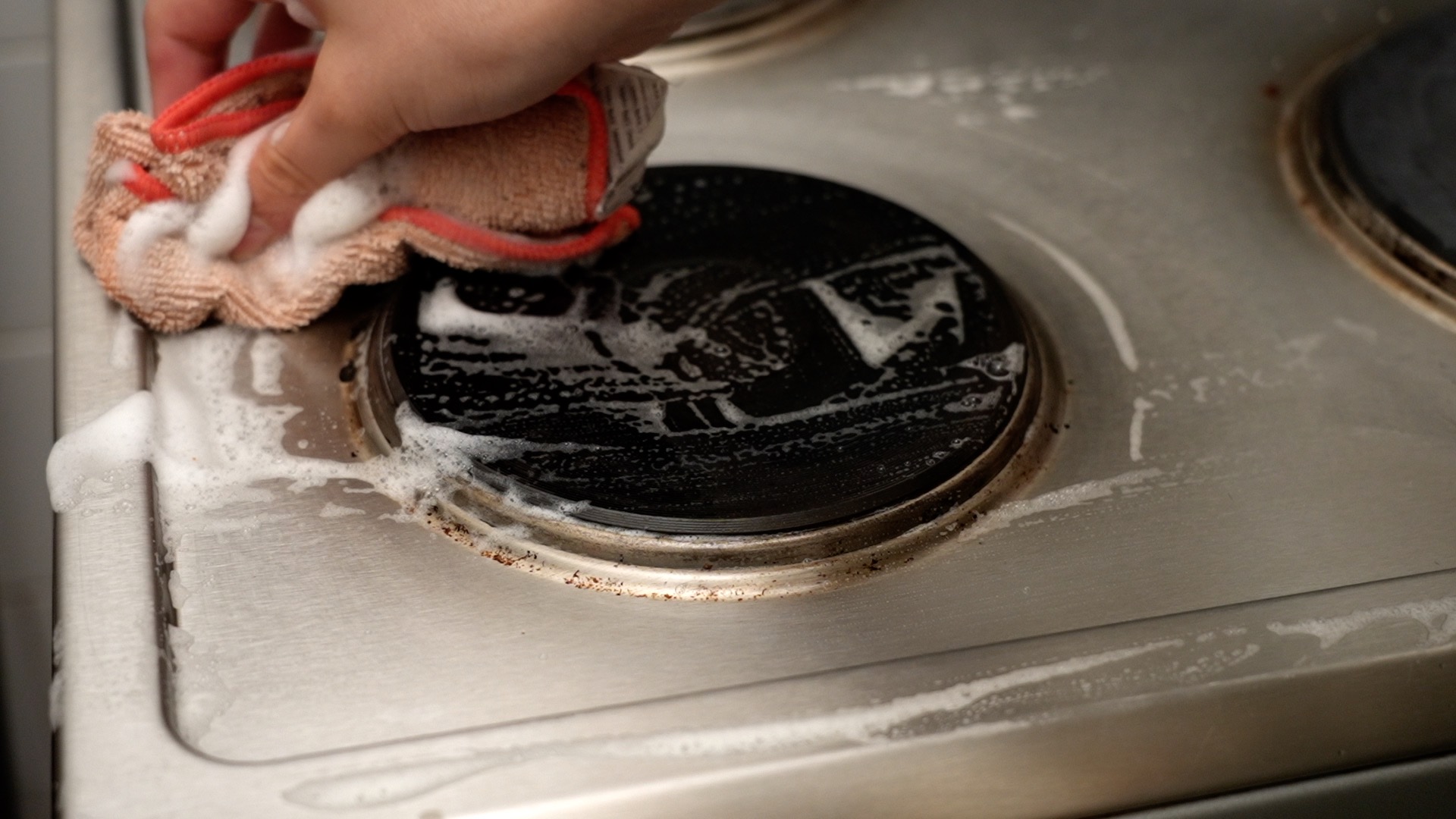
Mix a small amount of dish soap into warm water. Dip your microfiber cloth into the solution, wring it out well, and wipe the stainless steel with the grain. Focus on greasy areas like handles, control panels, edges around the oven door, and the zone directly above the stovetop where oil likes to throw parties.
Once the grease is loosened, wipe the surface again with a clean cloth dampened with plain water to remove soap residue. Then dry the area immediately with a fresh microfiber cloth. That final drying step matters more than people think. If you skip it, you may trade grease for streaks, which is not exactly progress.
Why this works
Dish soap is designed to break down oils and fats, so it is often the safest first step when you need to remove grease from stainless steel appliances. It cuts through oily film without the aggressiveness of harsher degreasers.
When this method shines
This is the best method for weekly maintenance and for anyone who wants the least risky option. If your fridge door is smudgy, your dishwasher has handprints, or your microwave exterior has mystery splatters from last Tuesday’s pasta incident, start here.
Common mistakes to avoid
Do not soak the cloth so heavily that water runs into seams, buttons, or control panels. Do not scrub in circles if you can see the grain clearly. And do not let the surface air-dry if you want a streak-free finish.
Way 2: Use a Baking Soda Paste for Stubborn, Sticky Buildup
Best for
Older grease, sticky residue, splatters that have hardened, and problem spots around cooktops, range hoods, and backsplashes.
What you need
Mix baking soda with a small amount of water to make a soft paste. For especially grimy areas, some cleaning guides also suggest combining a little dish soap with baking soda. Use a microfiber cloth, nonabrasive sponge, or soft nylon brush.
How to do it
Apply the paste to the greasy area and let it sit for about 5 to 10 minutes. You are not trying to mummify the appliancejust giving the paste time to loosen the grime. After that, gently rub the area with the grain using a soft cloth or nonabrasive sponge. If grease is packed into corners or textured trim, use a soft nylon brush or an old soft-bristled toothbrush.
Once the buildup lifts, wipe away the residue with a damp microfiber cloth. Rinse thoroughly, then dry completely. If any chalky haze remains, follow with a light dish soap wipe and a final rinse.
Why this works
Baking soda is mildly abrasive, which means it helps lift sticky grime without being as aggressive as harsher scouring products. Used correctly, it gives you extra cleaning power on grease that laughs at plain soapy water.
When this method makes sense
This is your move when the grease has crossed over from “smudge” into “historic layer.” Think of the stainless area above a frying pan station, the front edge of a stove, or the lower section of a range hood that catches months of cooking vapor.
A smart caution
Gentle is the keyword here. Even though baking soda is common in DIY cleaning, you still should not attack stainless steel with a rough scrub pad or use dry abrasive powder like you are sanding a deck. Keep the paste soft, keep the tool nonabrasive, and keep your pressure moderate.
Way 3: Use Vinegar or a Stainless Steel Cleaner for Final Degreasing and Shine
Best for
Finishing touches, light residual grease, streaks, and restoring a cleaner look after the heavy lifting is done.
What you need
Use a diluted vinegar solution or a commercial stainless steel cleaner that is safe for your appliance’s finish. You’ll also need a clean microfiber cloth and a dry cloth for buffing.
How to do it
If your manufacturer allows vinegar, lightly dampen a microfiber cloth with a diluted vinegar solution and wipe the surface with the grain. Avoid soaking the surface or letting vinegar sit. Follow with a clean damp cloth, then dry thoroughly. For a commercial stainless steel cleaner, spray the product onto the cloth rather than directly onto the appliance unless the label says otherwise. Wipe with the grain and buff dry.
This third method works especially well after you’ve already removed the worst of the grease with dish soap or baking soda. It helps take the finish from “clean enough” to “Did you just replace the fridge?”
Why this works
Vinegar can help dissolve lingering residue and evaporates relatively cleanly, while commercial stainless steel products are designed to clean and polish at the same time. Some also leave a protective film that helps reduce future fingerprints and smears.
Important warning
Do not assume vinegar is safe for every stainless steel surface. Some coated and fingerprint-resistant finishes specifically warn against acidic cleaners. If you are not sure, use mild soap and water or a manufacturer-approved product instead.
What Not to Use on Stainless Steel
If you want to clean grease off stainless steel without creating a brand-new problem, avoid the following:
Steel wool or metal scrubbers
These can scratch the finish and may even leave behind particles that encourage rusting. Basically, they solve one problem by inventing two more.
Chlorine bleach or harsh abrasive cleaners
These can damage, dull, or corrode the finish over time.
Paper towels that feel rough or gritty cloths
Some surfaces, especially coated finishes, can be dulled by rough materials. Microfiber is usually the safer bet.
Oven cleaner on stainless exteriors
Unless the product label and your appliance manufacturer specifically say it is safe, keep oven cleaner away from the exterior stainless finish.
How to Keep Grease from Building Up Again
The easiest way to clean stainless steel grease is to not let it become a science project in the first place. Here are a few habits that help:
Wipe high-touch areas often
Handles, fridge doors, microwave fronts, and dishwasher panels collect oils from hands fast. A quick wipe every few days makes deep cleaning much easier.
Clean the area above the stove weekly
Grease vapor rises, so range hoods, backsplashes, and upper cabinet hardware tend to get coated first.
Dry after cleaning
Water spots and streaks can make a clean appliance look dirty. Drying also helps protect the finish.
Follow the grain every time
This simple habit improves results and reduces the chance of visible marks.
Which Method Is Best?
If you want the short version, here it is:
Dish soap and warm water are best for routine cleaning and most fresh grease. Baking soda paste is best for sticky buildup and cooked-on messes. Vinegar or a stainless steel cleaner is best for finishing, streak removal, and bringing back shineassuming your finish allows it.
In real life, the best results often come from combining methods. Start gentle. Move up only if needed. Stainless steel generally rewards patience more than brute force.
Real-World Experiences: What Cleaning Grease Off Stainless Steel Is Actually Like
If you have ever tried to clean grease off stainless steel with nothing but optimism and a paper towel, you already know how this story goes. The paper towel shreds, the grease smears into a wider greasy abstract painting, and suddenly the appliance looks worse than when you started. One of the most common real-world experiences with stainless steel is realizing that the mess is not always dramaticit is often a thin, sneaky film. You don’t notice it at first. Then sunlight hits the fridge just right, and there it is: a whole biography written in fingerprints and oil.
The easiest surfaces are usually refrigerator doors and dishwasher fronts because the grease there tends to come from hands rather than cooking vapor. In those cases, warm water and dish soap feel almost magical. A microfiber cloth picks up the residue quickly, and after a dry buff, the surface starts looking normal again. This is the kind of cleaning experience that makes you feel wildly competent for at least seven minutes.
Range hoods and stainless backsplashes are another story. That is where kitchen grease settles like it has signed a lease. The buildup can feel tacky, and if it has been there for a while, plain soapy water may only remove the top layer. This is usually where a baking soda paste earns its paycheck. The experience is less “wipe and done” and more “apply, wait, wipe, repeat.” But the difference can be dramatic, especially around the lower edge of a hood where grease collects in a stubborn line.
Another very common experience is streak panic. People remove the grease, step back proudly, and then notice cloudy marks or weird swirls. Usually that happens because too much product was used, the surface was not rinsed, or it was left to air-dry. Stainless steel can be a little dramatic that way. Drying immediately with a clean microfiber cloth often fixes the issue faster than trying three more cleaners and spiraling emotionally in the kitchen.
Many people also discover that “more scrubbing” is not the answer. On stainless steel, aggressive cleaning can backfire. A rough pad, gritty cleaner, or random household chemical may leave the surface duller than the original grease did. The better experience almost always comes from using a mild cleaner first, a soft cloth, and a methodical wipe with the grain. It is less satisfying in an action-movie sense, but much better for the appliance.
Perhaps the most relatable experience of all is cleaning one stainless steel surface and then suddenly noticing every other one in the room. You polish the microwave, and now the oven door looks suspicious. You clean the dishwasher, and the toaster starts looking like it has been living a secret second life. Stainless steel has a funny way of raising standards the minute one surface looks good. The upside is that once you know the right process, the rest goes much faster. The first greasy appliance is the lesson. The second is the victory lap.
Final Thoughts
When you need to clean grease off stainless steel, the safest approach is also the smartest one: start with warm water and dish soap, move to baking soda paste for stubborn buildup, and use vinegar or a stainless steel cleaner only if your finish allows it. Wipe with the grain, use microfiber, and dry the surface thoroughly. Those three habits do most of the heavy lifting.
Stainless steel may be beautiful, but it is also brutally honest. It shows every fingerprint, every splash, and every moment you thought, “I’ll wipe that later.” Thankfully, it also cleans up beautifully when you treat it right. So the next time your fridge, hood, or backsplash starts looking greasy, you do not need a miracle. You just need the right methodand maybe a little less frying at high heat for a week or two.














