
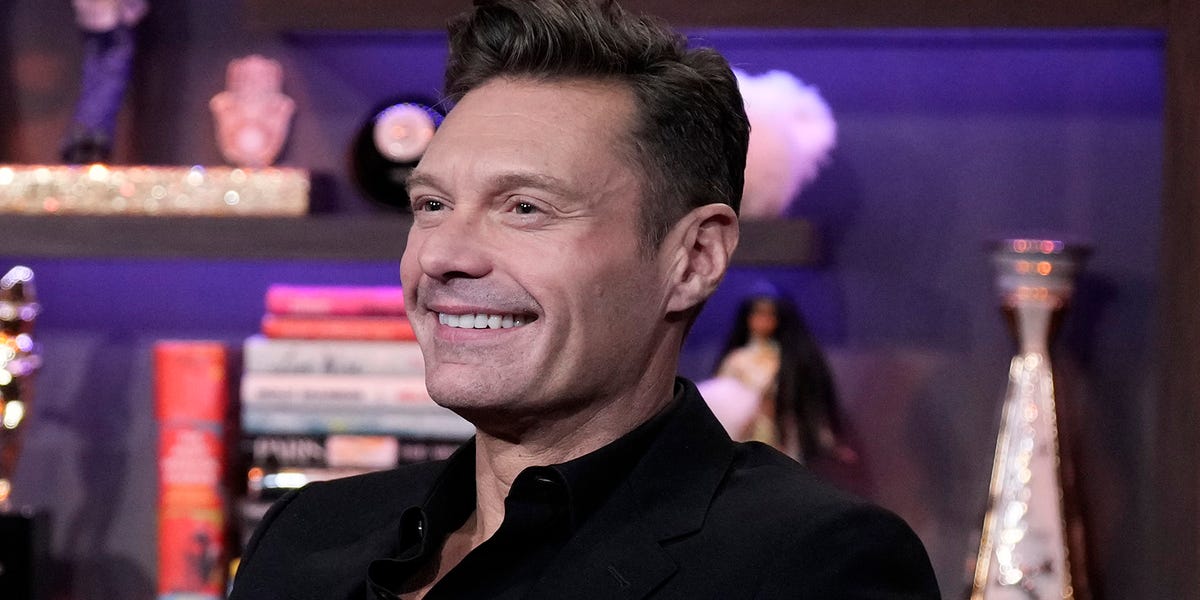
Ryan Seacrest is famous for keeping television moving. He announces singers, spins letter-filled wheels, counts down to midnight and somehow appears freshly pressed while maintaining a schedule that would make an ordinary calendar request paid vacation. Yet one of his most meaningful updates had little to do with ratings, red carpets or finding the correct vowel.
In October 2024, Seacrest shared an emotional look at the grand reopening of Seacrest Studios at Children’s Healthcare of Atlanta’s Arthur M. Blank Hospital. The moment brought him back to the city where his broadcasting career began and to the hospital system where his family’s charitable project opened its first studio in 2010.
Fans responded with enthusiastic messages praising Seacrest and the Ryan Seacrest Foundation for supporting hospitalized children. Their reaction was not simply celebrity applause. The update showed what can happen when a familiar public figure turns professional experience into something young patients can touch, use and make their own.
Ryan Seacrest’s Foundation Update Brought Him Back to the Beginning
Seacrest introduced the reopening with a message celebrating the journey “from the very first studio to this incredible new space.” That brief sentence carried considerable history.
The original Atlanta Seacrest Studio opened in 2010 at Children’s Healthcare of Atlanta. It became the starting point for a national network of broadcast media centers created inside pediatric hospitals. When Children’s Healthcare of Atlanta moved into the new Arthur M. Blank Hospital, the studio received a major upgrade rather than being packed into a moving box marked “microphones, game-show buzzers and celebrity selfies.”
The new facility officially opened on October 11, 2024. Seacrest joined hospital leaders, young patients and their families for the celebration. Musicians Lecrae and Lauren Alaina also attended, bringing live entertainment and extra excitement to the occasion.
For Seacrest, the reopening was both a charitable milestone and a homecoming. He grew up in the Atlanta area, attended Dunwoody High School and began developing his broadcasting skills as a teenager. Returning with a professional studio designed for children created a full-circle moment: the kid who once turned school announcements into a miniature morning show was now helping hospitalized children create shows of their own.
A Family Project That Became a National Mission
The Ryan Seacrest Foundation was established by Seacrest and his family after he visited pediatric hospitals and noticed that patients needed more opportunities for entertainment, expression and distraction during long or difficult stays.
Radio and television were the tools Seacrest understood best, so the family developed the idea for Seacrest Studios. Rather than building a room where children merely watched professional entertainers, the foundation created spaces where patients could become hosts, interviewers, performers, producers and contestants.
That distinction matters. A child in a hospital often has little control over the daily schedule. Meals arrive at set times. Tests must be completed. Medical professionals enter the room. Procedures cannot always be postponed because somebody is in the middle of a very important cartoon.
Inside a creative studio, however, the child can choose a song, answer a trivia question, operate a camera or speak into a microphone. For a while, the patient is not simply the person receiving care. The patient becomes the person running the show.
Inside the New Seacrest Studios in Atlanta
The redesigned Atlanta studio covers more than 1,200 square feet and includes professional television and radio equipment. Programming can be distributed through the hospital’s internal network, allowing children in patient rooms to participate even when they cannot physically visit the studio.
That accessibility transforms the studio from a special-event room into a hospital-wide experience. A child receiving treatment upstairs may still watch a performance, join a game, submit a question or see another patient hosting a program.
Depending on the day and hospital location, Seacrest Studios programming can include:
- Patient-hosted radio and television shows
- Music requests, trivia contests and interactive games
- Celebrity interviews and live performances
- Seasonal celebrations and hospital-wide broadcasts
- Educational segments, storytelling and creative activities
- Opportunities for patients to learn about cameras, microphones and production
The equipment may be sophisticated, but the central idea is wonderfully simple: give children something enjoyable to anticipate. Hospital life contains enough serious conversations. A brightly lit studio where somebody is debating the best pizza topping can offer a welcome change of programming.
Young Patients Helped Open the Studio
The Atlanta ceremony was not arranged solely around adult speakers and oversized scissors. Ten patients helped celebrate the opening alongside Seacrest and Children’s Healthcare of Atlanta CEO Donna Hyland.
Their involvement reflected the entire purpose of the project. The studio was not built as a monument to a television personality. It was built as a working space for children and families.
Seacrest also broadcast his syndicated radio program from the hospital during the celebration. The event connected the polished world of national media with the playful, patient-centered atmosphere of the new studio. Instead of asking children to imagine what professional broadcasting looks like, the program brought the professional broadcast directly to them.
Why Fans Became Emotional Over the Update
Celebrity social media comments can be unpredictable territory. One minute everyone is praising a charitable project; the next, three strangers are having a heated disagreement about somebody’s jacket. In this case, however, the dominant response was warm and supportive.
Fans thanked Seacrest for helping children, praised the foundation’s work and celebrated the continued growth of Seacrest Studios. The emotional reaction appears to have come from several parts of the story.
The Project Has Lasted
Many celebrity charitable announcements involve a donation, campaign or limited-time partnership. Those efforts can still be valuable, but the Atlanta update represented nearly a decade and a half of sustained work.
The original studio opened in 2010. By the time Seacrest returned for the new facility, the concept had expanded to pediatric hospitals around the country. Fans were not seeing a freshly announced intention. They were seeing the next chapter of a project with a substantial record behind it.
The Update Felt Personal
Atlanta is tied to Seacrest’s childhood, family and earliest broadcasting experience. Members of his family attended the reopening, reinforcing that the foundation has long been a shared commitment rather than a detached branding exercise.
His former radio mentor, Tom Sullivan, was also present. Sullivan had helped give the teenage Seacrest an early opportunity at an Atlanta radio station. Their reunion added another layer to the occasion: mentorship received years earlier had eventually become mentorship and creative access offered to a new generation.
The Children Were Participants, Not Props
The most effective moments from the event focused on patients actively using the studio. They were not positioned merely as an audience applauding a famous visitor. They were interviewing guests, exploring equipment and helping create the celebration.
That approach likely contributed to the sincerity fans recognized in the update. The story was not “Ryan Seacrest visits a hospital.” It was “Ryan Seacrest helps provide a permanent platform inside a hospital, and the children take over the microphones.” The second version has considerably more staying power.
Why Creative Experiences Matter During Hospital Stays
Seacrest Studios are entertainment spaces, but their potential value goes beyond entertainment. Pediatric-care organizations have long emphasized the importance of child-life services, therapeutic play, age-appropriate preparation and opportunities for self-expression.
Hospitalization can be confusing and stressful for children. Familiar routines are interrupted, privacy becomes limited and medical language can sound like it was invented by somebody trying to win a very difficult spelling bee.
Research on therapeutic play has associated structured creative activities with reduced distress, improved coping and more positive attitudes toward medical experiences. Child-life specialists use play, education, distraction and expressive activities to help patients understand what is happening and regain a sense of confidence.
A broadcast studio is not a replacement for medical treatment or professional psychological support. It is one part of the broader hospital environment. Within that environment, it can offer several meaningful benefits.
Creative Control
Producing a segment gives children choices. They can select a topic, decide what to say or choose whether they want to participate at all. Those small decisions can feel significant during a period when many other choices are necessarily controlled by medical needs.
Connection With Other Patients
Hospital rooms can feel isolating, particularly during extended stays or when infection precautions limit movement. Closed-circuit programming helps patients interact with a larger community from their rooms.
A child answering trivia from a hospital bed may discover that other children are participating too. Suddenly, the room feels connected to an event rather than separated from one.
A New Identity for the Day
Illness can become the main subject surrounding a child. Doctors discuss symptoms, relatives ask for updates and adults lower their voices in hallways as though children have temporarily lost the ability to notice anything.
In a studio, a patient can become a DJ, comedian, game-show champion or celebrity interviewer. That temporary identity does not erase the medical situation, but it creates room for another story to exist beside it.
The Foundation’s Work Extends Beyond Celebrity Visits
Celebrity appearances attract attention, and understandably so. Meeting a favorite singer can turn an ordinary hospital afternoon into a memory that lasts for years. Still, the day-to-day value of Seacrest Studios depends on the people who keep programming active between major visits.
Hospital media specialists, child-life professionals, volunteers and interns develop games, schedule broadcasts, assist patients and adapt activities for different ages and abilities. Their work ensures that the studio remains useful on a quiet Tuesday, not only when a Grammy winner enters the building.
The foundation also supports internships that introduce college students and young professionals to broadcasting, nonprofit programming and pediatric engagement. In that sense, a Seacrest Studio can serve two educational purposes at once: children explore media as a creative outlet, while interns learn how communication can be used in a service-centered environment.
The model has continued to expand through partnerships with pediatric hospitals in multiple U.S. cities. Although each facility operates within its own hospital system, the recurring formula remains recognizable: professional media technology, child-focused programming and access from patient rooms.
Related Experiences and Lessons From Ryan Seacrest’s Foundation Update
The emotional response to Seacrest’s post reveals something important about how people experience charitable news. Audiences often respond most strongly when an update shows continuity. A single ribbon-cutting photograph can be encouraging, but a story that connects a first studio in 2010 with a larger new facility in 2024 allows people to see time, effort and growth.
Imagine being the parent of a child facing a lengthy hospital stay. Medical care is naturally the priority, yet family life does not pause. Parents still try to provide birthdays, jokes, favorite songs, school activities and ordinary conversations. A hospital broadcast studio cannot remove the fear surrounding a diagnosis, but it can help create an afternoon in which the family talks about a funny interview instead of another procedure.
For a patient, the most memorable part may be something adults would consider small. Perhaps it is hearing a requested song played throughout the hospital. Perhaps it is pressing a button that starts the opening music. Maybe it is asking a celebrity a question and receiving an answer that was not filtered through a publicist, teacher or nervous parent whispering, “Please do not ask about money.”
These experiences matter because they belong to the child. Medical records document treatments, laboratory results and progress. Creative experiences document personality. They remind everyone that the person in the hospital bed has opinions, humor, curiosity and talents that exist independently of illness.
The update also offers a useful lesson for public figures considering philanthropic work. The most credible charitable projects often connect naturally with the person’s real skills. Seacrest did not suddenly present himself as a medical expert. He used his knowledge of broadcasting, production and celebrity relationships to help hospitals create experiences that complement professional pediatric care.
That alignment makes the project feel authentic. A chef might support nutrition education. An athlete might build inclusive recreation programs. A broadcaster can create a studio. Philanthropy works particularly well when expertise is not treated as decoration but converted into infrastructure that other people can use.
There is also a lesson in returning. Opening the first studio was important, but revisiting Atlanta for a new hospital and improved facility demonstrated that founding a program is not the same as finishing one. Equipment changes. Hospitals grow. Patient needs evolve. A lasting initiative requires maintenance, staffing, partnerships and occasional upgrades that involve considerably more than changing the password on a streaming account.
Fans may never enter the Atlanta studio, yet their supportive reaction still contributes to the project’s visibility. Social engagement can introduce new audiences to the foundation, encourage donations and help hospital programs attract volunteers or partners. A kind comment is not equivalent to funding a studio, of course, but public enthusiasm can help worthwhile work travel farther.
Most importantly, the story demonstrates how joy can be treated as a meaningful part of the hospital experience. Joy is not a substitute for medicine. It is not proof that every day will feel positive. It is a moment of relief, connection or laughter inside circumstances that may be exhausting.
When a child sits behind a microphone and announces the next song, the hospital has not disappeared. The diagnosis has not disappeared. But for several minutes, the child is directing everyone else’s attention. That shiftfrom being observed to being heardis one of the most powerful experiences the studio can provide.
Conclusion: A Homecoming With a Purpose
Ryan Seacrest’s emotional foundation update resonated because it combined personal history, visible progress and practical support for children. The reopening of Seacrest Studios at Arthur M. Blank Hospital brought the foundation back to the community where its first studio opened and where Seacrest’s own broadcasting ambitions began.
Fans celebrated the milestone, but the most important reactions likely happened away from social media: a patient laughing during a game, a sibling watching from a hospital room, a parent seeing a child become excited about something unrelated to treatment.
Seacrest has spent much of his career introducing other people before they step into the spotlight. Through his foundation, he has helped build places where hospitalized children can receive that introduction too. The cameras turn on, the microphone opens and, for once, the youngest person in the room gets to set the agenda.
Editorial note: This article is based on publicly reported information about the October 2024 reopening of Seacrest Studios at Children’s Healthcare of Atlanta and the broader mission of the Ryan Seacrest Foundation. Programs and studio locations may continue to evolve.













