
Note: This article is based on practical food-safety guidance, culinary knife-skill techniques, and real kitchen experience from reputable U.S. food, nutrition, and cooking resources. No source links are inserted so the content stays clean and ready for publishing.
Cucumbers look innocent. They sit in the produce drawer wearing their little green jackets, acting like the easiest vegetable in the kitchen. But the moment you start slicing one, you realize something important: the way you cut a cucumber changes everything. A thin round makes a crisp salad. A thick spear turns into a dip’s best friend. A ribbon makes your lunch look like it went to culinary school. A half-moon slice can rescue a sandwich from being aggressively boring.
That is why learning 4 ways to slice a cucumber is not just a tiny kitchen trick. It is a practical skill that helps you make better salads, prettier appetizers, crunchier snacks, cleaner meal prep, and more exciting side dishes. The cucumber may be mostly water, but do not underestimate it. When sliced correctly, it can bring freshness, texture, color, and a suspiciously fancy feeling to ordinary meals.
Before we grab the knife, let’s set the stage. Cucumbers should be rinsed under clean running water before cutting, even if you plan to peel them. Firm produce can be gently scrubbed with a clean vegetable brush, then dried with a towel to reduce surface moisture. Use a clean cutting board, keep raw meat far away from your cucumber station, and make sure your knife is sharp. A dull knife is not safer; it is just a tiny kitchen villain with confidence issues.
Why the Way You Slice a Cucumber Matters
A cucumber is crisp, mild, refreshing, and flexible. But it is also full of water, which means the cut you choose affects how it behaves in a dish. Thin slices soak up dressing quickly. Thick slices stay crunchy longer. Spears are ideal for dipping. Ribbons feel delicate and elegant. The shape controls texture, flavor absorption, presentation, and even how long the cucumber stays enjoyable after slicing.
For example, if you are making a creamy cucumber salad, thin rounds or half-moons help every bite catch dressing. If you are serving hummus or ranch, cucumber sticks work better because they are sturdy enough to scoop without collapsing like a dramatic actor in a soap opera. If you are building a party platter, ribbons add height and movement. If you are making quick pickles, thin rounds or bias slices allow the vinegar mixture to work faster.
Another factor is the type of cucumber. Standard slicing cucumbers often have thicker skins and larger seeds. English cucumbers are longer, thinner-skinned, and usually milder. Persian cucumbers are smaller, crisp, and excellent for snack trays and salads. Pickling cucumbers are short, bumpy, and naturally suited for brines. You can use the four slicing methods below with almost any cucumber, but the results will vary slightly depending on skin thickness, seed size, and water content.
Tools You Need Before Slicing
You do not need a professional kitchen setup to slice cucumbers well. You just need a few basics and a little common sense. A chef’s knife is the most versatile tool. A paring knife helps with trimming, peeling, and removing seeds. A vegetable peeler is perfect for ribbons. A mandoline creates thin, uniform slices quickly, but it must be used carefully with a hand guard or cut-resistant glove. Mandolines are useful, yes, but they are also basically tiny vegetable guillotines. Respect the blade.
Basic cucumber prep
First, rinse the cucumber under running water. Dry it well so it does not roll around while you cut. Trim off both ends. If the cucumber has a waxy or bitter skin, peel it fully or create decorative stripes by peeling lengthwise strips around the cucumber. For large cucumbers with watery centers, you can halve them lengthwise and scoop out the seeds with a spoon before slicing. This is especially helpful when making creamy salads, yogurt sauces, or cucumber sandwiches that should not become a puddle with ambition.
Method 1: Classic Cucumber Rounds
Classic rounds are the most familiar cucumber slice, and for good reason. They are simple, fast, attractive, and useful in almost everything. A round cucumber slice is made by cutting straight across the cucumber from one end to the other. The result is a circular piece that works beautifully in salads, sandwiches, water pitchers, snack plates, and quick pickles.
How to slice cucumber rounds
Place the cucumber horizontally on a clean cutting board. Hold it steady with your non-cutting hand, keeping your fingertips tucked under in a claw shape. Using a sharp chef’s knife, slice straight down across the cucumber. For salads, aim for slices about 1/8 inch to 1/4 inch thick. For snack plates, go a little thicker so the slices hold their crunch. For cucumber water or cocktails, thin rounds look pretty and release flavor quickly.
If you want perfectly even rounds, a mandoline can help. Set it to your preferred thickness, secure the cucumber with the food holder, and move slowly. Do not try to slice the last tiny end piece by hand. That final half-inch of cucumber is not worth a bandage and a new personality.
Best uses for cucumber rounds
Cucumber rounds are ideal for cucumber salad, tea sandwiches, open-faced appetizers, infused water, tzatziki prep, and refrigerator pickles. They are also great for stacking with cream cheese, smoked salmon, tuna salad, or hummus. For a quick appetizer, top thick rounds with whipped feta, dill, lemon zest, and a pinch of black pepper. Suddenly, your cucumber has a social calendar.
For salads that need to stay crisp, sprinkle the rounds lightly with salt and let them drain in a colander for 10 to 30 minutes. Pat them dry before adding dressing. This helps pull out excess moisture and prevents creamy dressings from becoming watery. It also concentrates the cucumber flavor, which sounds fancy but really just means “less sad salad juice.”
Method 2: Half-Moon Cucumber Slices
Half-moon slices are exactly what they sound like: cucumber pieces shaped like little green crescents. This cut is especially useful when the cucumber is large, seedy, or too wide for comfortable eating. Half-moons are easier to fork, easier to mix into bowls, and less likely to slide out of a sandwich like they are escaping a bad meeting.
How to slice cucumber half-moons
Trim the cucumber ends, then cut the cucumber in half lengthwise. Place each half flat-side down on the cutting board. This creates stability, which is important because rolling vegetables are chaos in cylindrical form. Slice crosswise into half-moon pieces. Keep them thin for salads and thicker for grain bowls or stir-fry-style cucumber dishes.
If the cucumber has large seeds, scoop them out before slicing. Run a small spoon down the center of each cucumber half to remove the watery seed channel. This step improves texture and keeps dressings from getting diluted. It is especially helpful for creamy cucumber salad, Greek salad, chicken salad, or any dish where you want crunch instead of cucumber soup wearing a disguise.
Best uses for half-moon slices
Half-moons are excellent in chopped salads, rice bowls, pita pockets, wraps, cold noodle dishes, and quick Asian-style cucumber salads. They mix evenly with tomatoes, onions, herbs, beans, feta, yogurt dressings, or vinaigrettes. Their flat side also helps them absorb seasoning quickly.
Try tossing half-moon cucumber slices with rice vinegar, a touch of sugar, sesame oil, chili flakes, and scallions. Let them sit for 10 minutes, and you have a fast side dish that tastes like you planned dinner better than you actually did. For a Mediterranean version, combine half-moons with tomato, red onion, olives, feta, oregano, lemon juice, and olive oil.
Method 3: Cucumber Spears and Sticks
Cucumber spears, sticks, and batons are the sturdy heroes of the slicing world. They are built for dipping, lunch boxes, snack boards, pickle jars, and children who suddenly become suspicious of vegetables unless they are shaped like something they can hold. This cut gives you crunch, structure, and a satisfying bite.
How to cut cucumber spears
Start by trimming both ends. Cut the cucumber crosswise into shorter sections, usually 3 to 4 inches long. Stand one section upright or lay it flat, then cut it lengthwise in half. Cut each half lengthwise again into quarters. For thinner sticks, cut the quarters once more. If the seeds are watery, slice off the seed strip from the inside of each spear.
For snack sticks, consistency matters. Try to keep the pieces similar in thickness so they look neat and are easy to serve. For pickling spears, leave enough thickness so the cucumber keeps its bite after sitting in brine. For dipping, avoid making the sticks too thin. A cucumber stick should be brave enough to handle hummus without bending like a pool noodle.
Best uses for cucumber sticks
Cucumber sticks are perfect with hummus, ranch, tzatziki, guacamole, whipped cottage cheese, baba ganoush, or spicy yogurt dip. They also belong in lunch boxes with carrots, bell peppers, and cherry tomatoes. For a party tray, arrange cucumber spears upright in a short glass or fan them around a bowl of dip.
This cut also works for quick refrigerator pickles. Pack cucumber spears into a clean jar with vinegar, water, salt, garlic, dill, and peppercorns. After a few hours in the refrigerator, the spears become tangy, crunchy, and dangerously snackable. You may open the fridge “just to check on them” and somehow eat six. This is normal behavior. Probably.
Method 4: Cucumber Ribbons
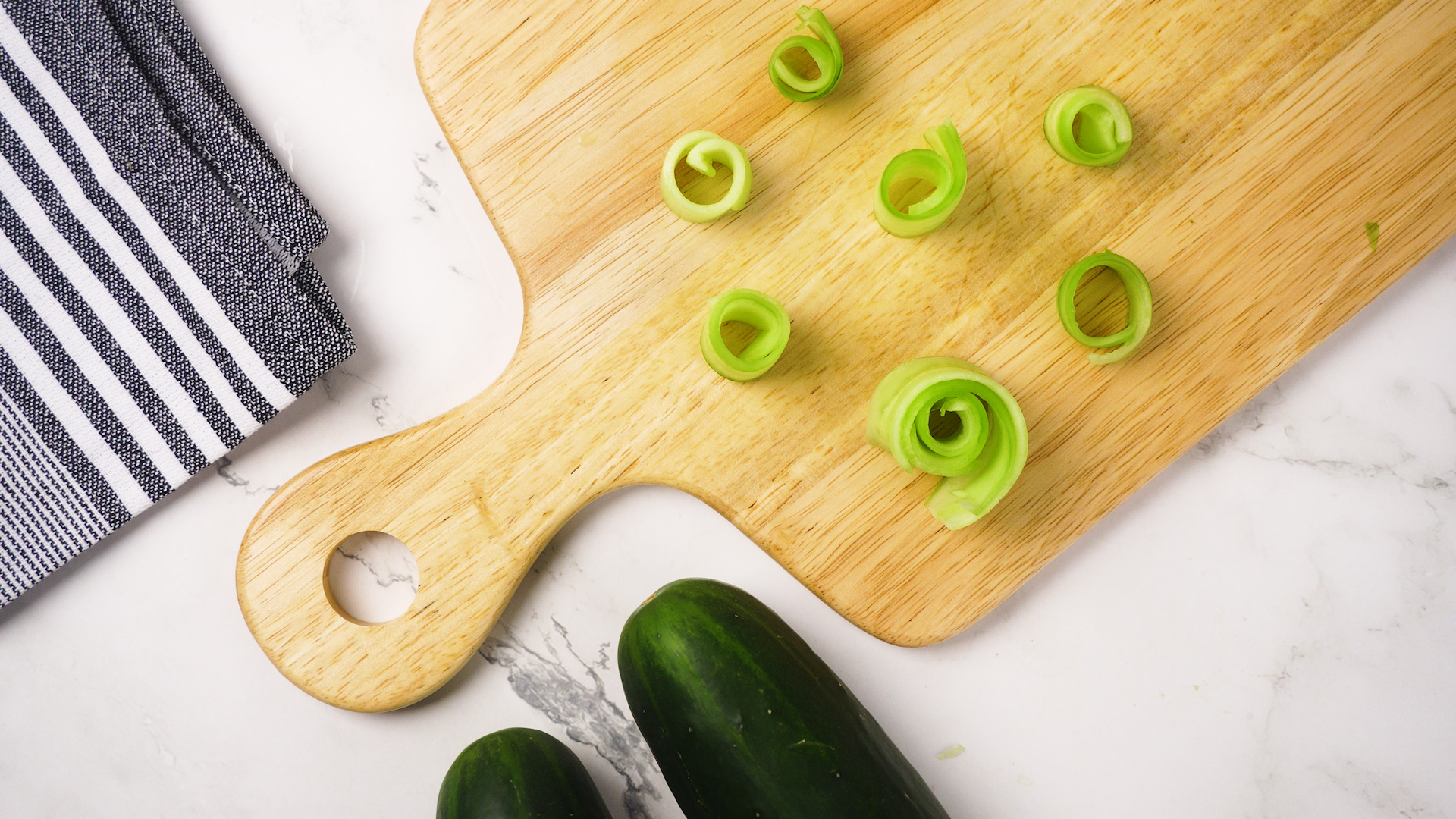
Cucumber ribbons are the elegant option. They look impressive, but they are surprisingly easy. Instead of cutting the cucumber into slices, you shave it into long, thin strips with a vegetable peeler, Y-peeler, or mandoline. Ribbons are delicate, flexible, and great for salads, garnishes, wraps, sushi-style rolls, and decorative plating.
How to make cucumber ribbons
Trim the cucumber ends. For the best ribbons, use an English or Persian cucumber because the skin is tender and the seed area is less watery. Hold the cucumber steady on the cutting board. Use a vegetable peeler to shave long strips from top to bottom. Rotate the cucumber as you work. When you reach the seedy center, turn the cucumber and shave the other side. You can discard the watery core, chop it into a salad, or toss it into a smoothie if you are the kind of person who has smoothie confidence.
If using a mandoline, choose a thin setting and use the hand guard. Ribbons should be thin enough to bend but not so thin that they tear instantly. If they feel too wet, place them on a clean towel and gently pat them dry before dressing.
Best uses for cucumber ribbons
Cucumber ribbons are wonderful in fresh salads with herbs, lemon, yogurt, sesame dressing, or chili crisp. They also make beautiful garnishes for grilled fish, chicken, grain bowls, and summer appetizers. Roll them around cream cheese and smoked salmon for quick party bites. Layer them in sandwiches for a delicate crunch. Toss them with mint, lime, and a little honey for a refreshing side dish.
Because ribbons are thin, they absorb dressing quickly. Dress them right before serving if you want them to stay lively. If you dress them too early, they may become soft. Still edible, yes. Glamorous, no.
Extra Tips for Better Cucumber Slicing
Use a sharp knife
A sharp knife makes cleaner cuts and gives you better control. Cucumbers have slick skins, so a dull blade can slide instead of cut. That is when trouble starts. Keep your fingertips tucked, stabilize the cucumber, and work at a comfortable pace.
Choose thickness based on the dish
Thin slices are best for quick pickles, delicate salads, tea sandwiches, and infused water. Medium slices are great for everyday salads and bowls. Thick slices or spears are best for dipping, lunch boxes, and snack boards. Ribbons are best for presentation, garnishes, and light salads.
Salt slices when moisture matters
Cucumbers contain a lot of water. That is part of their charm, but it can also water down dressings. If you are making a creamy cucumber salad, tzatziki, or a dish that must sit for a while, salt the sliced cucumber and let it drain. Then pat it dry. The cucumber will taste more concentrated and stay pleasantly crisp.
Store sliced cucumbers properly
Whole cucumbers usually last longer than sliced ones. Once cut, store cucumber pieces in an airtight container in the refrigerator. For best texture, eat them within a few days. Keep them away from raw meat, seafood, and poultry. Also avoid storing cucumbers near ethylene-producing produce like apples and tomatoes for long periods, since that can speed quality loss.
Common Mistakes to Avoid
The first mistake is not washing the cucumber before cutting. Even if you peel it, the knife can carry surface dirt or bacteria into the flesh. The second mistake is using the same board for raw meat and fresh produce without washing it well. The third mistake is slicing too far in advance. Cucumbers are crispest when freshly cut. The fourth mistake is ignoring the seed center in large cucumbers. If the center is watery, scoop it out before making salads or sandwiches.
Another mistake is dressing cucumber too early. Thin rounds and ribbons can soften quickly once salt, vinegar, or dressing gets involved. For meal prep, store sliced cucumbers separately and dress them close to serving time. For creamy salads, salt and drain first so the final dish stays thick and flavorful instead of turning into cucumber-flavored weather.
Which Cucumber Cut Should You Choose?
Choose rounds when you want a classic slice for salads, sandwiches, pickles, or infused water. Choose half-moons when the cucumber is large or when you want easy-to-eat pieces for bowls and chopped salads. Choose spears or sticks when you need a sturdy snack, dipper, or pickle shape. Choose ribbons when presentation matters and you want something fresh, delicate, and a little dramatic.
The best cucumber slice is not always the fanciest one. It is the one that fits the food. A ribbon may look beautiful, but it will not scoop hummus. A spear is satisfying, but it may be too bulky for a tea sandwich. A round is classic, but a half-moon may be easier to mix into a grain bowl. Once you understand the purpose of each cut, cucumbers become much more useful.
Real Kitchen Experiences: What I’ve Learned from Slicing Cucumbers
After slicing more cucumbers than any reasonable person needs to count, I have learned that the cucumber is a quiet test of kitchen patience. It seems simple, but small choices matter. The first time I made a big cucumber salad for a cookout, I sliced everything beautifully, added a creamy dressing, and placed the bowl proudly in the refrigerator. Two hours later, I opened the door and found a watery situation that looked less like salad and more like a dairy-based weather event. That was the day I learned to salt and drain cucumber slices before adding creamy dressing.
Another useful lesson came from snack boards. Thin cucumber rounds look nice, but they are not always strong enough for thick dips. When people are scooping hummus, pimento cheese, or Greek yogurt dip, cucumber spears work better. They are easier to grab, less slippery, and more satisfying to crunch. If you are preparing food for kids, spears are also more fun. There is something about a vegetable stick that feels less like homework and more like a snack with a job.
For sandwiches, I have learned that thinner is usually better. Thick cucumber slices can make bread slide around, especially if the sandwich has mayo, cream cheese, or avocado. Thin rounds or ribbons create freshness without turning the sandwich into a construction project. If the cucumber is especially watery, pat the slices dry before layering them. This tiny step can save your bread from becoming soggy and emotionally exhausted.
Ribbons are my favorite trick when a meal needs to look more thoughtful than it was. A bowl of rice, grilled chicken, herbs, and sauce looks fine. Add cucumber ribbons, and suddenly it looks styled. The long strips add movement and freshness. They also catch dressing beautifully. The only catch is timing: ribbons should be dressed close to serving because they soften quickly. They are the silk scarf of cucumber cutsbeautiful, but not built for heavy labor.
I have also learned that cucumber type matters. English cucumbers are excellent for ribbons and thin rounds because the skin is tender and the seeds are small. Persian cucumbers are wonderful for snacking and half-moons because they are crisp and compact. Large slicing cucumbers are affordable and useful, but they often benefit from peeling or seeding. Pickling cucumbers are sturdy and flavorful, especially when cut into spears or thick coins.
One more practical experience: do not underestimate drying. A wet cucumber is slippery to cut and watery in a dish. After rinsing, dry it with a clean towel. After salting, pat slices dry again. It seems fussy until you taste the difference. The cucumber stays crisp, the dressing stays balanced, and the final dish feels intentional.
Finally, cucumber slicing is one of those skills that gets faster with repetition. At first, you may think about every cut. After a while, you automatically choose rounds for quick salad, half-moons for bowls, sticks for dips, and ribbons for pretty plates. That is the real value of learning these four methods. You are not just cutting a cucumber. You are choosing texture, function, and presentation. Not bad for a vegetable that spends most of its life pretending to be spa water.
Conclusion
Learning 4 ways to slice a cucumber gives you more control over your meals with very little effort. Classic rounds are quick and versatile. Half-moons are practical for salads and bowls. Spears and sticks are perfect for dipping and snacking. Ribbons bring elegance to fresh dishes and appetizers. Once you know which cut fits which recipe, cucumbers stop being an afterthought and become one of the easiest ways to add crunch, freshness, and visual appeal to everyday food.
The key is to start with clean produce, use a sharp knife, choose the right thickness, and manage moisture when needed. A cucumber may be simple, but the right slice can make your salad brighter, your sandwich better, your snack tray neater, and your dinner plate look like you tried harder than you did. That is the kind of kitchen magic we can all support.














