
Rhythmic gymnastics is what happens when athletic discipline, dance, music, flexibility, and flying objects decide to become best friends. It looks elegant from the audience, but behind every floating ribbon and perfectly timed leap is a gymnast who has practiced balance, coordination, strength, rhythm, and apparatus control until “just one more try” became a lifestyle.
If you are wondering how to do rhythmic gymnastics, the good news is that you do not need to begin with Olympic-level back flexibility or a ribbon that obeys your every command. You start with the basics: posture, warm-ups, dance movement, simple body skills, safe stretching, and beginner apparatus handling. Then, step by step, you learn how to connect movements into a routine that flows with music.
This guide explains rhythmic gymnastics for beginners in a practical, friendly way. You will learn what the sport is, what equipment you need, how to train safely, how to practice each apparatus, and how to build your first routine without accidentally turning your ribbon into a decorative knot collection.
What Is Rhythmic Gymnastics?
Rhythmic gymnastics is a performance-based gymnastics discipline that combines dance, ballet-inspired movement, acrobatics, flexibility, and hand apparatus skills. Gymnasts perform routines to music while manipulating one apparatus at a time. The five traditional rhythmic gymnastics apparatus are rope, hoop, ball, clubs, and ribbon.
At high levels, routines are judged on difficulty, artistry, execution, body control, musical expression, and apparatus handling. A gymnast must not only leap, turn, balance, and travel across the floor, but also toss, roll, swing, catch, bounce, or spiral an apparatus in harmony with the routine. In short, rhythmic gymnastics asks the body and brain to multitask at a level that makes texting while walking look amateur.
Beginners, however, do not need to worry about complex scoring systems right away. The first goal is to build strong fundamentals: pointed toes, clean posture, safe flexibility, musical timing, and confidence with basic apparatus movements.
Benefits of Rhythmic Gymnastics
Rhythmic gymnastics offers more than beautiful routines. It develops physical and mental skills that carry into other sports, dance styles, and everyday movement.
Improved Flexibility and Mobility
Flexibility is central to rhythmic gymnastics. Training often includes splits, back mobility, shoulder flexibility, hip opening, and ankle work. The goal is not to force the body into extreme shapes overnight. Smart gymnasts improve range of motion gradually with warm muscles, controlled stretching, and consistent practice.
Better Balance and Coordination
Balancing on one leg while holding a graceful arm position is already challenging. Now add a ball rolling across your arms or a ribbon drawing circles in the air. Rhythmic gymnastics trains hand-eye coordination, body awareness, and balance in a uniquely artistic way.
Strength Without Bulk
Rhythmic gymnasts need strong legs for jumps, a stable core for turns, flexible shoulders for apparatus work, and controlled ankles for clean lines. Strength training usually focuses on bodyweight movements, posture, endurance, and control rather than heavy lifting.
Musicality and Confidence
Because routines are performed to music, gymnasts learn rhythm, expression, timing, and stage presence. Even shy beginners often become more confident as they learn to perform movements with purpose instead of looking like they are apologizing to the floor.
Essential Equipment for Rhythmic Gymnastics
You can begin rhythmic gymnastics with comfortable clothing, a safe open space, and one basic apparatus. As you progress, you may collect all five apparatus types.
Rope
The rope is used for swings, circles, rotations, jumps, throws, and skips. It helps beginners develop rhythm, foot coordination, and timing. A properly sized rope usually reaches near the armpits when the gymnast stands on the center and pulls both ends upward.
Hoop
The hoop is one of the most beginner-friendly apparatus options. Gymnasts roll it, spin it, toss it, pass through it, and rotate it around the body. It teaches spatial awareness because, unlike a ball, the hoop has a very clear opinion about where it wants to roll.
Ball
The ball is smooth, elegant, and surprisingly demanding. It should move fluidly with the body, not be gripped tightly. Beginner skills include rolling the ball across the arms, bouncing it, circling it around the body, and tossing it gently.
Clubs
Clubs are used in pairs and require excellent coordination. Beginners start with small circles, swings, taps, and simple tosses. Clubs are exciting, but they can feel like juggling with consequences, so patience is essential.
Ribbon
The ribbon is the superstar apparatus for many beginners because it looks magical. It creates spirals, snakes, circles, and waves. The challenge is keeping it moving. If the ribbon stops, it tangles. If it tangles, it becomes modern art.
How to Start Rhythmic Gymnastics Safely
Before practicing difficult movements, build a safe foundation. Rhythmic gymnastics rewards consistency, not rushing. A beginner who trains carefully will improve faster than someone who forces skills before the body is ready.
1. Find a Qualified Coach or Beginner Class
If possible, start with a rhythmic gymnastics coach, gymnastics club, dance studio, or community class. A coach can correct alignment, teach safe progressions, and help prevent bad habits. This is especially important for flexibility skills, leaps, turns, and backbends.
2. Use a Safe Practice Space
Choose an open area with enough room to move without hitting furniture, lamps, pets, siblings, or anything breakable. A gym mat or dance floor is ideal. Avoid slippery surfaces, uneven ground, and spaces with low ceilings when practicing tosses.
3. Warm Up Before Stretching
Do not begin with deep stretching when your muscles are cold. Start with 5 to 10 minutes of light movement such as jogging in place, arm circles, gentle jumps, high knees, or dance steps. Warm muscles stretch more safely and respond better.
4. Progress Gradually
Rhythmic gymnastics includes advanced flexibility and balance skills, but beginners should focus on clean technique first. A low leap with pointed toes and good posture is better than a high leap that looks like it lost a debate with gravity.
A Beginner Warm-Up for Rhythmic Gymnastics
A good warm-up prepares the body for movement, improves focus, and lowers the chance of injury. Try this simple structure before practice:
General Warm-Up
Begin with light cardio for 5 minutes. Jog, skip, march with high knees, or dance to music. The goal is to raise your body temperature and wake up your muscles.
Joint Mobility
Move through ankle circles, hip circles, wrist circles, shoulder rolls, neck turns, and gentle spinal waves. Rhythmic gymnastics uses the whole body, so do not ignore small joints like wrists and ankles.
Dynamic Stretching
Add leg swings, walking lunges, arm swings, gentle kicks, and controlled torso bends. Dynamic stretching helps prepare the body for active skills like leaps, balances, and turns.
Basic Conditioning
Include a short set of core and leg exercises: planks, calf raises, bridges, squats, and relevé holds. These build the strength needed for clean lines and stable landings.
Core Body Skills in Rhythmic Gymnastics
Before focusing heavily on apparatus tricks, beginners should learn the body movements that form the base of routines.
Posture and Alignment
Stand tall with shoulders relaxed, chest open, core engaged, and chin level. Good posture makes every skill look more polished. Practice walking, turning, and posing with long lines through the arms, legs, neck, and back.
Toe Point and Footwork
Pointed toes are a rhythmic gymnastics essential. Practice pointing and flexing the feet, rising onto the balls of the feet, and moving through tendu positions to the front, side, and back. Clean footwork makes beginner routines look instantly more advanced.
Balances
Start with simple balances such as passé balance, arabesque balance, and side leg holds at a comfortable height. Hold each position with control for a few seconds. Keep the supporting leg strong and the upper body lifted.
Turns
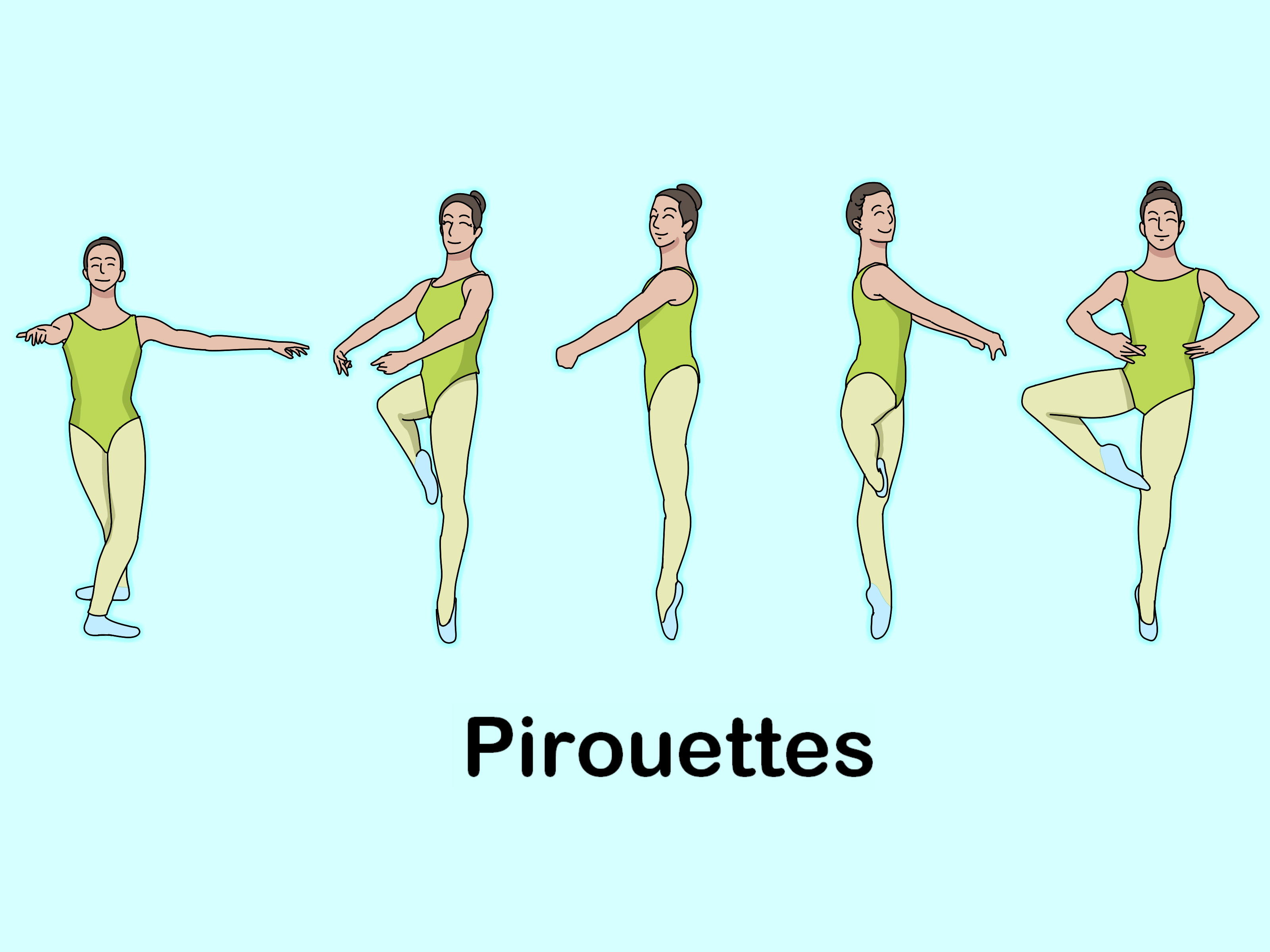
Begin with basic pivot turns and chainé-style turns. Focus on spotting, posture, and control. Do not spin wildly and hope for the best. That is not a turn; that is a weather event.
Leaps and Jumps
Beginners can practice small straight jumps, tuck jumps, split-prep jumps, and chassé steps. Land softly with bent knees and controlled ankles. Quality matters more than height at the beginning.
How to Practice Each Rhythmic Gymnastics Apparatus
How to Practice with Rope
Start by holding one end of the rope in each hand. Practice forward swings, side swings, circles, and basic skipping. Then try figure-eight movements and small tosses. Keep the rope moving smoothly and coordinate it with steps, jumps, or turns.
How to Practice with Hoop
Begin with waist-level hoop circles, hand rotations, and rolling the hoop across the floor. Practice stepping through the hoop and passing it around the body. Once comfortable, add small tosses with two-handed catches. Keep your eyes on the hoop and your posture tall.
How to Practice with Ball
Hold the ball gently in the palm without squeezing it. Try rolling it from one hand to the other, circling it around the waist, bouncing it with control, and rolling it along the arms. The ball should look connected to the body, not like a runaway orange.
How to Practice with Clubs
Start with one club before using two. Practice small wrist circles, arm swings, and tapping patterns. With two clubs, work on matching circles, alternating swings, and simple toss-and-catch drills. Keep movements small until coordination improves.
How to Practice with Ribbon
Hold the ribbon stick lightly and move from the wrist, not the whole arm. Practice snakes on the floor, vertical spirals, horizontal circles, and figure eights. Keep the ribbon moving continuously to avoid knots. If it tangles, pause, reset, and remember: every rhythmic gymnast has fought the ribbon monster at least once.
How to Build Your First Rhythmic Gymnastics Routine
A beginner routine does not need to be complicated. Start with 30 to 60 seconds of music and choose one apparatus. Your goal is to connect body movement, apparatus handling, and musical timing in a simple, confident sequence.
Step 1: Choose Music
Pick music with a clear beat and mood. Beginners often do well with music that is not too fast. Listen several times and mark where the phrases change. Your routine should match the music instead of looking like you accidentally pressed play nearby.
Step 2: Select Basic Skills
Choose three or four body skills, such as a balance, turn, jump, and dance step. Add three or four apparatus skills, such as a roll, swing, toss, spiral, or bounce. Keep the skills realistic and clean.
Step 3: Create Transitions
Transitions connect skills. Use steps, turns, arm movements, floor patterns, and dance gestures to move from one element to the next. A good routine flows instead of stopping after every trick like a slideshow.
Step 4: Practice with Counts
Count the music in sets of eight. Place each skill on a specific count so your timing becomes consistent. For example, you might start with four counts of walking, four counts of ribbon spirals, eight counts for a balance, and eight counts for a traveling turn.
Step 5: Perform and Refine
Record yourself if possible. Watch for posture, pointed toes, timing, facial expression, and apparatus control. Fix one or two things at a time. Trying to fix everything at once is the fastest way to forget the entire routine and stare dramatically into the distance.
Beginner Training Schedule
Consistency matters more than marathon practice sessions. A beginner can improve with two to four focused sessions per week, depending on age, fitness level, coaching, and recovery needs.
Sample 60-Minute Practice
10 minutes: Warm-up and mobility.
10 minutes: Flexibility and strength basics.
15 minutes: Body skills such as balances, turns, jumps, and dance steps.
15 minutes: Apparatus practice with rope, hoop, ball, clubs, or ribbon.
5 minutes: Routine connection or music practice.
5 minutes: Cool-down and gentle stretching.
Common Beginner Mistakes
Skipping the Warm-Up
Cold muscles are not ready for deep stretching or explosive movement. Always warm up first.
Forcing Flexibility
Flexibility should feel like a controlled stretch, not sharp pain. Pushing too hard can lead to injury and slower progress.
Ignoring Strength
Flexibility without strength can make skills unstable. Core, leg, ankle, shoulder, and back strength help gymnasts control big ranges of motion safely.
Only Practicing Favorite Skills
Everyone has a favorite apparatus, but balanced training matters. If you only practice ribbon because it looks pretty, the clubs will eventually file a complaint.
Looking Down Too Much
Beginners often stare at the floor or apparatus. Practice lifting your focus. Performance quality improves when your eyes, face, and posture show confidence.
Safety Tips for Rhythmic Gymnastics
Rhythmic gymnastics is beautiful, but it is still a sport. Train with care, especially when learning leaps, backbends, deep flexibility skills, or tosses.
Practice on safe flooring, use properly sized equipment, and stop if you feel sharp pain, dizziness, or unusual discomfort. Take rest days to help the body recover. Young athletes should work with qualified coaches and avoid repeating difficult skills excessively. Overuse injuries can happen when the same movements are practiced too much without enough recovery.
Good technique is also a safety tool. Landing softly, keeping knees aligned, strengthening the core, and improving ankle stability all help reduce unnecessary strain. The best gymnasts do not just train hard; they train intelligently.
Experience Notes: What Learning Rhythmic Gymnastics Really Feels Like
Learning rhythmic gymnastics feels exciting, humbling, and occasionally hilarious. At first, the sport may look simple from the outside. A gymnast tosses a ball, spins, catches it, smiles, and somehow makes it seem as natural as breathing. Then you try it yourself and discover that the ball has dreams of freedom, the ribbon has a secret talent for knots, and your balance disappears the moment someone says, “Let’s do that with music.”
The first real experience many beginners have is realizing that rhythmic gymnastics is not just flexibility. Flexibility helps, of course, but coordination is the real boss battle. You might be able to do a decent split on the floor, but can you step into a balance while rolling a ball across your arms and staying on the beat? That is where the sport becomes fascinating. It trains the body to move as one complete system: feet, hips, spine, shoulders, hands, eyes, and expression all working together.
Another memorable part of rhythmic gymnastics is learning patience. Progress often comes in tiny victories. One day, you finally keep the ribbon from touching the floor for an entire phrase of music. Another day, your hoop roll travels straight instead of making a bold escape toward the wall. Later, you catch a small toss without panicking. These moments may seem small, but they build confidence quickly because you can feel your coordination improving.
Beginners also learn that looking graceful takes effort. A simple arm wave requires soft fingers, relaxed shoulders, smooth timing, and lifted posture. A turn requires spotting, core control, and a clean finish. Even walking across the floor can become part of the performance. The sport teaches you that details matter. Pointed toes, stretched knees, musical accents, and facial expression can turn a basic routine into something polished.
One of the best training experiences is practicing with music. Music changes everything. Without music, a skill is just a skill. With music, it becomes a moment. Beginners should experiment with different styles: playful, dramatic, classical, upbeat, or elegant. The right music can make practice feel less like exercise and more like storytelling. It also helps you learn timing, which is essential for routines.
There will be frustrating days. Some practices feel smooth, and others feel like your apparatus woke up and chose chaos. That is normal. Rhythmic gymnastics rewards repetition, but it also rewards creativity. If one drill feels impossible, simplify it. Practice the hand movement without the turn. Practice the turn without the toss. Then combine them slowly. Breaking skills into pieces is one of the smartest ways to improve.
The biggest lesson from learning rhythmic gymnastics is that elegance is built, not magically granted. It comes from warm-ups, stretching, strength, corrections, repetition, and a willingness to laugh when the ribbon wraps around your ankle like it wants to join the routine. Start small, stay consistent, train safely, and celebrate progress. Whether your goal is competition, fitness, dance improvement, or simply trying a beautiful sport, rhythmic gymnastics offers a fun and challenging way to move with strength, rhythm, and style.
Conclusion
Rhythmic gymnastics blends athletic power with artistic expression. To begin, focus on the fundamentals: warm up properly, build posture and flexibility safely, practice body skills, learn one apparatus at a time, and connect movements with music. You do not need to master everything immediately. Start with simple drills, repeat them consistently, and let your confidence grow along with your coordination.
The best way to do rhythmic gymnastics is to respect both sides of the sport: the discipline and the joy. Train with care, listen to your body, ask for coaching when possible, and remember that every advanced gymnast once had a ribbon knot, a dropped ball, or a hoop that rolled away like it had somewhere more important to be.














