
Shopping for wheels can feel like learning a new language where every sentence includes numbers, letters, decimals, and someone casually saying, “Bro, just run a lower offset.” That advice may sound simple, but wheel offset is one of the most important measurements in wheel fitment.
Get it right, and your wheels can clear the brakes, suspension, fenders, and steering components while giving your vehicle the stance you want. Get it wrong, and your new wheels may rub, poke out like they are trying to escape the fender, or create steering behavior that makes every pothole feel personally offended.
This guide explains wheel offset in plain English, shows how it affects fitment and handling, and helps you choose wheels that look great without turning your vehicle into an expensive science experiment.
What Is Wheel Offset?
Wheel offset is the distance between the wheel’s centerline and its hub mounting surface. The hub mounting surface is the flat area on the back of the wheel that touches the vehicle’s hub or brake rotor when the wheel is installed.
Wheel offset is measured in millimeters and is usually stamped on the back of the wheel. You may see a marking such as ET35, +35, or 35 mm. The “ET” comes from the German word Einpresstiefe, which roughly translates to insertion depth. It sounds dramatic, but it simply describes where the wheel sits relative to the hub.
Offset determines whether a wheel sits farther inside the wheel well, closer to the suspension, or farther outward toward the fender. It is not the same as wheel width, tire width, bolt pattern, or wheel diameter. All of those measurements matter, but offset is the one quietly deciding whether the wheel actually belongs on your vehicle.
The Three Types of Wheel Offset
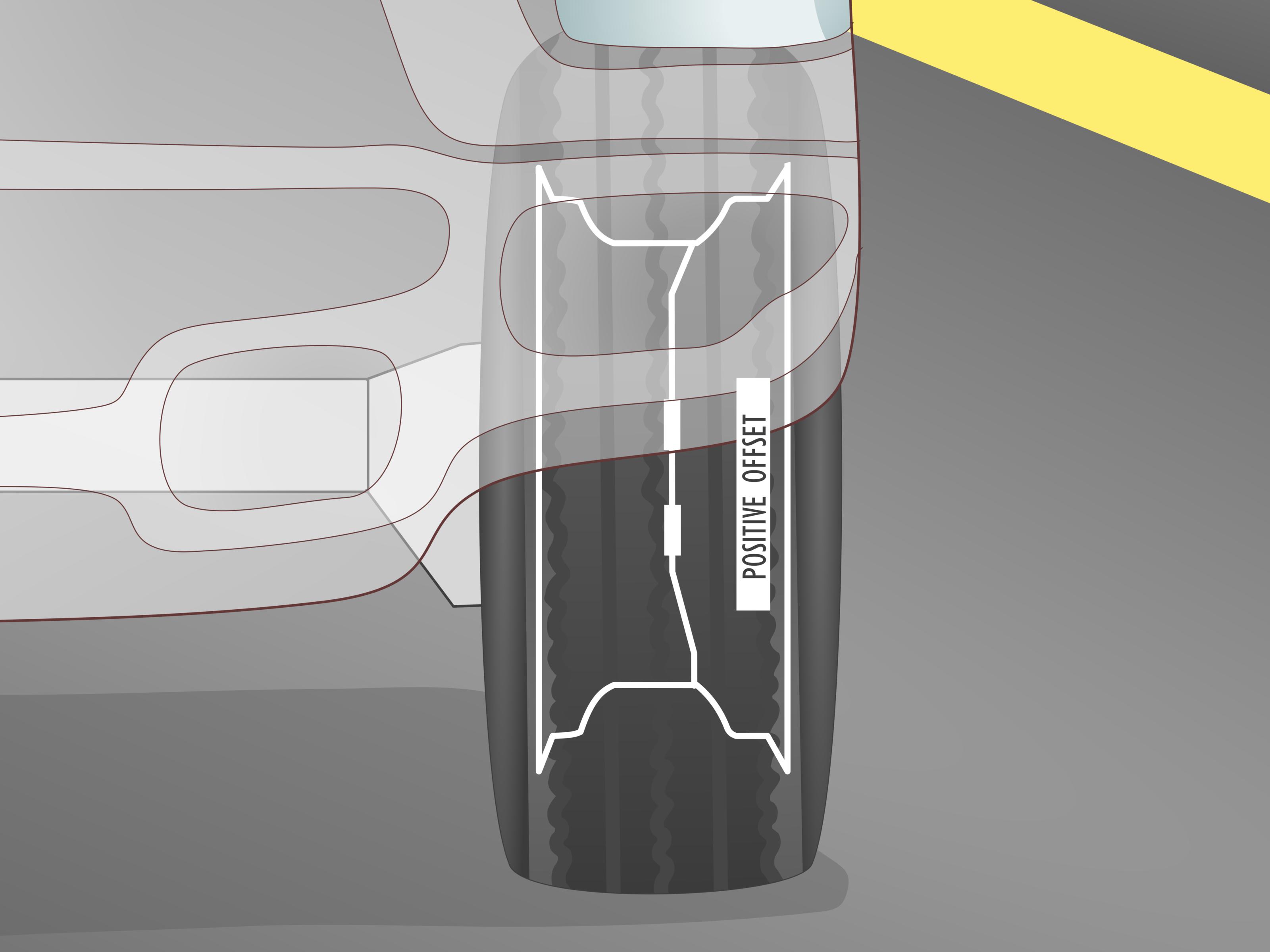
Positive Wheel Offset
A positive wheel offset means the mounting surface is positioned toward the front, or outer face, of the wheel. This pulls the wheel farther inward toward the suspension and away from the outer fender.
Many modern front-wheel-drive cars, crossovers, sedans, and SUVs use positive offset wheels. A positive offset helps manufacturers package brakes, steering components, suspension parts, and bodywork within a relatively compact space.
For example, a wheel marked 18×8 +45 has an 18-inch diameter, an 8-inch width, and a positive 45 mm offset. Compared with a wheel of the same width at +35, the +45 wheel will sit 10 mm farther inward.
Zero Wheel Offset
Zero offset means the hub mounting surface sits directly on the wheel’s centerline. The wheel is essentially balanced evenly around the mounting surface.
Zero offset wheels are common in certain trucks, older vehicles, off-road applications, and some specialty wheel setups. They can create a wider-looking stance than a high positive offset wheel, especially when used on a vehicle designed around more positive factory offset.
Negative Wheel Offset
Negative wheel offset means the mounting surface is closer to the back, or brake side, of the wheel. This pushes the wheel outward toward the fender and increases the visible “deep dish” appearance many truck and off-road enthusiasts love.
Negative offset wheels can create a more aggressive stance, but they also require careful fitment checks. A wheel that sticks out too far may contact the fender during suspension compression, interfere with steering at full lock, throw more road debris down the side of the vehicle, or violate local tire-coverage rules.
Wheel Offset vs. Backspacing: What Is the Difference?
Wheel offset and wheel backspacing describe related measurements, but they are not interchangeable. Think of them as cousins who attend the same family reunion but still need name tags.
Wheel offset measures the position of the hub mounting surface relative to the wheel centerline. It is usually expressed in millimeters.
Wheel backspacing measures the distance from the inner edge of the wheel to the hub mounting surface. It is often expressed in inches.
Backspacing is especially useful when checking clearance near suspension components, brake hardware, steering arms, and inner fenders. More backspacing generally moves the wheel farther inward. Less backspacing generally pushes the wheel outward.
A simplified backspacing formula looks like this:
Backspacing = half of the wheel’s actual overall width + offset converted to inches
For example, an 18×8.5 wheel with a +35 mm offset may have approximately 6.1 inches of backspacing, depending on the wheel’s lip design. Since wheel width is traditionally measured between the tire bead seats rather than the outer lips, real-world measurements can vary slightly by wheel manufacturer.
That is why two wheels with the same advertised width and offset can occasionally fit a little differently. Wheel design is not always as simple as a spreadsheet would like it to be.
Why Wheel Offset Matters
It Determines Clearance
Wheel offset plays a major role in clearance. If the offset is too high, the wheel and tire move inward and may contact suspension components, struts, brake hardware, steering arms, or inner wheel wells.
If the offset is too low, the wheel and tire move outward. That can cause rubbing against the fender liner, fender edge, bumper trim, mud flaps, or bodywork when the suspension compresses or the steering is turned fully.
Clearance is not something you can judge by looking at a parked vehicle from six feet away. A wheel may seem fine in the driveway but rub when the vehicle hits a bump, carries passengers, turns sharply, or travels over an uneven road.
It Changes the Vehicle’s Stance
Wheel offset has a major visual effect. Lower offset pushes the wheels outward and can create a flush or aggressive stance. Higher offset tucks the wheels farther inside the fenders.
A flush fitment usually means the outer tire sidewall sits close to the fender without rubbing. The keyword is close. Flush does not mean “the tire is now part of the bodywork.”
For daily driving, a balanced fitment is usually more practical than an extreme stance. A wheel that looks amazing in a parking lot may become less charming after it sprays dirt down the doors, rubs over every driveway, and makes tire rotations feel like a legal negotiation.
It Can Affect Steering Feel and Scrub Radius
Changing wheel offset can alter a suspension geometry measurement called scrub radius. Scrub radius is related to where the steering axis meets the road compared with the center of the tire contact patch.
Moving the wheel outward or inward changes the tire’s relationship to the steering axis. Depending on the vehicle’s suspension design, this may affect steering effort, road feedback, kickback over bumps, braking stability, and how strongly the steering reacts to ruts or uneven pavement.
That does not mean every 5 mm offset change will transform your sedan into a shopping cart with opinions. But large changes can make the steering feel noticeably different, especially on front-wheel-drive vehicles and vehicles with sensitive suspension geometry.
It Can Increase Stress on Hubs and Bearings
Moving the wheel centerline farther from its intended position can change the leverage acting on wheel bearings, hubs, studs, and suspension components. The farther the tire contact patch moves from the design position, the more the load path changes.
This is one reason extreme negative offset wheels, oversized tires, and thick wheel spacers should not be treated as cosmetic accessories. They can work in the right application, but they should be selected with the same care you would use when choosing brakes, tires, or suspension parts.
How Offset Changes Wheel Position
When wheel width stays the same, offset changes are easy to understand:
- A 10 mm lower offset moves the wheel and tire approximately 10 mm outward.
- A 10 mm higher offset moves the wheel and tire approximately 10 mm inward.
Things become more interesting when you change both wheel width and offset.
Consider this example:
- Factory wheel: 18×8 +45
- New wheel: 18×9 +35
The new wheel is one inch wider, which adds about 25.4 mm of width. Half of that added width goes inward and half goes outward, or roughly 12.7 mm each way.
Because the new wheel also has 10 mm less offset, it moves outward another 10 mm. The result is roughly:
- About 22.7 mm more outer poke toward the fender.
- About 2.7 mm less clearance on the suspension side.
This is why a wheel can look dramatically wider from the outside while only moving slightly closer to the suspension. It is also why wheel fitment calculators are useful starting points, but not replacements for physical measurements and test fitting.
How to Choose the Right Wheel Offset
Start With the Factory Wheel Specifications
The easiest way to make a smart decision is to begin with your original equipment wheel specs. Find the factory wheel width, diameter, offset, bolt pattern, center bore, load rating, and tire size.
The owner’s manual, wheel stampings, manufacturer parts information, and reputable wheel retailers can help identify factory specifications. Do not assume that all trim levels use the same wheels. A base model, performance trim, towing package, and hybrid version of the same vehicle may use different wheel fitment.
Check More Than Offset
Wheel offset matters, but it is only one piece of proper wheel fitment. Before buying wheels, verify:
- Wheel diameter and width
- Bolt pattern
- Center bore and hub-centric compatibility
- Brake caliper clearance
- Wheel load rating
- Lug nut or wheel bolt seat type
- Tire size and overall tire diameter
- Suspension, fender, and steering clearance
- TPMS sensor compatibility
Brake clearance deserves special attention. Two wheels with identical size and offset can have different spoke shapes, barrel profiles, and mounting-pad designs. One may clear a large brake caliper perfectly while the other acts like it has never met a brake rotor in its life.
Think About Your Vehicle’s Purpose
A wheel setup for a commuter car should prioritize clearance, ride quality, tire availability, and predictable handling. A truck built for off-road use may need different offset to clear larger tires or suspension upgrades. A track-focused vehicle may use a carefully calculated setup for tire width, brake clearance, and suspension geometry.
There is no universal “best wheel offset.” The best offset is the one that fits your specific vehicle, wheel width, tire size, brake package, suspension setup, and intended use.
Wheel Spacers and Effective Offset
Wheel spacers sit between the hub and the wheel, moving the wheel outward. A spacer effectively lowers the wheel’s offset by the spacer thickness.
For example, a +45 wheel with a 10 mm spacer behaves approximately like a +35 wheel after installation.
Spacers can solve minor brake-caliper or suspension-clearance issues, but they are not magical aluminum permission slips. The spacer must be designed for the vehicle, properly centered, compatible with the hub and wheel, and installed with the correct stud engagement or longer wheel bolts where required.
Hub-centric spacers are generally preferred because they help keep the wheel centered on the hub. Lug-centric setups can work in some applications, but poor centering increases the risk of vibration and fitment problems.
There is no universal “safe spacer thickness” for every vehicle. The right choice depends on the hub design, wheel design, wheel studs or bolts, load, suspension geometry, and intended driving conditions. Always follow the vehicle and wheel manufacturer’s torque specifications.
Signs Your Wheel Offset May Be Wrong
Improper wheel offset does not always announce itself with fireworks. Sometimes the warning signs are subtle at first.
- Rubbing noises during turns, bumps, or suspension compression
- Scuffed tire sidewalls or damaged fender liners
- Contact marks on struts, control arms, or brake components
- Steering that feels unusually heavy, twitchy, or prone to kickback
- Vibration after installing wheels or spacers
- Tires protruding beyond the fenders
- Reduced turning radius because the tire contacts body or suspension parts
Do not ignore rubbing. Tires are tough, but they are not designed to be slowly sanded by a plastic liner, metal fender edge, or suspension component every time you turn into a grocery store parking lot.
Common Wheel Offset Mistakes to Avoid
Buying Wheels Based Only on Appearance
Photos are useful for inspiration, but they do not tell the full story. A wheel setup that fits a lowered rear-wheel-drive coupe may not fit a stock all-wheel-drive sedan, even if both vehicles use the same wheel diameter.
Ignoring Tire Size
The tire is often the first thing to rub, not the wheel. A wider tire, taller sidewall, aggressive shoulder design, or larger overall diameter can completely change fitment.
Assuming All Wheels With the Same Offset Fit the Same
Wheel width, barrel design, spoke shape, brake clearance, tire profile, and suspension modifications all affect fitment. Offset is important, but it does not work alone.
Using Spacers to Fix Every Problem
A spacer can create clearance in one area while causing interference in another. Before adding spacers, measure both the inner and outer clearance. Solving a strut-clearance issue by moving the tire into the fender is not really a solution. It is just moving the argument to the other side of the vehicle.
Real-World Wheel Offset Experiences: Lessons Drivers Learn the Hard Way
Wheel offset becomes much easier to understand once you see how it affects real vehicles. Most drivers do not become obsessed with offset because they enjoy geometry. They become obsessed with offset after hearing a tire rub for the first time and realizing that a wheel purchase can somehow become a suspension project.
One common experience involves a daily-driver sedan owner upgrading from factory 17-inch wheels to wider 18-inch aftermarket wheels. The new wheels may look nearly identical in photos, but the owner chooses a lower offset because they want a more flush stance. At first, the fitment looks perfect while parked. Then the vehicle hits a dip in the road with two passengers in the back, and the rear tire touches the fender liner.
The lesson is simple: parked fitment is not driving fitment. Suspension compression, body roll, steering angle, cargo weight, and road conditions all change the space around the tire. A wheel that clears in the driveway may rub during real-world use.
Truck owners often learn a different lesson. A negative offset wheel can create the wide, aggressive stance many people want, especially when paired with all-terrain tires. The vehicle may look tougher, wider, and more prepared for a mountain expedition, even if its toughest recent terrain has been a coffee shop parking lot.
However, pushing the wheels outward can increase tire poke, send mud and gravel down the sides of the truck, and create fender rubbing during turns. Larger tires may also contact crash bars, splash guards, or bumper trim. The wheel offset may technically fit, but the complete wheel-and-tire package may still need trimming, suspension changes, or a more conservative tire size.
Performance-car owners often notice steering changes more quickly. A lower offset wheel can improve the visual stance, but it may also change steering feedback. Some drivers describe the steering as more direct or more communicative. Others notice more kickback through the steering wheel on rough roads. Neither reaction is automatically good or bad; it depends on the vehicle’s original suspension geometry and how far the setup moves away from factory dimensions.
Another frequent experience involves wheel spacers. A driver installs spacers to clear a larger brake kit or create a flush appearance. The setup may work well, but only when the spacer is correctly centered, the wheel has proper hub engagement, and the lug hardware provides sufficient thread engagement. Poor-quality spacers, mismatched hub bores, or incorrect hardware can lead to vibration, loose wheels, or unnecessary stress on components.
There is also the classic “forum fitment” mistake. A driver sees that another owner is using 19×9.5 +35 wheels and assumes the same setup will fit their vehicle. What gets overlooked is that the other vehicle may be lowered, have rolled fenders, use narrower tires, run adjustable camber, or have a different brake package. Wheel fitment advice is useful, but it should be treated as a clue, not a guarantee.
The most successful wheel upgrades usually come from drivers who measure first, compare factory and new specifications, confirm brake and suspension clearance, and choose a setup that matches how the vehicle is actually used. The best wheel offset is rarely the most extreme number. It is the one that gives you the stance, clearance, comfort, and confidence to enjoy the vehicle without hearing that unforgettable sound of rubber meeting something it absolutely should not meet.
Conclusion
Wheel offset may seem like a small measurement, but it has a major effect on wheel fitment, tire clearance, steering feel, suspension geometry, and the overall look of your vehicle.
Positive offset moves the wheel inward, negative offset moves it outward, and zero offset sits near the wheel centerline. The right setup depends on far more than appearance. Wheel width, tire size, brake clearance, suspension design, hub fitment, and intended driving use all need to work together.
Before buying new wheels, compare the factory specifications with the proposed setup, check both inner and outer clearance, and avoid guessing based on photos alone. Your vehicle deserves more than a “that should probably fit” strategy.













