
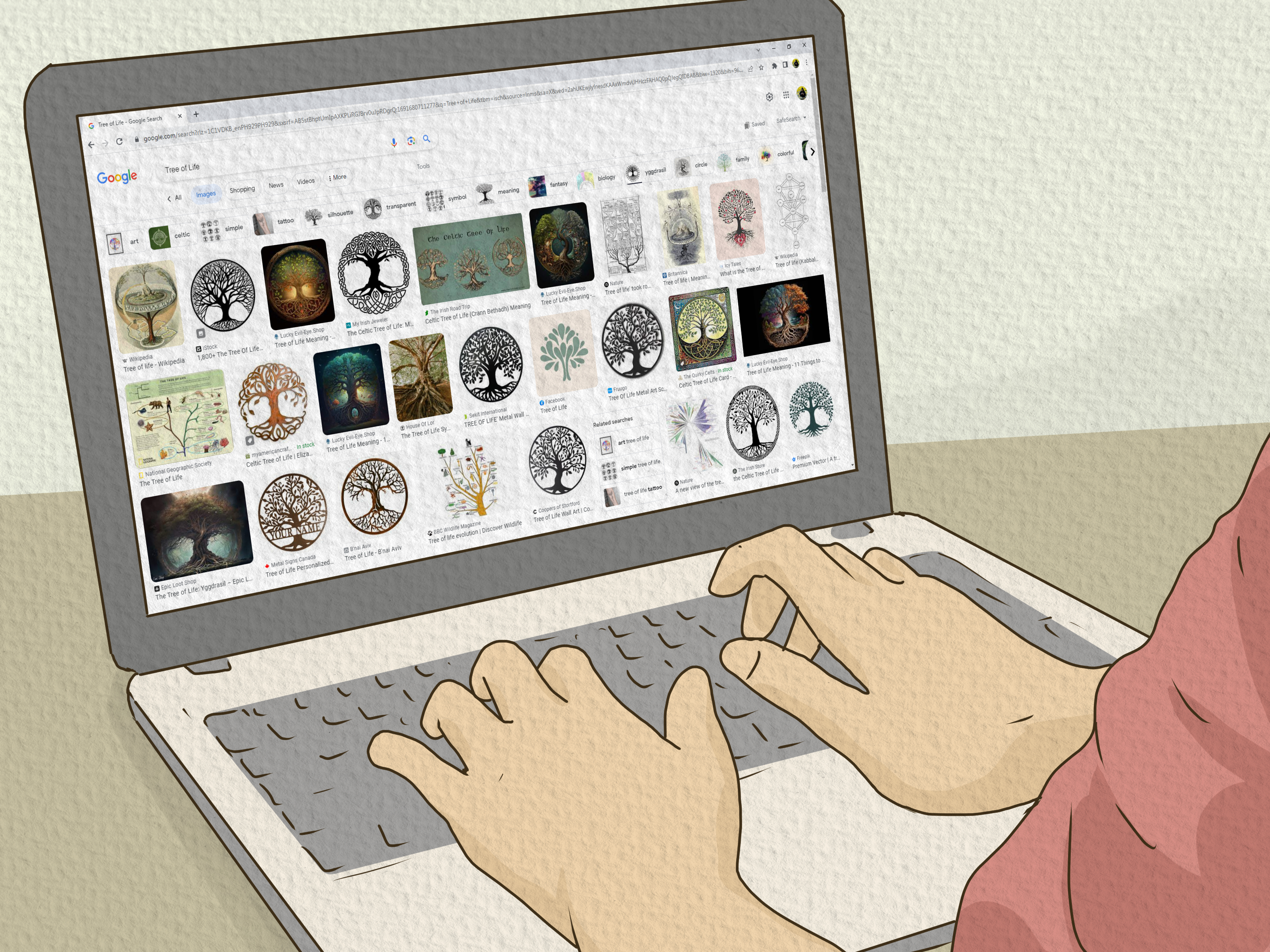
The Tree of Life is one of those symbols that refuses to stay in one lane. It appears in religion, mythology, art, jewelry, tattoos, family charts, meditation rooms, museum collections, and even biology textbooks. Apparently, when humans want to explain life, death, ancestry, wisdom, paradise, and personal growth, we all point at a tree and say, “Yes, that. That explains it.”
At its heart, the Tree of Life meaning is about connection. Roots reach into the hidden past. The trunk stands in the present. Branches stretch toward possibility. Leaves fall and return. Fruit suggests nourishment, blessing, or spiritual reward. Across cultures, the image becomes a living map of the universe, the soul, the family, the community, and the mystery of existence itself.
What Is the Tree of Life?
The Tree of Life is a symbolic tree that represents the interconnectedness of all things. While every tradition gives it a different flavor, the core idea is surprisingly consistent: life is not random confetti blowing across the sidewalk. It is rooted, branching, cyclical, and connected.
In spiritual traditions, the Tree of Life may represent divine life, enlightenment, immortality, wisdom, moral choice, or the structure of the cosmos. In cultural traditions, it can symbolize family ancestry, community unity, fertility, peace, resilience, and renewal. In modern life, people often use the Tree of Life as a reminder that growth takes time, healing has seasons, and strong roots matter more than looking impressive on social media.
Common Tree of Life Symbolism
Although interpretations vary, several themes appear again and again:
- Roots: ancestry, memory, foundation, heritage, and spiritual grounding.
- Trunk: strength, identity, stability, and the path between earth and sky.
- Branches: growth, choices, expansion, family lines, and future possibilities.
- Leaves: renewal, healing, seasons, and the living energy of nature.
- Fruit: wisdom, blessing, immortality, nourishment, or spiritual reward.
The Tree of Life in the Bible and Christianity
In the biblical tradition, the Tree of Life appears at both the beginning and the end of the story. In Genesis, it stands in the Garden of Eden, associated with divine life and humanity’s original nearness to God. After Adam and Eve’s disobedience, access to the tree is guarded, turning it into a symbol of lost intimacy, moral choice, and the longing for restored life.
In the Book of Revelation, the Tree of Life returns in a restored creation, bearing fruit and offering healing. That arc gives the symbol its deep Christian resonance: what was lost in the garden is restored in the renewed world. For many Christians, the Tree of Life points to eternal life, divine grace, and the healing of creation. Some Christian thinkers have also connected the cross of Christ with the Tree of Life, interpreting it as the place where death is transformed into life. Not exactly what you would call a casual garden feature.
Spiritual Meaning in Christianity
For Christian readers, the Tree of Life often means restoration. It is not merely about living forever; it is about life healed, reordered, and reunited with God. The image also carries moral weight. It asks a simple but uncomfortable question: What kind of tree are we becoming? A source of shade and fruit, or a decorative branch with commitment issues?
The Tree of Life in Judaism and Kabbalah
In Jewish tradition, the phrase “Tree of Life” can refer to Torah, wisdom, and divine vitality. In Jewish mysticism, especially Kabbalah, the Tree of Life becomes a complex spiritual diagram. It is often shown as ten sefirot, or divine emanations, connected by paths. These sefirot represent qualities such as wisdom, understanding, kindness, strength, beauty, foundation, and kingship.
The Kabbalistic Tree of Life is not simply a pretty geometric poster for people who own too many candles. It is a map of divine manifestation, human spiritual growth, and the relationship between the infinite and the created world. The structure suggests that spiritual life involves balance: mercy without discipline becomes mushy; discipline without mercy becomes a brick wall in shoes.
Personal Growth and Inner Balance
One reason the Kabbalistic Tree of Life continues to fascinate modern seekers is that it feels both cosmic and personal. It speaks about God, creation, the soul, ethics, and transformation. The tree’s balanced structure invites people to ask where their lives are lopsided. Do we need more compassion? More courage? More beauty? More grounding? The tree becomes a spiritual mirror, and mirrors are useful even when they are rude before coffee.
The Tree of Life in Norse Mythology: Yggdrasil
In Norse mythology, the great world tree is Yggdrasil, commonly described as an immense ash tree at the center of the cosmos. Its roots and branches connect worlds of gods, humans, giants, and the dead. Around Yggdrasil, existence itself is organized. It is not merely a tree in the world; it is the structure that holds the worlds together.
Yggdrasil represents interconnection, fate, endurance, and the tension between life and decay. Creatures dwell in it, forces gnaw at it, and yet it continues to stand. That is a wonderfully Norse detail: even the cosmic tree has maintenance problems. The message is not that life is untouched by struggle, but that life persists through struggle.
What Yggdrasil Teaches
Yggdrasil’s spiritual significance lies in its realism. Life is not all spring blossoms and inspirational mugs. Roots reach into dark places. Branches face storms. Still, the tree connects realms and keeps growing. For modern readers, Yggdrasil can symbolize resilience, destiny, and the invisible ties between personal action and the wider universe.
The Celtic Tree of Life: Roots, Branches, and Sacred Nature
The Celtic Tree of Life, often called Crann Bethadh, is commonly associated with balance between earth, sky, and the spiritual realm. Trees were deeply important in Celtic landscapes and imagination. Ancient groves, especially oak groves, were associated with sacred space, wisdom, and community life.
In modern Celtic-inspired symbolism, the Tree of Life is often drawn with roots and branches forming a circle. This design expresses harmony, continuity, and the cycle of life. The roots mirror the branches, suggesting that what is below and what is above belong to the same living pattern. In plain English: your past and your future are not strangers; they are sharing the same trunk.
Meaning in Celtic-Inspired Spirituality
Today, people often wear or display the Celtic Tree of Life as a symbol of strength, protection, heritage, and connection to nature. It is especially popular in jewelry, tattoos, wall art, and family gifts. Its appeal is easy to understand: it feels ancient, earthy, elegant, and just mysterious enough to make a living room look like it has read poetry.
The Bodhi Tree in Buddhism
In Buddhism, one of the most important sacred trees is the Bodhi Tree, traditionally identified as the tree under which Siddhartha Gautama attained enlightenment and became the Buddha. The word “bodhi” means awakening or enlightenment. Because of this, the Bodhi Tree is not just a historical marker; it is a symbol of spiritual awakening, patience, meditation, and liberation from suffering.
The image is powerful because enlightenment does not happen in a palace, a lecture hall, or a luxury retreat with cucumber water. It happens beneath a tree, in stillness, after deep struggle. The Bodhi Tree reminds practitioners that awakening requires discipline, presence, and the courage to sit with reality until illusion gets bored and leaves.
Bodhi Tree Spiritual Meaning
The Bodhi Tree symbolizes clarity, mindfulness, compassion, and the possibility of transformation. Its heart-shaped leaves are often used in Buddhist art as signs of wisdom and spiritual insight. For many people, the Bodhi Tree also represents the quiet strength of meditation: no fireworks, no dramatic soundtrack, just a person sitting still long enough to see clearly.
The Sacred Fig and Ashvattha in Hindu Thought
In Hindu traditions, sacred trees such as the Ashvattha or Peepal tree are associated with divine presence, cosmic order, and spiritual continuity. The upside-down cosmic tree appears in philosophical texts such as the Bhagavad Gita, where roots above and branches below suggest a universe rooted in the divine. This image turns ordinary thinking on its head, which is exactly what good philosophy likes to do before breakfast.
The sacred fig is also connected with worship, ritual, fertility, longevity, and the presence of deities in many local traditions. Its wide canopy, long life, and visible rootedness make it a natural symbol of cosmic shelter and continuity.
Life, Duty, and Detachment
In Hindu interpretation, the Tree of Life can represent both the beauty of creation and the need to understand what lies beyond surface appearances. The tree of worldly existence has many branches: desires, duties, relationships, pleasures, fears, and ambitions. Spiritual wisdom means learning how to live responsibly among those branches without becoming tangled in every vine.
The Tree of Life in Islamic Tradition and Art
Islamic tradition includes several significant tree images. The Quran refers to the “Tree of Immortality” in the story of Adam, where temptation is connected with the desire for permanence and a kingdom that does not fade. Islamic descriptions of paradise also include lush gardens, shade, flowing water, and blessed trees, creating a spiritual landscape of mercy, abundance, and divine reward.
In Islamic art, vegetal patterns often appear in architecture, textiles, manuscripts, ceramics, and carpets. While not every vine or flower carries a fixed symbolic meaning, garden imagery commonly evokes paradise. Trees, flowers, and flowing patterns can suggest the beauty, order, and generosity of creation without relying on literal human or animal imagery.
Paradise, Mercy, and Moral Choice
The Islamic spiritual meaning of tree imagery often centers on abundance, shade, reward, and divine provision. At the same time, the story of Adam reminds believers that the promise of immortality can become a test when it is pursued against divine guidance. In other words, even paradise has boundaries. Apparently, “Do not eat that” has been a difficult instruction since the beginning.
The Tree of Peace in Haudenosaunee Tradition
Among the Haudenosaunee, also known as the Iroquois Confederacy, the Tree of Peace is a profound political and spiritual symbol. It is traditionally associated with the Great Law of Peace, unity among nations, and the burying of weapons beneath the tree. The white pine is especially meaningful, with its long needles often understood as a sign of joined nations and shared peace.
This is an important reminder that tree symbolism is not only personal or mystical. It can also be social and political. A tree can stand for a covenant, a government, a community, and a commitment to stop breaking things long enough to build something better.
Community Roots
The Tree of Peace teaches that peace is not passive. It must be planted, protected, and renewed. Like any tree, it requires care. Neglected peace withers. Shared peace grows roots in every direction, inviting others to gather beneath its branches.
The Tree of Life in Art, Jewelry, and Modern Design
The Tree of Life has appeared in ancient Near Eastern art, Mediterranean motifs, medieval textiles, religious manuscripts, Islamic garden carpets, Christian imagery, Jewish mysticism, folk art, and contemporary design. It works visually because it is instantly recognizable. You do not need a PhD in symbolism to understand that roots plus branches plus fruit probably mean “life is connected.”
In jewelry, the Tree of Life often represents family, protection, strength, or personal renewal. As a tattoo, it can symbolize survival, ancestry, grief, rebirth, or a major life transition. In home decor, it brings a sense of grounding and harmony. In meditation spaces, it often serves as a reminder to breathe, grow, and avoid emotionally pruning everyone who mildly annoys you.
Why the Symbol Is Still Popular
The Tree of Life remains popular because it is both universal and flexible. A person can see it as religious, spiritual, ecological, ancestral, artistic, or psychological. It does not demand one narrow interpretation. Instead, it offers a symbolic language broad enough for many lives and many stories.
Modern Meanings: Family, Ecology, and Personal Growth
Today, the Tree of Life is often used as a family tree symbol. Roots represent ancestors, the trunk represents the family line, and branches represent descendants. This makes the image especially meaningful for genealogy, memorial gifts, family reunions, and heirloom art.
In ecology, the Tree of Life also reminds us that actual trees are not merely symbols. They cool cities, provide shade, support wildlife, filter air, reduce erosion, and store carbon. The symbolic Tree of Life becomes more meaningful when we remember that real trees are doing real work, quietly, without asking for applause or a better parking spot.
In science, the phrase “tree of life” is also used to describe evolutionary relationships among living organisms. Branching diagrams show how species are related through common ancestry. This modern scientific use echoes the ancient symbolic idea that life is connected, branching, and rooted in shared beginnings.
Tree of Life Meaning by Theme
Connection
The Tree of Life shows that nothing exists in isolation. Families, ecosystems, cultures, and spiritual traditions all depend on relationships. Roots feed branches. Branches protect leaves. Leaves nourish the whole tree. It is teamwork, but with less email.
Growth
Growth is rarely dramatic while it is happening. Trees grow slowly, season by season. The Tree of Life reminds us that deep change often looks boring from the outside. Roots are not glamorous, but without them, the branches are just future firewood.
Renewal
Leaves fall, fruit ripens, seeds scatter, and new life begins. This cycle makes the tree a natural symbol of rebirth and resilience. It tells us that endings are not always failures. Sometimes they are compost with better public relations.
Wisdom
Trees suggest patience, perspective, and endurance. Many cultures associate sacred trees with knowledge because trees live longer than human moods. They watch generations pass and seem to say, “Perhaps do not panic quite yet.”
Spiritual Ascent
Because trees connect earth and sky, they often symbolize the path between human life and divine reality. Roots reach downward; branches rise upward. The human soul, somewhere in the middle, tries to remember where it came from and where it is going.
Experiences Related to the Tree of Life Meaning
One reason the Tree of Life feels so personal is that people often encounter it during turning points. Someone grieving a parent may see the roots as family memory. Someone beginning recovery after illness may see the leaves as renewal. Someone moving to a new country may see the trunk as identity, holding steady while the branches adapt to a new sky. The symbol is ancient, but it has a very modern habit of showing up exactly when life feels complicated.
Imagine a person planting a tree after the birth of a child. At first, the sapling looks almost comically fragile. A strong breeze could make it reconsider its career. But year after year, the roots deepen. The child grows taller. The tree begins to cast shade. Family photos gather around it: birthdays, backyard lunches, first-day-of-school poses, awkward teenage expressions that deserve their own museum wing. Over time, the tree becomes more than landscaping. It becomes a living family archive.
Now imagine another person wearing a Tree of Life necklace after surviving a hard season: divorce, burnout, grief, or loss. The jewelry is small, but the meaning is large. It says, “I am still rooted.” It says, “I can grow again.” It says, “The storm was real, but so am I.” This is why the symbol appears so often in memorial gifts and healing art. It gives shape to emotions that are difficult to explain without either crying or making everyone uncomfortable at brunch.
There is also a powerful experience in simply sitting beneath a tree. No incense required. No perfect lotus posture. Just shade, bark, leaves, and time. Under a tree, people often feel naturally quieter. The mind slows down. The body notices air, light, and sound. The tree does not solve your problems, file your taxes, or respond to your messages, but it does something almost as valuable: it reminds you that life is bigger than your current crisis.
For many spiritual people, the Tree of Life becomes a meditation image. Visualizing roots can help create a sense of grounding. Imagining branches can inspire hope and openness. Seeing the trunk as the self can encourage stability. This practice is simple but meaningful: breathe into the roots, stand in the trunk, reach through the branches. It is basically therapy with better landscaping.
Families also use the Tree of Life to talk about ancestry. A family tree can reveal migrations, marriages, losses, surprises, and stories that never made it into polite dinner conversation. The Tree of Life invites people to honor those who came before without being trapped by the past. Roots support growth; they are not supposed to become handcuffs.
In environmental experiences, planting or protecting trees can transform the symbol into action. It is lovely to admire the Tree of Life on a pendant, but it is even better to care for actual trees in neighborhoods, parks, schools, and yards. Real trees offer shade, habitat, beauty, and cleaner air. They are spiritual teachers with chlorophyll. They remind us that life is not an abstract idea; it is living, breathing, growing, and vulnerable.
Ultimately, the Tree of Life meaning becomes most powerful when it moves from decoration to reflection. It asks: What are my roots? What nourishes me? What needs pruning? What fruit am I offering others? Where am I growing next? These questions are simple, but they are not shallow. Like the tree itself, they go down deep.
Conclusion: Why the Tree of Life Still Matters
The Tree of Life endures because it speaks a language older than words. Every culture understands roots, growth, shade, fruit, seasons, and renewal. Whether it appears as the biblical Tree of Life, the Kabbalistic map of divine emanations, Norse Yggdrasil, the Bodhi Tree of awakening, the Celtic Tree of Life, the Islamic garden image, the Haudenosaunee Tree of Peace, or a modern family tree, the symbol keeps pointing toward the same truth: life is connected.
Its cultural and spiritual significance lies in its range. It can mean wisdom, immortality, family, healing, peace, ancestry, enlightenment, divine presence, ecological responsibility, or personal transformation. That is a lot of work for one tree, but trees have always been overachievers. They give shade, clean air, fruit, beauty, shelter, metaphors, and occasionally a place for squirrels to make questionable decisions.
To understand the Tree of Life is to understand that growth requires roots, renewal requires seasons, and connection gives life its meaning. Whether you wear it, study it, meditate on it, plant it, or simply sit under one, the Tree of Life invites you to live more deeply rooted and more generously branched.
SEO Tags
Note: This article is written in original standard American English and synthesizes established cultural, religious, historical, artistic, ecological, and symbolic interpretations of the Tree of Life for web publication.














