
Note: This article is written in a fully original style and synthesizes real gift-giving patterns, consumer behavior, etiquette guidance, and public “worst gift” stories without copying source text.
There are bad gifts, and then there are gifts so confusing they deserve their own support group, theme song, and possibly a small claims court hearing. Most of us have received something that made us smile politely while our soul quietly packed a suitcase. A sweater three sizes too small. A mug that says “World’s Okayest Intern.” A scented candle that smells like a haunted cinnamon broom. We say thank you because society depends on tiny lies, but deep down, we know the truth: some presents are less “thoughtful surprise” and more “emotional escape room.”
The worst gifts are not always cheap. In fact, some terrible presents are expensive, shiny, and impressively wrong. What makes a gift awful is usually not the price tag; it is the message hiding inside it. A bathroom scale says, “I noticed your body.” A self-help book says, “I diagnosed your personality.” A half-used item says, “I found this in my car.” A gift card with seventeen cents left on it says, “I technically participated.”
So why do terrible gifts happen? Because gift-giving is part love, part psychology, part guessing game, and part last-minute panic in a Target aisle at 9:47 p.m. The best gifts show that someone listened. The worst gifts reveal that someone either did not listen, listened too aggressively, or somehow confused “present” with “household chore assignment.” Below are 40 unforgettable examples of gifts people say they would rather have left in the wrapping paper forever.
Why Bad Gifts Feel So Personal
A gift is rarely just an object. It is a tiny social message wrapped in paper. When the message is “I know you,” the gift feels warm, even if it is simple. When the message is “I have no idea who you are, but here is a novelty toilet plunger,” things get weird quickly.
Many disappointing gifts fall into a few common categories: gifts that are secretly for the giver, gifts that comment on someone’s appearance, gifts that create work, gifts that are obviously recycled, gifts that ignore allergies or values, and gifts that feel like an insult wearing a bow. A pair of socks can be wonderful if they are cozy and chosen with care. A pair of socks can also be a declaration of emotional bankruptcy if they were clearly purchased at a gas station during a nacho run.
40 Absolute Worst Gifts People Have Ever Received
1. The Half-Used Energy Drink
One person recalled receiving an opened energy drink and a nearly empty gas station gift card. It was less a present and more evidence from a road trip. Nothing says “happy birthday” like caffeine backwash and nineteen cents of purchasing power.
2. A Gym Membership After Giving Birth
A new mother received a gym membership shortly after having a baby. Even if the giver meant well, the timing turned it into a neon sign flashing, “Your body is now a project.” That is not a gift; that is a villain origin story.
3. Weight-Loss Shakes From a Parent
Several people have shared memories of receiving diet shakes, slimming products, or calorie-focused items from relatives. These gifts often hurt because they turn a celebration into a body review meeting nobody requested.
4. A Bathroom Scale From a Romantic Partner
A scale can be useful. It can also be the fastest way to make Christmas dinner feel like a courtroom. As a romantic gift, it ranks somewhere between “expired coupon” and “breakup pregame.”
5. Clothes in the Wrong Size
Wrong-size clothing is a classic bad gift because it comes with multiple layers of awkwardness. Too small? Ouch. Too large? Also ouch. A person can recover from a bad sweater, but the size tag may live rent-free in their brain for years.
6. A Gift Clearly Bought for the Giver
One common complaint is receiving something the giver obviously wanted for themselves: a video game console “for the family,” a kitchen gadget only one person cooks with, or sports tickets for a team the recipient does not follow. The wrapping paper says “for you,” but the receipt says otherwise.
7. A Vacuum Cleaner on a Romantic Holiday
Practical gifts can be great when requested. But a vacuum as a surprise anniversary or Valentine’s Day gift can feel less like romance and more like unpaid labor with attachments.
8. Cleaning Supplies
Trash bags, dish soap, sponges, and floor cleaner have appeared in many “worst gift” stories. Unless someone specifically asked for a premium cleaning kit, this is not a present. It is a chore wearing a bow.
9. A Regift With the Old Card Still Inside
Regifting is risky. Regifting without checking the box is comedy. People have opened presents only to find a card addressed to someone else. At that point, the gift is no longer a gift. It is a paper trail.
10. Expired Food
A basket of expired snacks, stale candy, or dusty pantry goods sends a bold message: “I found this behind the oatmeal and thought of you.” Food gifts should be fresh, safe, and preferably not old enough to vote.
11. A Gift Card With Almost No Balance
Gift cards are usually safe, but only when they contain actual money. A card with a few cents left is not a gift; it is a plastic insult with a barcode.
12. A Self-Help Book With a Pointed Message
Books can be beautiful gifts. But a book about anger management, dating failures, clutter, laziness, or “fixing your life” can feel like a diagnosis from someone with no medical license and too much confidence.
13. Anti-Aging Cream
Beauty products are tricky. Anti-aging cream, wrinkle serum, cellulite lotion, or hair-loss products can feel like a public service announcement about someone’s insecurities. Unless requested, skip the “I noticed time is happening to your face” category.
14. A Dead Bug or Strange Natural Object
Some bad gifts are not insulting; they are just baffling. People have described receiving dead insects, odd bones, rocks, or mystery objects. Nature is wonderful. Nature in a box at a birthday party is a situation.
15. A Pet Nobody Asked For
Surprise pets are among the worst gifts because they turn a sweet moment into a long-term responsibility. A puppy, kitten, fish, bird, or reptile should never be handed over like a sweater. Living creatures are not impulse buys.
16. A Plant for Someone Who Kills Plants
Plants can be lovely, but not for everyone. For some recipients, a plant is not decor; it is a slow-motion guilt machine. Every drooping leaf whispers, “You have failed me, Linda.”
17. A Subscription That Becomes a Bill
A free trial disguised as a gift is sneaky. The recipient gets one month of excitement and then a monthly charge they never wanted. That is not generosity; that is financial jump scare.
18. Something Broken
Broken jewelry, cracked mugs, missing puzzle pieces, and gadgets that do not turn on often appear in bad gift stories. A broken gift says either “I did not check this” or “I checked this and proceeded anyway.” Neither is ideal.
19. A Used Item Presented as New
Secondhand gifts can be thoughtful when chosen carefully. But a visibly used item with scratches, stains, or someone else’s hair attached is not charming. It is a garage sale with emotional consequences.
20. A Donation Made to a Cause the Recipient Dislikes
Charitable gifts can be meaningful when they match the recipient’s values. But donating in someone’s name to a cause they do not support can feel like moral homework assigned without consent.
21. A Wedding Gift That Creates Debt
Some couples have received “gifts” that came with hidden costs: memberships, services, or items requiring expensive accessories. A present should not arrive with a monthly payment plan and a sense of dread.
22. Baby Items for Someone Who Is Not Pregnant
Few gifts are more awkward than baby clothes given as a hint. Whether the recipient wants children, cannot have children, or simply wants people to stop managing their uterus, this gift belongs in the Hall of Absolutely Not.
23. Religious Items Given Without Knowing Beliefs
Faith-based gifts can be deeply meaningful when shared respectfully. But giving religious items to someone without knowing or respecting their beliefs can feel less like kindness and more like a conversion starter pack.
24. Political Merchandise
A hat, shirt, mug, bumper sticker, or flag tied to politics can turn a birthday party into a cable news panel. Unless the recipient proudly asked for it, political merchandise is a risky present with a high argument-per-dollar ratio.
25. A Coupon for a Favor the Giver Never Honors
Homemade coupons can be sweet. But “one free dinner,” “one massage,” or “one day of help” becomes annoying when the giver refuses to redeem it. At that point, the present is just decorative debt.
26. A Framed Photo of the Giver
A framed photo can be lovely when sentimental. But a glamour shot of the giver, especially when the recipient did not ask for it, has big “I am the gift” energy. Confidence is great. Wall space is limited.
27. A Random Office Secret Santa Disaster
Office gift exchanges create fertile ground for chaos: cheap candles, odd mugs, expired candy, and gag gifts that are funny to exactly one person. The workplace Secret Santa is where enthusiasm goes to fill out HR forms.
28. A Book the Recipient Already Wrote
Writers, artists, makers, and specialists often receive amateur versions of things they already know deeply. A quilter receiving a mass-produced quilt or a chef receiving a basic cookbook can feel like the giver skipped the entire personality section.
29. A Kitchen Tool for Someone Who Hates Cooking
A blender, mixer, pan, or air fryer can be fantastic for the right person. For someone who survives on takeout and vibes, it may feel like being assigned a new identity.
30. A Tool for a Home Project Nobody Agreed To
Some gifts are really requests: a faucet, shelves, paint, landscaping tools, or repair equipment. The giver may call it helpful. The recipient hears, “Congratulations, you have weekend labor.”
31. A Joke Gift That Embarrasses the Recipient
Gag gifts can work among close friends with shared humor. But in front of family, coworkers, or in-laws, a joke gift about body odor, dating, aging, weight, or bathroom habits can become social arson.
32. Cheap Perfume With Nuclear Strength
Fragrance is personal. A scent that one person calls “romantic amber” may smell to someone else like a fruit basket caught fire in a nightclub. Bad perfume does not simply sit on a shelf; it occupies a zip code.
33. A Candle That Smells Terrible
Candles are popular backup gifts, but they can go wrong fast. Some scents claim to be “winter forest” but deliver “wet basement with cloves.” A bad candle is technically home decor and indoor weather.
34. A Handmade Gift With Emotional Pressure
Handmade gifts can be treasures. They can also be stressful when the giver expects permanent display, daily use, and a standing ovation. The effort matters, but so does the recipient’s taste.
35. A Gift That Ignores Allergies
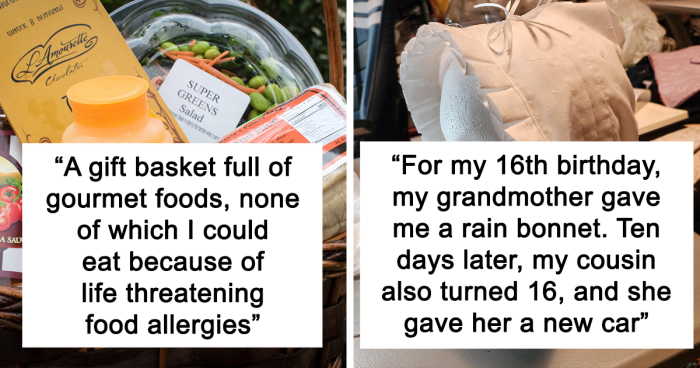
Food gifts become terrible when they ignore allergies, dietary restrictions, or medical needs. Giving nuts to someone with a nut allergy is not just thoughtless; it is potentially dangerous.
36. Alcohol for Someone Who Does Not Drink
Wine, whiskey, or cocktail kits can be elegant gifts, but not for someone who is sober, pregnant, underage, religiously abstinent, or simply uninterested. A good gift respects boundaries, not just party themes.
37. A Holiday Decoration in January
Seasonal items given too late can feel like homework for next year. A Christmas ornament on December 26 is acceptable. A giant inflatable reindeer in mid-January is storage bullying.
38. A Lottery Ticket That Wins Nothing
Lottery tickets are fun as extras, but as the main gift, they are risky. When they lose, the recipient receives the experience of scratching silver dust onto a table and feeling hope leave the room.
39. Something With the Wrong Name on It
Personalized gifts are charming when accurate. A necklace, mug, towel, or ornament with the wrong name is unforgettable for the wrong reason. Nothing says “I care” like misspelling the only required detail.
40. Nothing, But Wrapped Dramatically
Some people have opened boxes inside boxes only to find a joke, a note, or absolutely nothing. Surprise can be delightful. Empty-box humor, however, has a very short runway before it crashes into disappointment.
What These Terrible Gifts Have in Common
Looking at these examples, the pattern is clear: bad gifts usually fail because they center the giver instead of the recipient. The giver may want credit for being funny, practical, generous, spontaneous, or clever. But a good gift asks a quieter question: “What would make this person feel seen?”
The worst gifts also tend to carry unwanted messages. A weight-loss product comments on appearance. A cleaning tool assigns labor. A regift with old packaging suggests carelessness. A pet creates responsibility. A political item starts conflict. A gift card with no money left says, “I found this in a drawer and chose chaos.”
Another issue is assumption. People assume that everyone wants alcohol, candles, clothes, kitchen gadgets, baby items, religious items, or home decor. But gifts are not universal. A present that delights one person can irritate another. A cast-iron skillet is a dream for a home cook and a heavy paperweight for someone who considers cereal a full dinner.
How to Give Better Gifts Without Becoming a Spreadsheet Goblin
Listen for Small Clues
People often reveal what they want in everyday conversation. They mention a favorite snack, a worn-out wallet, a hobby they want to try, or a place they miss. Great gift-givers collect these clues casually. They do not need a detective board with red string, though honestly, that would be festive.
Respect Wish Lists and Registries
Some givers avoid wish lists because they want to be original. But originality is overrated when the alternative is a decorative ceramic frog for someone with minimalist taste. If someone gives you a list, they are handing you the cheat code. Use it.
Avoid Gifts That “Improve” the Recipient
Unless specifically requested, avoid gifts that suggest the person should lose weight, clean more, dress differently, parent differently, date better, pray more, work harder, or reorganize their entire life. A gift should not feel like a performance review.
Give Experiences Carefully
Experience gifts can be wonderful, but only if they match the recipient’s schedule, interests, health, and comfort level. A skydiving voucher for someone afraid of heights is not adventurous. It is a threat with customer service.
Include a Gift Receipt
A gift receipt is not an admission of failure. It is kindness with a barcode. It tells the recipient, “I tried, and if I missed, you are free.” That is emotional maturity in paper form.
How to React When You Receive a Truly Awful Gift
First, pause. Your face may try to flee the scene, but do not let it. Say thank you. Focus on the intention if the intention seems kind. If the gift is insulting, unsafe, or inappropriate, you can still respond calmly without pretending it is wonderful.
For mild misses, a simple “Thank you for thinking of me” works beautifully. For gifts that cross boundaries, try something gentle but clear: “I appreciate the thought, but this is not something I can use.” If someone gives you a pet, an expensive obligation, or a gift that violates your health or values, you are allowed to decline. Manners do not require you to accept a living animal, a monthly bill, or a box of peanuts when you are allergic.
Regifting, donating, returning, or exchanging unwanted gifts can be reasonable, especially when the item is new and useful to someone else. The key is to do it discreetly and kindly. Do not post “Look what my aunt gave me, lol” unless you want next year’s gift to be a dictionary opened to the word “ungrateful.”
Personal Experiences and Lessons From Truly Terrible Gifts
Almost everyone has a bad gift story because gift-giving lives at the intersection of love, memory, money, timing, and panic. One of the funniest things about terrible gifts is that they often become better stories than good gifts. A perfect scarf keeps your neck warm. A bizarre ceramic clown from an uncle who “thought it looked like you” keeps an entire family laughing for a decade.
The most painful bad gifts are usually not the strange ones. A weird mug, odd candle, or ugly sweater can become a joke. The gifts that sting are the ones that make the recipient feel unseen. Imagine telling your partner for months that you are exhausted and need rest, then receiving a vacuum. Imagine saying you are trying to save money, then getting an expensive item that requires accessories you must buy yourself. Imagine carefully choosing gifts for everyone else, only to receive something grabbed from a checkout lane because someone forgot.
That is why the emotional weight of a gift can be much larger than the object itself. A $7 notebook can feel priceless if it matches someone’s hobby, favorite color, or private dream. A $700 gadget can feel cold if it solves a problem the recipient never had. Gift-giving is not a competition of price; it is a test of attention. The best present says, “I noticed.” The worst says, “I needed to buy something before the store closed.”
Bad gifts also reveal how different people define practicality. Some people genuinely love useful gifts: tools, socks, groceries, kitchen gear, car supplies. Others want gifts to feel special and separate from daily chores. The problem happens when givers assume their definition is universal. A husband who loves practical presents may think a set of trash bags is helpful. His spouse may see it as a holiday-themed reminder that the kitchen bin is full. Same object, different emotional translation.
Another common experience is the “gift that comes with a job.” A plant requires watering. A pet requires years of care. A home improvement item requires installation. A class requires time. A subscription requires cancellation. These gifts may look generous, but they hand the recipient a task. Before giving anything that creates responsibility, the giver should ask one simple question: “Would this make their life easier, or am I adding homework?”
There is also the awkward world of family tradition. Some relatives give the same category every year regardless of age, taste, or usefulness. A child grows into an adult but still receives novelty pajamas. A teenager receives toys meant for a much younger kid. A professional adult receives a random trinket because the giver remembers who they were fifteen years ago. These gifts can be sweet, but they can also make people feel frozen in someone else’s memory.
The good news is that even bad gifts can teach useful lessons. They remind us to ask questions, keep notes, respect boundaries, and avoid turning presents into advice. They teach us that humor needs context, usefulness needs consent, and surprise works best when it is built on knowledge. Most of all, they prove that thoughtfulness does not require a huge budget. It requires curiosity. Ask what someone likes. Notice what they use. Remember what they avoid. Choose something that belongs to their life, not your fantasy version of it.
And if all else fails, give a gift receipt. It may not be poetic, but neither is a half-used energy drink.
Conclusion: The Worst Gifts Are Funny Because They Are Human
The absolute worst gifts are not just bad objects. They are tiny misunderstandings dressed in wrapping paper. They show what happens when people rush, guess, project, joke poorly, or forget that a gift should honor the recipient instead of the giver’s convenience.
Still, terrible gifts have a strange charm. They become stories. They make holiday dinners funnier. They teach us what not to do. They remind us that the safest gift is not always the most expensive one, and the best gift is rarely the flashiest. The real magic is attention: knowing someone’s taste, respecting their boundaries, and choosing something that says, “I see you clearly.”
So before buying your next present, pause for ten seconds. Is it kind? Is it useful or meaningful to them? Does it avoid accidental insults? Is it free of hidden chores, hidden bills, and hidden judgment? If yes, wrap it proudly. If no, step away from the bathroom scale.













