
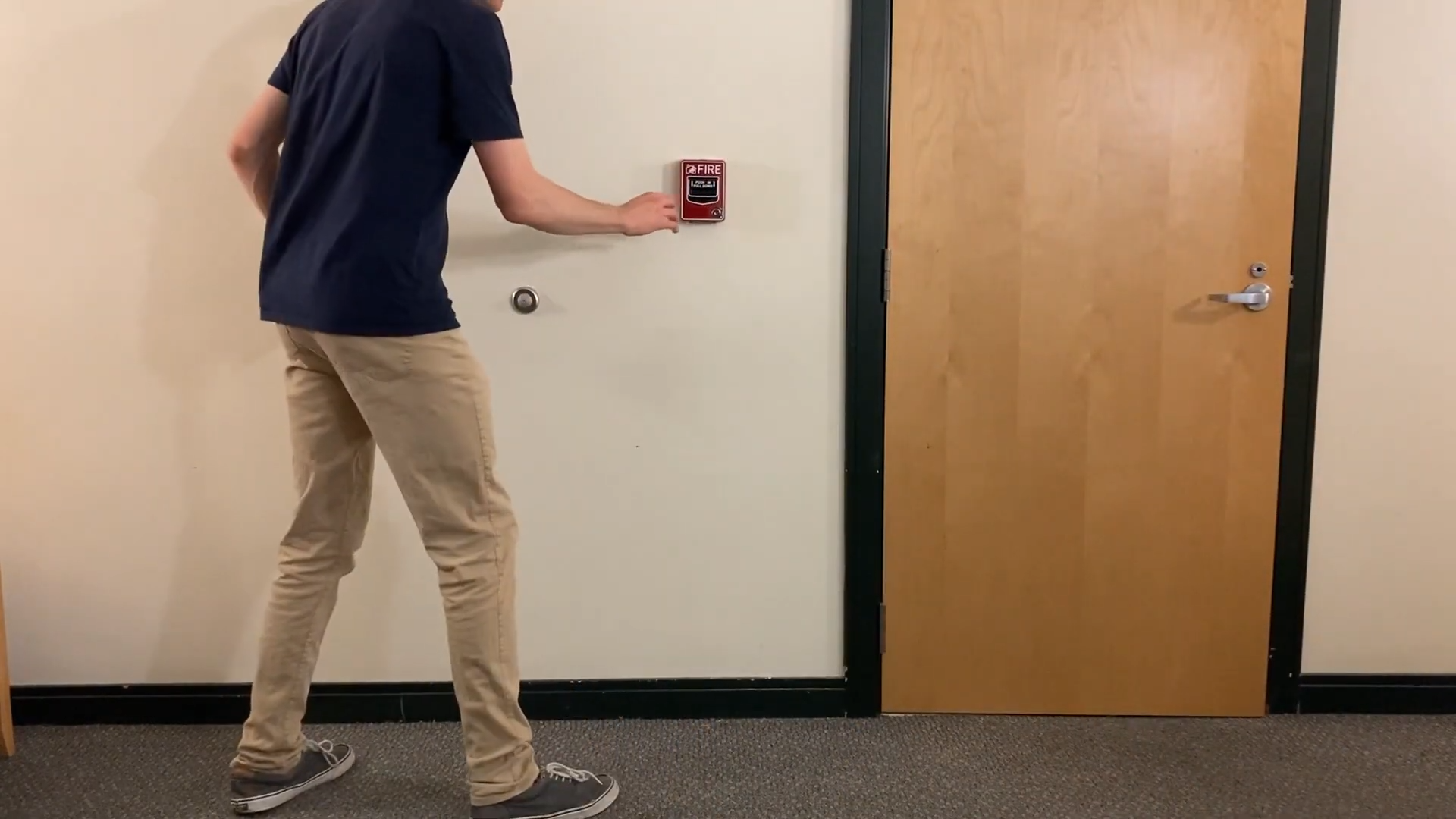
Note: This article uses a playful title, but a real fire alarm is never background music. Treat every alarm like the main event is “get out safely,” not “find the beat.”
There is a very specific kind of chaos that happens when a fire alarm goes off. The lights flash. The horn blasts. People freeze for one dramatic second as if the building itself just yelled, “Everybody to the exit, and yes, I brought strobe lights.” That accidental nightclub energy is exactly why the phrase Fire Alarm Disco Party works so well. It is funny, visual, and just absurd enough to stick in your brain. But behind the joke is a serious truth: fire alarms are designed to grab your attention fast, cut through confusion, and get people moving before seconds become a problem.
That is what makes this topic surprisingly worth talking about. A fire alarm is not just a loud noisemaker with a flair for drama. It is part warning system, part behavior trigger, part life-saving technology, and part test of whether humans under pressure will do the smart thing or stand in a hallway holding coffee and asking, “Do you think this is real?” Spoiler: you should assume it is.
In this article, we are taking the title Fire Alarm Disco Party and using it as a fun doorway into real, practical fire alarm safety. We will look at why alarms sound the way they do, why flashing strobes matter, how false alarms create bad habits, what families and workplaces should do when the system erupts, and why your best fire-safety move is to rehearse before the building starts impersonating Studio 54.
Why Fire Alarms Feel Like a Party You Never Wanted to Attend
The “disco” part of a fire alarm experience is not imaginary. Modern alarm systems often combine a piercing audible signal with bright flashing visual strobes. That mix is intentional. It is supposed to be impossible to ignore. The sound pattern is recognizable, the lights are attention-grabbing, and together they help alert people with different access needs and in different environments. In other words, the system is built to interrupt whatever you are doing, whether you are asleep, working, cooking, wearing headphones, or pretending you did not burn the toast.
That sensory overload is one reason people joke about alarms turning a hallway into a terrible rave. The lights flash. Shadows jump. Everyone starts moving in a slightly uncoordinated way. One person appears barefoot. Another is carrying a laptop for reasons known only to them and possibly their therapist. And yet, awkward as the moment is, that design works. In an emergency, hesitation is the enemy. Fire alarms are meant to replace hesitation with motion.
There is also a psychology angle here. People remember vivid experiences. A boring safety lecture fades. A loud alarm with flashing lights does not. That is why the best fire alarm safety messaging is simple and repeatable: know two ways out, get outside fast, meet at a designated spot, and stay out. When the brain is overloaded, it needs a short script, not a twenty-slide presentation.
What the Alarm Is Actually Trying to Tell You
At its core, a fire alarm has one job: warn occupants early enough to evacuate or take the appropriate emergency action. That may sound obvious, but people often treat alarms like suggestions. They are not suggestions. They are instructions delivered with all the subtlety of a marching band inside a blender.
In homes, smoke alarms are the first line of warning. In larger buildings, full fire alarm systems may include detectors, pull stations, horns, strobes, panels, and linked notification devices. In both cases, the goal is speed. Once an alarm sounds, the clock is not your friend. Fire can grow quickly, smoke can spread faster than people expect, and the safest decision is usually the least glamorous one: leave immediately.
That is also why home fire escape plans matter so much. Families that have working smoke alarms but no plan are basically owning a whistle without knowing the play. The device can warn you, but it cannot decide which window sticks, who helps the toddler, where the dog leash is, or whether Grandma needs a door with a lower threshold and extra assistance. Planning fills that gap.
How to Build a Fire Alarm Setup That Does Its Job
Put alarms where they actually protect people
A good smoke alarm strategy is not random. The basic rule is straightforward: place alarms inside each bedroom, outside each sleeping area, and on every level of the home, including the basement. Interconnected alarms are even better because when one sounds, they all sound. That means a problem on one side of the house is not politely keeping itself to one room while the rest of the household snores through the opening act.
Test them like you mean it
Too many people treat smoke alarms like decorative ceiling mushrooms. They are there, which feels reassuring, but nobody checks whether they actually work. Testing monthly is one of the easiest safety habits you can build. If an alarm fails the test, fix it immediately. Replace batteries as needed, and replace the unit when it reaches the end of its service life. A tired old alarm is not “vintage.” It is unreliable.
Do not sabotage the system
One of the biggest fire-safety mistakes is disabling alarms after nuisance alerts, especially from cooking. Yes, repeated false or nuisance alarms are maddening. No, that does not make it a good idea to pull the battery and announce, “Peace has returned.” Newer smoke-alarm technology is improving at reducing unwanted activations, but the bigger lesson is simple: place alarms correctly, maintain them, and never leave your home unprotected because dinner got dramatic.
The Real Villain: Complacency
If there is one thing that turns a Fire Alarm Disco Party from funny to dangerous, it is complacency. People get used to alarms in dorms, apartment buildings, offices, and schools. They hear one too many drills or nuisance activations and start assuming every alarm is “probably nothing.” That mindset is risky because emergencies do not schedule a special audio cue labeled “this one is definitely real.”
This is where fire drill tips matter. Drills are not supposed to be theatrical inconveniences. They are supposed to turn the right behavior into muscle memory. Exit calmly. Use stairs, not elevators. Help anyone who needs assistance. Go to the designated meeting point. Do not wander off for coffee while the fire department is trying to determine whether the building is safe. The point of a drill is to make the real thing less chaotic, not to provide an excuse for parking-lot gossip.
Workplaces have an added responsibility here. Employees need alarm systems that are distinctive and recognizable, and they need training that tells them what action to take when those alarms activate. In a large building, confusion can waste precious time. A clear emergency action plan, visible exit routes, and regular training do far more for safety than a company memo nobody reads until the day after an incident.
Why Flashing Strobes Matter More Than People Realize
The flashing lights in a fire alarm system are not there to make the corridor look dramatic for social media. They are a critical accessibility feature. Visual notification devices can help alert people who are deaf or hard of hearing, and they also reinforce the message in loud spaces where sound alone might not be enough. Good fire-safety planning works best when it accounts for different abilities, ages, sleeping patterns, and building layouts.
That is why a one-size-fits-all plan is rarely enough. Some households need bed shakers or specialized alerting devices. Some workplaces need tactile systems or additional communication procedures. Some families need to plan for young children, older adults, or people with mobility challenges. The safest plan is the one tailored to real human beings, not the imaginary super-organized household from a stock photo where everybody already has shoes on.
What To Do When the Alarm Sounds
At home
Get out fast. Follow your escape plan. If there is smoke, stay low as you move toward the exit. Gather at your outside meeting place. Call emergency services from outside. And then stay outside. This is the part where people are tempted to re-enter for a phone charger, a pet toy, or a loaf of bread they suddenly feel emotionally attached to. Resist that urge. Property can be replaced. You cannot.
At work or school
Stop what you are doing and evacuate according to the building’s plan. Do not assume someone else checked. Do not stop to finish the email. Do not turn a two-minute exit into a personal documentary about mild inconvenience. Use the nearest safe exit, help others if you are trained or assigned to do so, and wait for official instructions before re-entering.
At a hotel, venue, or unfamiliar building
This is where people are most vulnerable because they do not know the exits. A good habit is to identify two ways out whenever you arrive somewhere new. It sounds a little dramatic until the alarm actually goes off, at which point it feels less dramatic and more genius. In unfamiliar spaces, preparedness is basically free and often priceless.
How Pop Culture Humor Can Actually Help Fire Safety
A title like Fire Alarm Disco Party works because humor makes memorable education. People are more likely to share and remember safety information when it feels human, not robotic. That does not mean turning emergencies into jokes. It means using a vivid phrase to help the lesson stick. If someone laughs at the idea of a “surprise hallway disco” and then remembers to test their smoke alarms, practice an escape plan, or stop ignoring building drills, the joke did real work.
This is also why modern safety messaging often leans into clear, catchy language. “Close before you doze.” “Plan two ways out.” “Get out and stay out.” Those phrases survive stress better than paragraphs do. Good safety communication is less like a textbook and more like a chorus: short, repeatable, hard to forget.
Fire Alarm Disco Party Experiences: What It Feels Like in Real Life
Anyone who has spent time in a dorm, apartment complex, office tower, or hotel probably has a fire alarm disco party memory. Maybe it happened at 2 a.m. when the horn blasted so suddenly that your soul left your body before your feet hit the floor. Maybe the hallway lit up with flashing strobes, and for one delirious second your half-awake brain thought, “This is the worst nightclub I have ever attended.” Then reality kicked in, and suddenly everyone was outside in pajama pants, gripping phones, keys, and whatever random item they happened to grab in the confusion.
There is always a cast of characters in these moments. One person is incredibly calm and already heading for the stairs like they trained for this exact event. Another is asking whether it might just be a drill, despite the fact that nobody schedules a drill for the middle of the night unless they are either very committed to realism or deeply unpopular. Someone else is wrapped in a blanket like a tiny exhausted monarch refusing to acknowledge the indignity of evacuation. And, somehow, there is always one guy carrying a full backpack, as if the building alarm announced a pop quiz instead of a potential emergency.
Office versions are different but equally surreal. The alarm goes off, the strobes start flashing, and a room full of adults briefly turns into confused meerkats. People look up from laptops. Someone says, “Should we keep working?” which is a sentence that deserves its own safety poster. Then the slow migration begins: coworkers shuffling toward the stairwell, a few still holding coffee, all of them pretending this is normal while the ceiling screams otherwise. Once outside, the mood shifts from inconvenience to comedy. There is a strange bonding effect when an entire department is standing on a sidewalk together because somebody in the break room burned popcorn into a national incident.
Hotel alarms have their own special energy because nobody knows where anything is. Guests open doors, look left and right, and immediately regret not paying attention to the evacuation map on the back of the room door. That tiny diagram everyone ignores suddenly becomes the most interesting artwork in the building. Families try to gather their kids. Travelers search for shoes. Businesspeople clutch room keys like sacred artifacts. It is a masterclass in why learning exits before you need them is a smart move.
What all these experiences have in common is this: the moment feels absurd, but the lesson is serious. Fire alarms are supposed to interrupt your routine. They are supposed to feel urgent, awkward, and impossible to tune out. The best outcome is the one where everyone exits safely, waits for the all-clear, and later laughs about the accidental disco lighting. The worst outcome starts when people assume the alarm is nothing, delay evacuation, or ignore the plan entirely. So yes, call it a fire alarm disco party if that helps you remember it. Just remember the rule that matters most: when the music starts, the only dance move you need is straight to the exit.
Conclusion
Fire Alarm Disco Party is a funny phrase for a serious reality. Fire alarms are loud, bright, disruptive, and sometimes unintentionally theatrical because that is exactly what effective warning systems need to be. They are built to cut through sleep, noise, distraction, and human denial. The smartest response is not clever commentary. It is preparation.
Install smoke alarms in the right places. Test them regularly. Replace them when needed. Practice your home fire escape plan until it feels automatic. Learn the exits in unfamiliar spaces. Take workplace drills seriously. And if the alarm goes off, do not waste time wondering whether the building is just in the mood for strobe lights. Get out, stay out, and let the professionals decide when the party is over.










