
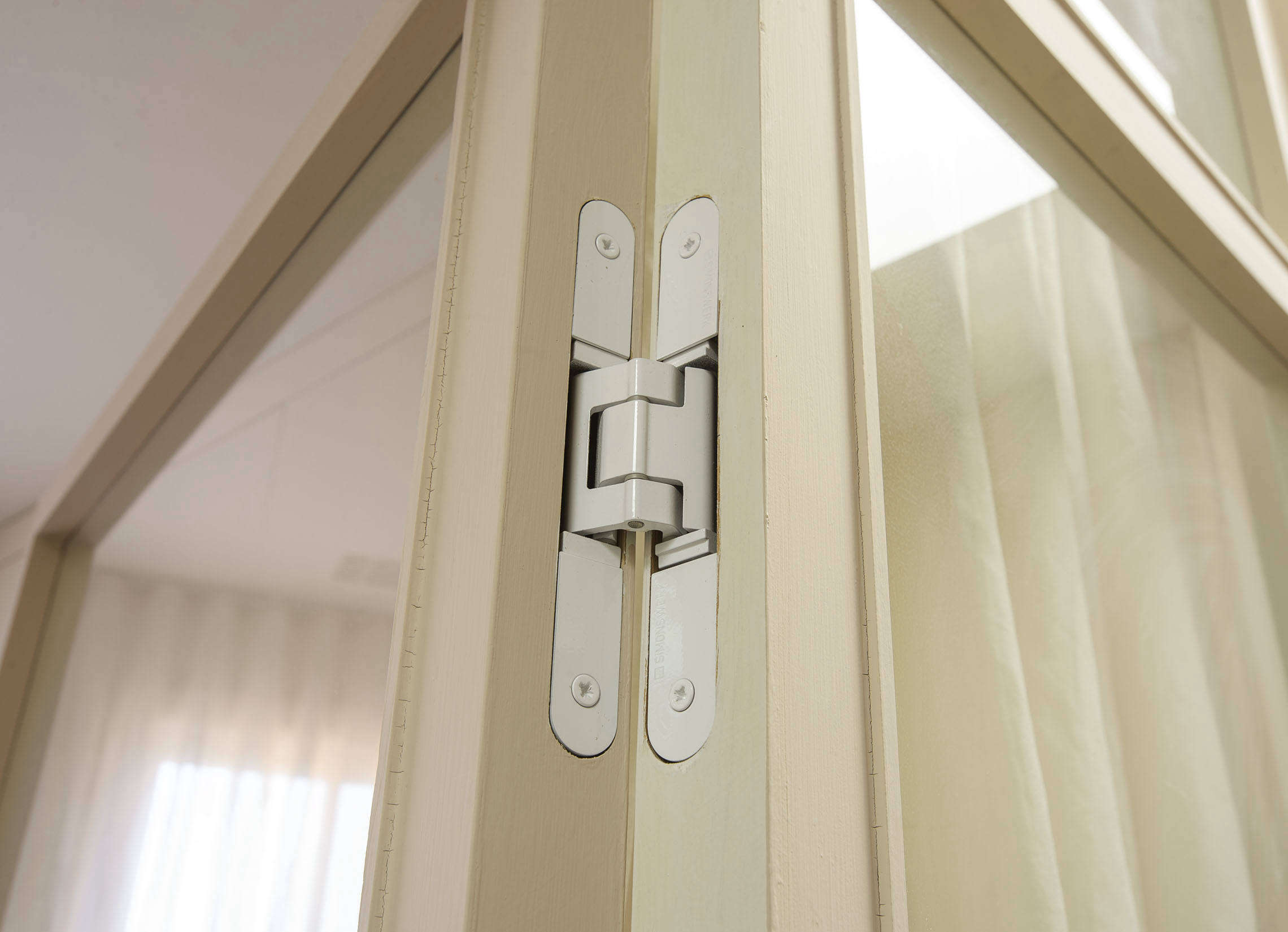
The Tectus concealed hinge system is one of those architectural details that quietly makes a room look expensive. It does not shout. It does not sparkle. It does not arrive with a dramatic brass knuckle begging for attention. Instead, it disappears into the door and frame, leaving behind the kind of clean, flush surface that makes architects nod slowly and homeowners say, “Wait… where are the hinges?”
Designed by SIMONSWERK, TECTUS hinges are built for flush-mounted doors where the goal is visual calm, precise alignment, and long-term performance. In simple terms, a Tectus hinge lets a door sit beautifully in the same plane as the wall or frame, while the hinge mechanism stays hidden when the door is closed. The result is a modern, minimalist look without sacrificing strength, adjustability, or everyday usability.
But TECTUS is not just a pretty face hiding in the jamb. The system includes models for residential doors, heavy commercial openings, fire-rated doors, clad doors, glass doors, steel frames, aluminum frames, wood frames, and even doors that need concealed power transfer for electronic locks or access control. In other words, it is not a one-trick hinge. It is more like the quiet overachiever of architectural hardware.
What Is the Tectus Concealed Hinge System?
The Tectus concealed hinge system is a range of fully hidden, three-dimensionally adjustable door hinges designed for flush doors. Unlike traditional butt hinges, which leave a visible barrel on the side of the door, TECTUS hinges are mortised into both the door leaf and the frame. When the door is closed, the hinge vanishes from view.
This makes TECTUS ideal for modern interior design, luxury residential projects, hospitality spaces, offices, galleries, high-end retail stores, and anywhere a door should feel integrated rather than interrupted. If a standard hinge is a visible zipper on a suit jacket, TECTUS is the custom tailoring that makes the seam disappear.
The system is especially popular in flush-to-wall doors, frameless door concepts, concealed door frames, and minimalist interiors. It helps designers create continuous wall planes, reduce visual clutter, and maintain crisp architectural lines. That sounds fancy because it is fancybut the practical benefit is easy to understand: the door looks cleaner, aligns better, and feels more intentional.
Why Designers and Builders Like TECTUS Hinges
1. A Clean, Minimalist Appearance
The biggest reason people choose Tectus concealed hinges is the look. With no visible hinge barrel, the door reads as part of the architecture rather than a separate object attached to it. This is particularly powerful in hallways, paneled walls, hidden pantry doors, primary suites, media rooms, and modern offices where every line matters.
In a minimalist space, one visible hinge can feel like a typo in a poem. TECTUS solves that by keeping the hardware out of sight while still allowing the door to swing smoothly and securely.
2. Three-Dimensional Adjustment
One of the system’s biggest technical advantages is 3D adjustability. After installation, many TECTUS models allow adjustment in three directions: side-to-side, height, and depth or compression. This helps installers fine-tune the door gap, improve the reveal, correct small alignment issues, and make the door sit exactly where it should.
This matters because flush doors are not forgiving. A slightly crooked reveal around a standard door may go unnoticed. A crooked reveal on a flush minimalist door is basically wearing a neon sign that says, “Something went wrong here.” TECTUS gives installers a way to refine the final look without removing and rebuilding half the opening.
3. Strong Load Capacity
The TECTUS family includes models for a wide range of door weights, from lighter residential applications to heavy-duty commercial doors. Depending on the model, TECTUS hinges can support doors from about 132 pounds up to much heavier architectural openings, with some systems rated for up to 661 pounds. That range is one reason the line is used in both homes and demanding commercial interiors.
For example, a lighter flush bedroom door may need a smaller TECTUS model, while a tall solid-core office door, oversized pivot-like interior door, or high-performance commercial door may require a larger model with greater load capacity. The key is matching the hinge to the actual door weight, height, width, frame material, closer use, and project requirements.
4. Opening Angle up to 180 Degrees
Many TECTUS concealed hinges allow the door to open up to 180 degrees, depending on the model, door thickness, frame condition, wall detail, and installation layout. This creates a generous swing and makes the door feel less restricted. In practical terms, it can help with furniture movement, accessibility, and general comfort.
Of course, walls are still walls. A door can only open as far as the surrounding construction allows. If there is trim, cladding, a deep reveal, or a very tight corner, the final opening angle may be affected. Hinges may be clever, but they do not perform magic tricks against drywall.
Where TECTUS Concealed Hinges Work Best
Luxury Residential Interiors
In high-end homes, TECTUS hinges are often used on primary bedroom doors, closet doors, hidden pantry doors, powder rooms, wine rooms, offices, and wall-panel doors. They pair beautifully with flush wood veneer doors, painted doors that match the wall, and doors integrated into millwork.
A common example is a hallway with several doors painted the same color as the wall. Standard hinges and casing can make the hallway feel busy. Concealed hinges, flush frames, and minimal pulls can make the same hallway feel calmer and more architectural.
Hotels and Hospitality Projects
Hotels use concealed hinge systems when they want guest rooms, suites, spa areas, and service spaces to look refined. In premium hospitality design, hardware has to work hard without looking like it is working hard. TECTUS helps deliver that polished effect while still handling frequent use.
For electronic locks, card readers, or access-control doors, TECTUS Energy models may be considered because they allow concealed power transfer through the hinge area. That means the door can support electronic functions without a visible wire loop flopping around like a sad little tail.
Commercial and Institutional Spaces
Offices, galleries, museums, healthcare environments, and public buildings may use TECTUS for clean design, heavy doors, fire-rated assemblies, or high-use openings. Some models are designed for wood, steel, and aluminum frames, which gives specifiers more flexibility across different project types.
In commercial work, however, the hinge is only one part of the assembly. Fire rating, door closer force, accessibility, acoustic performance, smoke control, and local code compliance all need to be considered. The right TECTUS hinge must be selected as part of the complete door, frame, and hardware package.
Important TECTUS Model Families
Standard TECTUS Models
Standard TECTUS hinges are used for flush residential and commercial doors. Models such as TE 240, TE 340, TE 540, and TE 640 are commonly discussed because they cover different load capacities, door thicknesses, and project demands. A smaller hinge may suit a refined residential door, while a larger hinge may be needed for a heavy commercial opening.
TECTUS Energy
TECTUS Energy models are designed for concealed energy transmission. These hinges are useful when a door needs power for electronic locks, access control, motorized hardware, multimedia components, or similar systems. This is especially helpful in hotels, private residences, offices, and high-end public buildings where visible wiring would ruin the clean design.
TECTUS FR
TECTUS FR models are designed for fire-rated door applications and may include integrated intumescent features depending on the version and market. Fire-rated doors are serious business, so the hinge must be approved for the specific door assembly. Do not casually swap hardware on a rated door unless you enjoy making inspectors unhappy.
TECTUS A8
TECTUS A8 versions are made for doors and frames with surface cladding, such as panels, laminates, mirrors, or thin stone finishes. These are useful when the door is meant to visually disappear into a paneled wall or decorative surface. In this type of installation, the hinge needs to account not only for the door itself but also for the added material thickness.
TECTUS Glass and Specialty Versions
The TECTUS range also includes specialty solutions for glass doors, recessed frame facings, and other architectural conditions. This is one reason the system is often specified on custom projects. It gives designers options beyond the basic “door plus hinge plus hope” approach.
How TECTUS Hinges Compare With Traditional Hinges
Traditional butt hinges are simple, affordable, and widely available. They work well for many doors and are easy for most carpenters to install. Their main downside is visibility. The hinge barrel remains exposed, which may not fit a modern flush-door design.
TECTUS concealed hinges cost more and require more precise preparation, but they create a cleaner look and offer post-installation adjustability. They are not necessarily the right choice for every door. For a basement utility room, a traditional hinge may be perfectly fine. For a flush walnut library door in a custom home, TECTUS suddenly starts looking very sensible.
The real comparison is not “traditional hinges are bad and concealed hinges are good.” The smarter question is: what does the design need? If the door is meant to be a visible decorative feature, exposed hinges may be part of the charm. If the door is meant to disappear, concealed hinges are the right tool.
Installation Considerations
Precision Routing Is Essential
TECTUS hinges require accurate mortising in both the door and frame. This usually involves routing templates, jigs, careful measurement, and an installer who understands tight tolerances. A concealed hinge is not the best place to practice “close enough carpentry.” The hinge pockets must be clean, square, and correctly positioned.
The Door and Frame Must Be Compatible
Before specifying TECTUS, confirm the door thickness, door weight, frame type, fire rating, cladding thickness, swing direction, and clearance requirements. Some models work with wood, steel, and aluminum frames, but that does not mean every model works with every condition.
Door Closers Can Affect Load Capacity
If the door uses an overhead closer or other closing device, hinge selection becomes more important. Door closers introduce additional forces, especially on heavy or frequently used doors. In some cases, a third hinge may be recommended for stability, although adding hinges does not automatically increase the official rated load capacity unless the manufacturer’s documentation says so.
Plan Early in the Project
Concealed hinges should be selected early, not after the doors arrive on site. The frame preparation, door machining, wall detail, casing strategy, and hardware schedule all need to work together. Waiting until the end of the project and saying, “Can we make this door invisible?” is a great way to make your carpenter stare silently into the middle distance.
Common Mistakes to Avoid
Choosing by looks only: The hinge must match the door weight, thickness, height, frame material, and performance requirements. A beautiful hinge that is undersized is not a design win; it is a future service call.
Ignoring wall and frame details: A concealed hinge cannot create a flush architectural effect by itself. The frame, drywall return, casing, paneling, and reveal details all matter.
Skipping installation tools: Templates and milling frames exist for a reason. They help ensure the hinge pockets are accurate. Freehand routing may sound heroic, but so does juggling chainsaws. Both are best avoided by most people.
Forgetting maintenance access: Even though TECTUS hinges use maintenance-free bearing technology in many models, the cover plates and adjustment screws still need to be accessible during installation and final tuning.
Using the wrong hardware on rated openings: Fire-rated, smoke-rated, acoustic, or security doors must use approved hardware within the tested assembly. Always verify compliance before ordering.
Is the Tectus Concealed Hinge System Worth It?
For standard builder-grade doors, TECTUS may be more hinge than necessary. But for flush doors, modern interiors, high-end millwork, heavy commercial openings, or hidden-door concepts, the system is absolutely worth considering. It solves a real design problem: how to make a functional swinging door look clean, aligned, and intentional.
The value is not only visual. The adjustability helps fine-tune reveals after installation. The load range supports a wide variety of door types. The specialty models allow designers to solve tricky conditions like cladding, fire rating, glass, and power transfer. That combination of beauty and engineering is why TECTUS has become a go-to concealed hinge system for architects, designers, builders, and hardware consultants.
Real-World Experiences With the Tectus Concealed Hinge System
In real projects, TECTUS hinges tend to create two very different reactions. The first comes from the client after installation: “That looks amazing.” The second comes from the installer before installation: “Please tell me we have the right templates.” Both reactions are understandable.
The most successful TECTUS installations usually begin long before the hinge touches the door. On custom residential projects, the architect, door supplier, millworker, and hardware consultant often coordinate the hinge model during the design phase. That early planning prevents awkward surprises, such as a door that is too thin for the selected hinge or a wall panel detail that interferes with the swing. When everyone coordinates early, the finished door looks effortless. When they do not, the project may become a thrilling educational documentary called “Why Details Matter.”
One common experience is that TECTUS makes simple doors look much more expensive. A plain painted flush door with concealed hinges and a clean reveal can look more refined than a decorative door with busy trim and visible hardware. This is especially true in narrow hallways, where multiple doors can create visual noise. By hiding the hinges and simplifying the frame, the hallway feels calmer and more spacious. The door is still there, of course, but it stops waving at you.
Another practical lesson is that final adjustment is not optional. After installation, doors may need slight tuning once flooring is complete, humidity changes, or wall finishes are applied. The 3D adjustment feature is extremely helpful here. A tiny correction in height or depth can improve the shadow gap and make the door feel properly seated. This is where TECTUS earns its keep: not just in the showroom-perfect image, but in the messy reality of construction where walls are not always perfectly straight and floors sometimes have opinions.
Installers also learn quickly that concealed hinges reward patience. Accurate layout, sharp bits, stable routing, and careful screw placement all matter. The hinge pockets must be clean. The frame must be solid. The door must be properly prepared. If the installation is rushed, the hinge will not politely hide the mistake. It will display the error through uneven gaps, rubbing, or a door that refuses to sit flush.
From a homeowner’s perspective, the best experience is often emotional rather than technical. People notice the silence of the design. They like that the room feels cleaner. They like that a pantry door can blend into cabinetry, a powder-room door can disappear into a hallway, or an office door can look like part of a paneled wall. Nobody hosts a dinner party and says, “Please admire the hinge mortise geometry,” but guests do notice when a space feels unusually polished.
The main caution is budget. TECTUS hinges cost more than standard hinges, and the labor can also be higher because precision matters. However, in the right project, the upgrade can feel small compared with the visual impact. If the entire design depends on flush surfaces, hidden frames, and modern restraint, using a visible hinge to save money is like wearing sneakers with a tuxedo. Comfortable, yes. Correct for the moment? Probably not.
The best advice from real-world use is simple: choose the hinge early, verify the specifications, use the correct installation tools, and let a skilled professional handle the prep. Do that, and the Tectus concealed hinge system can deliver exactly what it promises: a strong, smooth, beautifully hidden connection between door and frame.
Conclusion
The Tectus concealed hinge system is a premium solution for anyone who wants flush doors, clean architectural lines, and hardware that performs without demanding attention. It is especially valuable in modern homes, luxury interiors, hospitality spaces, offices, and commercial projects where doors need to look seamless while still working reliably every day.
Its strengths are clear: concealed design, strong load capacity, 3D adjustability, a wide model range, specialty options, and compatibility with many high-end architectural conditions. Its challenges are also clear: higher cost, precise installation, and the need for careful specification. In other words, TECTUS is not a casual afterthought. It is a detail that should be planned like a detail, not wished into place at the end.
If you want a door that blends into a wall, supports a minimalist design, or gives a room that quiet custom-built feeling, TECTUS deserves a serious look. It may be hidden, but its impact on the finished space is anything but invisible.
Note: Always confirm the exact TECTUS model, load rating, frame compatibility, fire-rating requirements, and installation method with the door manufacturer, hardware supplier, and local building requirements before ordering.










