
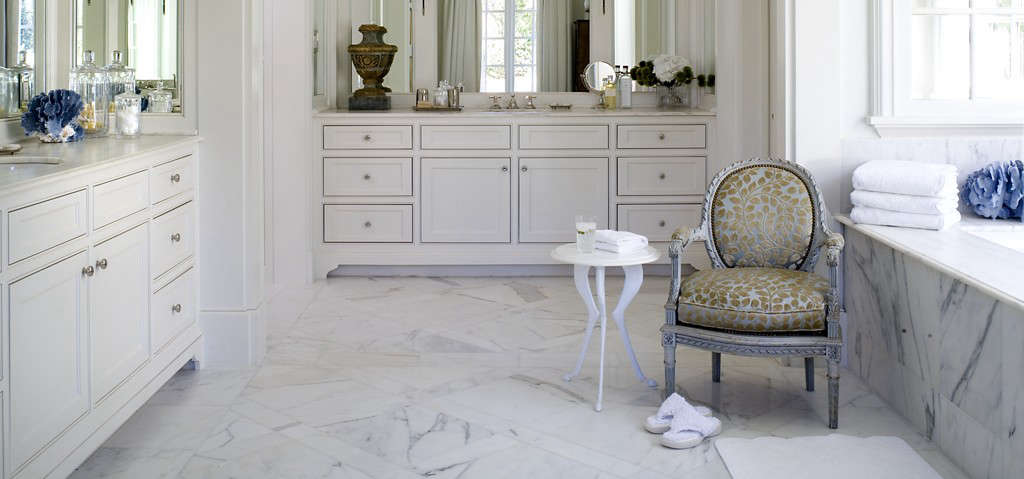
Some tiles politely finish a room. Ann Sacks Calacatta Borghini SP Italian Marble Tile walks in wearing an impeccably tailored Italian suit, orders sparkling water, and somehow becomes the room. Its soft, luminous background and sweeping gray-and-gold veining create the kind of surface that looks luxurious without needing chandeliers, velvet ropes, or a butler named Reginald.
This is genuine Italian marble rather than a printed marble-look product, so every piece carries natural variation. That unpredictability is the attraction: one tile may show a quiet wisp of gray, while the next delivers a warm honey-colored vein with enough drama to deserve its own soundtrack. The result can feel classical, modern, or quietly glamorous depending on the layout, surrounding materials, and amount of stone used.
What Is Ann Sacks Calacatta Borghini SP Marble Tile?
Calacatta Borghini is a distinguished white marble associated with the Carrara area of Italy and the famed Borghini quarry. The Ann Sacks SP selection has been described as a premium grouping chosen for rich coloration, elegant veining, and a translucent honeyed-white field crossed by gray and gold movement. A honed finish softens the reflection and gives the surface a velvety, architectural appearance rather than a mirror-like shine.
Older product information lists the tile for indoor wall applications and medium-duty residential flooring. Exterior use is treated as conditional because climate and installation method matter. In other words, this is not a “buy it on Friday and tile the patio on Saturday” situation. Outdoor plans should be reviewed by the supplier and an experienced natural-stone installer.
The letters “SP” belong to the product’s historical naming and premium selection description; buyers should not assume they identify a universal marble grade. Because the exact listing is found on an older curated product page rather than a clearly indexed current Ann Sacks product page, confirm current sizes, finishes, lead times, and quarry lots directly with the brand.
The Visual Character: White, Gray, Gold, and Plenty of Personality
A Warmer White Than Many Marble-Look Surfaces
Calacatta Borghini is often described as white, but “white” is doing a suspicious amount of work in that sentence. The background may read as creamy, milky, or faintly honeyed, especially under warm lighting. That softness helps it coordinate with natural oak, walnut, unlacquered brass, warm nickel, aged bronze, and off-white paint without making the room feel icy.
Veining That Ranges From Whisper to Headline
The veins may appear gray, taupe, beige, amber, or gold, and their scale can vary considerably from tile to tile. Some pieces are calm; others contain broad movement. Because this is natural stone, variation is not a defect. It is the entire plot. Ordering from one production lot and reviewing the material before installation helps create a balanced composition.
Why the Honed Finish Matters
A honed surface has a smooth, matte-to-satin appearance. It feels calmer than polished marble and reduces sharp reflections, but it is not maintenance-free, scratch-proof, or stain-proof.
Best Places to Use Calacatta Borghini SP Tile
Bathroom Walls and Vanity Backsplashes
Bathrooms are a natural home for this marble because the pale field brightens enclosed spaces while the veining adds movement. A vanity backsplash creates a refined focal point, while larger shower-wall pieces reduce grout lines. Wet-area success still depends on a complete waterproofing system and confirmation that the selected format and finish suit the wall, niche, curb, bench, or floor.
Kitchen Backsplashes
A backsplash lets the marble deliver maximum visual impact with less daily abuse than a worktop. It pairs particularly well with white, mushroom, deep green, navy, charcoal, and natural-wood cabinetry. Warm metal fixtures can echo the honey veining, while black accents sharpen the overall composition.
Because kitchens contain lemon juice, vinegar, tomato sauce, wine, and other acidic ingredients, splashes should be blotted promptly. Sealer can help resist staining, but it cannot prevent chemical etching. Marble is calcium-carbonate stone; acids can react with its surface and leave dull marks. The glamorous Italian suit, unfortunately, is not wearing acid-proof armor.
Fireplace Surrounds and Feature Walls
A fireplace surround gives the veining room to shine with little foot traffic or food exposure. Confirm heat clearances, substrate requirements, and fireplace-manufacturer instructions first.
Entry Floors and Medium-Duty Residential Floors
On a foyer or powder-room floor, Calacatta Borghini makes an unforgettable first impression. Because grit acts like sandpaper, use mats, dust-mop frequently, and evaluate slip resistance carefully in wet locations.
Formats, Layouts, and Vein Planning
Published examples of Ann Sacks Calacatta Borghini have included small field tile, larger rectangular and square formats, mosaics, custom-sized fields, and coordinating slabs. One material listing identifies a 3-by-6-inch honed field tile with approximately 3/8-inch thickness, while archived design imagery shows formats such as 8 by 16 inches, 16 by 16 inches, and large honed pieces. These references are useful for design inspiration, but current availability must be verified before plans are finalized.
Small rectangles create classic rhythm and distribute variation; larger tiles reduce grout lines but require a flatter substrate and careful handling. Mosaics can add grip and detail, although extra grout means extra maintenance.
Dry-lay the entire installationor at least a representative sectionbefore setting the tile. Rotate pieces, separate unusually bold veins, and decide whether the movement should flow continuously or appear randomly distributed. This step prevents the dreaded “why is every dark vein having a conference in the upper-left corner?” moment after the mortar cures.
Design Pairings That Let the Marble Look Expensive, Not Busy
Because Calacatta Borghini already contains movement, quiet cabinetry, simple profiles, and restrained secondary patterns usually produce the most elegant result.
- Warm modern: Pair honed marble with white oak, creamy plaster, brushed brass, and soft linen textures.
- Classic tailored: Use inset white cabinetry, polished nickel, dark-stained wood, and a restrained border detail.
- Moody contrast: Combine the stone with charcoal, forest green, oxblood, or near-black paint so the pale marble appears luminous.
- Minimalist: Select large-format pieces, narrow color-matched grout joints, simple plumbing, and unadorned millwork.
Evaluate samples in the actual room. Daylight, LEDs, paint undertones, and adjacent woods can change how the stone reads. Marble has opinions about lighting, and it expresses them freely.
Installation: Where Premium Material Meets Serious Preparation
Natural marble tile rewards professional installation. The substrate must be clean, stable, properly prepared, and sufficiently flat for the selected tile size. Larger and heavier pieces may require a mortar designed to support large-format tile and stone without excessive sagging or settling. For pale marble, the installer should select a compatible setting system approved for the stone and application.
Inspect every piece for damage, thickness variation, veining, and color range. Test the grout because strong pigments may affect pale stone, and apply penetrating sealer only at the stages specified by the supplier, sealer maker, and installer.
Order extra material for cuts, breakage, future repairs, and selective layout. General marble-tile guidance often suggests roughly 5 to 10 percent overage, but intricate patterns, diagonal layouts, large-format pieces, and highly selective vein matching may require more. Keep several labeled spare tiles after completion. Years later, they will be far more useful than a heroic attempt to locate an identical quarry lot.
Cleaning and Maintenance Without Accidentally Pickling the Marble
Use a pH-neutral cleaner intended for natural stone, warm water when appropriate, and soft microfiber cloths or nonabrasive mops. Avoid vinegar, lemon-based cleaners, harsh bathroom descalers, abrasive powders, and rough scrub pads. Acidic products can etch marble, while grit can scratch it.
Blot spills rather than spreading them. Remove grit with a clean dust mop or suitable hard-floor vacuum attachment; in showers, improve ventilation and use a soft squeegee.
Sealing improves resistance to absorbed stains; it does not make marble stain-proof, scratch-proof, or etch-proof. Resealing frequency depends on the product, traffic, exposure, and cleaning routine. Rather than following a magical calendar date, monitor how the stone behaves and follow the sealer manufacturer’s instructions. If water darkens the surface instead of beading, the installation may be ready for evaluation or resealing.
Advantages and Tradeoffs
Why Homeowners Choose It
- Authentic Italian marble with one-of-a-kind natural variation
- A warm white field suited to traditional and modern interiors
- Distinctive gray, gold, taupe, and honey-colored veining
- A honed finish that feels soft, refined, and architectural
- Strong visual impact for bathrooms, backsplashes, fireplaces, walls, and selected floors
What Buyers Must Accept
- Variation between samples, tiles, and quarry lots
- Potential staining, scratching, and acid etching
- Periodic sealing and stone-safe cleaning
- Higher material and installation costs than many porcelain alternatives
- A greater need for layout planning, skilled cutting, and substrate preparation
Buyers who want perfect uniformity may prefer marble-look porcelain; those who enjoy patina and geological variation often find real marble worth the care.
A Practical Buying Checklist
- Confirm that the exact Calacatta Borghini SP product or its current equivalent is available.
- Request current samples from the same lot intended for the project.
- Verify format, thickness, finish, edge, lead time, minimum order, and return policy.
- Ask whether the tile is approved for the planned wall, floor, shower, fireplace, or exterior condition.
- Calculate overage based on cuts, pattern, vein selection, and future repairs.
- Hire an installer experienced with premium natural stone, not merely ceramic tile.
- Approve a dry layout and grout mockup before full installation.
- Obtain written cleaning, sealing, and warranty instructions for every product in the assembly.
What the Real Project Experience Typically Feels Like
The experience of choosing Calacatta Borghini usually begins with confidence and immediately becomes a minor geology seminar. You see one sample, fall in love with the gold vein, and assume every tile will look exactly like it. Then the boxes arrive and reveal a family of relatedbut definitely not identicalpersonalities. One is creamy and quiet. One has a bold gray river. Another contains a warm amber streak that suddenly makes the brass faucet look like a brilliant decision.
This is the moment when a good installer slows the project down for the right reason. Instead of opening one box at a time and installing in order, the team blends pieces from several cartons and lays them across the floor. The room temporarily resembles an elegant stone card game. You walk around, move a dramatic tile away from another dramatic tile, and discover that “random” layouts require an astonishing amount of planning.
Lighting creates the next surprise. Under construction bulbs, the marble may look cooler and flatter than expected. Once permanent sconces, cabinet lighting, mirrors, paint, and metal finishes are installed, the honey tones return and the veining gains depth. This is why approving stone beside the actual project materials matters more than judging a tiny sample under showroom spotlights.
During installation, premium marble can feel emotionally expensive because every cut is permanent. A porcelain offcut is annoying; a poorly planned cut through a beautiful gold vein feels personal. Skilled installers measure carefully, use appropriate cutting equipment, protect finished surfaces, and keep the work area clean. Their patience is part of what the client is paying for.
After completion, most owners go through a brief stage of treating the marble like a museum artifact. Coasters appear everywhere. Guests are watched suspiciously if they approach with red wine. Someone whispers, “Is that lemon?” from across the room. Eventually, normal life resumes. The best routine is neither panic nor neglect: wipe spills promptly, use the correct cleaner, keep grit off floors, reseal when needed, and accept that genuine stone may develop a lived-in patina.
The strongest satisfaction usually comes from how the material changes the whole room. Even a compact backsplash can make simple cabinetry look custom. A marble fireplace surround can give a blank wall architectural weight. A honed bathroom can feel calm in daylight and softly luminous at night. The tile does not merely add pattern; it adds depth, history, and the unmistakable irregularity of something formed rather than printed.
There can also be frustration. A replacement tile may not match perfectly. A forgotten citrus splash may leave an etch. A bold vein may land differently than imagined. Those realities are not failures of natural marble; they are the terms of the relationship. Calacatta Borghini is best for people who want beauty with character, not beauty wrapped in bubble wrap forever.
In the end, the project experience is less about achieving flawless sameness and more about editing variation into a coherent composition. When the lot is thoughtfully selected, the layout is reviewed, and the installation is executed well, Ann Sacks Calacatta Borghini SP Italian Marble Tile can make a space feel collected, tailored, and enduringwithout looking as though it tried too hard. The marble handles the drama. Everything else can relax.
Conclusion
Ann Sacks Calacatta Borghini SP Italian Marble Tile is a high-character surface for interiors that deserve more than generic white. Its honeyed background, expressive gray-and-gold veining, and honed finish can elevate bathrooms, backsplashes, fireplaces, feature walls, and selected residential floors. The tradeoff is honest: real marble requires informed placement, skilled installation, stone-safe cleaning, and acceptance of natural variation.
Confirm current product availability and technical details before ordering, especially because online references to the exact SP selection include archived listings and historical formats. When specified carefully, dry-laid before setting, and maintained with common sense, this Italian marble can remain the visual anchor of a room for decades.
Note: Product availability, quarry lots, formats, application ratings, installation materials, and care instructions may change. Verify all current specifications with Ann Sacks, the setting-material manufacturer, and a qualified natural-stone installer before purchase or installation.













