
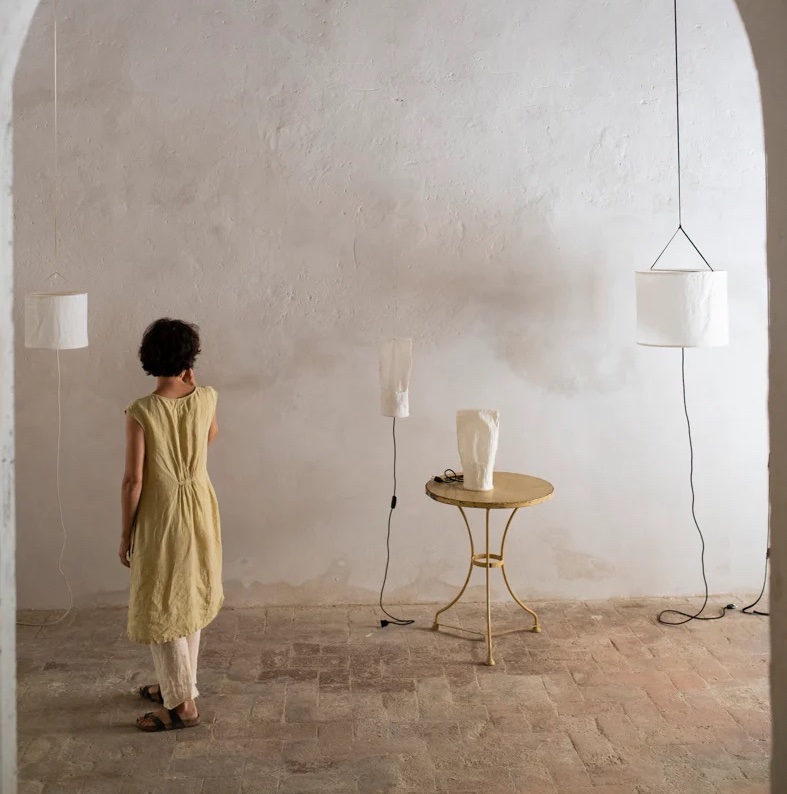
Some lighting shouts. Some lighting performs. Some lighting practically arrives wearing sequins and asking where the camera is. And then there is the quieter, rarer kind: lighting that seems less designed than discovered, as if it drifted into the room on a soft breeze and decided to stay. That is the feeling behind Chamusquina, a small workshop in Spain creating fabric-filtered lamps that feel ethereal without becoming precious and eco-minded without turning sustainability into a marketing drum solo.
In an era when homes are leaning toward layered ambience, natural textures, and pieces with a human touch, these handmade lights land in exactly the right emotional register. They are airy, warm, tactile, and gently sculptural. More importantly, they embody a design idea that has become increasingly attractive to modern homeowners: beauty that does not need to be loud, and sustainability that begins with restraint, local making, natural materials, and a refusal to overcomplicate the object.
This is what makes the workshop’s collection so compelling. The lamps are not merely functional fixtures. They are small atmospheres. They soften the edges of a room. They turn illumination into mood. They remind us that the right light does not just help us see; it helps us feel at home.
Why Fabric-Filtered Light Feels So Different
The phrase “light filtered by fabric” sounds poetic because it is poetic, but it is also deeply practical. Fabric changes light in a way that metal, glass, and bare bulbs simply do not. Linen and cotton diffuse brightness, mellow glare, and add visual softness. Instead of a sharp beam that interrogates your bookshelf like a detective in a crime drama, textile shades create a warmer, gentler spread that feels more flattering to walls, wood, skin, and pretty much everyone’s mood after 7 p.m.
That softness matters. Interior design has been moving away from stark, overly bright rooms toward layered lighting schemes built around ambient glow, task support, and sculptural accents. Natural-fiber shades fit beautifully into that shift because they combine atmosphere with texture. Even when switched off, they still contribute something: a pale, wrinkled, pleated, or gently irregular form that adds character without clutter.
Fabric also introduces a subtle emotional effect that is easy to underestimate. It makes light feel inhabited. A linen or cotton shade does not simply cover a bulb; it translates it. The result is illumination that feels less industrial and more domestic, less machine-like and more intimate. That is part of the reason paper lanterns, linen shades, woven pendants, and softly diffused fixtures continue to resonate in both minimalist and warm-modern interiors.
A Small Workshop in Spain With a Clear Point of View
Chamusquina’s appeal begins with scale. This is not a giant lighting conglomerate pumping out lookalike fixtures by the container-load. It is a small Spanish workshop making textile lamps by hand, with a focus on simple materials and the warmth of light passing through cloth. That sense of smallness is not a limitation; it is the brand’s superpower. It allows the work to feel personal, specific, and refreshingly free of mass-market bloat.
The workshop is associated with Catalina Alós and Ana Casas, who bring together design sensibility, sewing skill, and a clear commitment to responsible consumption. Their approach is rooted in natural materials such as linen and cotton, and in forms that are timeless rather than trend-chasing. That distinction matters. Plenty of brands talk about sustainability while producing the visual equivalent of a disposable phone case. These lamps feel built to live with, not to cycle through your home until the next algorithm tells you woven chrome is back.
There is also something deeply charming about the workshop’s worldview. The lamps are handmade, cut, sewn, and assembled one by one. The materials are straightforward. The forms are light and airy. The goal is not to overwhelm a room but to give it a warmer pulse. In a design culture that often confuses “statement” with “oversized object that could frighten a houseplant,” that restraint is a breath of fresh air.
What Makes These Lights Eco-Minded
To call these lamps eco-minded is not to claim that they come wrapped in a halo of perfection. It is to recognize the quieter, more credible signs of thoughtful design. The workshop works with natural materials like linen and cotton. It makes pieces by hand in a small-scale setting. It favors simple construction, repair-friendly logic, and forms that are unlikely to feel dated next season. Sustainability, in this context, is less about glossy slogans and more about reducing excess.
That matters because the greenest object is often the one you keep. Timelessness is not just a style preference; it can be a sustainability strategy. A light that still feels relevant in five or ten years has already done more good than a trend piece destined for storage, resale limbo, or the sad corner of a garage next to a broken bar cart and three unresolved life decisions.
The workshop’s eco-minded approach also shows up in its sensitivity to material behavior. Linen, cotton, cords, ropes, and simple metal structures are used not only because they are beautiful, but because they let the light perform naturally. Nothing feels over-engineered. The fixtures rely on texture, translucency, and form rather than spectacle. That kind of low-drama intelligence is often where good sustainable design lives.
Standout Designs: Quiet Shapes, Strong Personality
Baum: The Adjustable Sculpture
Among the most striking designs is the Baum lamp, a pendant with a counterweight system that allows vertical sliding. It is a brilliant example of how utility can become poetry. On paper, “movable hanging lamp” sounds practical. In person, it becomes theatrical in the best way: a floating textile form you can shift according to mood, task, or table height. The linen shade gives it softness, while the counterweight adds a note of old-world ingenuity. It feels part workshop tool, part lantern, part sculpture.
Duende and Golf: Slim, Playful, Slightly Magical
The Duende family, including the hanging version and the slim table-lamp variant often listed as Golf, leans into vertical elegance. These pieces are narrow, elongated, and quietly whimsical. Their proportions make them especially effective in corners, beside seating, or anywhere you want a little glow without visual bulk. They are the kind of lamps that say, “I am helping,” but never, “Please discuss me at length over appetizers.”
Muffin: Pleats, Softness, and Gentle Drama
The Muffin lamp introduces pleating and more visible textile structure. It has a fuller, more couture-like presence, but still feels grounded because the materials remain honest. The pleated linen shade gives it rhythm and dimension, while the filtered light stays warm and inviting. It is proof that softness can still be sophisticated. If Baum is the quietly clever intellectual, Muffin is the effortlessly chic friend who somehow looks elegant in every candid photo.
Bag: A Simple Idea With Unexpected Charm
Then there is the Bag lamp, a design built around the disarming simplicity of a cloth bag closing around a lamp holder. It sounds almost too modest to work, which is exactly why it works. The form is direct, practical, and surprisingly expressive. It turns an everyday textile gesture into a lighting object. More importantly, it captures what Chamusquina does so well: taking familiar materials and allowing them to become luminous without stripping away their everyday humanity.
Why These Lamps Fit the Moment in Interior Design
The current design mood favors warm minimalism, tactile materials, and rooms that feel collected rather than manufactured. Homeowners are increasingly drawn to objects that offer atmosphere, artisan character, and a softer visual language. Chamusquina’s lamps align with all of those currents. They are sculptural, yes, but not severe. They are handmade, but not rustic in a costume-drama sense. They feel modern without becoming sterile.
There is also a broader return to diffused lighting and lightweight shades made from paper, linen, jute, and other touchable materials. Designers keep circling back to these forms because they humanize interiors. They soften architecture. They bring a room down from “showroom” to “lived-in sanctuary.” In that sense, Chamusquina’s work is not isolated or quirky. It belongs to a wider design conversation about warmth, tactility, and emotional comfort.
That is one reason these lamps work across styles. In a Mediterranean interior, they echo the breeziness of natural fabrics and sunwashed plaster. In a pared-back contemporary apartment, they add softness and tension. In a cottage, a townhouse, or a quiet modern bedroom, they introduce just enough material irregularity to keep the space from feeling flat. They are versatile because they are based on fundamentals: proportion, texture, and glow.
How to Style Fabric Lamps Without Overdoing the Dreaminess
The easiest mistake with ethereal lighting is to go full cloud-core and end up with a room that looks like it is one scented candle away from floating into another dimension. The better move is balance. Pair textile lamps with grounded materials: wood tables, limewashed walls, aged brass, simple ceramics, or matte black accents. Let the softness of the shade play against surfaces with weight and grain.
Use a Baum pendant over a dining nook where its adjustability adds function as well as charm. Place a slim table lamp on a bedside table if you want ambient light that feels intimate rather than clinical. A pleated lamp like Muffin can serve as a sculptural punctuation mark in a reading corner. The Bag lamp, meanwhile, works beautifully in awkward little spots that need personality without bulk: an entry hook, a breakfast corner, a tiny writing desk, or that one mysterious alcove every apartment seems contractually obligated to include.
Bulb choice matters, too. These shades shine best with warm, low-glare LED bulbs. Think cozy evening light, not operating-room enthusiasm. The whole point is the filtered effect. A harsh bulb inside a delicate textile shade is like blasting heavy metal at a tea ceremony. Technically possible, spiritually confusing.
The Real Luxury Here Is Feeling
What Chamusquina ultimately offers is not just a lamp but a kind of domestic atmosphere that many people are actively seeking. We want homes that calm us down, not rev us up. We want objects that feel made, not merely manufactured. We want sustainability to look like intelligence and care, not sacrifice and beige self-righteousness. These lights speak to all of that.
They suggest a different idea of luxury: not shinier, louder, or more expensive for the sake of it, but quieter, more tactile, and more emotionally resonant. They prove that a small workshop in Spain can produce something more memorable than many giant brands with infinitely larger budgets. And they remind us that the best lighting is not always the brightest thing in the room. Sometimes it is simply the light that makes the room feel most like yours.
Experience Matters: Living With Fabric-Filtered Light Every Day
To understand the appeal of fabric-filtered lighting, it helps to imagine the experience of actually living with it. In the morning, a textile lamp is rarely the star. Natural daylight usually does the heavy lifting, and the lamp sits quietly in the corner like a well-dressed friend who does not need attention to have presence. But even then, the shade contributes something visual. Linen catches ambient daylight differently from glass or metal. It has body, grain, and softness. It looks calm before it ever glows.
By late afternoon, the magic starts to shift. This is when hard-edged light can make a room feel tired, while filtered light begins to feel forgiving. A fabric shade turns the transition into evening into an event you can actually enjoy. Walls look warmer. Shadows feel softer. The room becomes less about brightness and more about atmosphere. You may notice yourself lingering longer at the table, reading one more chapter, or choosing conversation over doom-scrolling. Not because the lamp performed hypnosis, though honestly that would be impressive, but because the room now feels emotionally easier to inhabit.
At night, the experience becomes even more distinct. A textile lamp does not flatten a room; it gives it layers. It highlights what is near, softens what is far, and allows darkness to remain part of the composition. That balance is one reason fabric-filtered light often feels more restful than overhead glare. Bedrooms become calmer. Living rooms become more intimate. Hallways stop looking like accidental office corridors and start feeling connected to the rest of the home.
There is also a tactile pleasure in simply being around objects made from cloth, cord, and simple frames. The materials do not feel icy or aloof. They feel familiar. Even when the design is refined, there is an underlying ease to it, as though the lamp belongs to daily life instead of hovering above it on a pedestal of design importance. That emotional accessibility is powerful. It makes beautiful lighting feel usable, not intimidating.
For people trying to create a more sustainable home, the experience is meaningful in another way. Living with a handmade textile lamp can subtly shift what you value. You begin to notice construction, not just appearance. You think about materials, not just trends. You appreciate the object not because it dominates a room but because it improves the mood of that room every single day. That is a strong argument for buying fewer, better things.
In the end, the experience of fabric-filtered light is not flashy. It is intimate, steady, and atmospheric. It works on you gradually. One evening you switch it on and think, “Nice lamp.” A week later you realize the room feels incomplete without it. A month later you are standing under some brutally bright ceiling fixture elsewhere, squinting like a Victorian ghost, wondering why every space cannot feel this warm, this soft, and this human.
Conclusion
“Light Filtered by Fabric” is more than a beautiful phrase. In the case of this small Spanish workshop, it is a full design philosophy: natural materials, handmade care, soft diffusion, and a thoughtful relationship between object, atmosphere, and everyday life. Chamusquina’s lamps show how eco-minded lighting can feel elegant, artistic, and emotionally intelligent without becoming fussy or overdesigned.
For readers interested in sustainable lighting, handmade lamps, linen shades, artisan interiors, or simply a home that feels gentler after dark, these pieces offer a compelling reminder that design does not have to shout to be unforgettable. Sometimes the most memorable glow is the one that arrives softly, through fabric, and stays with you long after the switch is off.














