
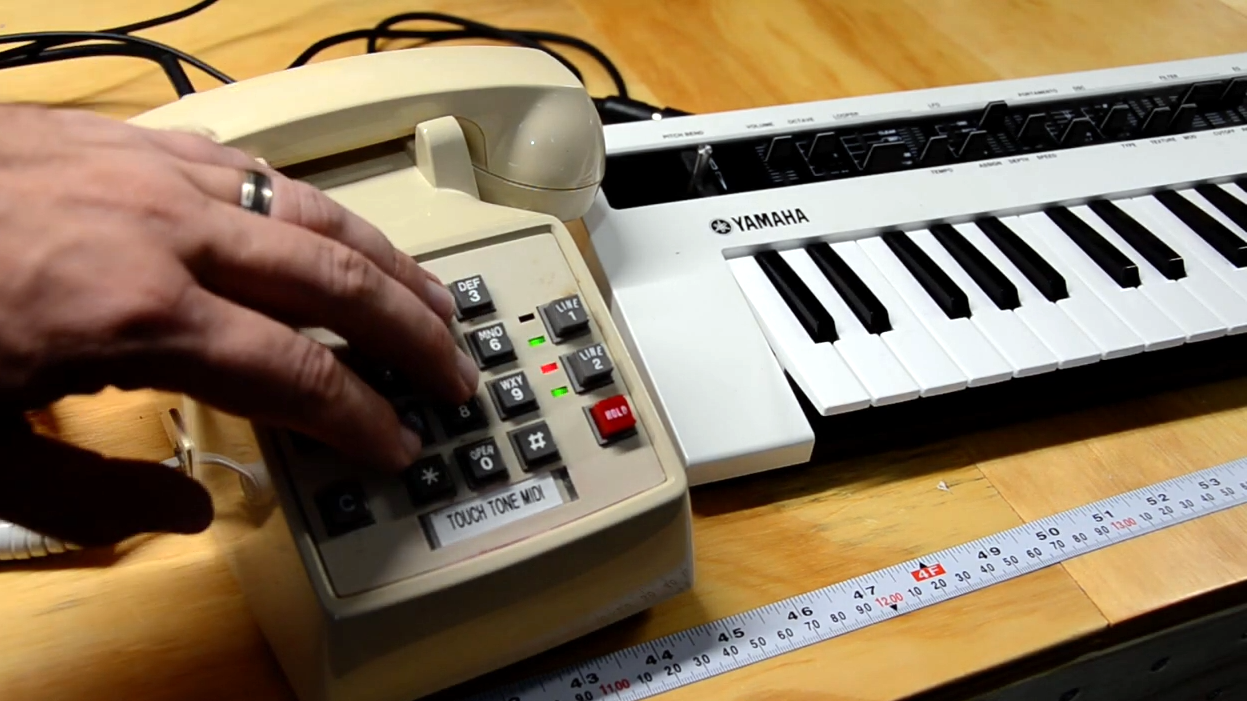
Some musical instruments arrive wearing polished wood, chrome hardware, and a price tag that makes your bank account quietly leave the room. Others begin life as an old landline phone, probably beige, possibly dusty, and definitely familiar to anyone who remembers dialing Grandma before smartphones turned every pocket into mission control. The Touch Tone MIDI Phone and vocoder cover of Daft Punk sits proudly in that second category: a clever DIY music project that turns obsolete communication hardware into a surprisingly expressive electronic instrument.
At its core, this project takes a vintage touch-tone telephone and converts its keypad into a MIDI controller. The buttons trigger musical notes, the handset microphone becomes part of the performance chain, and a vocoder gives the whole thing that deliciously robotic, Daft Punk-flavored personality. The result is not just a novelty gadget. It is a tiny museum of technology history that also happens to groove.
Even better, it covers “Around the World,” one of Daft Punk’s most recognizable tracks. That song is already built around repetition, machine-like vocals, and hypnotic dance energy, so hearing it performed through a phone-based MIDI instrument feels oddly perfect. It is retro, futuristic, nerdy, and funky all at oncethe rare combination that makes both engineers and music producers lean forward and say, “Okay, wait, how did they do that?”
What Is a Touch Tone MIDI Phone?
A Touch Tone MIDI Phone is a modified telephone that uses its push-button keypad to send MIDI data. MIDI, short for Musical Instrument Digital Interface, is not audio itself. Instead, it is a control language that tells electronic instruments and software what to play, when to play it, and how strongly to play it. Think of MIDI as sheet music with electricity in its shoes.
In a traditional touch-tone phone, every keypress generates a pair of audio tones. This system is called dual-tone multi-frequency signaling, or DTMF. Pressing a button such as “5” produces two specific frequencies at the same time. Old phone networks used those tones to understand which number you dialed. In the MIDI phone project, however, the physical keypad becomes a performance surface. Instead of calling your dentist, the phone calls up notes, chords, and musical phrases.
The charm is obvious. A telephone keypad is tactile, limited, and instantly recognizable. It has fewer buttons than a piano, so the builder has to make creative decisions. Which notes should each number trigger? Should the star and pound keys act as octave controls? Should buttons launch bass notes, melody fragments, or rhythmic stabs? Suddenly, a simple phone becomes a musical puzzle box.
Why Daft Punk Makes Perfect Sense for This Project
Daft Punk built an entire mythology around the meeting point of humans and machines. Their music often feels warm and mechanical at the same time, like a disco ball designed by a robot with excellent taste. “Around the World,” released from the duo’s 1997 debut album Homework, is especially suitable for a phone-based vocoder performance because the track is repetitive, minimal, and instantly identifiable.
The famous vocal phrase loops again and again, functioning almost like a rhythmic instrument rather than a traditional lyric. That makes it a perfect playground for a vocoder cover. A vocoder takes the shape and movement of a voice and applies it to another sound source, often a synthesizer. In simple terms, the voice tells the synth how to talk, and the synth responds by sounding like it has just joined a stylish robot choir.
Using a telephone handset as the microphone adds another layer of character. Phone microphones are not known for pristine studio quality, and that is exactly the point. The narrow, slightly boxy tone can make the vocal input feel more mechanical before the vocoder even touches it. Add MIDI-triggered notes from the phone keypad, and the whole instrument becomes a compact Daft Punk tribute machine.
How the Touch Tone MIDI Phone Works
The Keypad Becomes the Controller
The most important part of the build is the keypad interface. Inside a touch-tone phone, the buttons are wired in a pattern that can be mapped and read by a microcontroller. In many DIY builds, an Arduino or compatible board scans the buttons, detects which one is pressed, and converts that input into MIDI messages.
For example, pressing “1” might send a MIDI note-on message for one pitch, while pressing “2” sends another. Releasing the button can send a MIDI note-off message, stopping the sound. With careful mapping, twelve phone keys can become a mini keyboard, a chord trigger pad, or a loop-friendly performance controller. It is not about having every possible note. It is about making the available notes musically useful.
The Arduino Handles the Translation
The Arduino acts like a translator between the antique phone body and the modern music software. It reads button presses, applies the builder’s chosen musical logic, and outputs MIDI data to a computer, synthesizer, or digital audio workstation. Depending on the hardware, this can happen through USB MIDI, serial MIDI, or another MIDI-capable connection.
This is where the project moves from “fun prop” to “actual instrument.” A reliable MIDI controller needs consistent response, clean note triggering, and sensible behavior when buttons are pressed quickly. If the keypad bounces, double-triggers, or misses notes, the performance gets messy fast. A good build accounts for button debouncing, timing, and how the player will physically use the phone.
The Handset Microphone Feeds the Vocoder
The handset microphone is the secret ingredient. Instead of ignoring the most iconic part of the phone, the project keeps it involved. The performer speaks or sings into the handset while the keypad sends MIDI notes. In a vocoder setup, the voice acts as the modulator and the synth sound acts as the carrier. The MIDI notes determine the pitch or harmony, while the spoken phrase shapes the articulation.
That is why a Daft Punk cover works so well. The performer can say or sing a phrase into the handset while using the keypad to control the musical pitches. The result feels like a tiny telephone operator has been hired by a French house duo and is now taking calls from the dance floor.
The History Hiding Inside the Sound
The best part of the Touch Tone MIDI Phone and vocoder cover is that it stacks several generations of technology on top of each other. Touch-tone dialing became famous because it replaced slow rotary dialing with button presses and audio tone pairs. MIDI emerged decades later as a standard way for electronic instruments and computers to communicate. The vocoder goes back even further in concept, with roots in telecommunications research and speech synthesis.
In other words, this project does not merely recycle an old phone. It reconnects technologies that were always cousins. Telephones, synthesizers, voice encoding, signal processing, and electronic music all share a fascination with turning human intention into controlled electrical information. The MIDI phone just makes that relationship visibleand a lot more danceable.
There is something poetic about using a device designed for conversation to perform a song famous for its robotic repetition. The phone once carried human voices across wires. Now it helps turn a human voice into a musical robot voice. That is not planned obsolescence. That is planned resurrection.
Why DIY Music Hardware Still Matters
Modern music production is incredibly powerful. A laptop can host thousands of sounds, effects, loops, and virtual instruments. But that abundance can also feel strangely flat. When every sound is available, choosing one can become exhausting. DIY music hardware solves that problem by adding limits, personality, and physical interaction.
A phone keypad is not a perfect piano keyboard. That imperfection is exactly why it is interesting. It forces the performer to think differently. You cannot casually run up and down seven octaves. You have to design a musical layout, practice the timing, and embrace the object’s quirks. The result often feels more memorable than something made with a standard controller.
There is also visual appeal. A performer holding a phone handset while playing notes on the base creates an image people instantly understand. It is funny before it even makes a sound. Then the vocoder kicks in, the Daft Punk rhythm appears, and the joke becomes a genuine musical performance. That transformation is the magic.
Musical Design: Making Twelve Buttons Feel Big
Choosing the Right Notes
With only twelve main keys, note selection matters. A smart layout might use a pentatonic scale, a minor scale, or a set of notes that match one specific song. For a Daft Punk-inspired cover, the builder can map keys to bass tones, chord tones, or melodic fragments that work within the track’s harmonic world. This avoids wrong notes and makes the instrument easier to play live.
Using Star and Pound Creatively
The star and pound keys are begging for special duties. They can shift octaves, change modes, trigger effects, start loops, or switch between performance banks. A practical setup might assign the number keys to notes and use star and pound to move the range up or down. Another setup might use them to activate sustain or change the vocoder’s carrier sound.
Adding Lights for Feedback
Repurposed LEDs make the instrument feel alive. Lights can blink when MIDI messages are sent, show mode changes, or provide timing cues. That may seem decorative, but performance feedback matters. On a dark stage or in a video, a blinking phone looks far more intentional than a silent beige box sitting there like it wants to discuss your long-distance plan.
The Vocoder: Robot Voice With a Human Soul
The vocoder effect is often described as a robot voice, but that label undersells it. A vocoder is interesting because it needs both human input and machine structure. Without the voice, the synth is just a synth. Without the synth, the voice is just a voice. Together, they create a hybrid sound that feels mechanical but expressive.
That is why vocoders have lasted so long in popular music. They can sound futuristic, nostalgic, emotional, silly, cold, or funky depending on how they are used. Daft Punk understood this beautifully. Their robotic vocals rarely feel empty. They often feel strangely sincere, as if the machine is trying very hard to dance its way into humanity.
In the Touch Tone MIDI Phone project, the handset microphone reinforces that hybrid quality. The performer is physically speaking into an old communication device while controlling digital notes. The vocoder then fuses the voice and the instrument into one sound. It is not just a cover; it is a miniature essay on how music technology evolves.
Why This Project Works So Well Online
Projects like this spread quickly because they are easy to understand at a glance. “Old phone becomes MIDI controller” is a headline that does not require a degree in electrical engineering. The object is familiar, the transformation is surprising, and the result is musical. Add Daft Punk to the equation, and the internet’s curiosity engine starts humming.
There is also a strong sustainability angle. Repurposing obsolete technology keeps devices out of the trash and gives them cultural value. Not every old phone needs to become an instrument, of course. Some may prefer retirement in a drawer next to mysterious cables. But when a discarded object becomes a working musical tool, it proves that e-waste is sometimes just creativity waiting for a screwdriver.
For makers, the build is educational. It involves disassembly, circuit mapping, microcontroller programming, MIDI communication, audio routing, and performance design. For musicians, it offers a reminder that instruments do not need to be conventional to be expressive. For viewers, it delivers the simple joy of seeing something familiar behave in an unexpected way.
Practical Tips for Building a Similar MIDI Phone
Start With the Right Phone
A sturdy touch-tone phone with a working keypad and handset is ideal. Older desk phones are especially satisfying because they have enough internal space for wiring and electronics. Before modifying anything, inspect the phone carefully. Some vintage devices may include components that require caution, especially if they were designed to connect directly to telephone lines.
Map Before You Solder
Do not guess the keypad wiring. Use a multimeter to identify which contacts connect when each button is pressed. Create a simple map on paper before connecting anything to a microcontroller. This step is not glamorous, but neither is spending three hours wondering why the “7” key thinks it is the pound key.
Plan the Musical Layout
Decide whether the phone will be a melody instrument, bass controller, chord trigger, or effect controller. A clear musical purpose makes the build better. If the goal is a Daft Punk-style performance, map the keys around the song’s core notes and rhythm. The more playable the layout feels, the less the final performance looks like someone angrily ordering pizza from the future.
Keep the Audio Chain Simple
For a vocoder cover, the signal chain can be straightforward: handset microphone into an audio interface, MIDI from the phone into a computer, and vocoder software inside a digital audio workstation. Choose a clear carrier sound, such as a bright synth pad or sawtooth-based patch. Then adjust the vocoder bands, release, and formant settings until the words remain understandable.
Experiences Related to the Touch Tone MIDI Phone And Vocoder Covers Daft Punk
Working with a concept like the Touch Tone MIDI Phone And Vocoder Covers Daft Punk is a reminder that creative projects rarely begin with perfect equipment. They begin with curiosity. Imagine placing an old phone on a desk and asking, “What else can this do?” At first, it is just plastic, buttons, wires, and nostalgia. Then the keypad clicks under your fingers, the handset has that familiar weight, and suddenly the object suggests a performance style all its own.
The first experience many builders have is surprise. A phone keypad feels completely different from a piano keyboard or pad controller. The buttons are small, stiff, and arranged for dialing numbers, not playing melodies. That limitation can feel awkward for about five minutes. Then it becomes fun. You start to discover patterns: numbers that sit well under the fingers, rhythms that feel natural, and note combinations that make sense because the layout forces your hand into unusual choices.
The second experience is the strange pleasure of hearing a familiar object speak a new language. When the phone sends its first MIDI note, the moment is almost comic. Nothing about the object looks like a synthesizer, yet there it is, triggering sound from a computer or hardware instrument. It feels like convincing a toaster to join a jazz trio. Technically, you know it is just wiring and code. Emotionally, it feels like the phone has developed a secret hobby.
Adding the vocoder deepens the experience. Speaking into a handset already feels intimate because telephones trained us to associate that gesture with conversation. But when your voice comes back as a harmonized robotic tone, the experience becomes theatrical. You are no longer just testing electronics. You are performing a character: part operator, part musician, part chrome-helmeted disco android.
Covering Daft Punk makes the project even more satisfying because the music welcomes repetition. “Around the World” does not demand vocal acrobatics. It asks for timing, tone, groove, and confidence. That makes it ideal for an experimental controller. Each button press becomes part of the rhythm. Each spoken phrase becomes material for the vocoder. The phone stops being a gimmick and becomes a focused performance tool.
There is also an audience experience worth noting. People do not need a technical explanation to enjoy it. They see the phone, hear the robotic vocal, recognize the Daft Punk reference, and immediately understand that something clever is happening. The project creates a bridge between maker culture and music culture. Engineers notice the interface. Producers notice the sound design. Casual viewers notice that an old phone is suddenly funkier than expected.
Most importantly, this kind of project encourages creative courage. It says that instruments can be invented, not merely purchased. It says old technology can still surprise us. And it says that the line between silly and brilliant is often just a few solder joints, a good MIDI map, and the willingness to look at a telephone and hear a dance track waiting inside.
Conclusion
The Touch Tone MIDI Phone And Vocoder Covers Daft Punk project works because it combines nostalgia, engineering, and musical taste in one compact object. It transforms a familiar telephone into a MIDI instrument, uses the handset microphone as part of a vocoder setup, and channels the robotic funk spirit that made Daft Punk iconic. It is funny, clever, educational, and genuinely musical.
As a DIY music project, it proves that limitations can be creative fuel. Twelve buttons are enough to make a performance memorable. A handset microphone is enough to shape a robotic vocal. An old phone is enough to become a stage-worthy controller. In a world overflowing with polished music gear, this project stands out because it has personality. It does not just play notes; it tells a story every time a button clicks.













