
Some brands spend months researching a tagline. They interview customers, summon focus groups, debate punctuation, and eventually approve three words that must somehow communicate personality, purpose, and the promise that buying another cheeseburger will improve your afternoon.
Then someone comes along, replaces the carefully engineered slogan with a movie or book title, and the result feels strangely more accurate.
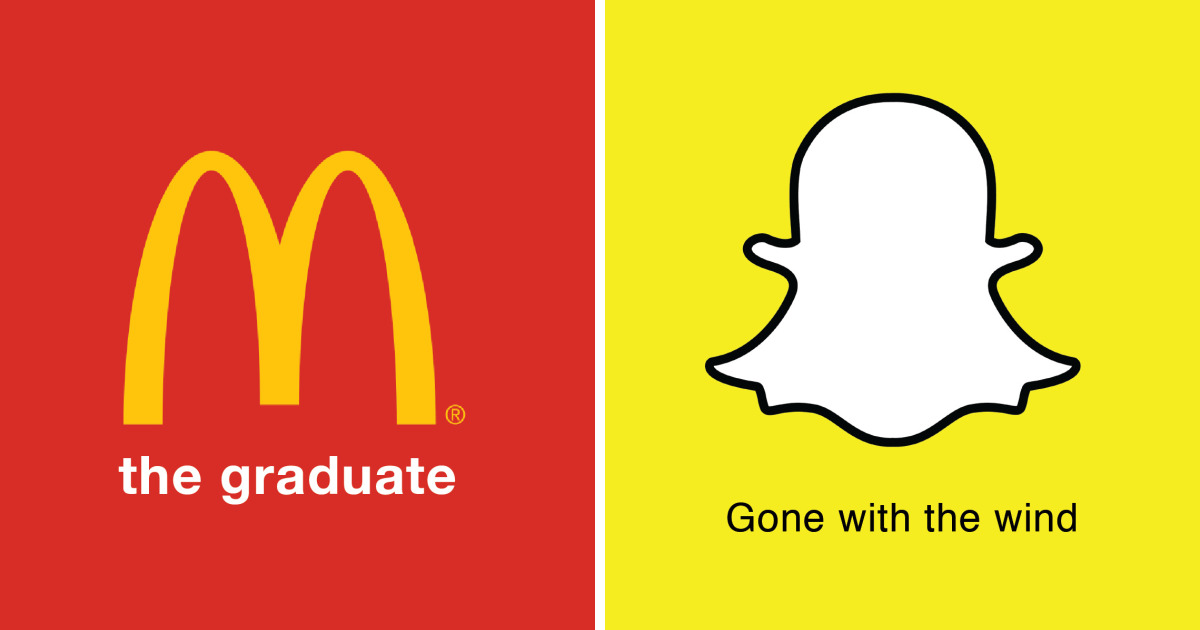
That is the irresistible idea behind “I Replaced Brands’ Taglines With Book And Movie Titles,” a creative project originally shared by advertising enthusiast Andrea Erali. The series paired familiar logos with recognizable titles based on what each company or organization represented to the creator. Instagram became I Know What You Did Last Summer, NASA received The Fault in Our Stars, and Snapchat was summarized by the perfectly temporary Gone with the Wind.
The images are funny, but they are not merely visual jokes. They reveal how much storytelling already exists inside famous brandsand how one borrowed title can expose an entirely different side of a logo we thought we understood.
Why Replacing Brand Taglines Works So Well
A successful tagline is essentially a story squeezed into a carry-on bag. It must be short enough to remember, specific enough to belong to one brand, and flexible enough to appear under everything from a billboard to a sponsored post featuring an inexplicably enthusiastic golden retriever.
Classic examples demonstrate that a few words can become inseparable from a company. Nike has “Just Do It.” Apple has “Think Different.” McDonald’s has “I’m Lovin’ It.” These lines do more than describe products; they establish attitudes. Marketing research and advertising histories repeatedly connect memorable slogans with brand recognition, differentiation, and recall.
Book and movie titles perform a similar job. A strong title suggests an entire emotional universe before the first chapter begins or the opening credits finish. Die Hard implies stubborn endurance. Great Expectations promises ambition with a strong possibility of disappointment. Final Destination suggests that the journey may not end with complimentary snacks.
When a famous title is placed beneath a recognizable logo, two compact stories collide. The audience understands the brand, remembers the title, and supplies the connection. That tiny moment of recognition is where the humor lives.
The Joke Requires Audience Participation
These mashups rarely explain themselves. They trust viewers to complete the thought.
Instagram paired with I Know What You Did Last Summer works because the platform is associated with a permanent-looking record of vacations, lunches, hairstyles, and decisions that seemed reasonable at 1:17 a.m. The title turns a photo-sharing service into a witness with excellent storage capacity.
Snapchat and Gone with the Wind connect through disappearance. The joke is simple, visual, and immediate: the message arrives, the message vanishes, and suddenly everyone is discussing screenshot etiquette.
This kind of humor is effective because it rewards recognition. Nielsen has identified audience-appropriate humor, emotional connection, memorable creative ideas, and strong brand linkage as recurring features of successful advertising. A funny concept is not enough by itself; viewers must still remember which brand was involved.
The Funniest Brand and Title Pairings
Instagram: I Know What You Did Last Summer
This pairing transforms Instagram into the friend who remembers everything and has organized the evidence into highlights. Vacation photographs, location tags, comments, old relationships, and regrettable filters create a personal archive that can be charming, useful, or mildly terrifying.
The title works on two levels. It describes the platform’s memory while borrowing the suspicious tone of a horror story. Instagram is no longer asking what happened last summer. Instagram already knows. It would also like to show you a “Then and Now” collage.
NASA: The Fault in Our Stars
Placing The Fault in Our Stars beneath the NASA insignia is a wonderfully literal celestial joke. NASA studies stars, planets, galaxies, space weather, and the many ways the universe can remind humanity that it is both brilliant and extremely small.
The pairing also carries emotional weight because the title is associated with love, mortality, and circumstances beyond individual control. The humor is gentle rather than mocking. Apparently, even the cosmos can receive a dramatic young-adult adaptation.
McDonald’s: The Graduate
The golden arches matched with The Graduate invite several interpretations. McDonald’s is often connected with first jobs, student budgets, late-night meals, and the moment a young adult realizes that cooking requires ingredients, dishes, and planning.
The pairing also looks suspiciously official. The title sits under the arches as though someone has successfully completed a four-year degree in locating fries at the bottom of the bag.
PlayStation: Die Hard
For PlayStation, Die Hard captures the emotional condition of a player who has reached the final boss with one health point and no intention of going to bed.
Gaming is full of persistence: repeat the level, learn the pattern, miss the jump, blame the controller, discover the controller is working perfectly, and repeat. The title becomes less of a movie reference and more of an instruction manual.
Tinder: Great Expectations
Few combinations summarize online dating as efficiently as Tinder and Great Expectations. Every swipe begins with possibility. Perhaps this person loves dogs, reads books, communicates clearly, and has never described cryptocurrency as a personality trait.
Then reality enters the conversation wearing sunglasses in every photograph.
The joke succeeds because the title captures both hope and its potential collapse. The profile looks promising. The opening message arrives. It says only “hey.” Charles Dickens quietly closes his laptop.
Listerine: The Terminator
The Terminator gives mouthwash the personality it has always believed it deserved. Listerine is no longer part of a morning hygiene routine; it is a highly advanced machine sent from the future to eliminate plaque.
The product’s famously intense sensation strengthens the joke. Some mouthwashes gently refresh. Others make users grip the sink and reconsider every snack they have eaten since childhood. “I’ll be back” sounds less like a movie quotation and more like a warning from the bathroom cabinet.
Apple: A Beautiful Mind
Apple has long marketed its products through simplicity, creativity, and emotional storytelling. Its “Think Different” campaign positioned the company alongside innovators and cultural rule-breakers, while later advertising often reduced complex technology to elegant images and short, confident language.
That history makes A Beautiful Mind a natural replacement tagline. It compliments the intelligence associated with Apple’s products while gently teasing the brand’s talent for presenting a laptop as though it were a newly discovered philosophy of existence.
National Geographic: The Good Earth
This combination is less sarcastic and more poetic. National Geographic is closely associated with nature, geography, science, wildlife, exploration, and photography capable of making a mud puddle look spiritually significant.
The Good Earth fits the publication’s mission and visual identity so comfortably that it almost resembles an official campaign. The yellow frame becomes a window through which the planet is observed, documented, admired, and occasionally photographed while a leopard is eating lunch.
Facebook: Out of the Past
Facebook has birthdays, family photographs, school friends, former coworkers, and a powerful ability to display something posted in 2009 without considering whether the owner is emotionally prepared.
Out of the Past therefore feels less like a replacement tagline and more like a feature description. One minute you are checking a community group. The next, you are looking at a photograph of yourself wearing three belts and communicating entirely through song lyrics.
Netflix: One Thousand and One Nights
The Netflix pairing predicts the streaming experience with alarming precision. You begin with one episode during dinner. The platform asks whether you are still watching. You take the question personally. Suddenly, the sun is rising and the characters on-screen feel more familiar than several relatives.
One Thousand and One Nights turns binge-watching into an epic storytelling tradition, which sounds much more dignified than admitting you ignored the laundry for an entire season.
Airbnb, Chrome, and the Vatican
Airbnb becomes An American in Paris, neatly connecting travel, temporary homes, and the fantasy of living like a local despite spending 20 minutes trying to understand the apartment’s shower controls. Google Chrome receives Final Destination, a suitable title for a browser that transports users through searches, links, maps, and dozens of tabs they promise to read later. The Vatican is paired with Angels & Demons, a match so direct that it practically arrives with dramatic music and a secret passage beneath Rome.
What Makes a Successful Brand Slogan Parody?
Replacing brand taglines with book and movie titles looks effortless, but the strongest combinations follow several creative rules.
Start With the Brand’s Cultural Meaning
Do not begin with the product’s official description. Begin with what people actually associate with it. A dating app is technically a digital matchmaking platform, but culturally it represents optimism, attraction, awkward messages, and selective photography. That emotional meaning creates better material.
Choose Titles With More Than One Interpretation
The ideal title works literally and metaphorically. The Fault in Our Stars mentions stars while carrying emotional meaning. Gone with the Wind describes disappearance while suggesting drama. Great Expectations captures hope and disappointment in two familiar words.
Preserve the Visual Identity
The original project succeeds because each title appears within the visual language of the brand. Typography, spacing, logo placement, and background colors remain recognizable. Only the verbal message changes.
That restraint matters. If every part of the design were altered, viewers would spend their time identifying the company instead of enjoying the connection. The familiar logo serves as the setup; the unexpected title delivers the punch line.
Use Humor Without Losing Brand Recognition
The funniest replacement should still feel specific. A random movie title beneath a logo creates confusion. A carefully selected title makes the viewer wonder why the company did not think of it first.
This balance reflects a broader advertising principle: creativity attracts attention, but the audience must connect the idea to the correct brand. Research on advertising effectiveness emphasizes that memorability and brand linkage must work together.
Could a Brand Actually Use a Movie or Book Title?
The creative exercise is playful, but commercial use introduces legal questions. In the United States, titles, names, slogans, and short phrases generally do not receive copyright protection by themselves. However, trademark law, branding rights, artwork, logos, and the likelihood of consumer confusion can still matter.
The USPTO explains that trademarks can be considered confusingly similar even when they are not identical if their appearance, sound, meaning, or overall commercial impression is too close. Parody may receive protection as commentary or artistic expression in some circumstances, but it is not an automatic legal shieldespecially when a disputed mark is used commercially.
For a personal design experiment, classroom exercise, or editorial commentary, the context is quite different from printing the mashup on ten thousand T-shirts. Creators planning commercial use should seek qualified legal advice rather than relying on the respected legal doctrine known as “but it was funny.”
My Experience Exploring Brands Through Famous Titles
The most surprising part of this exercise is how quickly a familiar logo begins to feel like a fictional character. At first, replacing taglines appears to be a simple matching game: pick a company, search your memory for a relevant title, and place the words beneath the logo. In practice, the process becomes an unexpectedly detailed study of reputation, visual language, and public behavior.
I began by writing down what each brand officially claimed to represent. The list was polished and predictable: connection, innovation, entertainment, discovery, convenience, and community. Then I made a second list based on how people actually experience those brands. That version included forgotten passwords, endless scrolling, impulsive purchases, late-night streaming, dating anxiety, browser tabs, and photographs from vacations nobody remembered inviting Facebook to preserve.
The second list was far more useful.
Searching for a matching title also taught me that obvious connections are not always the funniest. A title that simply names a product category feels flat. The stronger pairings contain tension. Instagram and I Know What You Did Last Summer are funny because the title transforms casual photo sharing into surveillance. Tinder and Great Expectations work because the optimism of the phrase clashes with the unpredictable reality of online dating. Listerine and The Terminator succeed because anyone who has used powerful mouthwash understands that the experience is not entirely peaceful.
Visual restraint proved just as important as word choice. My first instinct was to add extra symbols, alter colors, and make every design visibly “creative.” The results looked busy and explained the joke too aggressively. Once I returned to the original colors and typography, the pairings became clearer. The logo established familiarity, while the new title created surprise. The less I decorated, the more confidently the joke landed.
Some brands were much easier than others. Companies with strong cultural personalities generated dozens of possible titles. A streaming service suggests stories, sleepless nights, cliffhangers, and excessive commitment. A navigation app suggests journeys, wrong turns, road trips, and arguments about whether the driver missed the exit. More neutral brands required deeper thought because they had recognizable products but weaker emotional identities.
The process also changed the way I noticed advertising in everyday life. Taglines began to look less like decorative sentences and more like tiny attempts at controlling a narrative. Every company wants to tell consumers what it means. A replacement title interrupts that official story and allows the audience to answer back.
That may be why brand slogan parodies are so enjoyable. They transform passive viewers into critics and co-writers. We already carry opinions about the platforms, restaurants, devices, and services we use. Pairing those brands with famous titles gives those opinions a concise, shareable form.
The best result is not simply a clever pun. It is a combination that feels instantly understandable yet slightly unexpected. When the right title appears beneath the right logo, the viewer laughs and then pauses for a second. That pause is the real achievement. It reveals that brands are not only businesses or products. They are stories constantly being written by advertisers, customers, critics, and anyone with a movie collection and access to a design program.
Conclusion: Every Brand Is Already Telling a Story
Replacing brands’ taglines with book and movie titles works because brands and stories rely on the same raw materials: identity, emotion, expectation, memory, and conflict. A logo provides the character. A famous title supplies the plot. The audience performs the final edit.
The cleverest combinations feel both ridiculous and inevitable. Snapchat really does seem Gone with the Wind. Netflix can easily consume One Thousand and One Nights. Tinder continues operating under Great Expectations, whether Charles Dickens approves or not.
More importantly, the project demonstrates that strong creative work does not always require adding something new. Sometimes creativity means placing two familiar ideas together and allowing each one to change the meaning of the other.













