
Note: This article is written for web publication in standard American English and synthesizes publicly available entertainment reporting, official network updates, and industry information about Rick and Morty, Dan Harmon, Scott Marder, Adult Swim, and the show’s evolving creative direction.
Introduction: The Portal Gun Still Has Plenty of Gas
When Dan Harmon describes Rick and Morty as “a limitless sandbox,” he is not simply tossing out a shiny phrase for a press quote. He is summing up the strange magic that has kept the Adult Swim animated series alive, flexible, and dangerously unpredictable for more than a decade. Most long-running shows eventually settle into a comfortable recliner. Rick and Morty prefers to saw the recliner in half, launch it into a parallel universe, and then ask whether furniture has feelings.
The title quote comes from Harmon’s discussion of what Rick and Morty even is at this stage. Is it a family sitcom? A science-fiction parody? A serialized multiverse saga? A workplace comedy where the workplace is occasionally inside a dying alien’s digestive tract? The answer, beautifully and annoyingly, is yes. Harmon’s point is that the series has the emotional continuity of a narrative show but the conceptual freedom of an anthology. It can follow Rick Sanchez’s grief and guilt one week, then turn around and build an episode around a bizarre sci-fi premise, a pop culture riff, or a full-blown genre experiment the next.
That freedom is rare. Most shows need a stable format to survive. Rick and Morty survives because instability is the format. The characters anchor the chaos, while the multiverse gives the writers permission to break the toy box, rebuild it, and then reveal the toy box has been judging humanity all along.
What Dan Harmon Means by “Limitless Sandbox”
A sandbox is a creative space where rules exist, but they are flexible enough to invite play. In a children’s sandbox, you can build a castle, bury a toy truck, or stage a tiny political coup among plastic dinosaurs. In Rick and Morty, the sandbox includes alternate realities, memory parasites, clones, alien civilizations, sentient technology, family trauma, and jokes that begin as nonsense before somehow becoming philosophy with a hangover.
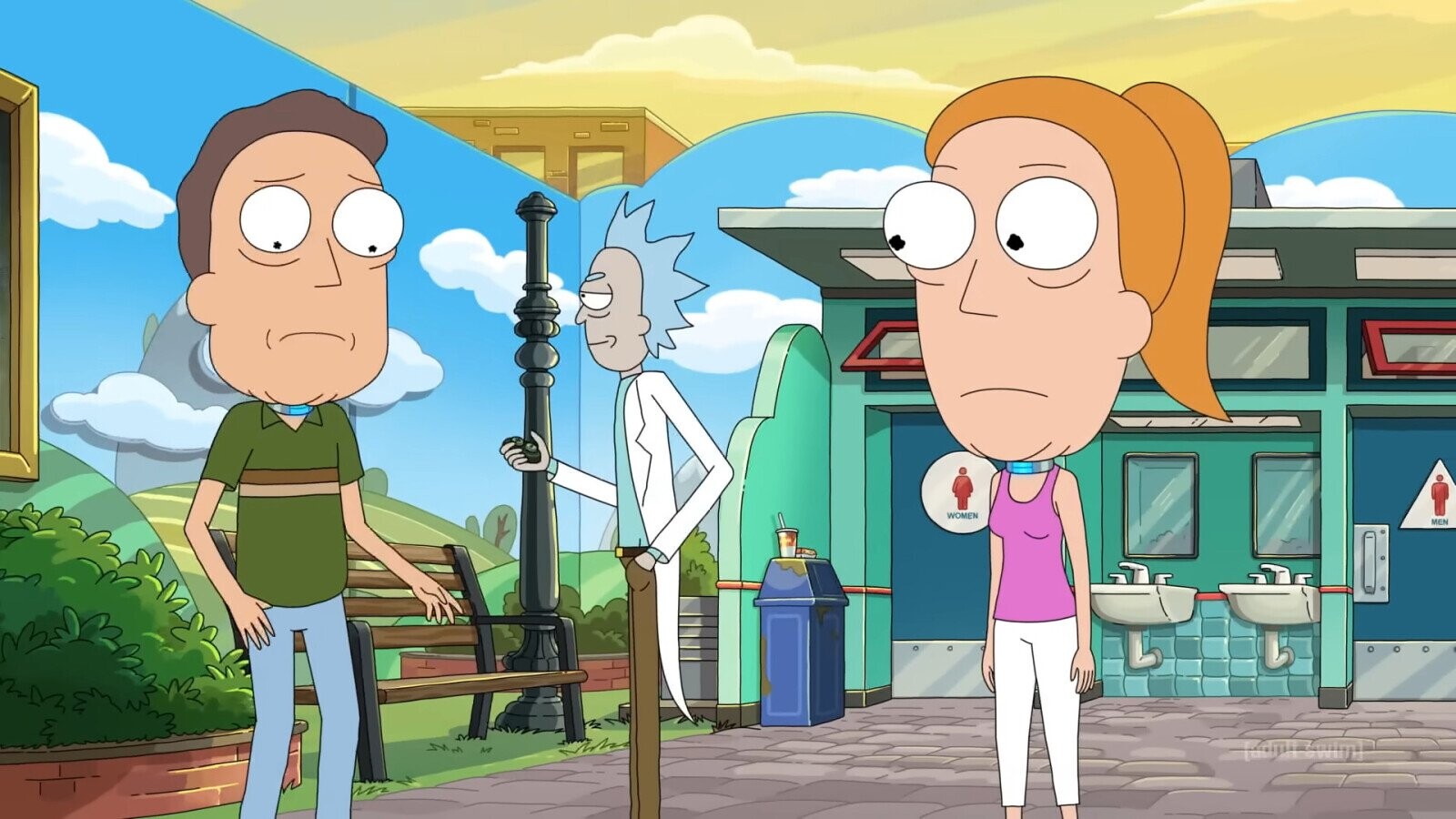
Harmon’s “limitless sandbox” comment matters because it explains the show’s unusual balance. Rick and Morty is not a pure anthology like Black Mirror, where every episode can introduce a new world and cast. It keeps returning to Rick, Morty, Summer, Beth, Space Beth, and Jerry. Viewers know the family, the garage, the portal gun, the dinner table arguments, and Rick’s world-class ability to turn emotional avoidance into an engineering discipline.
At the same time, the series can behave like an anthology whenever it wants. One episode may focus on a high-concept sci-fi disaster; another may become a horror parody, a heist spoof, a relationship drama, or a meta-commentary on storytelling itself. The show’s lack of a fixed weekly template becomes its identity. In other words, Rick and Morty is defined by refusing to stay neatly defined.
Why the Anthology Comparison Fits
Anthology shows have a major advantage: reinvention. They are not locked into the same house, workplace, school, or police station every episode. They can chase ideas. Rick and Morty borrows that advantage while still keeping the emotional stickiness of a recurring cast.
That is why the show can jump from one absurd concept to another without feeling completely random. Rick’s intelligence, cynicism, grief, and arrogance remain recognizable. Morty’s anxiety, moral confusion, and occasional flashes of courage remain intact. Summer’s confidence, Beth’s complicated identity, and Jerry’s heroic commitment to being Jerry all provide familiar emotional wiring. The settings may mutate, but the character dynamics keep the viewer oriented.
This is also why Rick and Morty can parody nearly anything. Superhero tropes? Done. Time loops? Of course. Alien societies? Frequently. Existential dread? Served hot, often with a side of screaming. The anthology-like structure gives the writers room to ask, “What if?” The narrative structure lets them ask, “What does this do to the family?” That combination is where the show finds its sharpest comedy.
The Characters Are the GuardrailsEven When the Show Pretends It Has None
Scott Marder, the series showrunner, has also emphasized how the absence of strict guardrails keeps the idea flow loose and fresh. But even a show this wild needs some form of gravity. For Rick and Morty, that gravity is character.
Rick can go anywhere, invent anything, and destroy entire systems before breakfast, but he cannot fully escape himself. His genius is almost unlimited, yet his emotional habits are painfully repetitive. He avoids vulnerability, mocks sincerity, and turns cosmic scale into a shield. That is funny because it is exaggerated; it is compelling because it is recognizable. Many people cannot build portal guns, but plenty of people know how to dodge a difficult conversation with sarcasm and a snack.
Morty, meanwhile, gives the series a human pressure point. He is not just a sidekick. He is often the moral alarm bell, even when the alarm bell is panicking, cracking, or accidentally making everything worse. The show’s best episodes often place Morty’s ordinary teenage feelings inside enormous science-fiction machines. Crushes, guilt, fear, jealousy, and independence become interdimensional problems. That is the joke, but it is also the engine.
From Canon Episodes to One-Off Madness
One reason fans keep debating Rick and Morty is that the show alternates between canon-heavy episodes and stand-alone adventures. Some viewers want more Evil Morty, Rick Prime, Citadel history, and serialized emotional payoff. Others prefer chaotic one-off episodes that begin with a ridiculous premise and end with the audience staring into the middle distance, wondering why a cartoon just made them reconsider free will.
The “limitless sandbox” model allows both. The show can deliver lore when it needs to, then step away from the mythology before it becomes homework. This matters because too much serialization can make a comedy feel burdened by its own filing cabinet. Too little continuity can make emotional stakes feel disposable. Rick and Morty works best when it treats canon like hot sauce: powerful, memorable, and best used with intention rather than dumped over everything until the audience needs a glass of milk.
That flexibility is especially useful for a long-running animated series. The longer a show continues, the harder it becomes to surprise viewers. Rick and Morty keeps surprise alive by making the premise elastic. It can be a multiverse epic, a bottle episode, a family argument, a horror riff, or a weird philosophical sketch wearing a lab coat.
Season 8, Season 9, and the Show’s Ongoing Momentum
The sandbox idea also helps explain why Rick and Morty continues to move forward after major behind-the-scenes changes. Season 7 introduced Ian Cardoni as Rick and Harry Belden as Morty after Adult Swim recast the title roles. By Season 8 and the lead-up to Season 9, the show had entered a new era while still relying on the core creative promise that anything can happen.
Season 8 premiered in 2025, and Season 9 is scheduled to premiere on Adult Swim in May 2026. The network and entertainment press have positioned the newer seasons as further proof that the series remains a major force in adult animation. The show has also been renewed through Season 12, giving the creative team a long runway. For a series about infinite realities, that is fitting. For a writers’ room, it is also a challenge: if the sandbox is limitless, the expectations are too.
The show’s record gives it credibility. Rick and Morty has won two Primetime Emmy Awards for Outstanding Animated Program, including recognition for “Pickle Rick” and “The Vat of Acid Episode.” Those wins highlight something important: the show is not rewarded merely for being strange. It is rewarded when strangeness is shaped into story, character, timing, and emotional consequence.
Why Creative Freedom Can Be a Blessing and a Trap
Freedom sounds wonderful until you have to use it. A blank page can feel like a playground or a dentist’s waiting room for the soul. Harmon understands that unlimited possibility does not automatically create good storytelling. In another discussion about potential episode formats, he noted that “nothing’s off the table” in theory, including ideas like a musical episode, a silent episode, or even an episode that feels like one continuous drawing. But he also warned against forcing a concept just because it sounds like a bucket-list item.
That is a crucial distinction. Rick and Morty is not great because it can do anything. It is great when it finds the right reason to do something. A musical episode, for example, would not work simply because musicals exist and the writers have heard of rhymes. It would need to reveal character, heighten the comedy, or expose some emotional truth that regular dialogue could not. Otherwise, it would be a gimmick wearing tap shoes.
The same principle applies to the show’s broader creative freedom. A limitless sandbox still needs taste, discipline, and restraint. Otherwise, the result is just noise with lasers. The best Rick and Morty episodes feel wild, but not careless. They appear chaotic on the surface while quietly following strong story logic underneath.
The Secret Ingredient: High-Concept Ideas With Human Consequences
The most memorable Rick and Morty stories usually begin with a high-concept premise and end with a human bruise. “The Vat of Acid Episode” is funny because the device is absurd, but it lingers because Morty’s experience becomes emotionally brutal. “Pickle Rick” is ridiculous from the first syllable, yet the episode works because Rick’s transformation becomes a physical metaphor for avoidance. He would rather turn himself into a vegetable and fight sewer rats than attend family therapy. That is not just science fiction. That is commitment to the bit at a medically concerning level.
This is where the anthology comparison becomes especially useful. Anthology storytelling thrives on big ideas. Rick and Morty thrives when those big ideas crash into familiar flaws. Rick’s grief, Morty’s insecurity, Beth’s identity crisis, Summer’s hunger for agency, and Jerry’s need to be valued all keep the show from floating away into pure concept.
Even when episodes seem detached from the larger canon, they often sharpen the audience’s understanding of the characters. A bizarre adventure can reveal who panics, who adapts, who lies, who sacrifices, and who somehow makes the situation about their divorce. The multiverse is huge, but the emotional target is often very small and very specific.
How the Show Uses Genre Like a Toy Chest
Part of Rick and Morty’s SEO-friendly magicyes, even the search engines are probably trapped in a microverse somewhereis its ability to absorb genres. The show can borrow from horror, action, fantasy, superhero stories, anime, family sitcoms, and prestige television. It does not simply reference those genres; it takes them apart to see where the jokes and anxieties are hiding.
That genre flexibility is why the phrase “creative freedom” fits so well. The writers can start with a familiar pop culture shape and then mutate it. A heist story becomes a critique of heist stories. A superhero team becomes a mess of ego and branding. A sci-fi gadget becomes a moral disaster. A family dinner can turn into a psychological minefield before the appetizers cool down.
Because the show is animated, the visual possibilities are nearly endless. Animation allows Rick and Morty to stage impossible worlds without asking a live-action effects budget to file for emotional damages. The form supports the sandbox. The sandbox supports the jokes. The jokes support the existential despair. It is a very efficient, very unhealthy ecosystem.
Why Fans Still Care
Fans return to Rick and Morty because it offers two pleasures at once: unpredictability and familiarity. You never know where an episode will go, but you know the emotional chaos will probably involve Rick making a terrible decision with total confidence. That combination gives the audience a reason to keep watching.
The show also invites debate. Is Rick a tragic genius or a toxic narcissist? Is Morty becoming stronger or simply more damaged? Should the series focus more on canon or keep embracing episodic chaos? Is Jerry secretly the most emotionally honest character? These questions keep the fandom active because the show leaves enough room for interpretation.
That is another advantage of the limitless sandbox. It does not close itself too quickly. It lets viewers argue, theorize, rank episodes, quote lines, complain about canon, defend Jerry, and then immediately pretend they never defended Jerry. The show’s openness becomes part of its cultural life.
Experience and Takeaways: What the “Limitless Sandbox” Feels Like as a Viewer
Watching Rick and Morty over time can feel like visiting a theme park designed by a genius who does not believe in safety inspections. You enter expecting jokes, aliens, and maybe a portal or two. Then the ride suddenly becomes a therapy session, a philosophy lecture, a monster movie, and a family argument happening inside a collapsing reality. Somehow, you leave entertained and mildly accused.
The best viewing experience comes when you stop demanding that the show be only one thing. If you approach every episode expecting heavy canon, the silly stand-alone adventures may feel like detours. If you only want loose comedy, the emotional episodes may feel too serious. But if you accept Harmon’s sandbox idea, the variety becomes the point. The show is built to roam. Some episodes are roller coasters. Some are puzzle boxes. Some are emotional sucker punches disguised as dumb jokes. Some are just extremely committed nonsense, which is also a public service.
As a viewer, one of the most enjoyable parts of Rick and Morty is noticing how often the show turns freedom into structure. At first glance, an episode may seem like it is sprinting in every direction. But by the end, the pieces usually click into place. A ridiculous invention reveals a character flaw. A parody becomes a confession. A sci-fi premise exposes an ordinary fear. That is why the chaos rarely feels empty. The show is not simply asking, “What would be weird?” It is asking, “What would be weird in a way that hurts, surprises, or reveals something?”
The anthology-like freedom also makes the series easy to revisit. A viewer can return for a favorite concept episode without needing to rewatch an entire season. At the same time, the deeper character arcs reward long-term attention. That dual experience is valuable in the streaming era, where audiences may binge, skip, rewatch, or drop into a random episode at midnight while eating cereal over the sink like a raccoon with Wi-Fi.
Another experience connected to the topic is creative inspiration. For writers, bloggers, animators, and fans of storytelling, Rick and Morty is a reminder that a strong premise can create enormous freedom. The portal gun is not just a device in the story; it is a storytelling engine. It allows the writers to move instantly from domestic comedy to cosmic absurdity. But the lesson is not “add a portal gun to everything.” Please do not put one in your office romance unless accounting is prepared. The real lesson is to build a format that supports surprise.
That is why Harmon’s “limitless sandbox” comment lands so well. It names the thing many viewers already sense: Rick and Morty has lasted because its foundation is flexible. The family gives it heart. Science fiction gives it scale. Comedy gives it speed. Animation gives it visual freedom. And the anthology-like approach gives it permission to keep changing shape without losing its identity.
In the end, the show’s freedom works because it is not freedom from meaning. It is freedom to keep searching for meaning in the dumbest, smartest, most chaotic places imaginable. Sometimes that place is a multiverse. Sometimes it is therapy. Sometimes it is a pickle. Television, like life, is complicated.
Conclusion: The Sandbox Is the Show
Dan Harmon’s description of Rick and Morty as a limitless sandbox with the freedom of an anthology show captures why the series remains one of adult animation’s most durable experiments. It can reinvent itself without abandoning its central characters. It can chase wild ideas without always severing emotional continuity. It can parody genres, deepen lore, ignore lore for a week, and still return to the Smith family dinner table as if nothing happenedexcept, of course, everything happened.
The creative freedom of Rick and Morty is not a blank check for randomness. It is a carefully maintained engine that turns sci-fi imagination into comedy, character conflict, and cultural conversation. As the show continues through newer seasons and toward its long-term future on Adult Swim, the challenge will be the same one it has always faced: keep the sandbox limitless, but make every castle, crater, and emotionally damaged sandworm count.










