
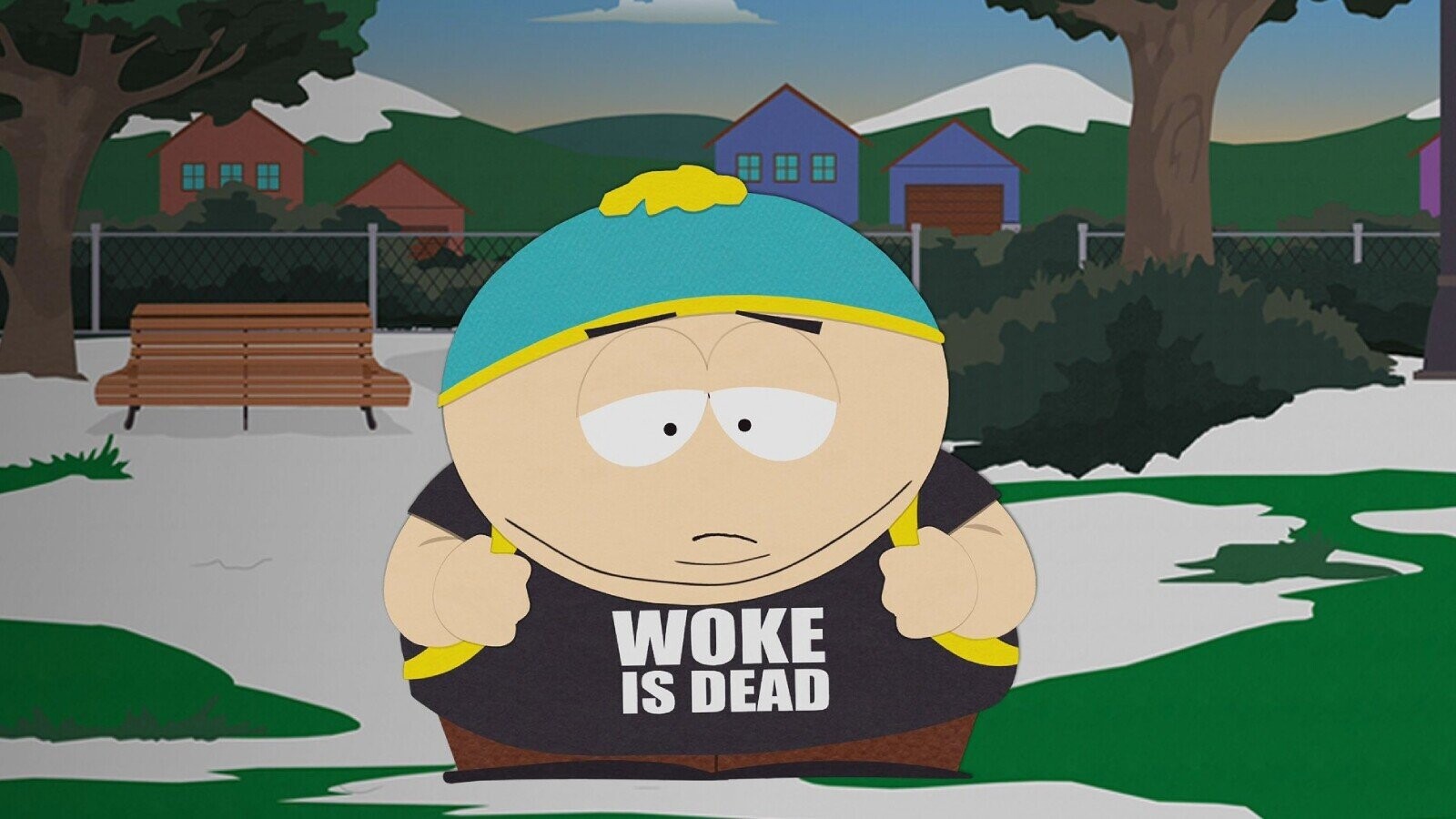
How South Park turned Eric Cartman’s supposed political victory into an identity crisisand made a larger joke about power, rebellion, and American culture.
Eric Cartman has spent decades treating basic decency as though it were a personal attack. He insults people, manipulates his friends, invents conspiracies, and reacts to consequences with the dignity of a raccoon trapped inside a vending machine. Naturally, one might assume that the so-called “death of woke” would make him the happiest fourth grader in Colorado.
Instead, it destroys him.
In “Sermon on the ’Mount,” the Season 27 premiere of South Park, Cartman discovers that the wider culture has caught up with his favorite brand of offensive behavior. People are less shocked by the language he uses. Political correctness appears to be retreating. Even PC Principal has abandoned his old identity and reinvented himself as Power Christian Principal.
Cartman has seemingly won the culture war, yet he looks like someone just canceled Christmas, Casa Bonita, and unlimited snack privileges on the same afternoon. That contradiction powers one of the episode’s smartest jokes: Cartman never truly wanted an anti-woke world. He wanted a woke world that he could annoy.
What Happens to Cartman in “Sermon on the ’Mount”?
The episode begins with Cartman upset over the disappearance of the progressive media content he enjoys mocking. His beloved supply of liberal complaints is drying up, and the political climate has shifted so far that previously taboo words and attitudes no longer create the reaction they once did.
Cartman sadly declares that “woke is dead.” For an ordinary anti-woke commentator, this might be cause for a victory lap, a commemorative podcast, and several mugs labeled “Your Tears.” For Cartman, however, it is an existential emergency.
Cartman Has Lost His Favorite Audience
Cartman’s pleasure rarely comes from holding a coherent political belief. It comes from making another person angry, uncomfortable, or powerless. His offensive language is valuable to him because somebody objects to it. Remove the objection and the performance loses its purpose.
Kyle has historically been the ideal audience for Cartman because he pushes back. Teachers, parents, activists, and authority figures also provide Cartman with the resistance he needs. Their outrage transforms his cruelty into a spectacle. Without that resistance, he is merely a loud child saying ugly things in an increasingly noisy room.
That is Cartman’s nightmare. He does not want freedom from consequences nearly as much as he wants the thrill of escaping them.
Even PC Principal Has Switched Teams
The transformation of PC Principal into Power Christian Principal makes Cartman’s crisis worse. Introduced in Season 19 as an aggressive embodiment of political correctness, PC Principal once represented a nearly perfect enemy for Cartman. He enforced inclusive language with the subtlety of a professional wrestler carrying a workplace diversity handbook.
Now the character has embraced a new institutional fashion. His initials remain conveniently intact, but the ideology behind them has changed. Christianity is returning to the school, conformity is wearing a different uniform, and the authorities are once again announcing what respectable people must believe.
That shift gives the episode a sharper point than a simple “left bad” or “right bad” message. Institutions may change slogans while retaining the same appetite for control. Yesterday’s approved vocabulary can become today’s embarrassment, and yesterday’s rebels can suddenly find themselves surrounded by people repeating their lines.
Why the “Death of Woke” Makes Cartman Miserable
His Identity Depends on Opposition
Cartman is a contrarian before he is an ideologue. Tell him everyone loves something and he will organize a boycott. Tell him everyone hates it and he may become its most devoted defender before lunch. His beliefs often serve his ego rather than the other way around.
In that sense, Cartman needs political correctness. It gives him boundaries to cross, rules to violate, and people to provoke. A taboo is a stage, and outrage is applause. Once the taboo disappears, Cartman loses both.
This explains why the episode’s premise feels recognizable beyond South Park. Plenty of public personalities build careers around violating social rules. Their status depends on the rules continuing to exist. If everyone becomes deliberately offensive, the professional provocateur faces an awkward problem: how do you shock a society that arrives pre-shocked?
Transgression Suffers From Inflation
Cartman’s old verbal weapons no longer buy what they used to. He can still say something cruel, but the cultural purchasing power of that cruelty has declined. It is transgression inflation: yesterday’s scandal becomes today’s comment section.
To remain exceptional, a provocateur must escalate. The jokes become harsher, the claims become stranger, and the performance grows more desperate. Eventually, there is nowhere left to go except into absurdityor, in Cartman’s case, a garage.
His despair leads to an extremely dark sequence involving Butters and an attempted carbon-monoxide death in a parked vehicle. The plan fails because the car is electric. It is a beautifully grim South Park punch line: even Cartman’s self-destruction is defeated by changing technology. The future does not merely ignore him; it refuses to provide the correct emissions.
Winning Is Less Fun Than Complaining
Cartman also reveals something uncomfortable about culture-war politics: permanent victory can be terrible for business. A movement organized around grievance needs a continuing source of grievance. Commentators require opponents, algorithms require conflict, and fundraisers rarely send messages announcing that everything is fine now.
If the enemy disappears, the movement either has to declare success or invent a new threat. Success sounds pleasant, but it can leave influencers without content and Cartman without a personality.
His sadness therefore functions as a parody of the outrage economy. The people who appear most furious about an opposing ideology may also depend on it most heavily. Their rival supplies purpose, attention, income, and a dependable reason to turn on the microphone every morning.
The Episode Is Not Really Announcing That Wokeness Is Dead
The title phrase should not be treated as a neutral diagnosis of American society. South Park is examining the performance surrounding the supposed end of wokeness, not issuing a tidy certificate of death.
Political language rarely vanishes overnight. Terms such as “woke,” “politically correct,” “cancel culture,” and “anti-woke” change meaning depending on who is using them. A word that once referred to awareness of racial injustice became a broad label for progressive politics, corporate messaging, inclusive entertainment, university policies, and occasionally anything that made someone mildly annoyed before breakfast.
By placing the declaration in Cartman’s mouth, the episode makes it unreliable by design. Cartman believes woke culture is dead because the social environment is no longer producing the responses he expects. The claim tells viewers more about his loss of status than about the actual condition of social justice activism.
Power Christian Principal Reveals the Larger Pattern
PC Principal’s rebranding is more than a quick joke. It demonstrates how cultural power can move without becoming less coercive. The language changes, the official symbols change, and the approved moral framework changes. The pressure to conform remains.
Earlier seasons mocked progressive institutions that used inclusivity as a tool for status, intimidation, or corporate marketing. The Season 27 premiere turns toward conservative power and organized religion in public education. Jesus appears at a school assembly, but he is hardly thrilled to be used as a political mascot. He warns the town about the consequences of challenging an administration that responds to criticism with legal threats.
That twist keeps the satire from becoming a simple ideological endorsement. The show is not arguing that one team should control the principal’s office forever. It is asking why the principal’s office keeps becoming a headquarters for whichever cultural movement currently possesses the loudest megaphone.
Cartman’s Breakdown Mirrors South Park’s Role in Culture
There is also a clever meta-joke at work. Like Cartman, South Park has spent much of its life provoking people who police acceptable speech. The series built its reputation by crossing lines, offending multiple political camps, and refusing to behave like a respectable civic institution. Respectability would look very strange on a program with a talking towel.
But the show faces a version of Cartman’s problem. What does rebellion mean when powerful political figures, corporate executives, and online personalities have adopted the language of transgression? Being deliberately offensive is no longer automatically anti-establishment. Sometimes it is the establishment.
The premiere answers that problem by directing its satire upward. Its fictional president uses lawsuits and intimidation to obtain submission. The town ultimately agrees to a multimillion-dollar settlement and must produce flattering messages about him. The absurd resolution mirrors real concerns about media companies, political pressure, and the chilling effect created when fighting a lawsuit becomes more expensive than surrendering to it.
The episode arrived amid extraordinary corporate circumstances. Paramount had agreed to a $16 million settlement with Donald Trump over his lawsuit involving a 60 Minutes interview with Kamala Harris. At the same time, Paramount’s merger with Skydance required federal approval. Parker and Stone also secured a widely reported five-year agreement valued at approximately $1.5 billion shortly before the premiere.
Rather than becoming cautious around its corporate parent, South Park turned that tension into material. The result feels less like a conventional episode and more like a mischievous employee testing exactly what “creative freedom” means after the contract has been signed.
Why Cartman Is the Perfect Character for This Satire
Cartman can expose hypocrisy because he is almost entirely composed of it. He demands freedom when he wants to hurt someone but becomes authoritarian the moment he gains authority. He calls others sensitive while responding to inconvenience with operatic despair. He claims to despise moral scolding, yet nobody delivers a self-righteous speech with greater confidence than Eric Theodore Cartman.
His reaction to anti-woke dominance is funny because it exposes the emotional machinery beneath his rhetoric. He did not pursue a principle and achieve it. He pursued attention and lost his supply.
That makes his depression surprisingly logical. If everyone can talk like Cartman, then Cartman is no longer special. He is simply one unpleasant voice among millions, and many of those voices have better lighting, larger audiences, and sponsored supplement codes.
Does the Political Satire Always Work?
Not every target receives equal attention. The episode moves rapidly among wokeness, Christianity in schools, presidential lawsuits, the Jeffrey Epstein controversy, media settlements, corporate anxiety, and explicit visual gags. At times, it resembles a news cycle being fired from a T-shirt cannon.
Viewers looking for a carefully balanced policy argument will not find one. South Park is a satirical cartoon, not a congressional budget office staffed by foul-mouthed fourth graders. Its strength lies in compressing a cultural contradiction into an unforgettable character reaction.
The central Cartman joke works because it remains clear amid the chaos: a professional rebel becomes miserable when rebellion turns mainstream.
Conclusion: Cartman Never Wanted to Win
The “death of woke” ruins Cartman’s life because political correctness supplied the resistance that made him feel powerful. It gave him enemies, boundaries, attention, and an identity. When the culture shifts, his favorite provocations become ordinary, and his supposed victory feels like personal erasure.
Through that reversal, South Park delivers a sharp analysis of contrarian politics. Outrage merchants need outrage. Anti-establishment personalities need an establishment to offend. Cartman needs someone to tell him no.
Without that opposition, he is not a dangerous rebel. He is just a furious child standing in an empty theater, waiting for applause that sounds suspiciously like booing.
The Viewing Experience: Laughing, Cringing, and Recognizing the Pattern
Watching Cartman mourn the end of wokeness creates an unusual mixture of amusement and recognition. The initial joke is wonderfully backward. A character identified with offensive, anti-progressive behavior finally gets the cultural environment he supposedly wanted, and his response is despair. It is like watching a dog catch the mail truck and immediately realize it has no plan for operating a federal delivery vehicle.
Longtime viewers may first experience the scene as a callback to Cartman’s history. He has always needed Kyle, Wendy, teachers, parents, or activists to resist him. His schemes become entertaining because another character understands how horrible they are. When nobody objects, the energy drains from the performance. The silence surrounding him feels more punishing than detention.
The episode then becomes uncomfortable in a productive way. Most people have encountered someone whose public identity depends on being opposed. It may be a coworker who turns every policy change into a revolution, a relative who arrives at dinner prepared to debate an argument nobody made, or an online creator who posts daily announcements that society has forbidden him from posting daily announcements.
Cartman exaggerates that behavior, but the underlying experience is familiar. Constant opposition can become emotionally rewarding. It provides certainty: there is a villain, there is a fight, and therefore there is a role to play. When circumstances change, a person built around resistance may feel lost instead of relieved.
The garage scene produces a different reaction. It is dark even by the show’s standards, yet the electric-car twist converts the horror into absurd frustration. Viewers are not asked to admire Cartman’s despair. They are shown that his dramatic attempt to escape modern culture cannot survive contact with modern engineering. Progress quietly defeats him by failing to produce exhaust.
Another memorable part of the viewing experience comes from watching PC Principal change identities with institutional ease. Anyone who has lived through multiple corporate rebranding campaigns may recognize the rhythm. A new slogan appears. Old language disappears. Leaders insist the transformation is profound. The same people remain in charge, now wearing redesigned lanyards.
That familiarity makes Power Christian Principal more than a pun. He captures the experience of watching institutions adapt to power faster than their official values would suggest. The principles may be presented as eternal, but the presentation deck was apparently updated on Tuesday.
Finally, the episode invites viewers to reconsider what makes political comedy feel rebellious. Offensive language alone cannot do the job when powerful people also use it. Genuine satire depends on direction, context, and risk. Mocking people with less power is easy. Challenging political intimidation and criticizing the corporation distributing your show carries a different charge.
The most satisfying experience, then, is not simply watching Cartman suffer. It is realizing why he suffers. He has mistaken opposition for oppression, attention for purpose, and provocation for personality. Once the old boundaries collapse, nothing remains behind the performance.
For a character who has survived monsters, cults, conspiracies, and his mother’s attempts at discipline, being culturally ordinary may be the cruelest fate South Park has ever devised for him.














