
Everyone has that one random fact waiting patiently in the brain like a tiny professor holding a flashlight. You may not remember where you put your keys, but you absolutely remember that octopuses have three hearts, lightning is hotter than the surface of the sun, or bananas are technically berries while strawberries are not. Is this information useful during tax season? Not usually. Is it excellent at dinner parties, road trips, awkward elevators, and group chats that have gone dangerously quiet? Absolutely.
Random facts are not just trivia sprinkles. They are little doorways into science, history, language, nature, and the deeply weird operating system of planet Earth. The best ones make people pause and say, “Wait, really?” That pause is where curiosity sneaks in wearing a fake mustache. Below are 30 interesting random facts people love to share when they want to flex their knowledge without looking like they brought flashcards to brunch.
Why Random Facts Are So Addictive
Interesting random facts work because they combine surprise with simplicity. A good fact is short enough to remember but strange enough to feel like a plot twist. It gives the brain a tiny reward: new information, a burst of wonder, and maybe the chance to become the most entertaining person standing near the snack table.
They also remind us that knowledge does not always arrive in formal shoes. Sometimes it shows up as a weird animal detail, a space fact, a history comparison, or a science nugget that sounds fake but is beautifully real. The world is full of these tiny “knowledge flexes,” and many of them are more memorable than anything we highlighted in a textbook.
30 Interesting Random Facts Worth Sharing
1. A Day on Venus Is Longer Than a Year on Venus
Venus rotates so slowly that one full day on the planet takes about 243 Earth days, while its trip around the sun takes about 225 Earth days. In other words, Venus looked at normal timekeeping and said, “No, thank you.”
2. The Ocean Covers About 71% of Earth
Earth is called the “blue planet” for a reason. The ocean covers nearly 71% of the surface and contains more than 97% of the planet’s water. We are basically living on a wet marble with continents sprinkled on top.
3. Octopuses Have Three Hearts
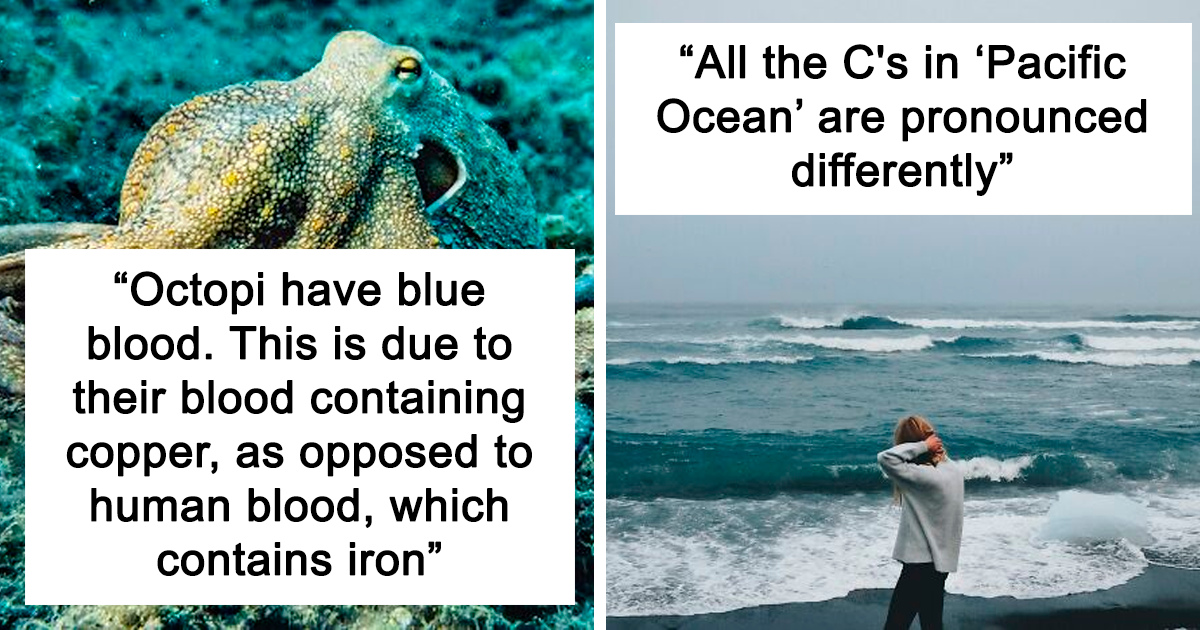
Two hearts move blood through the gills, while the third sends oxygen-rich blood through the body. Octopuses also have blue blood, which makes them sound like underwater royalty with excellent escape skills.
4. Honey Can Last for an Extremely Long Time
Properly sealed honey has a legendary shelf life because it is low in water, acidic, and naturally unfriendly to many microbes. It is not magic, but it is close enough to make your pantry feel like an archaeological site.
5. Lightning Can Heat Air to Around 50,000°F
Lightning can heat the air it passes through to roughly 50,000 degrees Fahrenheit. That is about five times hotter than the surface of the sun. Suddenly, “thunderstorm” sounds less cozy and more like sky drama.
6. A Cloud Can Weigh More Than a Million Pounds
A typical cumulus cloud may contain about 1.1 million pounds of water droplets. It floats because those droplets are spread out and supported by rising air. So yes, that fluffy cloud is secretly a heavyweight champion.
7. T. Rex Lived Closer in Time to Humans Than to Stegosaurus
Stegosaurus lived about 150 million years ago, while Tyrannosaurus rex appeared much later. The gap between those dinosaurs was so huge that T. rex is closer to us in time than it was to Stegosaurus. Jurassic Park really compressed the guest list.
8. The Moon Is Slowly Moving Away from Earth
The Moon drifts away from Earth by about 1.5 inches per year. That is about the rate fingernails grow, which means the Moon is slowly ghosting us, but politely.
9. Bananas Are Berries, But Strawberries Are Not
Botanically speaking, bananas fit the definition of berries because they develop from a single ovary and contain seeds inside. Strawberries are accessory fruits. Fruit terminology clearly enjoys making grocery shopping emotionally complicated.
10. Sloths Can Grow Algae in Their Fur
Sloth fur has grooves where algae can grow, giving the animal a greenish tint that helps with camouflage. It is part survival strategy, part mobile garden, part “I have become one with the couch.”
11. Flamingos Get Their Pink Color from Their Food
Flamingos eat algae and small crustaceans rich in carotenoid pigments. Their bodies process those pigments and deposit them in feathers. Basically, flamingos are the living proof that your snacks can become your aesthetic.
12. Butterflies Can Taste with Their Feet
Butterflies use chemoreceptors on their feet to detect useful molecules on plants. This helps females find the right place to lay eggs. Imagine choosing a restaurant by stepping on the menu.
13. Horseshoe Crab Blood Is Blue
Horseshoe crabs use hemocyanin, a copper-based oxygen-carrying molecule, which gives their blood a bright blue color. Their blood has also played an important role in testing medical products for bacterial contamination.
14. Adult Bones Are Constantly Remodeling
Bones may seem like solid scaffolding, but they are alive and active. Old or damaged bone is broken down and replaced with new bone throughout life. Your skeleton is basically running a renovation project with no lunch break.
15. Grand Canyon Rocks Are Older Than Dinosaurs
Many rocks exposed in the Grand Canyon are hundreds of millions to billions of years old. Some are far older than the oldest known dinosaurs. The canyon is not just a view; it is deep time wearing dramatic lighting.
16. Sharks Are Older Than Trees
Shark ancestors appeared hundreds of millions of years ago, before modern trees became common on land. That means sharks were already doing shark things before forests really got organized.
17. Some Fish Can Change Sex
In several fish species, sex can change as part of their life cycle or social structure. Some wrasses and clownfish are famous examples. Nature looked at fixed categories and said, “Let’s keep things flexible.”
18. The Human Body Has More Bacterial Cells Than Most People Expect
The human microbiome includes bacteria, fungi, and other microorganisms living mostly in the gut, skin, and mouth. Many support digestion, immunity, and overall health. You are not walking alone; you are walking as a committee.
19. The Word “Muscle” Comes from a Word Meaning “Little Mouse”
The word “muscle” traces back to Latin roots associated with a small mouse, likely because flexed muscles can look like tiny creatures moving under the skin. Congratulations, your biceps have rodent branding.
20. Sea Otters Use Tools
Sea otters are known to use rocks to crack open hard-shelled prey. Tool use is not limited to humans, and otters manage to make it look adorable instead of like a hardware demonstration.
21. The Surface of Venus Is Hot Enough to Melt Lead
Venus has a thick carbon dioxide atmosphere and intense greenhouse heating. Its surface is hot enough to melt lead, making it one of the least relaxing vacation spots in the solar system.
22. Sound Travels Faster in Water Than in Air
Sound moves faster through water because particles are closer together, allowing vibrations to transfer more efficiently. This is one reason marine animals rely so heavily on sound underwater.
23. Some Trees Can Communicate Through Chemical Signals
Plants can release chemical compounds in response to pests or stress, and those compounds may affect nearby organisms. Forests are quieter than group chats, but they are not exactly silent.
24. Penguins Have Knees
Penguins look like they are waddling around on tiny leg stumps, but their legs include knees hidden under feathers and body structure. Their walk is less “no knees” and more “formalwear engineering.”
25. A Group of Crows Is Called a Murder
The phrase “a murder of crows” is one of many colorful collective nouns in English. It sounds dramatic, but crows are intelligent, social birds, not tiny courtroom villains in feathers.
26. Your Stomach Acid Is Strong, But Your Stomach Protects Itself
Stomach acid helps break down food and defend against many microbes. The stomach lining produces mucus and other protective substances so the digestive system does not become its own horror movie.
27. The Shortest War in History Was Incredibly Brief
The Anglo-Zanzibar War of 1896 is often cited as the shortest war in recorded history, lasting less than an hour. Some meetings last longer than that, and somehow feel more destructive.
28. Humans Share a Planet with Millions of Insect Species
Insects represent one of the most diverse groups of animals on Earth. They pollinate plants, recycle nutrients, feed birds and mammals, and occasionally enter your home like they pay rent.
29. The “Seeds” on a Strawberry Are Actually Tiny Fruits
The little dots on the outside of a strawberry are called achenes, and each one is technically a tiny fruit. The red fleshy part is not the true fruit in the strict botanical sense. Strawberries are delicious liars.
30. Earth’s Atmosphere Makes Sunsets Colorful
At sunset, sunlight travels through more atmosphere, scattering shorter blue wavelengths and letting reds, oranges, and pinks dominate the sky. The evening sky is not showing off; it is physics with excellent taste.
What Makes a Random Fact Truly Memorable?
A memorable fact usually has three ingredients: surprise, contrast, and a story. “Venus is hot” is fine. “Venus is hot enough to melt lead” is unforgettable because it gives the mind a vivid image. “Clouds contain water” is basic. “A cloud can weigh more than a million pounds” makes people look up suspiciously.
The best trivia facts also flip assumptions. People assume strawberries are berries because the word “berry” is standing right there, waving. Then botany kicks the door open and says, “Actually.” People assume bones are lifeless once grown, then biology explains the constant remodeling. People imagine dinosaurs living together like prehistoric roommates, then deep time reveals that Stegosaurus and T. rex missed each other by a massive margin.
Why People Love Flexing Their Knowledge Online
Sharing interesting facts online has become a form of friendly performance. It lets people be funny, smart, helpful, and oddly specific all at once. A random fact can travel fast because it is easy to repost, easy to remember, and easy to react to. It does not require a long argument or a 40-minute lecture. It simply walks into the room, drops a strange truth, and leaves everyone blinking.
There is also a social reason these facts spread. They help people connect. Someone shares a fact about octopuses, and suddenly five other people are talking about marine biology, childhood aquarium trips, alien intelligence, and whether an octopus could win at chess if it cared enough. Knowledge becomes a spark, not a sermon.
Experience Section: Living with a Brain Full of Random Facts
There is a special kind of person who collects random facts the way other people collect mugs, sneakers, or suspiciously expensive candles. They do not always mean to do it. They read one article about space, watch one documentary about animals, overhear one museum guide explaining dinosaur timelines, and suddenly their brain opens a permanent trivia drawer labeled “Use in Case of Social Emergency.”
The funny thing is that random facts rarely arrive when you need them. During an exam, your mind may go blank. During an important presentation, your brain may temporarily replace all useful vocabulary with elevator music. But three days later, while someone is opening chips at a party, you will remember that butterflies can taste with their feet. This is the curse and blessing of casual knowledge: it has terrible timing but excellent entertainment value.
People who love random facts often become unofficial conversation rescuers. When a dinner table falls into silence, they can launch a fact like a flare. “Did you know a day on Venus is longer than its year?” Suddenly, everyone is talking again. Someone asks how that works. Someone else mentions Mercury. Another person insists they would still rather live on Venus than answer work emails. The fact has done its job. It has turned silence into a tiny shared adventure.
Random facts also make everyday life feel less ordinary. A cloud is no longer just a cloud; it is a floating heavyweight. A flamingo is no longer just a pink bird; it is a feathered food diary. A strawberry is no longer just dessert; it is a botanical loophole with whipped cream potential. The more you learn, the more the world starts looking like it is hiding Easter eggs in plain sight.
Of course, there is a gentle art to sharing facts without becoming the human version of a pop-up ad. Timing matters. Tone matters. Nobody wants to be corrected aggressively while eating fruit salad. The best fact-sharers deliver information with delight, not superiority. They say, “This is wild,” not “Allow me to dominate the room.” Knowledge lands better when it feels like an invitation.
In a world overflowing with noise, interesting random facts offer a refreshing kind of curiosity. They are small, bright, and surprisingly human. They remind us that learning does not have to be heavy to be meaningful. Sometimes it can be silly, strange, beautiful, and perfectly sized for a group chat. And honestly, if knowing that honey can last for ages or that sloths can grow algae in their fur makes the day more fun, that is not useless trivia. That is mental confetti.
Conclusion
Random facts are tiny reminders that the world is bigger, stranger, and more entertaining than our daily routines suggest. From Venus’s upside-down sense of time to octopuses with three hearts, from million-pound clouds to botanically rebellious strawberries, these facts prove that curiosity is never wasted. They may not help you fix a leaky sink or remember your passwords, but they can make conversations livelier, spark new interests, and turn ordinary moments into mini discoveries.
The next time someone flexes their knowledge with an unusual fact, let them. Better yet, flex back. The world has plenty of room for people who know strange things and share them with joy. After all, today’s random fact may become tomorrow’s favorite conversation starter.














