
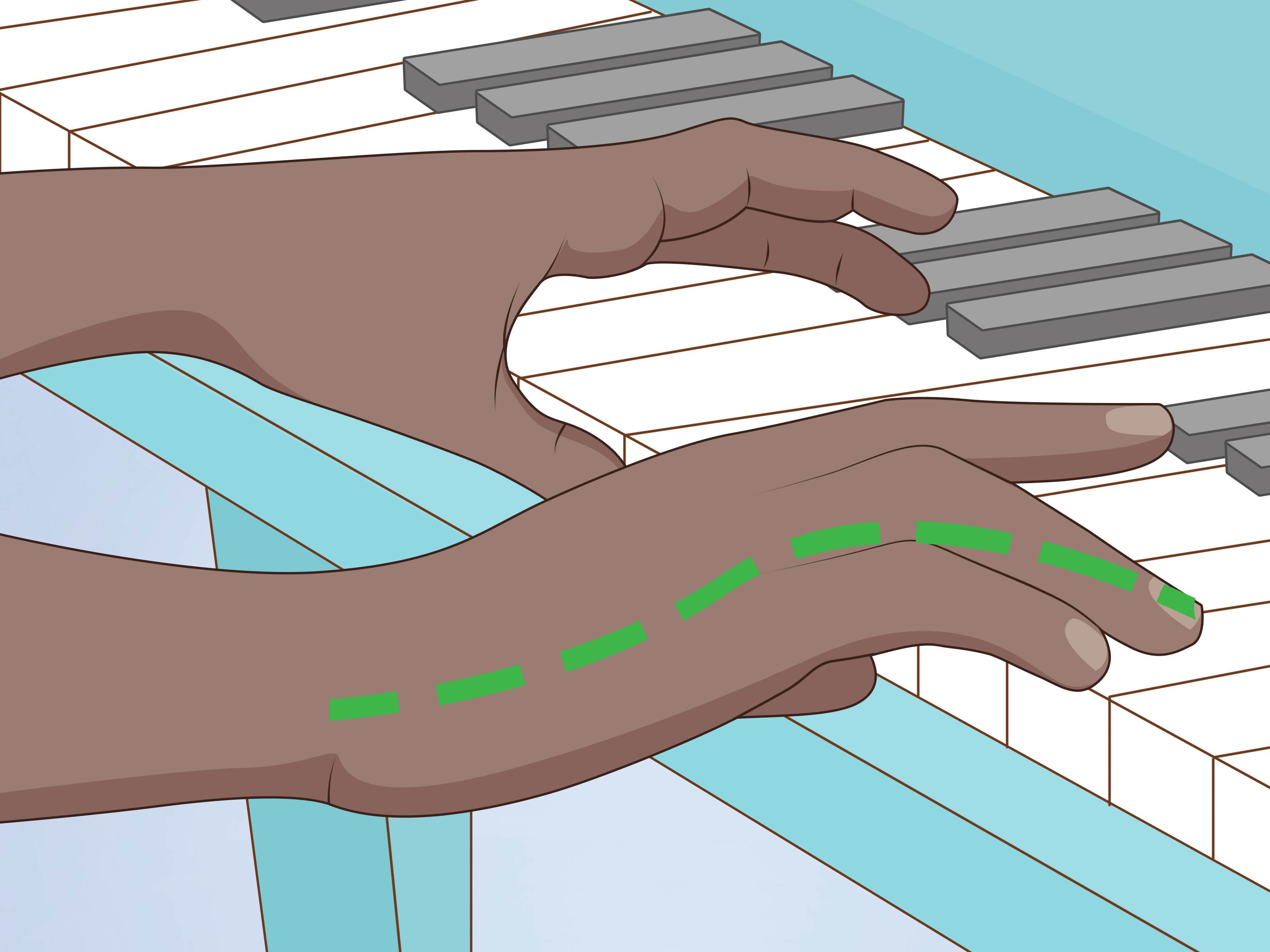
Piano dexterity is not about turning your fingers into tiny weightlifters. It is the ability to play accurately, evenly, freely, and musicallyeven when the notes begin arriving like commuters at a subway station during rush hour.
Many pianists try to improve finger speed by repeating difficult passages as fast as possible. Unfortunately, repeating a mistake at concert tempo does not transform it into technique. It simply teaches your hands to make the same mistake with remarkable confidence.
Real improvement comes from coordinating the fingers with the hands, wrists, arms, ears, and brain. Healthy movement, slow technical practice, and music-based coordination exercises can help beginners build dependable control while allowing experienced players to polish uneven scales, stubborn trills, awkward chord changes, and complicated two-handed passages.
The following three methods explain how to improve dexterity on the piano without relying on endless mechanical drills or the questionable philosophy of “play until something hurts.”
What Does Piano Dexterity Actually Mean?
Dexterity includes several related abilities: finger control, timing, coordination, flexibility, accuracy, dynamic control, and efficient movement across the keyboard. A dexterous pianist can play quickly when the music requires speed, but can also play softly, evenly, and independently with each hand.
That distinction matters because speed alone is not a reliable sign of good piano technique. A player may race through a scale while producing uneven rhythms, accidental accents, stiff wrists, and enough tension to make every finger look personally offended. Controlled playing is more useful than merely fast playing.
The fourth and fifth fingers often feel less independent than the thumb, index finger, and middle finger. This is partly related to the anatomical connections within the hand, so the goal should not be to force every finger to behave identically. Instead, pianists should develop better coordination and use efficient movements that allow the entire playing mechanism to support each finger.
1. Build Dexterity on a Foundation of Relaxed, Efficient Movement
Before practicing scales, arpeggios, or finger exercises, check how you are sitting and moving. Technical problems often begin above the fingers. A bench that is too low may cause the wrists to bend upward, while a bench that is too high can encourage raised shoulders or downward pressure. Sit far enough from the keyboard that the elbows can move freely without being pinned against the body.
Find a Neutral Hand Position
Allow your arms to hang naturally at your sides, then observe the gentle curve of your fingers. Bring that same relaxed shape to the keyboard. The knuckles should form a supported bridge, the fingertips should contact the keys without collapsing, and the wrist should remain flexible rather than locked.
A neutral position does not mean holding the hand in one frozen shape. Piano playing requires constant adjustment. The hand may open for an octave, move inward for black keys, rotate during a scale, or shift laterally during a fast passage. The important principle is to avoid unnecessary muscular effort.
Excessively curled fingers can create a gripping motion, while flat fingers may reduce control in passages requiring quick, precise attacks. A naturally curved hand usually provides a more efficient starting point for scales and arpeggios.
Use the Arm to Support the Fingers
Do not treat the fingers as five isolated pistons. The forearm can rotate slightly to support alternating fingers, the wrist can move laterally during wide passages, and the arm can transport the hand from one keyboard position to another.
For example, when playing a right-hand C-major scale, avoid forcing the thumb under a motionless hand. Let the wrist and forearm make a small coordinated adjustment as the thumb passes beneath the fingers. The movement should feel fluid, not like the thumb is crawling through a narrow ventilation duct.
Similarly, use lateral arm movement when playing broken chords over several octaves. The fingers should prepare the notes, but the arm carries the hand to each new position. This reduces stretching and improves accuracy.
Warm Up Without Aggressive Stretching
Begin with easy movements rather than immediately attacking the most difficult section of your repertoire. Play slow five-note patterns, gentle chords, or a comfortable scale at a moderate dynamic. Listen for an even tone and notice whether the shoulders, jaw, thumbs, or wrists are tightening.
A useful warm-up can take five minutes:
- Shake out the hands and allow the arms to hang loosely.
- Play five-finger patterns in C, G, D, F, and B-flat major.
- Repeat each pattern legato, staccato, softly, and moderately loudly.
- Play one slow scale with each hand separately.
- Finish with relaxed chords or arpeggios.
The purpose is not to exhaust the fingers before the practice session has officially begun. A warm-up should prepare coordination, attention, and sound production.
Release Tension Between Notes and Phrases
Dexterity depends as much on releasing muscles as activating them. After playing a chord, notice whether you continue squeezing the keys. After a leap, check whether the shoulder remains raised. During a scale, ask whether the thumb is pressing harder than necessary.
Practice a short phrase, pause, and deliberately release the hand. Repeat the phrase while trying to preserve that feeling of freedom. These small resets help prevent tension from accumulating across an entire page.
Pain, numbness, tingling, swelling, or persistent weakness should not be treated as evidence of productive practice. Repetitive motion, poor posture, and overuse can contribute to strain, so stop and seek qualified medical guidance when symptoms persist.
2. Practice Scales and Finger Patterns Slowly, Then Add Speed Gradually
Slow practice is one of the most effective ways to improve piano dexterity because it gives the brain time to organize fingering, rhythm, distance, and sound. At a manageable tempo, you can detect uneven notes and unnecessary movements that disappear beneath the general commotion of fast playing.
Choose Consistent Fingering
Decide which finger will play each note before repeating a passage. Constantly changing the fingering prevents the movement from becoming dependable. Write helpful finger numbers in the score, especially at turns, leaps, thumb crossings, and awkward transitions.
Good fingering usually minimizes unnecessary movement and places the hand in a comfortable position for what comes next. It should also support the musical phrase. A technically possible fingering may still be a poor choice if it creates an unwanted accent or interrupts a legato melody.
Use a Metronome as a Measurement Tool
Select a tempo at which you can play the pattern accurately and without tension. For a difficult passage, this may be 40 to 60 beats per minute. Play it correctly three times before increasing the tempo by two to five beats per minute.
When accuracy deteriorates, return to the previous successful tempo. This is not retreating; it is intelligent calibration. Research involving skilled piano movement has found that practice below maximum speed can support improvements in faster performance, while pedagogical guidance consistently recommends small, controlled tempo increases.
A simple progression might look like this:
- Play at 50 BPM three times accurately.
- Move to 54 BPM and repeat.
- Continue to 58 BPM.
- If tension or mistakes appear, return to 54 BPM.
- End with one relaxed repetition below your fastest successful tempo.
Transform Scales With Rhythmic Variations
Playing the same scale in the same rhythm can lead to automatic, inattentive repetition. Rhythmic variations force the fingers to respond in different combinations.
Take a four-note group such as C-D-E-F and practice it using:
- Long-short-long-short rhythms.
- Short-long-short-long rhythms.
- Groups of three notes.
- Groups of four notes with an accent on the first note.
- Accents shifted to the second, third, and fourth notes.
When one note is lengthened, the hand has extra time to prepare the next quick movement. Changing the accent reveals fingers that tend to strike weakly, late, or too loudly.
Practice Each Hand Separately
When both hands play together, the stronger hand can disguise problems in the weaker one. Separate practice allows you to hear uneven thumb crossings, uncontrolled accents, and inconsistent articulation.
Begin with the less secure hand. Play slowly enough to observe every movement, then practice the stronger hand using the same fingering and musical goal. Finally, combine the hands at a slower tempo than either hand could manage alone. Scales practiced one hand at a time can make flaws easier to identify and correct.
Train Control Rather Than Brute Strength
To improve the fourth and fifth fingers, place all five fingers on five neighboring keys. Hold four keys gently while playing repeated notes with the remaining finger. Use a soft dynamic, avoid lifting the active finger high, and stop if the hand becomes rigid.
You can also play patterns such as 1-3-2-4-3-5-4-2 in each hand. Start in C major, then move the pattern chromatically. Keep the wrist responsive and listen for equal timing rather than equal force.
Five to ten attentive minutes will usually be more valuable than thirty minutes of aggressive repetition. Your pinky is a musician, not a contestant in a bench-press competition.
3. Develop Hand Independence and Dexterity Through Real Music
Technical drills are useful, but dexterity becomes meaningful only when it serves music. Repertoire introduces combinations that isolated exercises may not include: one hand playing legato while the other plays staccato, inner voices moving beneath a melody, uneven rhythmic groupings, leaps, repeated chords, and changes in dynamic balance.
Give Each Hand a Different Job
Begin with a simple five-note pattern. Play legato with the right hand and staccato with the left. Then reverse the articulations. Next, play loudly with one hand and softly with the other.
Another useful exercise is to hold a chord in one hand while the other plays a scale. Switch roles after several repetitions. These tasks develop independence because each hand must follow a separate instruction without disrupting the other.
For an additional challenge, play a steady left-hand chord pattern while the right hand improvises using five notes. The improvisation does not need to sound like a lost Beethoven sonata. Its purpose is to teach one hand to remain stable while the other moves freely.
Practice Voices Separately
In contrapuntal music, such as a Bach invention, avoid treating each hand as a single block. Practice every melodic line separately, including inner voices shared between the hands. Sing one voice while playing another. Then combine two voices at a slow tempo.
This approach improves finger independence, balance, and listening. It also prevents the common situation in which the pianist successfully plays every printed note while accidentally hiding the melody under a mountain of accompaniment.
Use Small Practice Chunks
Instead of repeatedly playing an entire page, isolate one difficult beat, transition, or hand shift. Practice that fragment, add the beat before it, and then add the beat after it. Gradually expand the section until it reconnects with the surrounding music.
Small chunks reduce cognitive overload and allow precise correction. They also make practice more efficient. Ten focused minutes on one awkward transition can accomplish more than five heroic but inaccurate performances of the complete piece.
Practice Away From the Keyboard
Mental practice can reinforce fingering, rhythm, and movement planning without adding physical repetition. Close the score and imagine playing a short passage. Visualize the keyboard, hear the notes internally, and mentally follow each finger.
You can also tap the rhythm on a table, name the finger numbers aloud, or silently rehearse a hand crossing. Research on musical motor learning suggests that mental rehearsal can support movement anticipation and aspects of performance accuracy.
Select Repertoire That Targets Specific Skills
Choose pieces that challenge one or two technical areas without overwhelming every part of your playing at once. Bach inventions can develop contrapuntal control, selected Czerny studies can address passagework, and appropriately chosen works by Clementi, Burgmüller, Schumann, Chopin, Debussy, or contemporary composers can strengthen articulation, voicing, chord technique, and lateral movement.
Jazz, pop, gospel, and blues players can develop dexterity through chord inversions, walking bass lines, syncopated accompaniment patterns, transcribed solos, and scales that appear in actual improvisation. Practicing technical material connected to the music you perform makes it easier to transfer the skill from the exercise to the stage.
A 20-Minute Daily Piano Dexterity Routine
Consistency matters more than occasional practice marathons. Use this routine as a starting point and adjust it to your current level.
Minutes 1–3: Physical and Musical Check-In
Check bench distance, shoulder freedom, wrist alignment, and hand shape. Play a few quiet chords while listening to the quality of the sound.
Minutes 4–8: Scales and Arpeggios
Choose one key. Practice the scale one hand at a time, then together. Add the tonic arpeggio and one chord inversion. Use a metronome and prioritize evenness.
Minutes 9–12: Finger-Control Exercise
Use a five-finger pattern, rhythmic variation, held-note exercise, trill, or repeated-note drill. Keep the dynamic moderate and the movements small.
Minutes 13–16: Independence Exercise
Combine contrasting articulations, dynamics, or rhythms between the hands. Alternatively, practice two voices from a contrapuntal piece.
Minutes 17–20: Apply the Skill to Repertoire
Choose one short passage from a current piece. Identify its technical problem, practice it in small sections, and finish with a slow musical performance.
Take brief breaks during longer sessions. Avoid drilling the same demanding movement continuously, and stop when concentration or physical comfort declines.
Common Mistakes That Slow Dexterity Development
Practicing Too Fast
Fast practice can hide uneven timing and inefficient movement. Use a tempo at which you can observe and control the entire action.
Lifting the Fingers Excessively High
Large finger movements take more time and energy. Keep the fingers close to the keys unless a particular articulation requires a larger gesture.
Using Random Fingering
Choose fingering deliberately and repeat it consistently. Reliable movement requires a reliable plan.
Ignoring the Weaker Hand
Start selected exercises with the less coordinated hand and give it several independent repetitions before adding the stronger hand.
Confusing Tension With Effort
Some muscular activity is necessary, but continuous gripping is not. Learn to distinguish purposeful effort from unnecessary tension.
Playing Exercises Without Listening
A technically correct pattern should still have a clear rhythm, controlled tone, and intentional phrasing. Dexterity must remain connected to sound.
Practice-Room Experiences: What Improving Piano Dexterity Really Feels Like
One of the first surprises many pianists experience is that progress rarely feels dramatic while it is happening. During the first week of slow scale practice, the hands may seem just as awkward as before. The metronome remains stubbornly unimpressed, and the fourth finger continues behaving like an employee who has mentally resigned. Then, during a lesson or rehearsal, a previously difficult passage suddenly feels more organized. The change is not magic. It is the result of many accurate repetitions becoming a dependable movement pattern.
A particularly useful experience is discovering that the apparent “weak hand” often has a listening problem rather than a strength problem. A pianist may assume the left hand cannot play evenly, but recording a scale reveals that the thumb is creating an accent during every crossing. Slowing down, rotating the forearm slightly, and listening for equal tone can improve the passage without any strenuous finger exercise. The lesson is humbling but encouraging: better coordination often solves problems that brute force cannot.
Another common turning point occurs when a player stops practicing only from the beginning of a piece. Starting at measure one feels comfortable because the opening becomes familiar, but the difficult section in the middle remains an unexplored wilderness. Practicing from several starting points changes the experience completely. The pianist can isolate two measures, solve the fingering, connect them to the next phrase, and later perform the whole section with far less anxiety. Dexterity grows because the hands understand each transition instead of relying on momentum and optimism.
Hand-independence exercises can initially feel like trying to brush your teeth while signing your name with the other hand. A right-hand legato line combined with left-hand staccato may collapse after three notes. The most productive response is not to repeat the failure faster. Reduce the task. Play two notes, pause, and check both articulations. Add a third note only when the first two feel secure. Within several sessions, the brain begins separating the instructions, and the exercise becomes surprisingly manageable.
Recording practice also changes how pianists understand dexterity. While playing, a passage may feel smooth because the performer is occupied with fingering, reading, and survival. On playback, uneven rhythm or unwanted accents become obvious. Rather than treating the recording as a judgment, use it as a diagnostic tool. Choose one problem, correct it slowly, and record again. The second version often shows measurable improvement, which is far more motivating than vaguely hoping the fingers are becoming “better.”
Perhaps the most valuable experience is learning that a relaxed performance does not come from avoiding hard work. It comes from doing precise work at the correct level of difficulty. When fingering is settled, movement is efficient, rhythm is secure, and the ears remain engaged, the hands no longer need to fight the keyboard. Dexterity then feels less like forcing the fingers to move and more like removing the obstacles that prevent them from moving well.
Conclusion
The three best ways to improve dexterity on the piano are to establish healthy, efficient movement; practice technical patterns slowly and systematically; and apply coordination skills to real music. These methods develop more than finger speed. They improve accuracy, control, hand independence, tone, rhythm, and confidence.
Begin with short, focused sessions. Select one technical goal, use consistent fingering, listen carefully, and increase the tempo only after the movement feels secure. Progress may arrive gradually, but every accurate repetition gives the hands and brain better information.
Most importantly, remember that piano technique should make musical expression easier. The final goal is not to impress the metronome or terrify the neighbors with the fastest scale in the county. It is to play the music you hear in your imagination with freedom, clarity, and control.













