
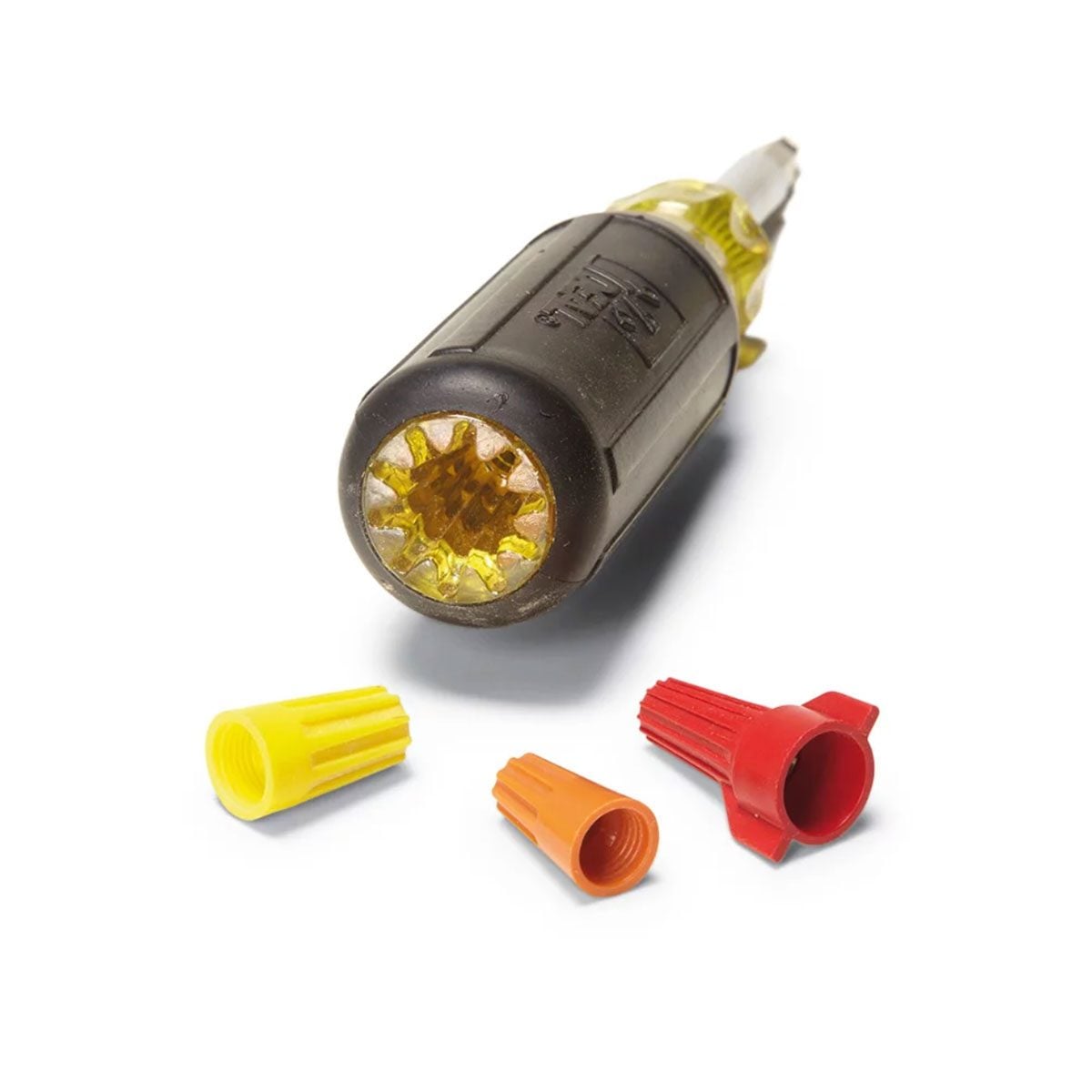
Every electrician owns pliers, screwdrivers, wire strippers, and at least one tape measure that mysteriously disappears whenever an apprentice walks nearby. Those everyday tools handle plenty of work, but specialized electrical jobs often require something more imaginative.
Unique tools for electricians are designed to solve the frustrating parts of the trade: tracing an unlabeled circuit, pulling cable around an impossible bend, inspecting a wall without turning it into Swiss cheese, punching clean holes in an enclosure, or tightening terminals to the correct torque. The best specialty tools do not merely look clever in a catalog. They save labor, improve consistency, reduce physical strain, and help electricians diagnose problems with less guesswork.
Electricians install, maintain, troubleshoot, and repair power, lighting, communications, and control systems. The work regularly involves technical diagrams, test instruments, hand tools, and power tools, so the ideal tool collection depends heavily on whether a person works in residential service, commercial construction, industrial maintenance, utilities, solar, or low-voltage systems.
What Makes an Electrician’s Tool Truly Unique?
A unique electrician tool is not necessarily rare, expensive, or powered by a battery large enough to start a lawn tractor. It is unique because it solves a narrow problem exceptionally well.
Specialty tools tend to earn their place in a service vehicle when they provide at least one of four benefits:
- They locate faults or hidden components faster.
- They reduce repetitive physical work.
- They improve the accuracy and repeatability of an installation.
- They allow work to be completed with less damage to finished surfaces.
No specialty tool replaces training, safe work practices, or proper personal protective equipment. OSHA requires electrical protective equipment to withstand the voltages that may be imposed on it, while insulating gloves and sleeves must be appropriately rated for the exposure. Power-operated hand tools used in construction must generally be approved double-insulated tools or properly grounded.
1. Advanced Circuit Tracers
A basic breaker finder is useful when the panel schedule says things such as “office,” “office plugs,” and “other office.” An advanced circuit tracer goes considerably further.
These systems typically use a transmitter and receiver to follow an electrical signal. Depending on the model and accessories, a professional tracer may locate breakers, fuses, hidden conductors, shorts, and splice problems. Some models work on both energized and de-energized circuits, allowing an electrician to investigate abandoned wiring or circuits that cannot be powered.
Professional tracers can detect a transmitted signal through materials such as drywall and concrete block, and certain configurations can follow underground conductors. Newer multifunction systems may also provide voltage measurement, continuity testing, receptacle checks, polarity information, and current measurement.
Where a Circuit Tracer Earns Its Keep
Circuit tracers are especially useful in older commercial buildings, remodeled homes, warehouses, and facilities where panel directories have been revised by several generations of handwriting. Instead of opening every junction box and flipping breakers until someone complains that the freezer stopped working, the electrician can approach the problem systematically.
2. Thermal Imaging Cameras
A thermal imaging camera translates temperature differences into a visible image. For electricians, that means abnormal heat patterns can be identified without touching every component or disassembling an entire system.
Thermal cameras are commonly used to investigate overloaded conductors, loose connections, imbalanced loads, overheating breakers, failing contactors, motor problems, and hot spots inside distribution equipment. They are also useful for preventive maintenance because the electrician can document a developing issue before it becomes an emergency shutdown accompanied by smoke and a very nervous facilities manager.
A thermal image is not a diagnosis by itself. Emissivity, reflections, load conditions, distance, and the material being inspected can affect what the camera displays. The image should guide additional testing rather than replace electrical measurements. Fluke’s professional product portfolio, for example, includes both electrical test instruments and thermal imaging equipment intended for condition monitoring and troubleshooting.
3. Flexible Inspection Cameras and Borescopes
An inspection camera is essentially a tiny set of eyes attached to a flexible cable. Feed the camera through an existing opening, and it can reveal what is hiding behind drywall, above a ceiling, inside equipment, or beneath an obstruction.
Electricians use borescopes to look for blocking, insulation, unexpected plumbing, damaged conductors, inaccessible junction boxes, framing members, and available pathways. A camera with an adjustable light, a small-diameter head, image rotation, and recording capability is particularly useful for service work.
Why It Matters
Cutting one unnecessary hole can turn a quick electrical repair into a drywall project. A borescope helps the electrician plan the route before drilling. It does not eliminate surprises, but it does allow the surprises to introduce themselves before the reciprocating saw arrives.
4. Magnetic Wire-Pulling Systems
Traditional fish tape works well when there is a clear pathway. Finished walls, insulated cavities, and awkward ceiling spaces are less cooperative.
Magnetic wire-pulling tools use a strong magnet inside the wall and a matching guide magnet outside the finished surface. The electrician moves the exterior magnet to steer the interior component through the cavity. Once the desired location is reached, a pull line can be retrieved and used to bring cable through.
These systems can be particularly effective for low-voltage cable, alarm wiring, speaker wire, thermostat cable, and selected residential retrofit work. Performance depends on wall thickness, insulation, fasteners, metal framing, and other obstructions, so they are helpful tools rather than supernatural forces.
5. Glow Rods and Specialty Fish Rod Kits
Glow rods are rigid or semi-flexible fiberglass sections that connect to create a longer cable-routing tool. Unlike coiled fish tape, rods can be pushed across suspended ceilings, through crawl spaces, down wall cavities, or under raised floors.
Brightly colored or illuminated rods are easier to see in dark cavities. Interchangeable tips can include hooks, magnets, chains, whisk heads, and pulling eyes. Klein Tools and other electrical-tool manufacturers offer extensive categories of fish tape, fish rods, conduit tools, and wire-pulling accessories for these applications.
A useful kit should include multiple flexibility levels. Stiff rods provide pushing power across open spaces, while highly flexible sections negotiate bends. Connecting the wrong combination can produce a rod that behaves like an uncooked spaghetti noodle with career ambitions.
6. Portable Wire-Reel Dispensers
Wire does not enjoy leaving a spool neatly. Left unsupervised, it tangles, rolls away, twists, and occasionally attempts to trip the person pulling it.
Portable wire dispensers hold reels so conductors can feed smoothly during an installation. Designs range from compact folding stands to carts that carry multiple spools. Some systems use ordinary conduit as an axle, which makes them simple to transport and adaptable to different reel sizes.
One well-known modular dispenser design accommodates multiple reel positions, supports reels up to approximately 34 inches, and is rated for substantial reel weight. The exact rating varies by version, so electricians should always follow the manufacturer’s published limits rather than testing the stand with the scientific method known as “let’s see what happens.”
Best Applications
Wire-reel dispensers are valuable during commercial branch-circuit installations, panel changes, multifamily projects, structured cabling, and any job where several conductors must be pulled together. Smooth feeding also reduces the risk of damaged insulation and twisted conductors.
7. Compact Powered Cable Pullers
Long conduit runs and heavy conductors can transform a cable pull into a full-body workout nobody requested. A compact powered cable puller provides controlled pulling force while reducing the manual strain placed on the crew.
These machines may attach to conduit, a mounting structure, or a specialized support system. Depending on the equipment, they can be configured for different pulling angles and speeds. Some use a capstan, while compact circuit pullers may work with a drill or their own power system.
Pulling equipment must be matched to the conductor, conduit layout, pulling rope, accessories, and calculated tension. More force is not automatically better. Excessive tension can damage conductors, fittings, or equipment, giving the crew the exciting opportunity to repeat the entire installation.
8. Hydraulic and Battery-Powered Knockout Punches
Step bits and hole saws have their place, but knockout punches produce clean, accurately sized openings for conduit fittings, controls, and other panel components.
A typical knockout system uses a punch, die, draw stud, and driver. Manual systems use a wrench or ratchet, while hydraulic and battery-powered drivers apply the force with much less effort. Professional kits are available for mild steel, stainless steel, aluminum, brass, copper, fiberglass, and plastic, although capacities depend on the selected punch and driver.
Why Electricians Prefer Them
Knockout punches leave a cleaner opening than many drilling methods, reduce burrs, and provide predictable conduit sizes. Battery-hydraulic models are particularly useful for repetitive panel fabrication or large-diameter openings. They cost more than a hole saw, but so does replacing an enclosure after a wandering drill bit creates modern art.
9. Cordless Cable Staplers
A cordless cable stapler drives approved fasteners over nonmetallic cable without requiring the electrician to swing a hammer beside the conductor. It can speed up rough-in work, especially in repetitive residential installations.
The correct tool, staple, cable type, and substrate must be used together. Staple depth and cable position still need to be checked because speed is not useful when it produces damaged insulation. A cable stapler should create a secure installation without crushing or pinching the cable.
This is one of those tools that may seem unnecessary until someone finishes stapling an entire house before lunch and still has enough grip strength to open a bottle of water.
10. Insulated Torque Screwdrivers
Electrical terminals are not supposed to be tightened according to emotion. Too little torque can contribute to loose connections and unwanted heating. Too much torque can damage conductors, threads, lugs, or equipment.
An adjustable torque screwdriver allows the electrician to set a specified tightening value and receive a mechanical indication when that value has been reached. Insulated versions combine controlled tightening with protection appropriate to their certified rating and intended use.
Professional kits may include an adjustable handle, a visible numerical scale, interchangeable insulated bits, a bit holder, and a calibration or inspection report.
Where Torque Control Matters Most
Torque tools are useful for breakers, control terminals, distribution equipment, photovoltaic components, electric-vehicle supply equipment, and other products with manufacturer-specified terminal values. The tool must be stored carefully, set correctly, and calibrated according to its instructions.
11. Insulation Resistance Testers
A standard multimeter can measure resistance, but an insulation resistance tester applies a higher DC test voltage to evaluate the condition of insulation in conductors, motors, transformers, and equipment.
These testers help identify moisture intrusion, aging insulation, contamination, damaged windings, and deterioration that may not appear during a basic continuity check. They are widely used in industrial maintenance, commissioning, preventive maintenance, and troubleshooting.
Test voltage, equipment isolation, discharge procedures, connected electronics, and manufacturer requirements must all be considered before testing. Megger’s test-equipment portfolio includes insulation, ground, low-resistance, cable-fault, and power-quality testing solutions for electricians and power professionals.
12. Flexible Current Probes and Advanced Clamp Meters
A traditional clamp meter works well when the jaw fits around the conductor. Large bus arrangements, crowded cabinets, and bundled conductors may leave no room for a rigid clamp.
A flexible current probe uses a loop that can wrap around a conductor in a confined location. When connected to a compatible meter, it allows current measurements in places where ordinary jaws cannot close.
Advanced clamp meters may add inrush-current capture, frequency measurement, temperature inputs, minimum and maximum recording, and other diagnostic functions. The instrument’s category rating, voltage rating, current range, and environmental suitability should match the application.
13. Multifunction Electrical Installation Pliers
Multifunction installation pliers combine several everyday operations in one hand tool. Depending on the design, one pair may grip flat material, grip round material, cut cable, strip conductors, deburr conduit, and crimp selected terminals.
The greatest benefit is not replacing every specialized tool. It is reducing tool changes during repetitive work. Electricians working from ladders, lifts, or confined equipment spaces appreciate having fewer items to retrieve from a pouch.
Manufacturers such as Knipex produce extensive families of professional pliers, cutters, stripping tools, crimping tools, and insulated products for electrical and industrial applications.
14. Battery-Powered Crimping and Cutting Tools
Large conductors and utility connections require more force and consistency than hand crimpers can comfortably provide. Battery-hydraulic crimping tools apply controlled mechanical force with interchangeable jaws or dies.
Certain professional platforms combine crimping and cutting functions in one tool. For example, Milwaukee offers an inline utility crimper with a rotating head and compatibility with multiple crimping and cutting jaws, allowing it to serve several heavy-duty applications while reducing the number of separate tools carried on a truck.
Correct dies, connectors, conductor preparation, inspection, and documented crimp procedures remain essential. A powerful tool can produce a bad connection extremely efficiently when fitted with the wrong components.
15. Portable Label Printers for Panels and Conductors
A professional label printer may not look as dramatic as a hydraulic punch, but future electricians will appreciate it far more. Portable printers can produce panel labels, equipment identifiers, warning labels, cable wraps, terminal markers, and heat-shrink identification sleeves.
Clear labeling improves serviceability and reduces troubleshooting time. It also prevents panel directories from evolving into a collection of cryptic abbreviations such as “LTS BCK RM?” followed by a question mark added by an electrician ten years later.
Look for a printer with durable label materials, electrical symbols, serialization, comfortable text entry, and cartridges suitable for the jobsite environment.
How to Choose Specialty Tools Without Emptying the Tool Budget
Buy for Repeated Problems
The best specialty tool is one that solves a problem encountered every month, not one that looked impressive during a midnight shopping session. Track recurring tasks and estimate how much labor each tool could save.
Check Ratings and Compatibility
Test instruments must have ratings appropriate for the system and environment. Accessories, leads, probes, dies, fasteners, batteries, and software should also be compatible with the intended work.
Consider the Entire System
A battery-powered tool may be more economical when it uses batteries already carried by the company. A low-cost crimper may become expensive if its dies are difficult to source. A sophisticated camera provides little value when nobody knows how to interpret its images.
Prioritize Safety Procedures
Specialty tools must support an established safe-work process. NFPA electrical-safety guidance emphasizes applying lockout/tagout procedures and verifying the absence of voltage with a properly rated test instrument when establishing an electrically safe work condition.
Field Experiences With Unique Tools for Electricians
The real value of a specialty tool usually becomes obvious during a job that was supposed to be simple. Consider a service call in a renovated restaurant. The customer reports that several receptacles have stopped working, but the panel directory was written before two remodels, a kitchen expansion, and an enthusiastic use of white paint. A basic outlet tester confirms the loss of power, but it cannot reveal the route of the hidden branch circuit. An advanced circuit tracer can turn hours of opening boxes into a controlled investigation. The lesson is not that every electrician needs the most expensive tracer available. It is that diagnostic tools can be more valuable than installation tools when labor is the largest cost.
Another common experience occurs during retrofit work. A new cable must travel from a basement to a second-floor wall, and the homeowner would prefer that the electrician not remove half the hallway. An inspection camera first confirms the framing layout. Glow rods or a magnetic pulling system then establish a pathway. Neither tool guarantees success, but using them together changes the work from blind drilling to informed routing. The saved drywall repair may be worth more than the tools.
Commercial panel work provides a different lesson. When an electrician uses a hole saw for several enclosure openings, the process includes drilling, controlling the pilot bit, removing sharp edges, and cleaning metal chips. A hydraulic knockout punch produces more consistent openings with less cleanup. On a single hole, the difference may seem minor. Across dozens of control panels, the improvement in speed, appearance, and fatigue becomes substantial.
Wire management tools also demonstrate how small improvements multiply. A crew may spend only a few minutes untangling wire during each pull, but those minutes accumulate across an entire project. A stable reel dispenser allows conductors to feed evenly, while a powered puller helps maintain controlled tension on longer runs. The crew works more smoothly, communication improves, and fewer people are assigned to wrestling with reels that appear determined to escape.
Torque tools often create the biggest change in professional habits. Electricians who have tightened terminals by feel for years may initially regard an adjustable torque screwdriver as unnecessary. Once the tool is used consistently, however, it becomes clear how unreliable “hand tight” can be. Small terminals, large lugs, different screw designs, and awkward working positions all affect perceived tightness. A calibrated tool creates a repeatable result and supports proper documentation.
Thermal imaging produces another memorable shift. Without a camera, an overheating connection may remain invisible until insulation discolors or equipment fails. With thermal imaging, a technician can scan equipment under load and compare components. The camera does not replace a meter or a qualified diagnosis, but it provides a fast way to decide where closer investigation is justified.
The final experience is financial. Specialty tools often look expensive when judged only by their purchase price. A better calculation compares the cost with saved labor, reduced surface damage, fewer repeat visits, improved documentation, and lower physical strain. A tool that saves 20 minutes once a year is probably a luxury. A tool that saves 20 minutes three times a week is an employee that never asks for vacation.
Conclusion
Unique tools for electricians are not substitutes for core trade skills. They are force multipliers for electricians who already understand installation methods, testing procedures, equipment limitations, and electrical safety.
Circuit tracers, thermal cameras, borescopes, wire dispensers, powered pullers, knockout punches, torque screwdrivers, insulation testers, specialized pliers, and labeling systems each address a different source of wasted time or inconsistent work. The right selection depends on the electrician’s specialty and the problems encountered most often.
Start with the task that causes the most delays. Choose a properly rated tool from a reputable manufacturer, learn its limitations, maintain it correctly, and measure whether it actually improves productivity. The most valuable tool is rarely the one with the longest feature list. It is the one that quietly turns a two-hour headache into a 20-minute job.














