
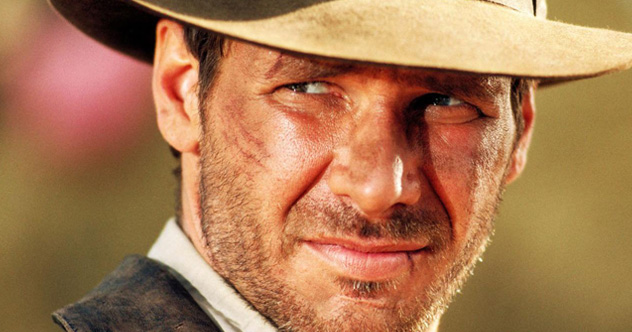
Creating an iconic fictional character is a bit like adopting a dragon: exciting at first, profitable if everything goes well, and eventually capable of becoming far more powerful than its owner. Once audiences fall in love with a detective, superhero, wizard, robot, or telekinetic waffle enthusiast, that character no longer belongs entirely to the person who invented them.
Unfortunately, creators do not always receive that memo. Some attempt to kill their most popular characters because they are bored. Others plan bizarre designs, premature exits, or major personality choices that could have erased everything audiences eventually loved. Corporate owners occasionally make matters worse by treating beloved heroes like last season’s inventory.
The following iconic characters survived questionable creative decisions through editorial intervention, actor chemistry, audience outrage, fortunate rewrites, or the simple realization that a monkey wearing a rubber mask was not the wisest filmmaking strategy.
1. Yoda Almost Became a Masked Monkey
Yoda is remembered as a tiny Jedi Master whose unusual speech, ancient wisdom, and expressive face made him one of the most recognizable characters in Star Wars. That legacy might have looked very different if an early production idea had survived.
While developing The Empire Strikes Back, the filmmakers considered portraying Yoda with a trained monkey wearing a costume and mask. Director Irvin Kershner later recalled discussions about dressing a monkey and animating its lips. The production wisely moved toward an advanced puppet designed by Stuart Freeborn and performed by Frank Oz.
A real animal might have been amusing for several seconds. Unfortunately, “small monkey repeatedly removing its Jedi mask” probably would not have carried Luke Skywalker’s most important spiritual lessons. The puppet allowed Yoda to feel intelligent, vulnerable, mischievous, and genuinely alive rather than like an escaped birthday-party attraction.
2. Batman Almost Remained a Gun-Toting Killer
Modern Batman is largely defined by his refusal to kill. That moral boundary separates him from the criminals he hunts and creates the eternal problem at the center of his relationship with the Joker: how does he stop an unstoppable murderer without becoming one?
Early Batman stories were not nearly so strict. The character occasionally used guns, caused fatal injuries, and behaved more like the violent pulp heroes who influenced his creation. Editor Whitney Ellsworth eventually pushed Batman away from firearms and killing, partly because children were reading the comics and public concern about violent entertainment was growing.
Bob Kane reportedly disliked losing Batman’s lethal edge, while Bill Finger was said to be more comfortable with the change. History favored Finger’s side. Without the no-killing rule, Batman might have become another grim vigilante instead of a hero trapped in a fascinating moral contradiction. Also, Gotham’s villains would have enjoyed considerably shorter careers.
3. The Joker Was Supposed to Die in His First Comic
Batman’s most famous enemy nearly had the shortest criminal career in Gotham history. In the final story of 1940’s Batman No. 1, the Joker was originally intended to die after accidentally stabbing himself.
DC editor Whitney Ellsworth recognized that the character had long-term potential. The ending was adjusted to reveal that the Joker had survived, preserving a villain who would become essential to Batman’s mythology.
Killing him immediately would not necessarily have made that first story bad. It would, however, have erased decades of influential comics, animated performances, television appearances, blockbuster movies, philosophical debates, Halloween costumes, and people attempting questionable impressions of his laugh.
The incident is an excellent reminder that creators cannot always identify an icon on the first try. Sometimes an editor has to look at a supposedly dead clown and say, “Perhaps we should keep this deeply alarming fellow around.”
4. Ron Weasley Was Nearly Killed “Out of Sheer Spite”
Ron Weasley provides humor, loyalty, insecurity, jealousy, courage, and emotional warmth throughout the Harry Potter series. He is not merely Harry’s funny friend. He helps turn a lonely boy’s magical adventure into the story of a chosen family.
J.K. Rowling later revealed that she seriously considered killing Ron while writing the books. She described the impulse as emerging during an unhappy period and said she contemplated doing it “out of sheer spite.” Ultimately, she preserved the central trio of Harry, Ron, and Hermione.
Ron’s death might have delivered a devastating dramatic moment, but shock alone does not guarantee a stronger story. Removing him would have transformed the trio’s chemistry, Hermione’s future, the Weasley family’s role, and Harry’s emotional journey.
Fortunately, the author reconsidered before turning a difficult writing period into permanent fictional trauma for millions of readers. Fred Weasley’s death already provided more than enough emotional damage, thank you very much.
5. Jesse Pinkman Was Planned as a Temporary Plot Device
Jesse Pinkman became the bruised, guilt-ridden heart of Breaking Bad. While Walter White grew colder and more monstrous, Jesse’s conscience helped audiences measure the human cost of Walt’s transformation.
Originally, creator Vince Gilligan planned to kill Jesse during the first season. The character would introduce Walt to the drug trade and then die, leaving Walt with guilt and pushing the story into darker territory.
Aaron Paul’s performance changed everything. Gilligan quickly recognized Paul’s talent and the volatile chemistry between Jesse and Bryan Cranston’s Walter White. He concluded that killing Jesse would be a colossal mistake.
That decision did more than save a popular character. It gave the series its most important emotional counterweight. Without Jesse, Walt’s descent might have remained intellectually interesting but emotionally colder. Keeping him alive allowed the show to explore manipulation, responsibility, trauma, loyalty, and the painful question of whether a damaged person can still escape.
6. Steve Harrington Was Supposed to Be a Disposable Jerk
Steve Harrington entered Stranger Things looking like a familiar horror-movie obstacle: the handsome, arrogant boyfriend who would probably make several terrible decisions before being eaten by something with too many teeth.
The Duffer Brothers originally imagined Steve as more unpleasant and expected him to die during the first season. Joe Keery complicated that plan by giving the character unexpected humor, vulnerability, and charm. The creators changed course, allowing Steve to return to the Byers house, grab his nail-covered baseball bat, and begin one of the show’s most satisfying redemption arcs.
Steve eventually evolved from selfish teenager to exhausted protector, unlikely mentor, and full-time babysitter of children who rarely obey him. Killing him as originally planned would have preserved a cliché. Letting him grow produced a character whose imperfections made his heroism more believable.
Sometimes the best character development begins when an actor quietly informs the script, through sheer charisma, that the script has underestimated him.
7. Eleven Was Originally Going to Sacrifice Herself
Stranger Things was initially developed with the shape of a limited story, and Eleven’s confrontation with the Demogorgon was intended to end in her sacrifice. In that version, the mysterious girl with supernatural abilities would save her friends and disappear permanently.
As the possibility of continuing the series became real, the Duffer Brothers understood that the story would struggle without her. Eleven was not simply a supernatural weapon. Her friendship with Mike, Lucas, Dustin, and Will gave the show much of its emotional identity.
Her survival also allowed the series to explore experiences that a heroic death would have prevented: family, adolescence, exploitation, identity, grief, independence, and the challenge of living after being treated as an experiment.
A sacrifice can be powerful, but it can also function as an easy exit. Allowing Eleven to live forced the story to ask a harder question: what happens after the miraculous child saves everyone and still has to figure out how to be human?
8. Spock’s Death Almost Became Permanent
Spock’s death in Star Trek II: The Wrath of Khan remains one of science fiction’s most effective farewell scenes. It works because it honors his logic, friendship, and willingness to place the needs of others above his own.
The danger was not that the scene lacked quality. The danger was losing one of the foundations of Star Trek forever. Leonard Nimoy was initially reluctant to continue playing Spock, and producer Harve Bennett persuaded him to return partly by offering the character a meaningful death.
During production, Nimoy had a more positive experience than expected and became open to returning. Elements such as Spock’s mind meld with McCoy and the final view of his casket created a path toward resurrection in Star Trek III.
Had the death remained irrevocable, the franchise would have lost the character who best embodied its tension between reason and emotion. Thankfully, the filmmakers left one door openan appropriately logical precaution when working in a universe containing transporters, alien planets, and miraculous space technology.
9. Optimus Prime Was Killed to Make Room for New Toys
Few creative decisions demonstrate the danger of confusing a character with a product as clearly as the death of Optimus Prime in 1986’s The Transformers: The Movie.
Hasbro wanted to introduce and market a new generation of toys. Older characters were removed with startling efficiency, and Optimus died after a brutal fight with Megatron. The people behind the decision underestimated how strongly children identified with the noble Autobot leader.
Young viewers cried, families left theaters, and angry messages reached the company. Story consultant Flint Dille later acknowledged that the team had viewed the situation largely as replacing an old product line. Screenwriter Ron Friedman had warned that Optimus functioned as a father figure and should not be removed.
The franchise eventually revived him, but the incident became a legendary example of corporate storytelling colliding with genuine audience attachment. Hasbro thought it was retiring inventory. Children thought their robot dad had died. Those are extremely different marketing experiences.
10. Arthur Conan Doyle Actually Killed Sherlock Holmes
Sherlock Holmes was not merely in danger of being ruined. His creator pushed him off a waterfall.
Arthur Conan Doyle became frustrated that Holmes overshadowed the historical fiction he considered more important. In 1893’s “The Final Problem,” Holmes and Professor Moriarty apparently fell to their deaths at Reichenbach Falls.
Readers were furious. Public protest demonstrated that Holmes had become larger than Doyle’s personal ambitions. After years away from the detective, financial incentives and continuing demand persuaded the author to bring him back, first through a story set before his apparent death and then through a full explanation of his survival.
Holmes’s return protected one of literature’s most influential characters, but the episode also established a pattern still visible in modern fandom. Audiences may accept tragedy when it serves the story. They are less forgiving when they sense that a creator is punishing a character for becoming too popular.
Doyle wanted freedom from Sherlock Holmes. Instead, he learned that the world’s greatest detective could solve even his own murder.
The Fan Experience: Why These Near-Disasters Matter
Audiences Form Relationships, Not Purchasing Habits
The most important lesson connecting these stories is that audiences rarely experience a beloved character as a replaceable entertainment component. Fans remember when a character helped them through childhood, represented an emotion they could not explain, made them laugh during a difficult period, or offered a model of courage that felt attainable.
That is why the death of Optimus Prime caused more than disappointment. Children did not interpret the scene as a toy-line transition. They experienced the loss of a trusted protector. Likewise, Sherlock Holmes readers were not simply requesting another mystery product. They believed an important companion had been taken away because his author resented him.
The Best Stories Often Emerge Through Collaboration
Popular culture loves the image of a solitary genius arriving with a flawless master plan. The histories of Jesse Pinkman, Steve Harrington, Batman, and the Joker suggest something messier and more encouraging. Editors notice possibilities. Actors reveal dimensions that were not visible on the page. Producers preserve escape routes. Other writers challenge decisions that appear clever in a meeting but disastrous in context.
Jesse and Steve survived because their performances generated new creative information. Whitney Ellsworth protected both Batman’s moral identity and the Joker’s future. These were not failures of planning. They were examples of artists responding intelligently when reality produced a better idea.
Shock Is Not the Same as Meaning
Killing a beloved character guarantees attention, but attention is only the beginning of storytelling. A meaningful death completes or transforms an arc. An empty death merely announces that the writer owns a dramatic hammer and has located the audience’s fingers.
Spock’s sacrifice succeeded because it expressed everything essential about him. Ron Weasley’s hypothetical spite-driven death would have carried a different emotional foundation. Context determines whether audiences feel devastated in a rewarding way or manipulated in a “please return my eight hours and emotional security deposit” way.
Creators Must Allow Characters to Outgrow Them
A character can begin as one thing and become another. Jesse started as a gateway into Walt’s criminal world. Steve began as a disposable boyfriend. Eleven was designed for a single heroic sacrifice. The Joker entered his first issue without long-term job security.
The creators who changed their plans allowed these characters to become more valuable than their original functions. That flexibility is one of the hardest skills in long-form storytelling. It requires admitting that the outline was incomplete, the actor discovered something better, the editor was right, or the audience recognized emotional potential before the official decision-makers did.
Fans do not always deserve control over a story, and creative teams cannot write by opinion poll. Yet audience attachment is still meaningful evidence. The healthiest relationship between creators and fans is neither total obedience nor open warfare. It is a continuing conversation in which creators protect the integrity of the story while recognizing when a fictional person has become culturally real.
Conclusion
These iconic character close calls reveal that creative success is often less about having a perfect original vision and more about recognizing a mistake before it becomes permanent. Yoda needed a puppet, Batman needed a moral rule, the Joker needed one altered ending, and several television favorites needed actors talented enough to derail their scheduled funerals.
Great characters survive because someone eventually understands what makes them irreplaceable. Occasionally that person is the original creator. Sometimes it is an editor, performer, producer, colleague, or theater full of sobbing children. However the rescue happens, popular culture is much richer because these ten characters escaped their creators’ most dangerous ideas.













