
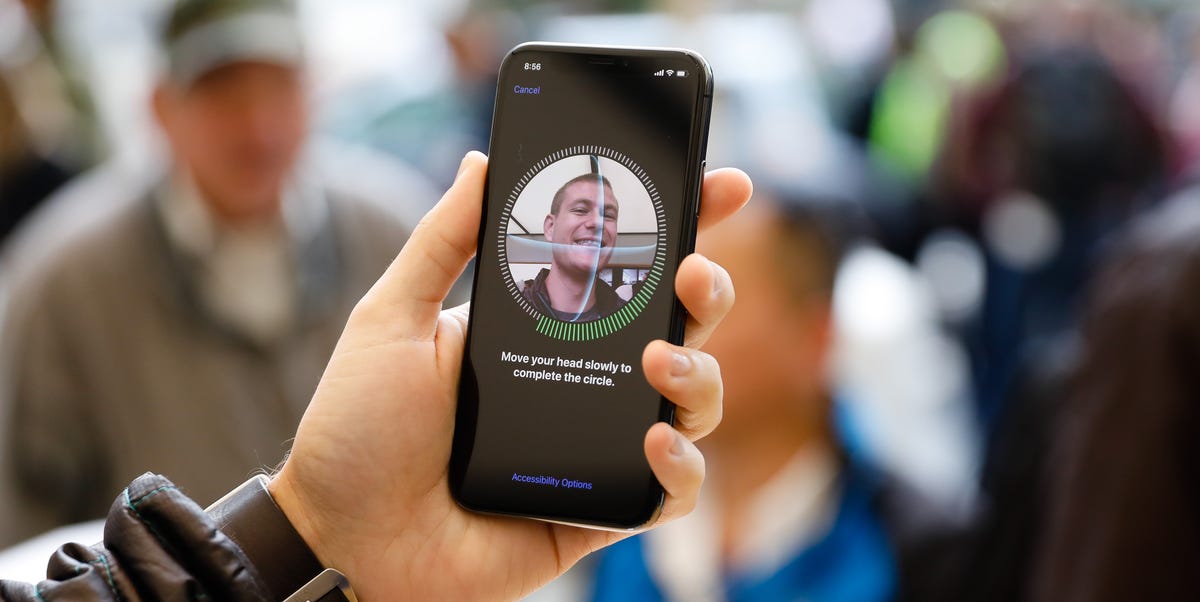
Imagine buying a shiny iPhone X because Face ID feels futuristic, smooth, and just a little bit James Bond. Then imagine federal agents showing up with a search warrant and asking you to look at your own phone so it opens for them. Suddenly, the coolest feature on your device feels less like a convenience and more like a courtroom exhibit with good lighting.
That is the privacy debate behind the headline: FBI unlocks a suspect’s iPhone using his face. In 2018, federal investigators reportedly used Apple’s Face ID feature during a search in Columbus, Ohio, making it one of the first publicly known cases in which law enforcement used a suspect’s facial biometric login to access an iPhone X. The case quickly became more than a tech-news curiosity. It raised serious questions about digital privacy, constitutional rights, biometric security, and what it means when your face becomes the key to your entire digital life.
This story sits at the messy intersection of law enforcement, smartphone design, and personal privacy. And like most modern privacy debates, it comes with a twist: the thing that makes your phone easier for you to use may also make it easier for someone else to compel access under certain legal circumstances.
What Happened in the FBI Face ID iPhone Case?
The reported incident involved Grant Michalski, a Columbus, Ohio resident who was under investigation in a federal case involving illegal digital material. During an August 2018 search, FBI agents had a warrant and allegedly instructed him to place his face in front of his iPhone X. The phone unlocked through Face ID, allowing investigators to view content on the device.
At the time, the case attracted major attention because Apple’s Face ID was still relatively new. The iPhone X, released in 2017, replaced the familiar Touch ID fingerprint sensor with facial recognition powered by the TrueDepth camera system. Consumers saw it as a sleek upgrade. Privacy lawyers saw a constitutional riddle wearing a very expensive glass-and-steel outfit.
The central issue was not whether the FBI could search a phone at all. In many situations, police need a warrant to search the digital contents of a phone. The bigger question was whether the government could compel a person to unlock that phone using a biometric feature such as a face scan or fingerprint.
Why Face ID Changed the Privacy Conversation
Before Face ID, many legal debates focused on fingerprints and passcodes. Courts often treated those two things differently. A passcode exists in your mind, so forcing you to reveal it can raise Fifth Amendment concerns because it may be considered testimonial. A fingerprint, however, has often been treated more like a physical characteristic, similar to a voice sample or handwriting sample.
Face ID complicated that distinction. Your face is obviously physical. You carry it everywhere, whether you are ordering coffee, taking a school photo, or pretending not to see someone you know at the grocery store. But when your face unlocks a device full of messages, photos, financial apps, location history, and browser data, it becomes more than a physical trait. It becomes a gateway.
That is why the case became such a powerful example in the debate over biometric security. A face scan is convenient because it removes friction. You glance, the phone opens, life moves on. But convenience has a privacy cost: if unlocking requires only a physical action, courts may view it differently from compelling someone to speak or disclose a memorized passcode.
Face ID vs. Passcodes: The Legal Difference
The Fifth Amendment protects people from being forced to provide self-incriminating testimony. In simple terms, the government generally cannot force you to reveal the contents of your mind. A passcode may fall into that category because it is knowledge. Your face, on the other hand, is a physical feature.
That difference explains why some legal experts argue that biometric unlocking receives weaker protection than passcode unlocking. If investigators ask for a passcode, they may be asking for knowledge. If they ask a person to look at a device, they may argue they are only asking for a physical act.
Of course, critics say that distinction feels outdated in the smartphone era. A modern phone is not just a pocket notebook. It is a photo album, bank branch, diary, map, social life, work desk, medical reminder, and occasionally a place where 3,000 screenshots go to retire. Unlocking it can reveal deeply personal information. So even if the unlocking action is physical, the consequences are informational.
The Fourth Amendment Still Matters
The Fourth Amendment protects against unreasonable searches and seizures. In the landmark case Riley v. California, the U.S. Supreme Court recognized that cell phones contain vast amounts of private information and generally require a warrant before police can search their contents after an arrest.
That decision is essential to understanding the FBI Face ID controversy. The issue was not simply “Can police look at a phone?” The better question was “What legal process must they follow, and what can they compel a person to do?” In the reported Ohio case, agents had a warrant. That detail matters because the warrant provided a legal basis for the search. Still, the use of Face ID raised a separate Fifth Amendment question about compelled access.
This is where digital privacy law becomes tricky. The law often develops one case at a time, while technology sprints ahead like it just drank three energy drinks. Courts are asked to apply old constitutional principles to devices and features that did not exist when those principles were written.
How Apple Designed Face ID Security
Apple designed Face ID as a privacy-preserving biometric system. Face ID data is not stored as a normal photo of your face. Instead, the system creates mathematical representations that are encrypted and protected on the device. Apple says Face ID data does not leave the device and is not backed up to iCloud.
That design helps protect users from many kinds of remote theft or large-scale data leaks. If a company does not store your face template in the cloud, hackers cannot simply break into a server and download everyone’s Face ID data like a terrible buffet of biometric doom.
But local security does not eliminate legal access questions. If the device is physically present and the user is physically present, law enforcement may try to use biometric authentication quickly before the phone locks or requires a passcode. This is why privacy advocates often recommend understanding how biometric locks behave under pressure, especially because many phones require the passcode after restarts, repeated failed biometric attempts, or certain emergency lock settings.
Why This Case Was a Wake-Up Call
The case was important because it showed that biometric authentication was not just a consumer feature. It had become part of the legal evidence chain. A phone’s lock screen was no longer a simple barrier. It was a battlefield where convenience, security, and constitutional rights collided.
For everyday users, the takeaway is not that Face ID is “bad.” Face ID is extremely useful and, for many people, safer than leaving a phone unlocked or using a weak passcode like 123456. Please do not use 123456. That is not a passcode; that is a welcome mat.
The real lesson is that different unlock methods may have different legal consequences. A strong passcode may receive more protection in some legal contexts because it involves knowledge. A biometric unlock may be treated as a physical characteristic. The law is not perfectly settled everywhere, and courts have not delivered one simple nationwide answer for every situation.
Digital Privacy Is Bigger Than One iPhone
The FBI Face ID case became famous because it involved an iPhone X, but the issue reaches far beyond Apple. Android phones use face unlock, fingerprint readers, iris scanning, and other biometric systems. Laptops use fingerprint sensors. Banking apps use facial verification. Airports use biometric identity systems. Even your front door may soon know your face better than your neighbors do.
Biometrics are spreading because they are convenient. Nobody wants to type a long password every time they check the weather. But biometrics are different from passwords in one crucial way: you can change a password. You cannot easily change your face. At least, not without a budget, a surgeon, and a life plan that sounds suspiciously like a spy movie.
That permanence makes biometric privacy especially sensitive. If a password leaks, you reset it. If biometric data is mishandled, the consequences may last much longer. This is why device makers, lawmakers, and courts must treat biometric authentication as more than a luxury feature. It is identity infrastructure.
What Users Should Understand About Phone Security
Smartphone security is not about paranoia. It is about understanding trade-offs. Face ID and fingerprint unlocks are excellent for daily convenience. Strong passcodes are better for high-risk situations where compelled biometric access may be a concern. Encryption protects data when the device is locked, but the strength of that protection depends partly on how the device is unlocked.
Users should also understand that “private” does not always mean “unreachable.” A locked phone is protected, but legal tools such as warrants can change the situation. Cloud backups, synced messages, app data, and third-party records may also be available through separate legal processes.
In other words, phone privacy is not one lock. It is a whole neighborhood of locks, windows, spare keys, cloud copies, and apps that politely ask for permission while quietly collecting more data than a nosy aunt at Thanksgiving.
Why Law Enforcement Wants Phone Access
From the law enforcement perspective, phones often contain critical evidence. Messages, photos, call logs, app data, and location history can help investigators establish timelines, identify victims, connect suspects, or prove intent. In serious cases, digital evidence may be central to public safety and prosecution.
That is why investigators seek warrants for phones and why agencies have pushed for access to encrypted devices. They argue that strong encryption can prevent lawful searches even when a judge has approved a warrant. Privacy advocates respond that weakening device security for law enforcement can weaken it for everyone, including journalists, activists, businesses, students, and ordinary families.
The debate is not simple. It is not “privacy good, police bad” or “security good, encryption bad.” The real challenge is balancing legitimate investigations with the need to protect millions of people from abuse, surveillance overreach, and cybercrime.
The Bigger Question: Is Your Face Testimony?
The most fascinating legal question is whether using Face ID should count as testimony. Traditional law says physical characteristics are usually not testimonial. But a biometric unlock is not just displaying a face. It communicates something powerful: this person can unlock this device.
That act may imply control, possession, and access. It can also lead directly to private data. Critics argue that compelling biometric unlocking is not the same as taking a fingerprint at booking. It is more like forcing someone to open a locked digital vault that may contain years of personal records.
Supporters of compelled biometric access argue that the government still needs legal authorization and that biometric features are simply physical keys. Courts have reached different conclusions in different contexts, and the Supreme Court has not fully resolved every biometric unlocking question.
Until clearer rules exist, this area will remain one of the most important frontiers in digital privacy law.
Practical Experiences and Lessons From the Face ID Debate
For many people, the FBI Face ID case changed how they thought about phone security. Before this story, Face ID felt like a harmless convenience. You picked up your phone, looked at it, and it opened. Smooth. Fast. Fancy. After the story, people began asking a different question: “What happens if someone else wants me to look at my phone?”
One practical experience many users can relate to is the difference between convenience mode and caution mode. In daily life, biometric unlocking is wonderful. You are carrying groceries, answering a text, checking a map, or unlocking your phone while half-awake and negotiating with an alarm clock. Face ID makes those moments easier. Nobody wants to type a complex passcode every seven seconds just to see whether the pizza driver is nearby.
But there are moments when convenience should take a back seat. Travelers, journalists, business owners, activists, attorneys, and anyone handling sensitive information may think differently about biometric unlocking in certain situations. A passcode can create a stronger legal and practical barrier, depending on the context. That does not mean everyone must turn off Face ID forever. It means users should know how their devices work and choose settings based on their risk level.
Another lesson is that privacy is not only for people who have something to hide. That phrase is one of the most stubborn myths in technology. Privacy is for people who have something to protect: family photos, medical reminders, financial apps, school messages, business documents, private conversations, location history, and personal identity. Your phone is not just a gadget. It is a compressed biography with a battery percentage.
The case also teaches that technology companies cannot solve every privacy problem through engineering alone. Apple can encrypt Face ID data, isolate biometric templates, and design strong hardware protections. Those are important achievements. But legal compulsion is not the same as hacking. A phone can be technically secure and still become accessible through a court-approved process. That is why privacy protection requires both good technology and clear legal safeguards.
For writers, publishers, and everyday readers, this story is also a reminder to slow down before choosing sides. It is easy to react emotionally to headlines about the FBI, suspects, encryption, or Apple. But the real issue is structural. What rules should apply when the government seeks access to the most personal device most people own? How should courts treat biometric identifiers? Should a face be treated like a key, a password, or something in between?
Finally, the experience of this case shows that small design choices can have huge legal consequences. A fingerprint sensor, a facial scanner, a six-digit code, an emergency lock feature, and a cloud backup setting may all shape what happens when privacy meets pressure. The smartest users are not necessarily the most secretive. They are the ones who understand that digital convenience is powerful, but it should never be accepted blindly.
Conclusion: A Face Can Unlock More Than a Phone
The story of the FBI unlocking a suspect’s iPhone using his face is not just a strange footnote in gadget history. It is a preview of the future. As biometric technology becomes more common, courts, lawmakers, companies, and users will have to decide how much protection a person’s face, fingerprint, or iris should receive when it functions as a digital key.
Face ID did not create the privacy debate, but it made the issue impossible to ignore. Smartphones hold extraordinary amounts of personal data, and biometric locks blur the line between who we are and what we know. A face may be physical, but when it opens a phone, it becomes legally and technologically meaningful.
For everyday users, the best response is awareness. Use strong security. Understand your settings. Know that convenience and privacy are often in negotiation. And remember: your phone may fit in your pocket, but the legal questions inside it are anything but small.














