
Medical note: This article is for educational purposes and cannot replace personalized advice from a nephrologist or other qualified healthcare professional.
Autosomal dominant polycystic kidney disease, better known as ADPKD, does not progress according to a perfectly punctual calendar. It is less like a train arriving at five clearly marked stations and more like a long road trip during which kidney cysts gradually grow, blood pressure may rise, and kidney function may eventually decline.
People often ask about the “stages of ADPKD,” but doctors may use two different systems when answering. The first is the standard chronic kidney disease staging system, which is based mainly on estimated glomerular filtration rate, or eGFR. The second involves ADPKD-specific risk tools that estimate how quickly the condition may progress, sometimes years before routine kidney-function tests become abnormal.
Understanding both systems matters. A person can have large, cyst-filled kidneys and still have a normal eGFR. In other words, the kidneys may look very busy remodeling the neighborhood while the laboratory results continue pretending that everything is quiet.
What Is ADPKD?
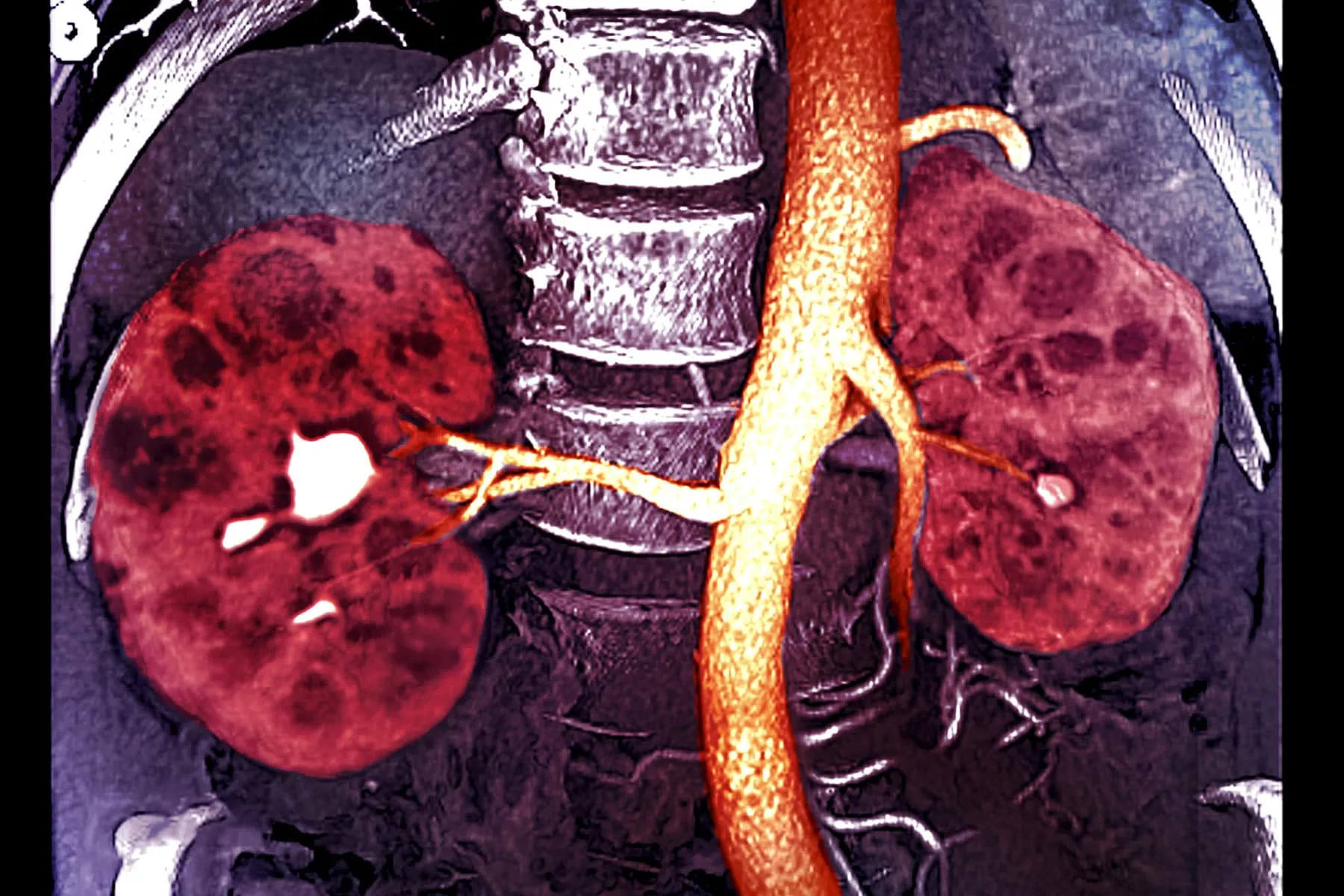
ADPKD is an inherited condition in which numerous fluid-filled cysts develop primarily in the kidneys. As these cysts enlarge and multiply, the kidneys may become much larger than normal. Healthy kidney tissue can gradually become compressed or damaged, reducing the organs’ ability to filter waste and extra fluid from the blood.
Most cases are associated with a disease-causing variant in the PKD1 or PKD2 gene. A person with ADPKD generally has a 50% chance of passing the condition to each biological child. However, some people develop ADPKD because of a new genetic variant and have no known family history.
ADPKD is not limited to the kidneys. It may also cause liver cysts, kidney stones, urinary tract infections, heart-valve abnormalities, abdominal discomfort, and problems involving blood vessels. A small proportion of patients have an increased risk of intracranial aneurysms, especially when there is a relevant personal or family history.
Are There Official Stages of ADPKD?
There is no universal five-stage system based solely on the number or size of kidney cysts. Instead, healthcare professionals usually describe ADPKD using the chronic kidney disease categories G1 through G5. These categories reflect filtration function rather than cyst burden.
Doctors may also measure urine albumin, monitor the rate of eGFR decline, review genetic information, and evaluate total kidney volume with imaging. Together, these details provide a more complete picture than any single test can offer.
The eGFR is an estimate of how much blood the kidneys filter each minute, adjusted for body surface area. A higher number generally means better filtration. Because temporary dehydration, illness, medications, and other factors can affect the result, one unusual eGFR reading does not automatically define a permanent stage.
The Five Main Stages of ADPKD-Related Chronic Kidney Disease
Stage 1: Kidney Damage With Normal or High Filtration
In CKD stage G1, the eGFR is 90 mL/min/1.73 m² or higher. A person must also have evidence of kidney damage or a structural kidney disorder. In ADPKD, the presence of characteristic kidney cysts can provide that evidence even when filtration remains normal.
This stage can be confusing because many people feel completely healthy. Kidney function may look excellent on blood tests, yet imaging may already show enlarged kidneys or multiple cysts. High blood pressure can also develop early, sometimes before the eGFR begins to fall.
Care during stage 1 commonly focuses on:
- Monitoring blood pressure and treating hypertension
- Checking kidney function and urine protein regularly
- Reviewing kidney size and cyst distribution through imaging
- Maintaining a heart-healthy, lower-sodium diet
- Avoiding tobacco and unnecessary kidney-stressing medications
- Assessing whether the disease appears likely to progress rapidly
This is not a “nothing to worry about” stage. It is a valuable opportunity to protect kidney health before substantial filtration loss occurs.
Stage 2: Mildly Reduced Kidney Function
Stage G2 corresponds to an eGFR between 60 and 89. Because ADPKD is already a recognized structural kidney disorder, a result in this range can support a CKD stage 2 classification when it persists.
Symptoms are still often absent. Some people experience headaches related to high blood pressure, back or side discomfort, blood in the urine, kidney stones, or a sense of abdominal fullness. These issues do not always correspond neatly with eGFR. A patient with good filtration can still have painful cyst complications, because ADPKD apparently did not receive the memo about keeping symptoms organized by stage.
Management may include closer tracking of eGFR trends, blood pressure, urine albumin, and total kidney volume. A nephrologist may evaluate the patient for rapid-progression risk and discuss disease-modifying therapy when appropriate.
Stage 3: Moderate Loss of Kidney Function
Stage 3 is divided into two categories:
- Stage G3a: eGFR of 45 to 59
- Stage G3b: eGFR of 30 to 44
At this point, filtration has declined more noticeably. Some people remain symptom-free, while others develop fatigue, changes in urination, swelling, high blood pressure, difficulty concentrating, or reduced exercise tolerance. These symptoms can have many causes, so they should be evaluated rather than automatically blamed on ADPKD.
Stage 3 is also when complications of chronic kidney disease become more likely. Doctors may check for anemia, abnormal potassium levels, metabolic acidosis, and changes in calcium, phosphorus, parathyroid hormone, or vitamin D.
Medication review becomes especially important because some drugs require dose adjustments as eGFR decreases. Nonsteroidal anti-inflammatory drugs such as ibuprofen and naproxen may worsen kidney function in certain situations and should not be used routinely without medical guidance.
A person in stage G3b may begin discussing long-term planning with a nephrologist. This does not mean dialysis is waiting outside with the engine running. It means the healthcare team is preparing early, monitoring trends, and avoiding rushed decisions later.
Stage 4: Severely Reduced Kidney Function
Stage G4 is defined by an eGFR between 15 and 29. Kidney function is severely reduced, and complications require more active management.
Possible symptoms include:
- Persistent fatigue or weakness
- Swelling in the feet, ankles, hands, or face
- Nausea or reduced appetite
- Shortness of breath
- Muscle cramps
- Itching or dry skin
- Sleep difficulties
- Changes in urination
These symptoms are not specific to kidney disease, and some people with stage 4 CKD still feel relatively well. Laboratory monitoring typically becomes more frequent. Treatment may address anemia, fluid retention, high potassium, acid imbalance, and CKD-related mineral and bone disorders.
Stage 4 is also the time to prepare for kidney replacement therapy. Patients may learn about kidney transplantation, hemodialysis, and peritoneal dialysis. For eligible people with ADPKD, a kidney transplant is often the preferred option. A preemptive transplant performed before dialysis becomes necessary may be possible when a suitable donor and appropriate timing are available.
Stage 5: Kidney Failure
Stage G5 means the eGFR is below 15. It is commonly called kidney failure, although the need for dialysis depends on more than the eGFR alone. Symptoms, laboratory abnormalities, fluid balance, nutrition, and overall health all influence when treatment should begin.
Signs of advanced kidney failure may include severe fatigue, persistent nausea, appetite loss, confusion, worsening swelling, breathing difficulty, intense itching, or dangerously abnormal electrolyte levels. Dialysis or transplantation may be needed to perform the filtering work that the kidneys can no longer manage adequately.
Patients with ADPKD may have unusually large kidneys at this stage. Most people do not automatically need their native kidneys removed before transplantation. Nephrectomy may be considered when the kidneys cause severe pain, repeated infections, recurrent bleeding, suspected cancer, or insufficient abdominal space for a transplanted kidney.
Why eGFR Does Not Tell the Whole ADPKD Story
In many kidney diseases, eGFR begins declining relatively early. ADPKD can behave differently. The kidneys may compensate for expanding cysts for years, keeping filtration within the normal range even as total kidney volume increases.
Consequently, two people with an eGFR of 95 may have very different futures. One may have relatively small kidneys and slow progression. The other may have rapidly enlarging kidneys and a high likelihood of significant function loss later.
Clinicians therefore examine the direction and speed of change rather than staring dramatically at one laboratory number. A pattern of declining eGFR over several years is generally more informative than an isolated result.
ADPKD Progression Risk: The Mayo Imaging Classification
The Mayo Imaging Classification is commonly used for adults with typical ADPKD. It combines age with height-adjusted total kidney volume, usually measured through magnetic resonance imaging or computed tomography.
Patients with typical cyst distribution may be placed into classes 1A through 1E:
- Class 1A: Lowest estimated rate of kidney growth
- Class 1B: Relatively slow estimated progression
- Class 1C: Intermediate-to-higher progression risk
- Class 1D: High progression risk
- Class 1E: Highest estimated progression risk
Classes 1C through 1E are often associated with a greater likelihood of rapid progression, although classification should be interpreted by an experienced clinician. Some people near a category boundary may need additional evidence before major treatment decisions are made.
The system is not appropriate for every patient. People with atypical patterns of cyst distribution are evaluated differently because total kidney volume may not predict their course as reliably.
Other Factors That Influence ADPKD Progression
No calculator can predict the future with perfect accuracy. Nephrologists may consider several additional factors:
- A sustained decline in eGFR
- Early development of hypertension
- Blood in the urine or cyst complications at a young age
- A truncating PKD1 genetic variant
- Family history of kidney failure at an earlier age
- Male sex, which is associated on average with faster progression
- Higher body weight or obesity
- Greater height-adjusted total kidney volume
- Protein or albumin in the urine
A PROPKD score may also be used in selected adults. This tool incorporates sex, genetic information, and the age at which certain clinical events occurred. Genetic testing can be helpful when imaging is unclear, family planning is being considered, or the diagnosis is uncertain, but it is not required in every case.
How Is ADPKD Monitored Through the Stages?
A monitoring schedule should be personalized according to kidney function, progression risk, age, symptoms, and treatment. Common assessments include:
- Blood pressure measurements
- Serum creatinine and eGFR testing
- Urine albumin-to-creatinine ratio
- Electrolyte and acid-base testing
- Kidney imaging when clinically appropriate
- Evaluation for stones, infections, bleeding, or chronic pain
- Review of cardiovascular risk factors
- Assessment of liver cyst symptoms and other extrarenal complications
Brain aneurysm screening is not automatically required for everyone with ADPKD. It may be recommended for patients with a personal history of aneurysm, a family history of aneurysm or subarachnoid hemorrhage, certain high-risk occupations, concerning neurological symptoms, or other specific circumstances.
Can Treatment Slow ADPKD Progression?
There is currently no universal cure that removes all cysts, but treatment can reduce complications and may slow kidney-function decline.
Control Blood Pressure
High blood pressure is common and may appear before kidney function falls. Controlling it helps protect the kidneys, heart, and blood vessels. Angiotensin-converting enzyme inhibitors and angiotensin receptor blockers are frequently used, depending on the patient’s medical needs.
Reduce Excess Sodium
A lower-sodium eating pattern may improve blood pressure control and reduce fluid retention. This generally means limiting highly processed foods, packaged snacks, cured meats, instant meals, and restaurant dishes that seem to believe salt is a personality trait.
Maintain Appropriate Hydration
Regular hydration may be encouraged, but the ideal amount varies. People with advanced kidney disease, heart problems, low sodium, or fluid-balance disorders may require individualized limits. Drinking enormous quantities of water without medical direction is not a do-it-yourself ADPKD treatment.
Consider Tolvaptan When Appropriate
Tolvaptan is a prescription medication that can slow kidney enlargement and kidney-function decline in certain adults at risk of rapidly progressing ADPKD. It increases the production of dilute urine, so thirst, frequent urination, and nighttime urination are common.
The medication can cause serious liver injury in rare cases and requires regular liver-function testing. It is not appropriate for every patient, and its potential benefits must be weighed against side effects, lifestyle demands, kidney function, age, pregnancy considerations, other medications, and progression risk.
Protect Overall Kidney Health
Regular physical activity, weight management, smoking cessation, adequate sleep, and treatment of diabetes or cardiovascular risk factors can support long-term health. Patients should discuss supplements and over-the-counter medications with their healthcare team because “natural” does not automatically mean “kidney-friendly.” Poison ivy is natural too, and nobody is blending that into a wellness smoothie.
When Should Someone With ADPKD Seek Urgent Care?
Prompt medical evaluation is important for:
- Sudden, severe headache unlike a usual headache
- Fever with back or side pain
- Persistent or heavy blood in the urine
- Severe abdominal or flank pain
- Inability to urinate
- Chest pain or severe shortness of breath
- Confusion, fainting, weakness, or new neurological symptoms
- Rapidly worsening swelling
A sudden “worst headache of my life” may indicate bleeding from an intracranial aneurysm and requires emergency care.
Living Through the Stages of ADPKD: Practical Experiences and Lessons
The medical stages of ADPKD are defined with numbers, but daily life is rarely experienced as a tidy row on a laboratory report. Many patients describe the early years as a strange combination of reassurance and uncertainty. Their eGFR may be normal, yet every blood-pressure reading, imaging appointment, or family conversation can feel loaded with meaning.
One common experience is learning not to compare disease timelines too closely. A parent may have reached kidney failure at age 55, while an adult child with ADPKD may progress more slowly because of a different genetic variant, better blood-pressure control, earlier diagnosis, newer treatment options, or simple biological variation. Family history is useful, but it is not a stopwatch.
Patients in stages 1 and 2 often find that organization reduces anxiety. Keeping a personal record of blood pressure, eGFR, creatinine, urine albumin, imaging results, and medications can reveal patterns that are difficult to see from memory. Bringing those records to appointments also makes discussions more productive. “My numbers seem worse lately” becomes “My eGFR changed from 78 to 69 over two years,” which gives the clinician something much more useful to evaluate.
Another practical lesson involves pain. Flank or abdominal discomfort may come from enlarged kidneys, cyst bleeding, infection, or stones, but not every ache is necessarily caused by ADPKD. Patients often benefit from describing the location, duration, triggers, severity, and associated symptoms rather than simply reporting “kidney pain.” Fever, urinary symptoms, vomiting, or visible blood in the urine may point to a problem requiring prompt treatment.
People who take tolvaptan frequently say that the treatment requires planning. Easy bathroom access, carrying water, arranging travel stops, and adjusting work routines may become part of everyday life. Some people adapt well; others find the aquaretic effects too disruptive. Honest discussions with the prescribing team are essential. Quietly stopping, skipping, or changing doses can undermine treatment and safety monitoring.
Stage 3 can bring a psychological shift. Laboratory results may begin changing more visibly, and appointments may include conversations about anemia, potassium, medication dosing, or long-term kidney replacement options. Patients often report that learning about transplantation and dialysis early is less frightening than encountering those subjects during a crisis. Information does not summon kidney failure; it simply removes some of its mystery.
By stage 4, practical preparation becomes increasingly important. Experiences shared by patients commonly include asking relatives about living donation, completing transplant evaluations, discussing employment and insurance, and comparing dialysis methods. These decisions can feel enormous, so breaking them into smaller tasks may help. One week might be devoted to transplant education; another might focus on meeting a dialysis nurse or reviewing home-support needs.
Nutrition also becomes more individualized as ADPKD advances. Advice that was appropriate during stage 1 may need to change in stage 4. Potassium, phosphorus, protein, sodium, and fluid recommendations depend on laboratory values, medications, nutritional status, and other health conditions. Copying another patient’s “kidney diet” from social media can therefore be ineffective or even harmful. Kidneys are notoriously unimpressed by viral meal plans.
Emotional support deserves the same attention as laboratory monitoring. ADPKD can affect decisions about relationships, pregnancy, genetic testing, parenting, work, and finances. Some people feel guilt about possibly passing the condition to a child, even though inheriting a genetic disorder is not a moral failure. Genetic counselors, mental health professionals, patient organizations, and peer-support communities can help families discuss these concerns without judgment.
The most useful long-term experience may be learning to focus on controllable factors. Nobody can negotiate directly with a gene variant. Patients can, however, take medications as prescribed, monitor blood pressure, attend follow-up appointments, avoid smoking, stay active, ask questions, and report new symptoms. Those habits may look ordinary, but they form the practical backbone of ADPKD care.
Conclusion
The stages of ADPKD are generally described using chronic kidney disease categories G1 through G5, based primarily on eGFR. Stage 1 represents preserved filtration with evidence of kidney disease, while stage 5 represents kidney failure. However, eGFR alone may underestimate early ADPKD activity because cysts and kidney enlargement can progress before filtration noticeably declines.
A complete assessment may include total kidney volume, Mayo Imaging Classification, eGFR trends, urine findings, genetics, blood pressure, clinical history, and family history. Knowing the stage is useful, but understanding the likely rate of progression is just as important. With regular monitoring, blood-pressure management, healthy daily habits, appropriate medication, and early preparation for advanced care, people with ADPKD can make informed decisions throughout every phase of the condition.













