
A manual breast pump is the multitool of milk expression: compact, quiet, inexpensive, and completely unconcerned about whether you remembered to charge it. It can sit in a diaper bag for weeks, then save the day during a missed feeding, a power outage, an unexpectedly long appointment, or a workday when an electric pump decides to behave like an expensive paperweight.
The best manual breast pumps of 2024 were not necessarily designed to replace a powerful double electric pump. Instead, they offered reliable suction, comfortable flanges, simple cleaning, and enough portability to go almost anywhere. Some used hand-operated handles, while others relied on continuous silicone suction to collect leaking or expressed milk.
This guide compares seven standout options using manufacturer specifications, independent product reviews, lactation guidance, ease of assembly, flange options, portability, cleaning requirements, and practical value. Because every body responds differently, the “best” pump is ultimately the one that fits correctly, feels comfortable, and works with your pumping routinenot the one with the fanciest packaging or most enthusiastic internet fan club.
Best Manual Breast Pumps of 2024 at a Glance
| Manual Breast Pump | Best For | Standout Feature |
|---|---|---|
| Medela Harmony | Best overall | Two-phase hand-pumping system |
| Lansinoh Manual Breast Pump | Comfort and everyday value | Two included flange sizes |
| Philips Avent Manual Breast Pump | Comfortable upright pumping | Natural Motion silicone cushion |
| Haakaa Generation 2 Silicone Breast Pump | Passive milk collection | One-piece silicone construction |
| Dr. Brown’s Manual Breast Pump | Soft, flexible flange comfort | SoftShape silicone shield |
| Evenflo Advanced Manual Breast Pump | More flange-size choices | Wide AdvancedFit size range |
| Frida Mom 2-in-1 Manual Breast Pump | Versatility | Handle and silicone suction modes |
How We Evaluated the Best Manual Breast Pumps
A good hand breast pump must do more than create suction. Our evaluation focused on five practical factors:
- Comfort: The breast shield should form a secure seal without pinching, rubbing, or pulling excessive areola tissue into the tunnel.
- Milk-expression control: A useful handle should let the user adjust rhythm and suction rather than forcing every session into one aggressive setting.
- Portability: Manual pumps earn their keep by being compact, lightweight, quiet, and independent of batteries or electrical outlets.
- Cleaning: Fewer small parts generally mean faster washing and fewer mysterious silicone pieces hiding under the dish rack.
- Replacement-part availability: Valves and membranes can wear down, so accessible replacement parts add long-term value.
The right flange fit also matters enormously. A poorly fitted shield may cause discomfort and reduce effective milk removal. Pumping should create a pulling sensation, but it should not produce sharp pain, bleeding, cracking, or significant swelling.
1. Medela Harmony Manual Breast Pump
Best Overall Manual Breast Pump
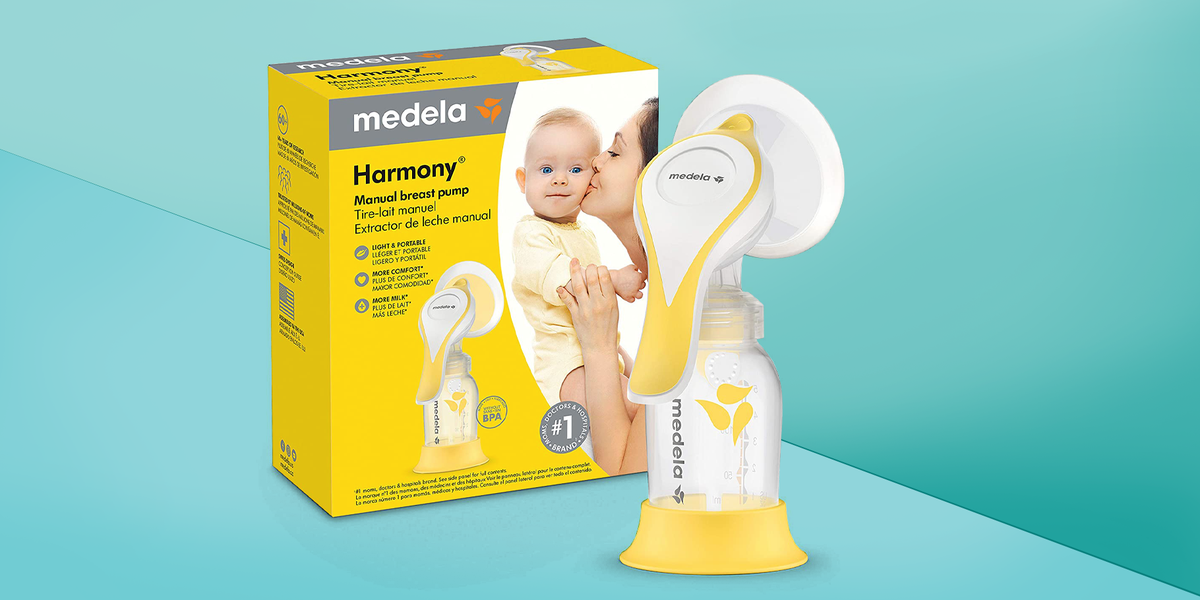
The Medela Harmony remained one of the strongest all-around manual pumps in 2024 because it combined a familiar bottle-and-handle format with unusually precise control. Its two-sided handle supports two pumping rhythms: short, quicker movements to encourage let-down and longer, slower compressions for milk expression.
The included PersonalFit Flex breast shield has an oval shape, soft rim, and wide opening angle. It can be rotated to find a more comfortable position, which is useful because breasts rarely consult geometry textbooks before choosing their shape.
Harmony is especially practical as an emergency pump, travel pump, or occasional alternative to an electric model. It is lightweight, quiet, and small enough to fit inside many diaper bags without requiring the bag to become a dedicated milk-extraction suitcase.
Pros
- Two-phase handle gives the user direct control over rhythm.
- Compact and exceptionally lightweight.
- Comfortable oval shield with a flexible rim.
- Replacement membranes and compatible accessories are widely available.
Cons
- The small membrane can be easy to misplace.
- One included flange size will not fit every user.
- Frequent pumping may cause hand fatigue.
Verdict: The Medela Harmony is the most balanced choice for occasional pumping, travel, relieving fullness, and backing up an electric pump.
2. Lansinoh Manual Breast Pump
Best for Comfort and Everyday Value
The Lansinoh Manual Breast Pump stands out by including two ComfortFit flange sizes, typically 25 millimeters and 30.5 millimeters. That does not guarantee a perfect fit, but it gives buyers a better starting point than pumps packaged with only one shield.
Its two-phase design lets users switch between stimulation and expression modes. The easy-express handle is shaped to reduce strain during one-handed operation, while the relatively small number of components simplifies setup and washing.
Lansinoh’s wide-neck bottles are compatible with other products in the brand’s feeding and storage system. This can reduce milk transfers, spilled ounces, and the special kind of heartbreak caused by watching freshly expressed milk run across a kitchen counter.
Pros
- Includes two flange sizes.
- Two pumping modes support let-down and expression.
- Comfortable, easy-to-compress handle.
- Fewer parts than many competing hand pumps.
- Compatible with Lansinoh wide-neck bottles.
Cons
- Users with smaller nipples may need a separately sold flange.
- The handle still requires repetitive squeezing during longer sessions.
Verdict: This is an excellent value for parents who want a traditional manual pump with multiple included flange sizes and uncomplicated assembly.
3. Philips Avent Manual Breast Pump
Best for Comfortable Upright Pumping
The Philips Avent Manual Breast Pump uses a soft silicone cushion and the company’s Natural Motion design, which combines nipple stimulation with suction. Its compact body allows many users to express milk while sitting upright rather than leaning forward to keep milk moving into the bottle.
The ergonomic handle is easy to operate with one hand, and the pump connects directly to compatible Philips Avent bottles. The soft cushion adapts to different breast shapes, although nipple fit still depends on the internal tunnel dimensions.
This model is attractive for parents already using Avent bottles because milk can be expressed, stored, and fed with fewer container changes. Availability may vary because certain versions have been discontinued or replaced in some markets, so buyers should check the exact model number and replacement-part supply.
Pros
- Soft silicone cushion supports a gentle seal.
- Allows a relaxed, upright pumping position.
- Compact design with an ergonomic handle.
- Connects directly to compatible Avent bottles.
Cons
- Some model variations may be difficult to find.
- The cushion and valve require careful assembly to maintain suction.
- Limited flange-sizing options compared with modular systems.
Verdict: The Philips Avent pump is a comfortable choice for occasional expression, particularly for families already invested in the Avent bottle system.
4. Haakaa Generation 2 Silicone Breast Pump
Best Silicone Suction Pump
The Haakaa Generation 2 is different from a standard handle-operated breast pump. Made from one piece of food-grade silicone, it attaches to the breast and uses continuous suction to collect milk. Many parents use it on one side while nursing on the other, allowing it to catch milk released during let-down.
Its greatest strength is simplicity. There are no motors, tubes, handles, valves, or tiny membranes to assemble. The Generation 2 model also has a suction base, reducing the risk that a curious baby, tired elbow, or poorly timed sneeze will knock it over.
However, a silicone suction pump should not automatically be treated as a complete replacement for an active pump. Output varies significantly. Some users collect several ounces during let-down, while others collect very little. Strong continuous suction may also feel uncomfortable, so it should be adjusted by gently releasing and reattaching the pump.
Pros
- Single-piece construction is extremely easy to clean.
- Silent, compact, and battery-free.
- Useful for collecting milk during nursing.
- Suction base helps prevent spills.
Cons
- Does not provide the rhythmic action of a handle pump.
- May be kicked or pulled off during feeding.
- Continuous suction may be too strong for sensitive users.
Verdict: The Haakaa is ideal for passive collection, travel, and simple relief, but it may not empty the breast as effectively as a well-fitted active pump.
5. Dr. Brown’s Manual Breast Pump
Best for a Soft, Flexible Breast Shield
Dr. Brown’s Manual Breast Pump uses a one-piece SoftShape silicone shield that flexes against the breast instead of relying on a completely rigid plastic flange. The shield is designed to conform to different breast shapes and create a comfortable seal.
The pump offers two handle rhythms: quicker movements for stimulation and longer compressions for expression. Its curved handle and narrow neck are designed for one-handed use, and the kit includes a five-ounce Dr. Brown’s wide-neck bottle, storage cap, and slow-flow nipple.
The standard package generally includes a 25-millimeter shield, while additional 21-millimeter and 30-millimeter SoftShape shields can be purchased separately. That size selection is helpful, though some users may still fall between available options.
Pros
- Soft silicone shield conforms to the breast.
- Two pumping rhythms support stimulation and expression.
- Three shield sizes are available.
- Includes a bottle, nipple, and storage cap.
- Top-rack dishwasher and sterilizer compatibility.
Cons
- Only one shield size is included in the standard package.
- The flexible shield must be positioned carefully to preserve its seal.
Verdict: This pump deserves consideration from users who dislike hard flange edges or already use Dr. Brown’s wide-neck bottles.
6. Evenflo Advanced Manual Breast Pump
Best for Flange-Size Flexibility
The Evenflo Advanced Manual Breast Pump is particularly appealing when flange sizing is the main concern. The package includes 24.5-millimeter and 30.5-millimeter options, while the wider AdvancedFit system offers separately sold sizes ranging from approximately 21 to 36 millimeters.
That range is valuable because nipple diameter varies considerably, and a standard 24- or 25-millimeter flange is not universally appropriate. A correct fit should allow the nipple to move through the tunnel without scraping while preventing large amounts of surrounding tissue from being pulled inside.
The pump is lightweight and intended primarily for occasional use. It works well for relieving pressure, replacing a missed nursing session, or keeping in a desk drawer or travel bag.
Pros
- Two flange sizes are included.
- Six flange sizes are available across the compatible system.
- Lightweight and easy to transport.
- Good choice for users who struggle with standard sizing.
Cons
- Additional flange sizes cost extra.
- Designed more for occasional than exclusive pumping.
- Not as compact as a one-piece silicone collector.
Verdict: The Evenflo Advanced is one of the best manual breast pumps for buyers who prioritize a broad, clearly defined flange-size system.
7. Frida Mom 2-in-1 Manual Breast Pump
Best Hybrid Manual Breast Pump
The Frida Mom 2-in-1 combines two pumping styles in one kit. It can operate as a traditional hand pump for active milk expression or switch to silicone suction collection. This allows a parent to pump one breast actively while collecting leaking milk from the other.
The pump is lightweight, cord-free, and designed around a freestanding five-ounce silicone bottle. Its hybrid design can reduce the need to pack both a hand pump and a separate suction collector.
Versatility does bring a little extra complexity. Users must learn both configurations and confirm that each valve and connection is assembled correctly. Replacement valves are available, which is important because worn valves can weaken suction over time.
Pros
- Functions as both an active hand pump and silicone suction pump.
- Can support simultaneous pumping and milk collection.
- Freestanding silicone bottle helps reduce spills.
- Portable and battery-free.
Cons
- More components than a basic silicone collector.
- Correct valve assembly is essential for reliable suction.
- A hybrid pump may be unnecessary for users who need only one pumping style.
Verdict: The Frida Mom 2-in-1 is the most versatile option for parents who want active pumping and passive collection in a single travel-friendly kit.
How to Choose a Manual Breast Pump
Choose the Right Pumping Style
A handle-operated pump creates rhythmic suction and gives the user direct control over speed. It is generally better for actively expressing a feeding’s worth of milk. A silicone suction pump is simpler and works well for catching let-down, but results depend heavily on milk flow and individual anatomy.
Prioritize Flange Fit
Breast size does not determine flange size; nipple diameter is the more relevant measurement. During pumping, the nipple should move freely without rubbing against the tunnel. Persistent pain, whitening, swelling, cracking, or low output can indicate a sizing, positioning, suction, or equipment problem.
Consider How Frequently You Pump
A manual pump makes sense for occasional sessions, travel, emergencies, or relieving fullness. Exclusive pumpers and parents replacing multiple daily feedings will usually save time and hand strength with a quality double electric pump.
Count the Parts Before Buying
A pump with twelve washable components may look impressive in a product photo. It may look less charming at 2:14 a.m. when one valve has disappeared. Consider how quickly the pump can be disassembled, washed, air-dried, and rebuilt.
Check Bottle and Storage Compatibility
Direct compatibility with bottles or storage bags can reduce milk transfers. Fewer transfers mean fewer dishes and fewer opportunities to spill the results of twenty minutes of determined hand pumping.
How to Use a Manual Breast Pump Effectively
- Wash your hands and assemble completely clean, dry pump parts.
- Center the nipple inside the flange tunnel before creating suction.
- Begin with quick, gentle handle compressions to encourage let-down.
- Once milk begins flowing, switch to slower, deeper compressions.
- Use the strongest suction that remains comfortablenot the strongest suction your hand can physically create.
- Massage or compress the breast gently if that improves milk flow.
- Release the seal before removing the pump from the breast.
- Transfer, cap, label, refrigerate, or freeze milk promptly according to current storage guidance.
More suction does not automatically produce more milk. Excessive vacuum can cause pain and swelling, which may make pumping less productive. Comfort is not a luxury feature; it is part of effective milk expression.
Cleaning and Safety Tips
Any component that touches the breast or breast milk should be separated and cleaned as soon as practical after each use. Follow the manufacturer’s instructions because dishwasher, boiling, steaming, and sanitizing recommendations differ by product.
- Wash hands before handling clean pump parts or expressed milk.
- Disassemble flanges, valves, membranes, connectors, and collection containers.
- Rinse away remaining milk under running water rather than placing parts directly in the sink.
- Wash in a dedicated basin with soap and water or use a dishwasher when permitted.
- Allow components to air-dry completely on a clean rack or unused towel.
- Inspect valves and membranes for tears, warping, residue, or reduced suction.
- Do not share a personal-use manual pump unless the manufacturer specifically identifies it as suitable for multiple users.
Practical Experiences: What Living With a Manual Breast Pump Is Really Like
A product description can explain flange diameters and bottle capacities, but it cannot fully describe the moment when a manual pump becomes genuinely useful. The most common success stories tend to involve convenience rather than maximum pumping speed.
Experience One: The Diaper-Bag Backup
Imagine leaving home for what should be a two-hour visit. The baby unexpectedly sleeps through a feeding, traffic turns the return trip into a grand tour of every brake light in the county, and breast fullness becomes increasingly uncomfortable. A lightweight hand pump stored in the diaper bag can provide enough relief to make the trip manageable.
In this situation, a traditional model such as the Medela Harmony or Lansinoh often works better than a passive collector because the user can create a deliberate pumping rhythm. The goal may not be to complete a perfect session. Expressing a modest amount can soften the breast and reduce pressure until normal feeding or pumping resumes.
Experience Two: Catching Let-Down During Nursing
Some nursing parents notice that the opposite breast leaks heavily during a feeding. A Haakaa-style silicone pump can collect milk that would otherwise soak into a nursing pad. The process seems almost suspiciously simple: attach the silicone pump, adjust the vacuum, and let milk flow into the container.
The experience is not universal. One person may collect several ounces, while another gets only a few drops. A baby may also kick the pump loose with the timing and confidence of a tiny martial-arts instructor. A suction base, stabilizing strap, or secure positioning can make a meaningful difference.
Experience Three: Pumping Quietly at Night
Manual pumps are almost silent. During a nighttime session, there is no motor cycling beside a sleeping partner or baby. A soft-shield model such as the Dr. Brown’s pump may feel especially appealing when the breasts are tender, while the Avent design can support a more relaxed upright position.
The trade-off is effort. Repeated handle squeezing can tire the hand, wrist, or forearm. Alternating hands, adjusting the grip, and using breast compressions can help. Users prone to hand pain may prefer shorter manual sessions or reserve the hand pump strictly for emergencies.
Experience Four: Discovering That Flange Size Matters
A surprisingly common experience is assuming that the included flange must be correct simply because it came in the box. Then pumping feels pinchy, the nipple rubs against the tunnel, and output seems disappointing. Trying a more appropriate size can transform the experience.
This is where systems from Evenflo, Lansinoh, or Dr. Brown’s can be useful. They provide multiple included sizes or compatible alternatives. Fit may also change during the postpartum period, so a flange that worked during the first few weeks may not remain ideal forever.
Experience Five: The Five-Minute Cleaning Test
The best manual pump is often the one a parent is willing to wash and reassemble. One-piece silicone pumps win this contest without breaking a sweat. Traditional hand pumps require more effort, but models with fewer components can still be cleaned quickly once the assembly becomes familiar.
A useful home test is simple: disassemble the pump, clean it according to the instructions, let the pieces dry, and rebuild it without studying the manual like an archaeologist translating an ancient valve diagram. If the routine feels manageable while rested, it has a better chance of remaining manageable during real postpartum life.
Frequently Asked Questions
Can a manual pump express as much milk as an electric pump?
It can for some users and sessions, but electric pumps are usually faster and more practical for frequent pumping. Milk output depends on flange fit, let-down, milk supply, suction, pump condition, timing, and individual response.
Can I use a manual breast pump every day?
Yes, provided it remains comfortable and meets your needs. However, daily replacement of several feedings can make a manual pump tiring. A double electric pump may be more efficient for frequent use.
Can a manual pump increase milk supply?
Milk production generally responds to effective, regular milk removal. A manual pump may contribute to that process, but the device alone does not guarantee an increase. Parents concerned about supply should seek individualized support from a healthcare professional or qualified lactation consultant.
Why has my manual pump lost suction?
Common causes include a loose connection, incorrectly seated diaphragm, damaged valve, worn membrane, wet components, residue, or an incomplete seal around the breast. Disassemble the pump, inspect every part, and follow the troubleshooting instructions for the exact model.
Does pumping normally hurt?
Pumping may create firm pressure or pulling, but it should not cause persistent pain, bleeding, severe swelling, or tissue damage. Stop and check flange fit, alignment, suction, and pump assembly. Seek professional help for ongoing pain, breast redness, fever, recurrent clogs, or other concerning symptoms.
Final Verdict
The Medela Harmony is the best overall manual breast pump of 2024 for its two-phase control, portability, and flexible shield. The Lansinoh Manual Breast Pump offers excellent value and two included flange sizes, while the Evenflo Advanced provides the broadest sizing system.
For passive collection, the Haakaa Generation 2 remains wonderfully simple. The Frida Mom 2-in-1 adds hybrid versatility, the Dr. Brown’s Manual Pump emphasizes soft-shield comfort, and the Philips Avent Manual Pump supports relaxed upright expression.
No single pump wins for every breast, schedule, or milk supply. Look first at fit, comfort, cleaning, and intended frequency. The right manual pump should feel like a dependable backup plannot a hand-powered medieval challenge.













