
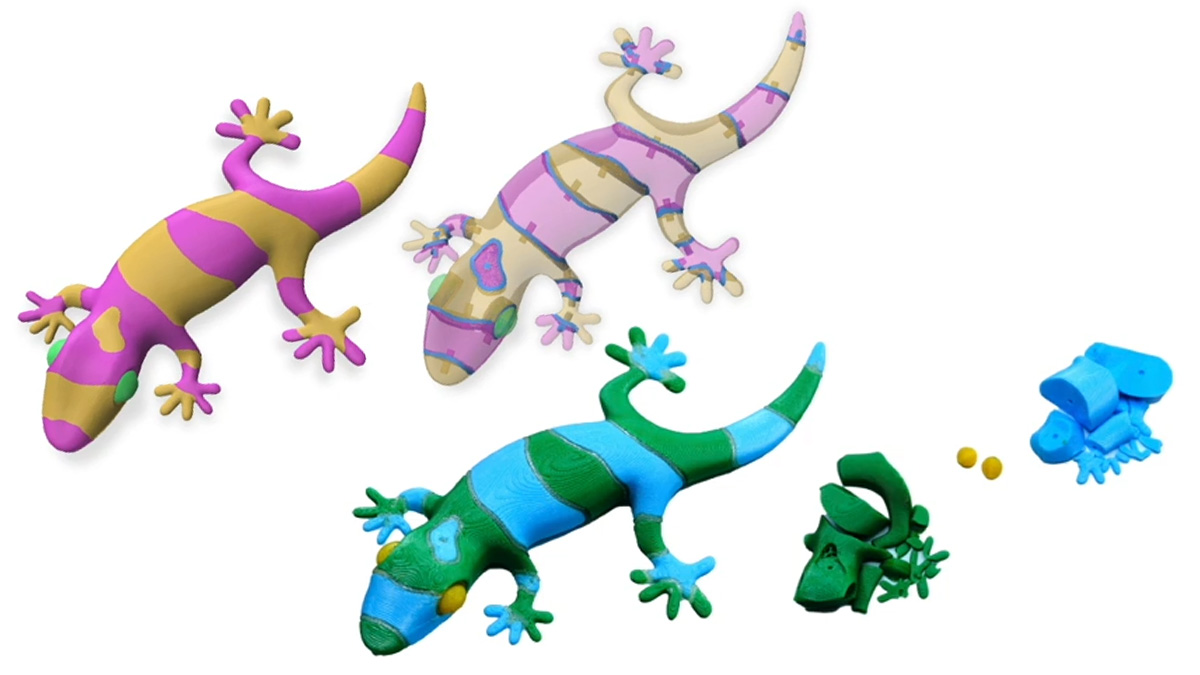
Desktop 3D printing can turn a digital sketch into a replacement knob, custom bracket, plant label, prototype, or tiny articulated dragon before a colorful pile of failed supports, calibration cubes, and plastic spaghetti.
Decomposable filaments promise a cleaner path forward. Materials such as polylactic acid, polyhydroxyalkanoates, and certain plant-filled biocomposites can reduce dependence on conventional petroleum-based plastics. Some may also biodegrade or compost under defined conditions. The important phrase is under defined conditions. A filament does not become environmentally harmless merely because its package contains a leaf icon and several reassuring shades of green.
Sustainable 3D printing requires more than choosing a fashionable spool. It combines responsible material selection, efficient design, reliable print settings, waste reduction, reuse, and a realistic end-of-life plan.
What Are Decomposable 3D-Printing Filaments?
A decomposable filament is a thermoplastic feedstock designed to break down through biological, chemical, or managed composting processes more readily than conventional materials such as ABS, nylon, or standard PETG. The category includes biodegradable polymers, certified compostable plastics, biobased materials, and blends containing agricultural fibers.
Those descriptions are related, but they are not synonyms.
Biobased Does Not Automatically Mean Biodegradable
A biobased plastic is made partly or entirely from renewable biological resources such as corn, sugarcane, cellulose, vegetable oils, wood residues, or microbial fermentation products. It describes the material’s origin, not necessarily its final destination.
A polymer can be biobased and remain durable for decades. Conversely, some biodegradable polymers can be manufactured partly from fossil-derived ingredients. The raw material and the disposal behavior must therefore be evaluated separately.
Biodegradable Is an Incomplete Claim Without Conditions
Biodegradation occurs when microorganisms convert a material into simpler substances such as water, carbon dioxide, biomass, and, under some conditions, methane. Temperature, moisture, oxygen, microbial activity, surface area, and time all influence the process.
Saying that a filament is biodegradable without naming the environment is a little like saying a cake is “bakeable” without mentioning an oven. Soil, seawater, industrial compost, home compost, and landfill conditions are dramatically different environments.
Compostable Materials Must Meet Specific Requirements
Compostable plastics are expected to biodegrade and physically disintegrate within a specified composting system without leaving unacceptable toxic residue. In the United States, ASTM D6400 is an important specification for plastics intended for municipal or industrial aerobic composting facilities.
Certification does not guarantee that a neighborhood composting program will accept a printed object. Facilities establish their own rules, processing times, screening systems, and contamination controls. Always ask the receiving facility before placing filament scraps or finished prints in an organics bin.
The Leading Sustainable Filament Options
PLA: Accessible, Printable, and Frequently Misunderstood
Polylactic acid, better known as PLA, is the most familiar bioplastic in consumer fused-filament fabrication. It is commonly produced from fermented plant-derived sugars and generally prints at relatively moderate temperatures. PLA offers low warping, good dimensional accuracy, a wide color selection, and forgiving behavior on entry-level printers.
These qualities make PLA useful for architectural models, educational projects, decorative objects, prototypes, organizers, and lightly loaded household parts. It is not ideal for components exposed to hot cars, boiling water, sustained outdoor heat, or heavy mechanical stress. Standard PLA can soften at temperatures that ordinary summer environments occasionally achieve with alarming enthusiasm.
PLA is often described as biodegradable, but most conventional grades break down efficiently only under managed industrial composting conditions involving elevated heat, moisture, oxygen, and active microorganisms. A thick PLA print may remain recognizable for years in a backyard compost pile. It should not be discarded in nature, buried beside a tomato plant, or tossed into the ocean as an experimental snack for marine biology.
PHA and PHB: Promising Biological Polymers
Polyhydroxyalkanoates, or PHAs, are a family of polyesters produced by microorganisms. PHB is one well-known member of this family. Depending on the formulation, PHA materials can biodegrade in a wider range of environments than conventional PLA.
PHA filament is attractive for disposable prototypes, research applications, agricultural components, and products designed around controlled end-of-life pathways. It can, however, be more expensive and less forgiving than standard PLA. Warping, brittleness, moisture sensitivity, narrow processing windows, and bed-adhesion problems may appear with some formulations.
Modern commercial PHA blends are becoming easier to print, but users should follow the spool manufacturer’s profile rather than copying generic PLA settings. Two filaments bearing the PHA label may behave like close cousins, distant relatives, or strangers seated together at a wedding.
PLA-PHA Blends
Blending PLA with PHA can balance printability, toughness, flexibility, and degradation behavior. These hybrid materials may be less brittle than ordinary PLA while remaining compatible with many desktop FFF printers.
The environmental performance of a blend depends on its exact composition, additives, pigments, and processing history. A PLA-PHA label alone does not prove home compostability. Look for independent certification, technical documentation, and disposal instructions covering the finished material rather than only its base resin.
PCL: Low-Temperature Printing for Specialized Uses
Polycaprolactone, or PCL, is a biodegradable polyester with a low melting temperature. It is used in medical research, education, prototyping, and specialty low-temperature printing systems. Because it softens so easily, PCL can sometimes be reshaped in hot water.
That convenience is also its limitation. PCL is unsuitable for parts requiring high heat resistance or long-term dimensional stability. It remains valuable for classroom modeling, custom-fit forms, experimental structures, and applications where controlled biodegradation matters more than stiffness.
Plant-Filled and Wood-Like Filaments
Biocomposite filaments may combine PLA or another polymer with wood flour, cellulose, bamboo, hemp, cork, algae, coffee residue, or other biomass. These fillers can reduce the amount of virgin polymer in each object while creating distinctive textures and natural-looking surfaces.
However, adding a natural filler does not automatically make the entire filament compostable. The polymer matrix still determines much of its end-of-life behavior. Fillers can also alter strength, flow, moisture absorption, and nozzle performance.
Wood-filled materials often print more reliably through a larger nozzle because plant particles can clog very small openings. They may produce beautiful planters and display pieces, but they are not automatically suitable for direct food contact or structural components.
How Sustainable Are Biodegradable 3D Prints?
There is no single sustainability score for a spool of filament. Environmental performance depends on feedstock production, manufacturing energy, transportation, printer efficiency, print success rate, product lifespan, and disposal infrastructure.
Renewable Feedstocks Can Reduce Fossil Dependence
Plant-derived polymers can replace some fossil-based raw materials and support a broader bioeconomy. Agricultural byproducts, wood residues, lignin, starch, and microbial polymers are all being investigated as feedstocks for additive manufacturing.
Renewable does not mean impact-free. Growing and processing crops can require land, water, fertilizer, transportation, and energy. A responsible comparison should consider the full life cycle rather than celebrating the beginning of the supply chain while politely ignoring everything after it.
Additive Manufacturing Can Reduce Material Waste
3D printing builds parts layer by layer, allowing hollow interiors, lightweight infill, internal channels, and geometries that would be difficult to manufacture by subtractive methods. A well-designed print can use only the material needed for its function.
That advantage disappears when five failed versions are printed before breakfast. Supports, purge towers, brims, test pieces, and rejected prototypes can quickly outweigh the final object. Sustainable additive manufacturing therefore depends heavily on first-time print success.
Durability May Be More Sustainable Than Rapid Decomposition
A decomposable material is not always the greenest choice. A weak biodegradable hook replaced every month may consume more resources than a durable recycled-plastic hook that works for ten years.
Match the expected service life to the material. Compostable or biodegradable filaments make the most sense for short-lived applications with a verified disposal route. Durable recycled filaments may be preferable for tools, fixtures, repair parts, and products intended for repeated use.
Designing Sustainable 3D Prints
Print the Function, Not a Plastic Brick
Reduce unnecessary walls, decorative bulk, and excessive infill. Many nonstructural models perform well with modest infill and carefully placed perimeters. Topology optimization, ribs, shells, and lattice structures can provide stiffness without turning every bracket into a doorstop.
Do not reduce material blindly. A fragile part that fails immediately is not efficient. Use slicer previews and test coupons to identify the lightest design that still meets its mechanical requirements.
Design to Avoid Supports
Support material frequently becomes waste the moment a print leaves the build plate. Reorienting the model, splitting it into interlocking sections, using chamfers instead of severe overhangs, and designing self-supporting angles can substantially reduce discarded plastic.
Make Products Repairable
Use screws, snap-fits, replaceable wear surfaces, and modular connections where practical. If one tab breaks, the owner should not need to reprint an entire enclosure. A downloadable replacement component may be one of 3D printing’s most genuinely sustainable tricks.
Label the Material
Add a small material code to the underside of the model, such as “PLA,” “PHA,” or the manufacturer’s recommended identifier. This helps future users separate materials for recycling, reprocessing, or specialized composting.
Printing Strategies That Prevent Waste
Start with a small calibration object whenever opening a new material. Confirm extrusion temperature, flow, dimensional accuracy, bridging, cooling, and bed adhesion before beginning a 30-hour print that might detach at hour 29 out of pure theatrical timing.
Keep moisture-sensitive filament dry. Wet filament can bubble, string, produce weak layers, and create rough surfaces. Store spools in sealed containers with reusable desiccant, and dry them according to the manufacturer’s instructions.
Use the lowest practical temperature that still produces reliable flow and layer bonding. Excessive heat can increase stringing, discolor natural fillers, degrade polymers, and contribute to airborne emissions. Temperature should never be reduced so far that layers separate under normal use.
Maintain the printer regularly. A clean build surface, calibrated first layer, healthy nozzle, aligned motion system, and stable filament path prevent more waste than an inspirational sustainability sticker placed on the enclosure.
Managing Scraps and Finished Prints Responsibly
Reuse Before Disposal
Save clean leftover filament for small objects, color changes, repair welds, or decorative details. Failed prints can become painting samples, drilling templates, educational cross-sections, or material test pieces.
Explore Mechanical Recycling
Some maker communities and businesses collect sorted PLA waste, shred it, and extrude it into new filament. Reprocessing can extend the useful life of the polymer, although repeated heating may change viscosity and mechanical performance. Contamination, mixed colors, dirt, adhesives, and incompatible polymers complicate recycling.
Keep waste streams separate from the beginning. A clearly labeled container for clean PLA is more useful than a mystery bucket containing PLA, PETG, support material, painter’s tape, crumbs, and one screw that nobody remembers dropping.
Verify Composting Acceptance
Do not place a printed part in a compost cart merely because the filament is described as compostable. Contact the local hauler or facility and provide the material name, certification, thickness, and object type. Some facilities accept certified serviceware but reject thick 3D-printed parts because they may not disintegrate within the facility’s processing cycle.
Never Treat Littering as Biodegradation Testing
Biodegradable materials can persist when environmental conditions are unsuitable. They may fragment, travel through waterways, or be eaten by wildlife before meaningful decomposition occurs. Responsible disposal is still required.
Health and Safety Still Matter
Plant-derived filament is not the same thing as emission-free filament. Heated thermoplastics can release ultrafine particles and volatile compounds. Emissions vary with the printer, polymer, additives, colorants, temperature, and operating conditions.
Operate printers in a well-ventilated area. An enclosure connected to appropriate local exhaust or equipped with effective particle and gas filtration can reduce exposure. Keep printers away from bedrooms and poorly ventilated classrooms, and avoid hovering over the nozzle as though waiting for a tiny plastic prophecy.
Follow the filament safety data sheet, especially when using composite materials, specialty pigments, or post-processing chemicals. Sanding also creates dust, so use suitable controls and personal protective equipment.
Practical Workshop Experiences With Decomposable Filaments
A realistic sustainable-printing workflow usually begins with a modest project, not an attempt to replace every plastic object in the house by Sunday evening. Consider a workshop producing plant labels, cable clips, storage dividers, and prototype enclosures. These objects reveal several lessons that glossy filament advertisements tend to skip.
The first lesson is that familiar PLA remains popular for a reason. It loads easily, adheres well when the first layer is calibrated, and produces accurate details without demanding an elaborate heated chamber. For indoor labels and prototypes, a reputable PLA can deliver consistent results with little waste. The sustainability benefit comes partly from reliability: one successful print is better than three experimental failures made from a theoretically greener material.
The second lesson appears when switching to a PHA-rich or compostable blend. The printer may need a different bed surface, slower first layer, adjusted cooling, or a carefully tuned temperature. Copying an old PLA profile can cause curled corners or weak layers. A 20-minute calibration piece therefore saves far more material than repeatedly launching the full model and hoping the printer develops emotional maturity overnight.
Natural-fiber filament provides another useful reality check. A wood-filled PLA planter can look warmer and more handcrafted than ordinary plastic, especially after light sanding. Yet a narrow nozzle may clog, fine surface details may soften, and the material can absorb moisture during storage. A wider nozzle, dry filament, and slightly larger design features often produce better results. The object may contain renewable filler, but its disposal route still depends on the polymer matrix and local facility rules.
Design choices create some of the biggest improvements. A storage divider originally modeled as a nearly solid block can often be redesigned as a thin shell with ribs. The new version may use dramatically less filament while remaining stiff enough for the job. Rotating the part can also eliminate supports. These changes save material regardless of whether the spool contains PLA, PHA, recycled polymer, or material allegedly blessed by a committee of woodland creatures.
Tracking failures is equally valuable. A simple workshop log can record filament type, nozzle temperature, bed temperature, print speed, cooling, part orientation, mass, and failure cause. Patterns soon emerge. Perhaps most waste comes from poor bed adhesion, wet filament, or models downloaded without checking their geometry. Fixing one recurring problem may reduce the workshop’s environmental footprint more effectively than purchasing a premium “eco” spool.
End-of-life planning is the final lesson. Small clean scraps can be sorted for a filament-recycling program where one exists. Functional parts can be repaired or remelted with compatible material. Certified compostable objects should go only to a facility that explicitly accepts them. When no suitable recovery system is available, the most responsible option may be ordinary disposal after maximizing the object’s useful life.
The experience demonstrates that sustainable 3D printing is not a single material choice. It is a chain of decisions: select an appropriate filament, tune it carefully, design efficiently, print successfully, use the object for as long as possible, and send it to a verified end-of-life destination.
The Future of Sustainable 3D-Printing Materials
Researchers are developing improved PHA formulations, fiber-reinforced biocomposites, enzyme-assisted polymers, chemically recyclable materials, and closed-loop filament systems. Agricultural waste, lignin, cellulose, algae, and other renewable resources may become increasingly useful ingredients.
The most promising future may combine several strategies rather than relying on decomposition alone. A product could use renewable feedstocks, require little energy to print, remain repairable during service, be mechanically recycled several times, and finally biodegrade in a controlled facility when recycling is no longer practical.
Clearer labeling and standardized testing will be essential. Consumers need to know where a material comes from, how it behaves during use, whether additives affect compostability, and which end-of-life systems actually accept it.
Conclusion
Decomposable filaments can make additive manufacturing more sustainable, but they are not magical disappearing plastics. PLA offers excellent accessibility and renewable-content potential, yet usually requires industrial composting conditions. PHA materials may provide broader biodegradation possibilities, although cost and printability remain challenges. Plant-filled filaments reduce polymer content and create attractive textures, but their environmental performance depends on the complete formulation.
The most sustainable print is not simply the one made from the greenest-looking spool. It is a useful object designed with minimal material, printed correctly the first time, used for an appropriate lifespan, repaired when possible, and sent to a verified recycling or composting pathway.
In other words, sustainability begins before the nozzle heats up and continues long after the satisfying little completion jingle.













