
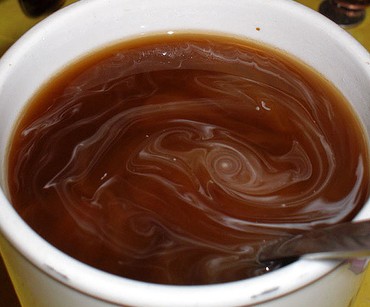
Some pleasures arrive with fireworks, applause, and a suspiciously expensive ticket. Others happen before 8 a.m. in a chipped mug. Watching cream go into coffee belongs to the second category: a brief, beautiful performance starring two liquids, one sleepy audience member, and absolutely no admission fee.
A Tiny Morning Spectacle Hiding in Plain Sight
Fresh coffee begins as a dark, nearly uniform surface. Then a ribbon of cream drops into the cup and everything changes. Pale clouds bloom beneath the surface. Feathery tendrils curl outward, collide, disappear, and reappear somewhere else. For several seconds, the mug resembles a thunderstorm photographed from space, except this particular storm smells like roasted beans and improves meetings.
The transformation is so familiar that it is easy to overlook. We add the cream, reach for a spoon, and start thinking about email before the first swirl has finished. Yet pausing to watch reveals an unexpectedly rich experience. There is color, motion, anticipation, aroma, and the satisfying knowledge that the drink is becoming exactly the way we like it.
That is the spirit behind “#563 Watching cream go into coffee” from 1000 Awesome Things: everyday happiness does not always need to be discovered in a distant country or purchased during a flash sale. Sometimes it is already spinning around in your breakfast.
The Science Behind Cream Swirling in Coffee
Diffusion Starts the Process
Cream and coffee mix partly through diffusion, the natural movement of particles from areas of higher concentration toward areas of lower concentration. Left completely undisturbed, the cream would gradually spread through the coffee. It would eventually create a more uniform drink, although the process would test the patience of anyone who considers three seconds a long wait for caffeine.
Diffusion alone does not explain the dramatic white plumes. Temperature differences, density variations, gravity, and the momentum of the pour all contribute to the motion. The result is a miniature laboratory experiment performed in ordinary kitchenware.
Convection Creates the Rolling Clouds
Hot coffee and cooler cream do not have the same temperature or density. As the liquids meet, buoyancy and convection help create circulating currents. Fluid moves upward in some areas and sinks in others, pulling cream through the cup in branching shapes.
The effect changes depending on how the cream is poured. A gentle drizzle near the surface may produce delicate wisps. A fast pour from higher above can send a pale column toward the bottom before it curls upward. Pouring against the side of the mug tends to create smoother layers. Every cup becomes a slightly different show because tiny differences in temperature, speed, angle, and quantity alter the flow.
Turbulence Finishes the Job
Stirring introduces turbulent mixing. Researchers studying turbulence describe how moving fluids stretch and fold into increasingly fine structures. In coffee, a spoon pulls the cream into long streaks, folds those streaks through the darker liquid, and rapidly distributes them throughout the mug.
This humble action is related to processes found in oceans, weather systems, engines, chemical reactors, and water-treatment equipment. The spoon beside your mug is not merely a utensil. For a few seconds, it is the director of a very small fluid-dynamics department.
Why the Color Transformation Is So Satisfying
The visual appeal comes partly from contrast. Dark brown coffee forms a stage on which white or golden cream is immediately visible. The boundary between the two liquids constantly changes, giving the eye something new to follow from one moment to the next.
Human attention is naturally drawn to movement and evolving patterns. The cream never forms a perfectly predictable design. Instead, it creates temporary shapes that may resemble smoke, marble, storm clouds, flower petals, or a galaxy with excellent breakfast options. The mind tries to recognize patterns even as they dissolve.
There is also pleasure in watching a clear transformation reach completion. The drink moves from dark to light, bitter-looking to mellow-looking, unfinished to ready. That visible progress provides a tiny sense of order. Life may be complicated, but at least the coffee has successfully become beige.
Color also influences expectations about flavor. Research into multisensory perception shows that what people see can shape how they anticipate and experience food and beverages. As coffee becomes lighter, many drinkers expect it to taste smoother, creamier, and less intense. The eyes effectively send the taste buds a preview.
How Cream Changes Coffee Flavor and Texture
Softening Bitterness
Coffee contains acids, aromatic compounds, oils, caffeine, and substances created during roasting. Some contribute pleasant chocolate, caramel, fruit, nut, or toasted notes; others bring bitterness and astringency. Dairy fat and proteins alter how these compounds are perceived, often making the beverage seem rounder and less sharp.
Cream does not simply erase the flavor of coffee. A modest amount can soften aggressive edges while leaving the roasted character recognizable. Too much, however, may cover delicate flavors. There is a point at which a carefully brewed single-origin coffee can become a warm dairy beverage receiving postcards from a bean.
Creating a Fuller Mouthfeel
Compared with black coffee, cream adds fat and increases the impression of body. The drink feels richer and more substantial on the tongue. Half-and-half usually provides a lighter effect, while heavy cream produces greater richness with a smaller volume. Whole milk, oat beverages, and other alternatives create their own combinations of flavor, viscosity, and visual movement.
Plant-based creamers can be especially dramatic in the cup because their formulations vary. Oat, soy, almond, and coconut products contain different mixtures of water, oils, proteins, stabilizers, and carbohydrates. Some disperse immediately; others form distinct ribbons. Certain products may separate in very hot or acidic coffee, so freshness and temperature matter.
Changing the Aroma Experience
Much of what people call flavor is connected to aroma. Roasted coffee contains hundreds of volatile compounds, and heat helps carry them toward the nose. Adding cool cream lowers the beverage temperature slightly and changes how aroma compounds are released and perceived.
This does not automatically make the coffee better or worse. It creates a different sensory balance. Black coffee may present brighter acidity and more direct roasted aromas, while coffee with cream may emphasize sweetness, softness, and comforting richness.
The Coffee Ritual Matters as Much as the Coffee
A morning coffee routine contains a sequence of small signals: grinding beans, hearing water boil, smelling the brew, choosing a favorite mug, and finally adding cream. Repeating those actions can mark the transition from sleeping to functioningor at least to appearing convincingly functional on a video call.
Rituals provide structure. They turn an ordinary beverage into a familiar pause before the day begins. The pleasure may come not only from caffeine but also from expectation, control, and sensory engagement. You know what happens next, yet the experience remains enjoyable.
Watching the cream instead of stirring immediately can turn this routine into a brief mindfulness exercise. Mindfulness involves paying attention to present experience without rushing to judge or change it. No special cushion, app, or mountain retreat is required. For ten seconds, simply notice the movement, color, warmth, and aroma in front of you.
This is not a claim that creamer is a medical treatment for stress. It is a reminder that attention can enlarge small pleasures. The swirl already happens; watching allows you to receive it.
How to Get the Most Beautiful Coffee-and-Cream Swirls
Use a Cup With a Wide Opening
A broad mug exposes more of the surface and makes the moving patterns easier to see. A clear glass offers another perspective, revealing pale plumes descending through the dark coffee before circulating upward.
Pour Before Stirring
Let the coffee settle after brewing. Pour the cream slowly near the center and resist the spoon for a few moments. The strongest visual contrast appears before the liquids become fully blended.
Experiment With Pouring Height
A pour close to the surface tends to be gentle. Raising the container slightly gives the stream more momentum and sends it deeper into the coffee. Avoid excessive height unless your preferred kitchen design includes cream droplets on the counter, floor, and nearby toaster.
Compare Different Creamers
Try half-and-half, heavy cream, whole milk, or a barista-style plant beverage on different days. Notice how quickly each product spreads, how it changes the color, and what it does to the body and flavor. The goal is not to identify a universal winner. The best coffee creamer is the one that makes your cup taste right to you.
Photograph It Quickly
If you want a picture or slow-motion video, prepare the camera before pouring. The most elaborate patterns may last only a few seconds. Natural side lighting helps reveal the folds and gradients without making the drink look like evidence from a mysterious cafeteria incident.
Finding Happiness in Ordinary Things
Big experiences are wonderful, but they are infrequent. Vacations end, concerts sell out, and birthday cake eventually becomes a breakfast decision that raises questions. Small pleasures are available more often. Their value comes from repetition rather than rarity.
Watching cream go into coffee is a useful example because it asks almost nothing from us. The moment is already built into a routine many people perform every day. Recognizing it requires only a short pause.
Once you begin noticing this tiny spectacle, other overlooked pleasures become easier to spot: steam rising from a mug, the first clean page of a notebook, rain tracing a window, bread warming in a toaster, or sunlight reaching across the floor. Ordinary life contains an impressive special-effects budget. We are simply prone to looking at our phones during the best scenes.
Personal Experiences With Watching Cream Go Into Coffee
The Quiet Cup Before Everyone Wakes Up
One of the best versions of this experience happens in a quiet kitchen early in the morning. The house is still, the lights are low, and the coffee seems louder than usual as it enters the mug. When the cream is poured, its first white column sinks into the center and expands into soft, rolling shapes.
For a moment, there is nothing to solve. No messages need answers, no appointment is starting, and no one is asking where an object is while standing directly beside it. The moving cream holds attention because it is simple and complete. It begins, changes, and settles.
The first sip feels like the final step of the performance. The cup is warm between both hands, the aroma is close, and the flavor is gentler than it was seconds earlier. That brief experience can become a boundary between rest and responsibilitya modest but reliable way to enter the day.
The Office Coffee That Unexpectedly Delivers
Office coffee does not always inspire poetry. Sometimes it appears to have been brewed during a previous administration. Yet even an ordinary break-room cup can produce a surprisingly beautiful cream swirl.
You pour from a tiny container, and suddenly the dark surface fills with ivory spirals. Coworkers continue discussing spreadsheets while a private galaxy forms beside the sugar packets. The contrast is funny and strangely reassuring. Beauty has appeared in a room dominated by fluorescent lights and a printer that claims to be out of paper while visibly containing paper.
The moment creates a mental reset. You return to the desk with the same workload, but the interruption has broken its momentum. The pleasure did not require a premium machine or expertly steamed milk. It came from noticing something graceful in an unglamorous place.
The Weekend Experiment
On a slower morning, watching cream enter coffee can become an experiment. Pour it along the rim and observe a pale layer sliding around the cup. Add it directly to the center and watch the plume descend. Use cold cream one day and room-temperature cream another. Try a narrow stream, then a slightly faster pour.
The results never look exactly alike. One cup develops thin, smoky threads; another creates broad clouds that seem to roll over themselves. A clear mug makes the process even more dramatic because the motion becomes visible from the side. This is when an everyday habit begins to resemble edible science.
Tasting the variations adds another layer. Heavy cream gives a dense, luxurious texture. Half-and-half feels balanced. Oat creamer may bring sweetness and a distinct cereal note, while coconut-based products add their own aroma. The “best” result depends on the coffee, the creamer, and the person holding the mug.
Sharing the Moment
The experience becomes even better when someone else notices it. A child may stare at the moving shapes and ask why the colors do not mix immediately. A friend may see a dragon, a flower, or an approaching weather system in the cup. What began as beverage preparation turns into a tiny shared event.
That reaction reveals why this simple pleasure deserves a place among awesome things. It combines curiosity, comfort, science, and beauty without demanding that anyone become an expert. You do not need to understand convection to enjoy the clouds, just as you do not need a degree in acoustics to enjoy a favorite song.
The next time you make coffee, wait before reaching for the spoon. Watch the cream fall, spread, fold, and fade. Give the transformation ten uninterrupted seconds. The day will still be waiting afterward, but your cup will have offered a reminder: wonder has a habit of appearing in small places.













