
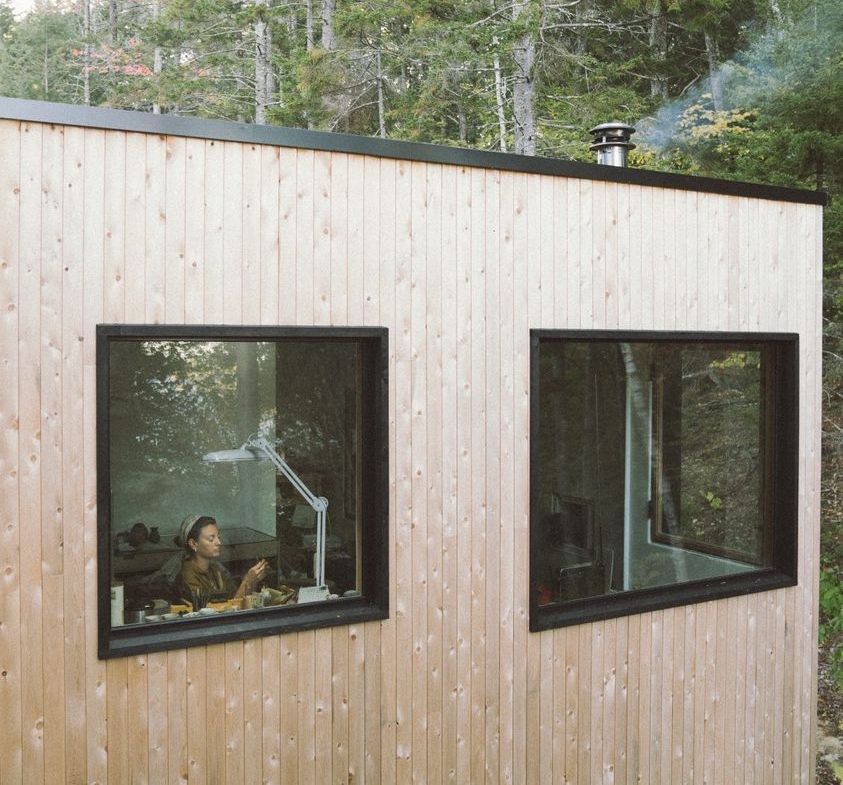
Some creative studios announce themselves with neon signs, dramatic mood boards, and enough marble to make a Roman emperor feel underdressed. Kate Jones’s home studio on the coast of Maine does something better: it quietly gets to work. Set near the Damariscotta River, where Jones grew up, the studio reflects the same spirit that defines her jewelry brand, Ursa Majorconsidered, tactile, coastal, handmade, and just unusual enough to make you look twice.
Ursa Major jewelry is often described as modern heirloom jewelry, but that phrase only tells half the story. The work is refined without being stiff, sculptural without being fussy, and rooted in materials that carry weight: recycled metals, reclaimed diamonds, and inlay materials sourced domestically whenever possible. In Jones’s world, a ring is not merely a shiny object waiting for a velvet box. It is a small architectural decision, a memory holder, and occasionally the most elegant thing in the room besides the dog.
Her coastal home studio gives that philosophy a physical address. It is part workshop, part refuge, part design laboratory, and part proof that beauty does not need to shout through a megaphone. It can arrive through good light, plaster walls, a wood stove, practical cabinets, and windows that understand the assignment.
A Coastal Studio with a Real Sense of Place
Kate Jones is the designer behind Ursa Major, a jewelry line she started in New York City in 2009. Before returning to Maine, she spent time in New York and San Francisco, two cities with strong creative energy but very different rhythms. Maine offered something else: quiet, water, family history, and the kind of landscape that does not care about trends. The coast simply keeps being the coast. Very chic of it.
The name Ursa Major comes from the sailboat Jones grew up on as a child. Her family spent long periods living aboard the boat and traveling through the Caribbean, an experience that shaped her sense of movement, stillness, utility, and beauty. That oceanic background appears in her work not through obvious anchors and seashell clichés, but through balance, restraint, curve, material, and negative space.
Her studio sits on land connected to her childhood, near the same small cove where she grew up. That matters. In design, location is not just a backdrop; it becomes a collaborator. The Maine coast brings changing light, weathered wood, muted tones, working harbors, foggy mornings, and a practical relationship with materials. A studio in this setting does not need decorative drama. The drama is already outside, wearing boots and smelling faintly of salt.
The Building: Small, Practical, and Deeply Personal
The home studio was created with help from Jones’s husband, builder Chris Reardon, along with friends and collaborators. What began as a small existing structure was substantially rebuilt and expanded, including a 10-by-20-foot addition. The result is not a glossy showroom pretending to be a workshop. It is a working jewelry studio, and that distinction is important.
A working studio must solve real problems. It needs excellent light for detailed jewelry work. It needs storage that does not turn every tool into a treasure hunt. It needs surfaces that can handle use. It needs warmth during Maine winters. It needs enough visual calm that the designer can think, sketch, solder, test, revise, and occasionally stare into space in the noble tradition of all creative people who swear they are “processing.”
The studio’s plaster walls, generous windows, built-in storage, and wood stove create an atmosphere that is both beautiful and usable. Nothing feels over-designed. Nothing feels precious in the wrong way. The space understands that handmade jewelry involves heat, dust, tools, repetition, and patience. A studio can be beautiful, yesbut it must also let someone make a mess without requiring an apology letter.
Why the Studio Matches the Jewelry
The best creative spaces echo the work made inside them. Jones’s studio does exactly that. Ursa Major jewelry often walks the line between architectural and organic. A ring might feel ancient and contemporary at once. A bangle may have a sculptural weight but still look effortless on the wrist. A necklace can be minimal but not anonymous. The studio works the same way: simple forms, honest materials, practical details, and a coastal softness that keeps everything from feeling severe.
There is a strong connection between the building’s physical qualities and the jewelry’s design language. Windows bring in shifting light, which is essential when working with metal, stone, polish, and texture. Plaster walls create a matte, quiet surface that lets objects stand out. Wood cabinetry adds warmth. The stove brings a lived-in feeling. Together, these elements create a place that supports concentration without flattening imagination.
This is why Kate Jones’s coastal home studio feels compelling to design lovers. It is not just a pretty room. It is a creative ecosystem. The space holds the values of the brand: longevity, care, intimacy, sustainability, and a preference for things that get better with time instead of louder with marketing.
Ursa Major Jewelry: Modern Heirlooms with a Twist
Ursa Major describes its jewelry as contemporary yet timeless, subtle yet distinct. That balance is difficult to achieve. Too much timelessness can become bland. Too much distinctiveness can become theatrical. Jones manages to create pieces that feel personal without needing to perform a one-woman Broadway show on your finger.
The brand’s use of recycled metals and reclaimed diamonds reflects a broader shift in fine jewelry toward sustainability and responsible sourcing. But Ursa Major does not treat sustainability as a buzzword sprinkled on top like artisanal sea salt. It is built into the practice. The jewelry is handmade in house, produced with a careful eye, and designed to last. In a culture that often treats accessories as disposable mood swings, Jones’s approach feels refreshingly stubborn.
Her pieces are also rooted in function. These are not museum objects that panic at the sight of daily life. They are meant to be worn, touched, stacked, gifted, repaired, remembered, and passed along. That is the heart of modern heirloom design: not making something old-fashioned, but making something with enough integrity to survive changing taste.
The Coastal Influence: Not Nautical, Thankfully
Coastal design can go wrong very quickly. One minute you are admiring natural light; the next, a decorative oar appears above the sofa and everyone has to pretend this is fine. Kate Jones’s studio avoids the obvious traps. The coastal influence is not literal. It is atmospheric.
The colors are quiet. The materials feel grounded. The light is important. The building has an unfussy relationship with nature. The result is not “beach house theme,” but coastal intelligence. It borrows from the coast what is actually useful: simplicity, durability, weather awareness, texture, and restraint.
This approach is especially relevant for anyone designing a home studio. You do not need to fill a workspace with objects that scream your inspiration. You need to create conditions where inspiration can arrive without tripping over clutter. Jones’s studio is a reminder that mood can be built through proportion, light, and material rather than decorative over-explanation.
Sustainability Beyond the Jewelry Box
The sustainable thinking around Jones’s life and work extends beyond jewelry. Her home project, designed with Chris Reardon and collaborators connected to Maine-based sustainable building practices, has been associated with straw-insulated, prefabricated construction and locally thoughtful materials. That context makes the studio feel part of a larger philosophy rather than a standalone aesthetic moment.
In Maine, sustainable building is not just about looking virtuous on a brochure. It is also practical. Good insulation matters. Durable materials matter. Local knowledge matters. A building should respond to cold weather, moisture, seasonal changes, and the realities of rural or coastal life. The most beautiful studio in the world is less charming if your fingers are too frozen to hold a file.
The connection between sustainable architecture and sustainable jewelry is powerful. Both ask similar questions: Where do materials come from? How long will this last? Can it be repaired? Does it create more waste than value? Does it respect the place it inhabits? Jones’s work suggests that beauty and responsibility do not need to be enemies. They can share a bench, provided someone keeps the tools organized.
Design Lessons from Kate Jones’s Home Studio
1. Let Light Do the Heavy Lifting
Jewelry work requires precise vision, but the lesson applies to any creative studio. Natural light changes the way materials appear and helps reduce visual fatigue. Large or well-placed windows can make a small workspace feel expansive. If your studio has poor light, even the nicest desk may start to feel like a tax office with pencils.
2. Choose Materials That Can Age
Plaster, wood, metal, leather, tile, and stone all have the ability to develop character over time. A coastal studio benefits from materials that do not look ruined the moment life happens. The same principle applies to jewelry: materials with depth and integrity age more gracefully than flimsy finishes trying their best.
3. Build Storage Around Real Habits
Beautiful storage is useless if it ignores how work actually happens. In a jewelry studio, tools must be reachable, supplies must be sorted, and small components must not vanish into the mysterious portal where earring backs and Allen wrenches go to retire. Jones’s studio shows the value of built-ins and practical cabinetry that supports daily production.
4. Keep Imperfection in the Room
One of the most appealing things about the studio is that it does not chase sterile perfection. Handmade work needs a little looseness. Rough plaster, visible use, and honest surfaces can make a workspace feel alive. Perfection is impressive for about four minutes; character lasts longer.
5. Design for Rhythm, Not Just Photos
A studio should support the rhythm of the maker. Where does the morning begin? Where do tools land at the end of the day? Where can the eye rest? Where can the body warm up in winter? Kate Jones’s coastal studio feels successful because it is designed for work, not just for being admired online by people holding iced coffee.
Why This Studio Resonates with Readers
Part of the appeal of Kate Jones’s home studio is that it offers a counterargument to the speed of modern design culture. It is not chasing viral aesthetics. It is not trying to become a trend forecast. It feels rooted, slow, and personal. That makes it more interesting.
For jewelry lovers, the studio gives context to Ursa Major’s objects. Knowing that the pieces come from a coastal workspace shaped by family history, sustainable values, and hands-on making deepens the emotional appeal. For interior design fans, the studio offers a lesson in small-space design, natural materials, and functional beauty. For makers, it is a reminder that a workspace does not need to be enormous to be meaningful. It needs to be intentional.
The studio also speaks to a growing desire for creative lives that are less separated from home, landscape, and daily rituals. Many people now want workspaces that feel human, not corporate. They want rooms that hold tools and tea cups, deadlines and daydreams. Jones’s studio captures that balance beautifully.
How to Bring the Ursa Major Studio Feeling into Your Own Space
You do not need a Maine cove, a jewelry bench, or a poetic childhood sailboat to borrow ideas from Kate Jones’s studio. Start with light. Move your desk, bench, or table closer to a window if possible. Use warm task lighting where natural light falls short. Keep surfaces clear enough for work but not so bare that the room feels like it is waiting for inspection.
Next, edit your materials. Choose wood, linen, ceramic, plaster-like finishes, aged brass, or stone where they make sense. Avoid over-decorating. Coastal calm comes from restraint, not from placing a miniature lighthouse on every available surface. The lighthouse has done nothing wrong, but it needs boundaries.
Finally, make room for tools and rituals. A good studio is not just where work happens; it is where work begins again after frustration. Keep the objects you use often within reach. Store the rest. Add one or two personal pieces that connect you to place, memory, or purpose. That is the difference between a room with a desk and a room with a pulse.
Experience Notes: What a Coastal Home Studio Teaches About Creative Living
Spending time thinking about a studio like Kate Jones’s reveals something useful: creative spaces work best when they stop pretending to be separate from real life. A coastal home studio is affected by weather, errands, visitors, seasons, family, silence, and the occasional deeply dramatic pile of unfinished tasks. Instead of fighting those realities, the best studios absorb them.
One experience many makers recognize is the importance of transition. When your studio is close to home, the commute may be short, but the mental shift still matters. A separate outbuilding, even a modest one, creates a threshold. You step inside and the day changes. The coffee is still coffee, but now it is studio coffee, which everyone knows has at least 18 percent more ambition.
Another lesson is that small spaces demand honesty. A large studio can hide clutter in corners. A small studio tells the truth immediately. If a tool does not have a place, it will make its own place, usually exactly where your elbow needs to be. This is why built-in storage, labeled drawers, wall shelves, and disciplined editing matter. The goal is not minimalism for its own sake. The goal is momentum. When the space supports the next step, work feels less like wrestling an octopus in a cardigan.
A coastal environment also changes how a person understands materials. Salt air, damp mornings, cold seasons, and bright reflections off water all encourage respect for durability. In jewelry, that may translate into stronger settings, better metals, and pieces made for daily wear. In interiors, it means choosing surfaces that can handle use and age without looking defeated. The coast is beautiful, but it is not delicate. It will test your hinges, your paint, your patience, and possibly your hairstyle.
There is also the emotional benefit of working near a landscape that is larger than the work itself. Creative people often get trapped inside tiny decisions: the angle of a curve, the finish of a surface, the wording of a product description, the mysterious disappearance of a tool used seven seconds ago. A view of water, trees, sky, or even a humble patch of weathered ground can reset perspective. It reminds the maker that the work matters, but panic is optional.
For anyone building or refreshing a home studio, the Ursa Major example suggests a practical checklist: prioritize light, warmth, storage, durable surfaces, and emotional connection. Do not copy the look blindly. Copy the logic. Jones’s studio succeeds because it belongs to its maker, its place, and its purpose. That is the real design lesson. A meaningful studio is not assembled from trends; it is built from habits, values, materials, and the courage to let a room become more useful than perfect.
Conclusion
Kate Jones’s home studio on the coast is more than a charming backdrop for Ursa Major jewelry. It is a working expression of the brand’s deepest ideas: modern heirlooms, responsible materials, coastal restraint, personal history, and handmade beauty that does not need to beg for attention. From its practical layout and generous light to its plaster walls, wood stove, and connection to the Maine landscape, the studio shows how a small creative space can hold a large philosophy.
For design lovers, it offers inspiration without excess. For jewelry collectors, it adds meaning to the pieces made under the Ursa Major name. For makers, it proves that a studio does not have to be flawless to be powerful. In fact, a little imperfection may be the secret ingredient. After all, perfect rooms rarely make interesting things. Rooms with tools, light, history, and a bit of coastal weather in their bones? Those are the ones that get to work.
Note: This article is written from synthesized public information about Kate Jones, Ursa Major jewelry, coastal Maine studio design, handmade jewelry practices, and sustainable building principles. Source links are intentionally not included to keep the publishable HTML clean.













