
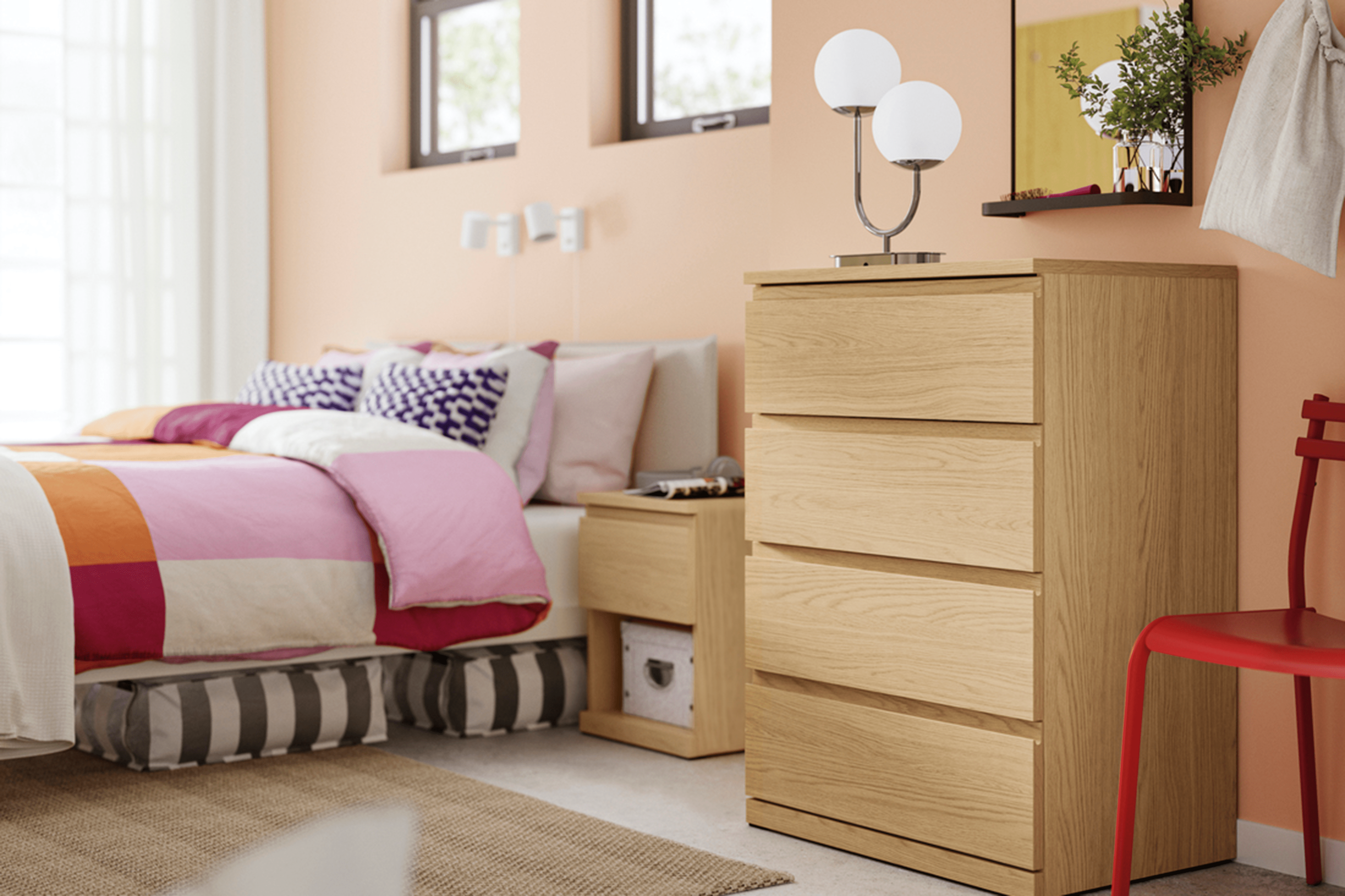
For years, dressers have had a slightly unfair reputation. They look innocent enough, sitting quietly in bedrooms and hallways while holding socks, T-shirts, and that one mystery charger nobody claims. But when unstable furniture tips over, the results can be devastating. That is exactly why IKEA’s new furniture line is getting so much attention: it treats stability like a headline feature instead of a tiny afterthought hidden in the assembly manual.
The big story is simple. IKEA’s newer chest and dresser families, including STORKLINTA and GULLABERG, are built around anti-tipping design. Instead of relying only on a warning label and a hopeful reminder to secure the piece later, these products use the company’s patented Anchor and Unlock system. Translation: the furniture behaves differently depending on whether it is properly anchored to the wall. That is not just clever engineering. It is a very practical way to nudge people toward safer habits at home.
In other words, safety finally got invited to the design meeting, and this time it was given a seat near the front.
Why IKEA’s Safety-First Line Matters
Furniture tip-over accidents are not some obscure, once-in-a-blue-moon problem. They have been a serious consumer safety issue in the United States for years, especially in homes with young children. Dressers can become dangerous when several drawers are opened at once, when weight shifts forward, when carpet changes the angle of the base, or when a child uses drawers like tiny stair steps in pursuit of a toy, a lamp, or pure chaotic curiosity.
That context matters because IKEA’s latest move is not happening in a vacuum. The company’s anti-tipping line arrives in an era shaped by the STURDY Act, the federal law that pushed the furniture industry toward mandatory stability standards for clothing storage units. Those standards raised the bar by focusing on more realistic testing conditions, including loaded drawers, dynamic force, and the effect of carpet. That means the market is moving away from the old “looks stable enough” mindset and toward measurable performance.
IKEA has positioned itself as an early, very visible player in that shift. The company has said its newer dresser range is designed to comply with the newer U.S. standards, and it has framed the launch as part of a larger safety and innovation push. That is a meaningful change for a brand whose furniture lives in millions of American homes.
What Is the Anchor and Unlock Feature?
This is the part that makes the new line genuinely interesting. IKEA’s Anchor and Unlock technology is designed to reduce tip-over risk by changing how the drawers function.
How it works
When the dresser is not anchored to the wall, only a limited number of drawers can be opened at a time. That restriction helps keep the center of gravity from shifting too far forward. Once the unit is properly anchored, the “unlock” part kicks in and multiple drawers can be opened when needed.
That is a pretty smart bit of design psychology. Instead of nagging shoppers with a safety lecture and hoping for the best, the furniture itself reminds them that wall anchoring is part of how the product is meant to work. The dresser is basically saying, “I can be cooperative, but first we secure the relationship.”
Why this design stands out
Most people do not spend their Saturday morning daydreaming about furniture stability systems. They shop for style, size, storage, finish, and price. Safety usually ranks lower until somebody has kids, pets, grandkids, or a bad scare. IKEA’s new approach folds safety into everyday usability, which is exactly why it is notable. It does not feel like a separate add-on. It feels built in.
That matters for real households because life is messy. People move. They rent. They assemble furniture late at night with one Allen key and fading optimism. If a product can make the safer choice more obvious and more natural, it has a better shot at being used properly.
Meet the New IKEA Furniture Families
The spotlight falls mostly on STORKLINTA and GULLABERG, two storage-focused families that blend function, bedroom style, and updated safety design.
STORKLINTA
STORKLINTA leans modern and streamlined. It is the kind of collection that works for people who like clean lines, straightforward shapes, and furniture that plays nicely with other pieces instead of shouting for attention. The series includes dressers and coordinating bedroom storage options, making it appealing for shoppers who want a cohesive look instead of a one-off storage rescue mission.
Its key selling point, though, is not just the aesthetic. It comes with the Anchor and Unlock feature that helps reduce tip-over risk when combined with wall anchoring. That makes STORKLINTA a good example of where bedroom furniture is heading: calm design on the outside, more engineering on the inside.
GULLABERG
GULLABERG takes a slightly more traditional route. It has a sturdier, more classic look, with details that feel a bit more familiar and warm. It is for shoppers who want storage that feels substantial without going full heavy-antique-drama. Like STORKLINTA, the GULLABERG family includes multiple storage pieces and is designed with the same anti-tip philosophy in mind.
Together, these collections signal a bigger transition inside IKEA’s bedroom storage lineup. The company has indicated that newer safety-focused designs are part of a long-term shift, with older familiar lines eventually giving way to products built around updated standards and stability features.
How the STURDY Standard Changed the Conversation
Before the new federal standard, furniture safety rules in this category were easier to overlook. For shoppers, the difference between one dresser and another often came down to style and price, while the safety language stayed buried in product descriptions and paperwork. The STURDY era changed that.
Under the updated approach, clothing storage units sold in the U.S. are tested in ways that better mirror real life. The stability requirements account for things like:
- drawers opened during normal use
- weight placed where a child might pull or climb
- the destabilizing effect of carpet
- dynamic force instead of a purely static scenario
That is important because homes are not lab-perfect environments. Floors are uneven. Rugs exist. Kids pull first and ask questions never. A safer dresser needs to account for that reality.
Just as important, the newer rules created a clearer dividing line for shoppers. A dresser built under the newer standard is not automatically invincible, but it is expected to meet tougher requirements. That gives consumers something more concrete to look for than marketing fluff and a stock photo of folded sweaters.
Why Anti-Tipping Features Still Do Not Replace Wall Anchoring
Here is the crucial point: even the smartest anti-tipping furniture is not permission to skip anchoring. IKEA itself makes that clear. The company says the Anchor and Unlock system significantly reduces tip-over risk, but does not eliminate it completely.
That distinction matters. Safety-forward furniture is better than ordinary furniture, but anchored furniture is better than unanchored furniture. Full stop.
If you have children in the home, frequent visits from grandchildren, or even energetic adults who yank open multiple drawers while half-awake, wall anchoring is one of the easiest safety upgrades you can make. It is not glamorous. Nobody posts a dramatic before-and-after reveal of a wall strap. But it can make a meaningful difference.
Basic safety habits that still matter
- Anchor dressers and chests to the wall using the provided hardware or an approved anti-tip kit.
- Place heavier items in lower drawers.
- Avoid putting tempting objects on top that might encourage climbing.
- Do not use dressers as TV stands unless they are specifically intended for that purpose.
- Be extra cautious with older furniture and secondhand pieces.
Yes, that is the less exciting part of the article. But it is also the part future-you will be grateful for.
What This Means for Shoppers in 2026 and Beyond
If you are shopping for a dresser now, IKEA’s new line gives you a useful blueprint for what to prioritize. It is no longer enough for a storage piece to be cute, affordable, and able to swallow an unreasonable number of sweatshirts. The smarter question is: how does this furniture behave when real life happens?
That means looking for stability language in product descriptions, clear warning labels, included anchoring hardware, and evidence that the piece is designed to meet the current federal standard. Shoppers should also remember that not every dresser on the market is equally current. Older inventory, resale pieces, thrift finds, and hand-me-down furniture may not reflect the latest safety expectations.
So yes, snagging a vintage bargain can still feel thrilling. But if the piece wobbles when you open two drawers, it is not “character.” It is a project.
The Bigger Brand Story Behind IKEA’s Move
There is also a broader business angle here. IKEA is not just selling storage furniture; it is selling reassurance. In a category shaped by painful recalls, consumer scrutiny, and tougher regulation, safety has become part of brand trust. By developing a patented feature and building a new line around it, IKEA is signaling that it wants to be associated with proactive design rather than reactive damage control.
That shift is good for shoppers, but it may also pressure the rest of the market. When a major retailer turns anti-tip engineering into a visible product benefit, competitors have fewer excuses to treat furniture stability as a niche concern. Consumers start expecting more. Regulators keep watching. And the industry, ideally, becomes less comfortable selling dressers that pass the eye test but fail the real-world test.
Final Thoughts
IKEA’s new furniture line puts safety at the forefront in a way that feels practical, overdue, and surprisingly consumer-friendly. The anti-tipping features in the STORKLINTA and GULLABERG families are not just marketing sparkle. They reflect a deeper shift in how dressers are being designed, tested, and sold in the United States.
The real win is not that these pieces look safer. It is that they are built to encourage safer behavior while fitting into normal homes and normal budgets. That is the kind of innovation people can actually use. And in a category where the stakes can be heartbreakingly high, “actually useful” is a very big deal.
So if you are buying new bedroom storage, this is a good moment to be picky. Ask about anti-tip features. Check whether the dresser meets the current U.S. standard. Use the anchor kit. Read the warning label. Then go ahead and fill the drawers with jeans, pajamas, and the random cords that apparently reproduce on their own.
Just do not let gravity win.
Experiences Related to IKEA’s New Furniture Line Puts Safety at the Forefront with Anti-Tipping Features
One of the most interesting things about this topic is how quickly it becomes personal. Talk to parents, grandparents, renters, or even people who just reorganized a bedroom recently, and the same pattern shows up again and again: nobody thinks much about dresser stability until a drawer is left open, a child starts climbing, or a heavy piece shifts in a way that makes everybody in the room freeze for a second.
For parents, the appeal of IKEA’s anti-tipping furniture is easy to understand. A toddler does not see a dresser as a carefully engineered storage unit. A toddler sees a ladder with handles. That is why so many real-life experiences around furniture safety are not dramatic horror stories, but near misses. A parent hears a thud upstairs. A child pulls open two drawers to reach a toy. A dresser leans just enough to turn an ordinary afternoon into a serious warning. In that context, a system that limits how many drawers can open before the unit is anchored feels less like a gimmick and more like a relief.
Renters have a slightly different experience. Many renters want safer furniture, but they also worry about drilling into walls, damaging paint, or dealing with landlords who act like a small anchor screw is a federal crime. For them, IKEA’s newer messaging is useful because it reframes anchoring as part of normal setup, not an optional extra for the ultra-cautious. It helps make the conversation more practical: patch the wall later if needed, but secure the dresser now.
There is also the experience of secondhand shoppers, which deserves more attention. Plenty of people buy used furniture online because it is affordable, sustainable, and sometimes far more stylish than brand-new options. But older dressers may not reflect newer safety standards. Someone might bring home a beautiful used chest, love the price, love the look, then discover it feels alarmingly top-heavy the moment two drawers slide open. That experience has pushed a lot of shoppers to think differently. The smartest bargain is not always the cheapest one. Sometimes it is the one that does not try to body-slam your flooring.
Even adults without kids can appreciate the change. Plenty of people have had that familiar moment of opening multiple drawers while looking for socks, chargers, or a passport, only to notice the furniture suddenly feeling forward-heavy. IKEA’s newer anti-tip design speaks to that everyday behavior. It treats safety as part of ordinary use, not just childproofing. That is part of what makes the line feel modern.
And then there is the assembly experience, which, let us be honest, is part of the emotional journey of any IKEA purchase. Building furniture already requires patience, floor space, and at least one moment of staring at a diagram like it is an ancient map. Adding the final anchoring step can feel like one more task when you are tired and ready to call it done. But this is exactly where better product design helps. If the dresser is engineered so its best functionality depends on proper anchoring, that final step feels more meaningful. It is not “extra.” It is part of finishing the job right.
That may end up being the biggest takeaway from this whole furniture line. Safer design works best when it meets people where they actually live: busy homes, shared apartments, chaotic mornings, tired evenings, and rooms full of stuff. IKEA’s anti-tipping features are not magical, but they are a solid example of what happens when a brand stops treating safety like fine print and starts treating it like a real feature people can use.













