
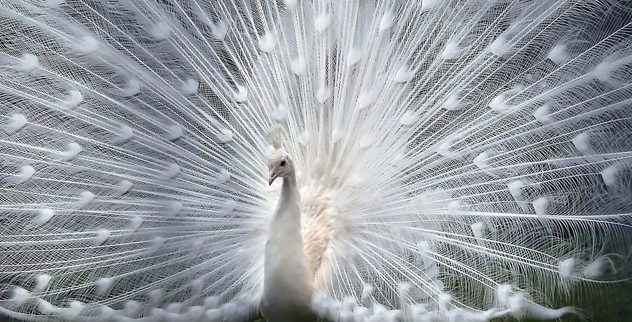
Note: In this article, the word “mutant” is used in its scientific sense: an animal with a genetic variation that changes a trait. No comic-book lasers, no glowing laboratory monsters, and sadly, no raccoons with Wi-Fi. Just real biology doing what biology does best: surprising everyone.
Introduction: Nature’s Wildest Remix Button
When people hear the phrase animal mutants, they often picture superhero movies, secret labs, or a lizard dramatically escaping through a broken window while alarms scream in the background. Real life is stranger, quieter, and usually much more fascinating. A mutation is simply a change in DNA. Sometimes it does almost nothing. Sometimes it causes problems. And occasionally, it produces an animal so unusual that scientists, photographers, and curious readers all stop and say, “Wait, nature can do that?”
Mutations are one of the engines of evolution. They create variation, and variation gives natural selection something to work with. A darker mouse may survive better on black lava rock. A city lizard may develop traits that help it grip walls. A tiger may be born with a white coat because of a pigment gene. A hairless cat may become a celebrity with cheekbones sharper than a fashion editor’s opinion.
This list of 10 amazing animal mutants explores real examples of genetic changes, unusual inherited traits, and extreme biological adaptations. Some are wild animals shaped by survival. Others are domestic breeds shaped by human preference. All of them show that the natural world is not a museum of fixed forms. It is more like a busy workshop, where DNA is constantly being edited, tested, rejected, orevery so oftenturned into something unforgettable.
What Makes an Animal a “Mutant”?
Scientifically, a mutant is not a monster. It is an organism with a mutation: a change in its DNA sequence. These changes can be inherited from parents, appear spontaneously, or spread through a population if they help animals survive and reproduce. Some mutations affect color. Others affect size, bones, muscles, immunity, metabolism, or behavior.
In nature, most mutations are neutral or harmful, but a small number can be useful in a particular environment. That is why the same trait can be helpful in one place and risky in another. A dark coat is excellent camouflage on black volcanic rock, but not so useful on pale desert sand. Biology, like fashion, is all about context.
10 Amazing Animal Mutants That Prove Nature Has Range
1. White Tigers: The Snowy Big Cats With a Complicated Story
White tigers are among the most famous animal mutants in the world. Their pale coats, dark stripes, and blue eyes make them look like they wandered out of a fantasy novel. But they are not a separate species. They are usually Bengal tigers or tiger hybrids carrying a rare recessive genetic variant that affects pigmentation.
Research has linked the white coat to a mutation in the SLC45A2 gene, which affects red and yellow pigment while leaving the dark stripes visible. That is why white tigers are not true albinos. They still have stripes, eye color, and some pigment.
The amazing part is the genetics. The uncomfortable part is the captive-breeding history. Many white tigers in captivity have been produced through inbreeding because two carriers are needed to reliably produce cubs with the white coat. That can increase health risks. So while the white tiger is visually stunning, it is also a reminder that unusual animals should not be bred simply because people find them beautiful.
2. Black Panthers: Melanism in Stealth Mode
A “black panther” is not one species. In most cases, it is a melanistic leopard in Asia or Africa, or a melanistic jaguar in the Americas. Melanism is the opposite of extreme paleness: it involves extra dark pigment called melanin. The animal may look nearly black, but under the right light, its spots or rosettes can still appear like secret patterns on velvet.
Melanism can be caused by genetic changes that affect pigment production. In some environments, darker coloring may help with camouflage, especially in dense forests or low-light habitats. It may also influence heat absorption or parasite resistance, though the advantages can vary by species and habitat.
Black panthers are a perfect example of how a mutation can become a survival tool. They are not magical shadow catsalthough, honestly, they do look like they have an excellent public relations team.
3. Rock Pocket Mice: Tiny Masters of Camouflage
The rock pocket mouse is small, adorable, and scientifically famous. In the American Southwest, some populations live on pale sand, while others live on dark lava flows. Light-colored mice are harder for predators to spot on pale ground. Dark-colored mice blend into lava rock. The difference is not just cosmetic; it can be life or death.
Researchers have studied how genetic changes related to melanin production help produce dark coats in mice living on dark rock. This is one of the clearest textbook examples of natural selection in action. A mutation appears, the environment decides whether it is useful, and predators provide the final exam. No pressure, little mouse.
What makes this mutant amazing is not its size but its elegance. A small change in coat color can shift survival odds. Evolution does not always need giant claws or dramatic horns. Sometimes it just needs better camouflage.
4. Axolotls: Regeneration Royalty
The axolotl looks like a smiling underwater dragon designed by someone who loves both science and cartoons. Native to Mexico, this salamander is famous for neoteny, meaning it keeps juvenile features into adulthood. It also has extraordinary regenerative abilities.
Axolotls can regrow complex structures such as limbs, parts of the tail, spinal cord tissue, and other body tissues. Scientists study them because understanding their regeneration may one day help improve regenerative medicine. The animal forms a structure called a blastema, where cells help rebuild missing tissue in a highly organized way.
Calling axolotls “mutants” is a little playful because their abilities are species-level traits rather than one odd individual’s mutation. Still, their biology is so unusual that they absolutely deserve a seat at the mutant table. Preferably a damp one.
5. Belgian Blue Cattle: The Myostatin Muscle Machines
Belgian Blue cattle are famous for their extremely muscular appearance. The reason is linked to mutations in the myostatin gene. Myostatin normally acts like a biological brake on muscle growth. When that brake does not work properly, muscle development can increase dramatically, creating the “double-muscled” look.
This trait has agricultural importance, but it also raises animal welfare concerns. Increased muscle mass can be associated with calving difficulties and other management challenges. As with many powerful genetic traits, the wow factor comes with responsibility.
The Belgian Blue shows that mutations are not limited to wild animals or rare zoo celebrities. Domestic animals carry some of the most dramatic examples of genetic change, often because humans have selected for certain traits over many generations.
6. Tiny Dogs: Small Bodies, Big Genetic Story
From Chihuahuas to toy poodles, small dogs can seem like nature’s answer to the question, “What if a wolf fit in a handbag?” The genetics of dog size are complex, but researchers have found that variation around the IGF1 region plays an important role in small body size.
What is especially fascinating is that some size-related variants appear to have ancient origins, long before many modern breeds existed. Humans later intensified these differences through selective breeding, producing the enormous variety of dog shapes we see today.
Small dogs are not “mutants” in the scary sense. They are living examples of how inherited variation and human selection can reshape a species. Also, they prove that an animal can weigh seven pounds and still believe it is the mayor of the living room.
7. Sphynx Cats: The Hairless Charmers
The Sphynx cat is nearly hairless, warm to the touch, and often described as looking like a tiny wise alien who knows where you hid the snacks. Its unusual coat is linked to mutations affecting the KRT71 gene, which is involved in hair structure.
The Sphynx mutation is recessive, meaning a cat generally needs two copies of the variant to show the nearly hairless trait. These cats are not completely maintenance-free. Without a normal fur coat, they need protection from temperature extremes and regular skin care.
What makes the Sphynx amazing is not only the mutation itself but also the way humans respond to unusual animals. Some people see strange. Others see adorable. The Sphynx seems to know this and has built an entire personality around being both.
8. Urban Anole Lizards: City Survivors With Genetic Upgrades
Puerto Rican crested anoles have become famous for adapting to city life. In urban environments, these lizards face smooth walls, wide open spaces, hotter surfaces, different foods, and more human-made obstacles than their forest relatives.
Studies have found that city-dwelling anoles can show longer limbs, larger toe pads, and genomic markers linked to limb and skin development, immunity, and metabolism. In plain English: some lizards are becoming better at being city lizards.
This is evolution happening in real time. The city is not just a place where animals struggle; it is also a powerful filter that favors traits useful for urban survival. These lizards are not wearing tiny sneakers yet, but give evolution a few more million years and who knows?
9. Venom-Resistant Lizards: Reptiles That Refuse to Be Easy Lunch
Some lizards have evolved resistance to snake venom, especially in regions where venomous snakes are major predators. Genetic changes can alter the biological targets that venom normally attacks, making the venom less effective.
This kind of mutation is part of an evolutionary arms race. Predators evolve better tools for catching prey. Prey evolve better defenses. Then predators evolve again. Nature is basically running a very intense, very old strategy game.
Venom resistance does not make these lizards invincible, but it can improve their odds. And in evolution, improved odds are a big deal. You do not need to win every encounter; you just need to survive long enough to pass on your genes.
10. Naked Mole-Rats: Wrinkled Wonders of Extreme Biology
Naked mole-rats may not win a beauty contest judged by humans, but biology does not care about our shallow mammal opinions. These underground rodents are extraordinary. They are long-lived for their size, tolerant of low oxygen, unusually resistant to some forms of cancer, and show unusual pain responses compared with many other mammals.
Researchers study naked mole-rats because their biology may reveal clues about aging, cancer resistance, and sensory systems. Their traits are not the result of one simple mutation but a suite of genetic and physiological adaptations shaped by life in underground colonies.
The naked mole-rat is proof that “amazing” does not always mean pretty. Sometimes it means being a wrinkly underground survival expert with a résumé that makes lab mice look underqualified.
Why Animal Mutations Matter
Animal mutations matter because they help scientists understand evolution, health, adaptation, and biodiversity. A pigment mutation can teach us about camouflage. A regenerative animal can teach us about tissue repair. A cancer-resistant rodent can inspire biomedical research. A city lizard can reveal how wildlife responds to urbanization.
They also matter because they challenge the way we think about “normal.” Nature is not built around one perfect version of each species. Every population contains variation. Some variation fades away. Some remains hidden for generations. Some becomes the trait that helps a species survive the next environmental challenge.
That does not mean every mutation is good. Some cause health problems. Some reduce survival. Some are beautiful to human eyes but harmful when exaggerated through irresponsible breeding. A responsible article about amazing animal mutants should celebrate biology without turning animals into props.
Experience Notes: What These Animal Mutants Teach Us in Real Life
Spending time learning about unusual animals changes how you look at ordinary ones. After reading about melanistic cats, even a regular black house cat seems less like a couch ornament and more like a tiny ambassador of pigment genetics. After learning about rock pocket mice, a patch of desert stops looking empty and starts looking like a high-stakes camouflage exam. The world becomes more layered when you realize that every color, limb, toe pad, and coat texture may carry an evolutionary backstory.
One of the best experiences related to this topic is visiting a reputable zoo, aquarium, science museum, or natural history exhibit with the mindset of a detective. Instead of asking only, “Is this animal cute?” ask, “What traits help this animal survive?” A tiger’s stripes are not decoration. A lizard’s toe pads are not random. A salamander’s regenerative power is not magic. Each feature is a clue. Once you start noticing those clues, animals become living case studies.
Another useful experience is observing local wildlife. You do not need a safari budget. Watch pigeons, squirrels, backyard birds, insects, or neighborhood lizards if they live near you. Look for variation. Are some darker? Faster? Bolder around people? Do certain birds seem better at using buildings, wires, or parking lots? Urban animals are constantly responding to human-made environments. The city may look like concrete to us, but to wildlife it is a maze of new pressures and opportunities.
For pet owners, this topic also offers a practical lesson: unusual traits can be charming, but they should never be valued above animal welfare. Hairless cats need special care. Very small dogs may have size-related health concerns. Animals bred for extreme looks can face preventable problems when appearance becomes more important than comfort. Loving animals means admiring their uniqueness while respecting their needs.
Finally, these animal mutants teach humility. Humans often act as if we have nature neatly labeled and filed away. Then along comes an axolotl that regrows a limb, a naked mole-rat that laughs in the face of low oxygen, or a city lizard that quietly redesigns itself for walls and sidewalks. Nature is not finished. It is still experimenting. Every generation is another draft. Some drafts are messy, some are brilliant, and some look like a hairless cat wearing the expression of a retired wizard.
The real experience of studying animal mutations is not just amazement. It is respect. Behind every strange trait is a biological story shaped by genes, environment, survival, chance, and time. That story is bigger than any single animal, and it reminds us that biodiversity is not merely beautiful. It is inventive.
Conclusion: Mutants Are Not MonstersThey Are Biology With Personality
The 10 amazing animal mutants in this article show that genetic variation can be elegant, strange, useful, risky, or wildly photogenic. White tigers reveal the beauty and ethical complexity of rare pigment traits. Black panthers and rock pocket mice show how color can shape survival. Axolotls and naked mole-rats give scientists clues about regeneration, aging, and disease resistance. Belgian Blue cattle, tiny dogs, and Sphynx cats show how inherited traits can be amplified through breeding. Urban anoles and venom-resistant lizards prove that evolution is still happening right under our noses, sometimes on a brick wall outside a coffee shop.
In the end, “mutant” is not an insult. It is a reminder that life is flexible. DNA changes, environments shift, and species respond in ways that can be subtle, spectacular, or downright weird. And weird, in biology, is often where the best discoveries begin.














