
Beaches are usually marketed as peaceful places for sunscreen, seashells, and sandwiches that somehow contain more sand than bread. But the shoreline is also the ocean’s lost-and-found counter. Waves, storms, currents, shipwrecks, and human carelessness can deliver objects so strange that a casual morning walk suddenly feels like the opening scene of a mystery movie.
Some bizarre things that washed up on beaches are amusing, such as rubber ducks and snack chips. Others are scientifically valuable, historically important, environmentally troubling, or deeply unsettling. These real-world beach discoveries prove that the sea has a long memoryand occasionally a very odd sense of humor.
10 Strange Things That Really Washed Ashore
1. Thousands of Rubber Ducks and Bath Toys
In 1992, a cargo ship lost containers during a storm in the North Pacific. One container released roughly 28,800 bath toys, including yellow ducks, green frogs, blue turtles, and red beavers. The toys became known as the “Friendly Floatees,” which sounds less like marine debris and more like a tiny floating government with excellent branding.
Many of the toys later appeared on beaches in Alaska and elsewhere, while others drifted through ocean currents for years. Oceanographers used their movements to better understand how surface currents carry floating objects across vast distances. The lesson was both charming and sobering: even a cheerful rubber duck can become a long-term ocean traveler.
2. A Sneaker Invasion in the Pacific Northwest
In 1990, the cargo ship Hansa Carrier encountered a storm while traveling from South Korea toward Seattle. Several containers went overboard, including containers carrying more than 61,000 Nike sneakers. Soon afterward, individual shoes began showing up on beaches across the Pacific Northwest.
The strange part was not simply that shoes washed ashore. It was that the shoes often arrived separated from their original pairs. Beachcombers might find a right shoe in one location and imagine its left-foot partner living an entirely different life several miles away. Researchers also used the floating footwear to study ocean drift patterns, proving that sneaker science is very much a thing.
3. Millions of LEGO Pieces
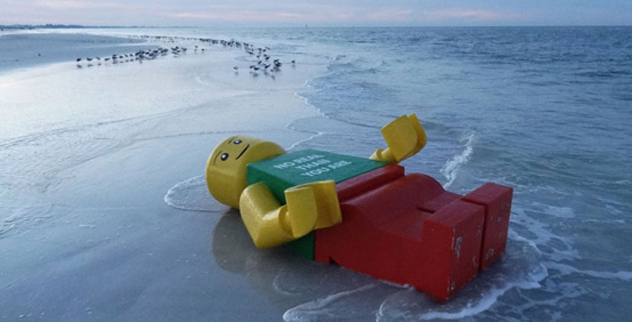
In 1997, a container ship called the Tokio Express lost cargo in rough seas near England. Among the lost goods were millions of LEGO pieces, many with a nautical theme. Over time, beachcombers found miniature flippers, octopuses, life preservers, diving gear, dragons, and tiny plastic swords along the coast.
Finding a LEGO octopus on a beach is delightful for approximately three seconds. Then comes the realization that it has spent years tumbling through saltwater, sunlight, and currents while refusing to decompose. It is a perfect example of how a toy can become both a treasured beach find and a reminder that plastic often outlasts everyone’s vacation plans.
4. Bags of Doritos
Not every beach surprise requires a microscope or a marine biologist. In 2006, a ship caught in severe weather off Virginia lost a container of Doritos. The snack bags later washed up on beaches in North Carolina, reportedly still sealed in many cases.
For a brief and deeply weird moment, the beach offered a shoreline buffet. Crowds reportedly arrived to collect the chips, because humans have apparently agreed that “mystery Doritos from the ocean” is a reasonable sentence to hear and then investigate. Still, food packages at sea are pollution, not treasure, and even an airtight bag of chips is not a souvenir worth eating.
5. A Harley-Davidson Motorcycle From Japan
After the devastating 2011 earthquake and tsunami in Japan, debris traveled across the Pacific Ocean. Some items that reached North American shores were astonishingly personal: a soccer ball, a fishing boat, a large floating dock, and an intact Harley-Davidson motorcycle found inside a shipping container in British Columbia.
The motorcycle became a powerful symbol of how far tsunami debris could travel. Unlike a random bottle or buoy, it carried an obvious human story. Objects like these are reminders that ocean currents do not merely move trash; they can transport pieces of people’s homes, memories, and lives across an entire ocean basin.
6. A Giant Blue Eyeball
In 2012, a beachgoer found a large, blue eyeball on Pompano Beach in Florida. It was roughly the size of a softball, which is not the kind of thing anyone wants staring back at them during a relaxing morning stroll.
Wildlife officials investigated the unusual find, and the eye was eventually believed to have come from a swordfish. Before that conclusion, speculation included giant squid, tuna, whales, and every monster imaginable from a late-night cable special. The real answer was still spectacular: ocean animals can possess features so strange that reality needs no extra special effects.
7. A “Sea Serpent” Known as an Oarfish
Oarfish are among the most bizarre animals that can wash ashore. These deep-sea fish have long, ribbon-like silver bodies, red fins, and a shape that looks suspiciously like a sea serpent designed by someone who had too much coffee. They are rarely seen alive because they typically live far below the surface.
When an oarfish appears near shore or washes up on a beach, it attracts immediate attention. Folklore in some regions connects them with earthquakes or disasters, although there is no solid scientific evidence that they predict earthquakes. Their odd appearance likely helped inspire old stories about sea monsters, because a long silver fish with a red crest does not exactly scream “ordinary Tuesday.”
8. Human Feet Inside Athletic Shoes
Beginning in 2007, human feet wearing athletic shoes began appearing along parts of the coast of British Columbia and Washington State. The discoveries were understandably disturbing and sparked waves of speculation about crime, shipwrecks, and unsolved mysteries.
Authorities later explained that water, decomposition, and the buoyancy of modern athletic shoes can create circumstances in which feet may separate from remains and float ashore. Several were identified through investigative work. This is one beach mystery best approached with respect rather than true-crime jokes: a shoreline discovery can represent a real person and a real family.
9. Vintage Bottles, Toys, and Horse Bones at Dead Horse Bay
Dead Horse Bay in Brooklyn, New York, has a name that does not exactly promise a spa experience. The beach sits near an area once associated with horse-rendering operations and later landfill activity. Over time, erosion exposed old garbage, including bottles, ceramics, toys, household containers, leather goods, and animal bones.
The result is a strange open-air archive of twentieth-century city life. A person walking there may see old medicine bottles, cosmetics jars, broken dishes, and other relics that look as though they escaped from a dusty attic and decided to join the tide. It is fascinating, but it also shows how long discarded materials can remain in coastal environments.
10. Ambergris, the Beach Blob With a Complicated Reputation
Ambergris is a waxy material that can occasionally wash up on beaches. It forms in the digestive tract of sperm whales, often around hard squid beaks and other indigestible material. For centuries, ambergris was prized in perfume making, which means history contains the unusual phrase “valuable whale digestive by-product.”
Its weirdness is only matched by its legal complications. In the United States, sperm whales are protected, and federal guidance warns that people may not collect, keep, or sell ambergris found on beaches. So, should you discover a mysterious gray, waxy blob that smells strange and might be valuable, the correct response is not to start planning a luxury yacht purchase. Leave it alone and contact the appropriate local wildlife authorities.
Why Do So Many Weird Things Wash Up on Beaches?
Beaches are collection points. Wind, waves, tides, storms, and large-scale ocean currents push floating material toward shore, where it can become trapped in seaweed, driftwood, sand, or rocky coves. The same natural forces that deliver shells and smooth stones can also deliver cargo, trash, lost belongings, wildlife remains, and historical objects.
That is why beachcombing can feel like archaeology, biology, weather science, and a garage sale all rolled into one. Every strange beach find has a travel story. Sometimes that story is funny. Sometimes it is heartbreaking. Often, it is an environmental warning dressed up as a bizarre headline.
The Beachcomber’s Experience: What It Feels Like to Find Something Unusual
There is a special kind of anticipation that comes with walking a beach shortly after a storm. The sand looks freshly rearranged, seaweed forms tangled ribbons along the tide line, and every patch of debris seems to whisper, “Take a closer look.” Most of the time, the discovery is harmless: a polished piece of sea glass, a shell with unusual markings, or driftwood shaped like a dragon that has lost an argument with a lawn mower.
But unusual beachcombing experiences teach you to slow down. An object that first appears to be a rock may be a fragment of pottery. A strange round blob may be a jellyfish. A bottle may be decades oldor it may have been discarded last week by someone who clearly did not understand the concept of a trash can. The thrill comes from not knowing what is around the next bend, but the responsibility comes from knowing that not every find belongs in your tote bag.
The best beachcombers learn to observe before they touch. They notice where an object sits in relation to the high-tide line, whether it is tangled in kelp, whether birds or insects are nearby, and whether it might pose a risk. A sealed container, chemical drum, suspicious package, dead marine animal, sharp object, or possible human remain should never become a hands-on investigation. A phone call to local authorities is much less exciting than starring in a beach mystery documentary, but it is usually the better plan.
There is also something humbling about realizing how far objects can travel. A toy can cross an ocean. A sneaker can drift from a cargo spill to a distant shore. A personal possession can survive saltwater and arrive years later in a place its owner never imagined. Standing on a beach, it is easy to think of the ocean as a beautiful backdrop. Strange washed-up objects make it clear that the ocean is also a powerful transportation system, a living habitat, and a record keeper with no interest in keeping our messes private.
The most rewarding beach experiences are not necessarily about finding something valuable. They are about noticing details: the colors in sea glass, tiny crab tracks in wet sand, the way a storm changes the shoreline overnight, and the stories hidden in objects that have traveled farther than most people ever will. Bring water, wear sturdy shoes, carry out any safe trash you can collect, and leave wildlife and questionable mysteries for the professionals. The ocean already has enough plot twists without you taking home an unidentified blob.
Conclusion
The strangest things that washed up on beaches range from funny cargo accidents to serious reminders of pollution, disasters, and human history. Rubber ducks, sneakers, LEGO pieces, snack chips, strange animals, and lost personal belongings may make irresistible headlines, but they also reveal how connected coastlines truly are. The beach is not merely where land meets water. It is where the world’s stories sometimes come ashore.
Note: Never touch unknown containers, suspected explosives, hazardous materials, injured wildlife, dead marine animals, or possible human remains. Keep a safe distance, photograph only when appropriate, and notify local emergency, park, wildlife, or marine authorities.













