
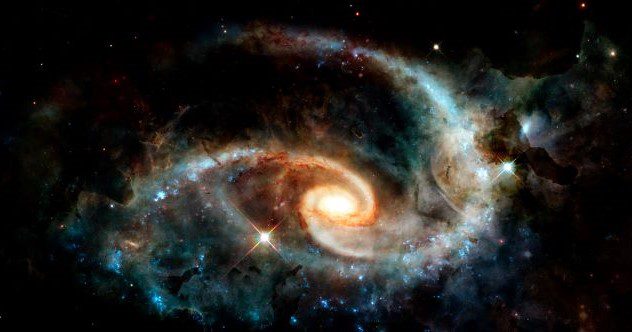
What if the universe is not just a gigantic container full of stars, planets, black holes, and suspiciously dramatic nebulae? What if it behaves less like a cold machine and more like a vast, evolving systemone that grows, organizes itself, recycles matter, produces complexity, and maybe even gives rise to awareness through creatures like us?
To be clear, scientists have not proven that the universe is alive in the biological sense. NASA’s working definition of life focuses on a self-sustaining chemical system capable of Darwinian evolution. The universe, as a whole, does not obviously eat breakfast, reproduce, or fill out tax forms. Still, modern cosmology, astrobiology, neuroscience, and philosophy have uncovered patterns that make the idea of a “living universe” surprisingly interesting.
This article explores 10 signs that the universe might be alivenot as a mystical slogan, but as a playful, science-informed question. The answer may be “no,” but the clues are fascinating enough to make your coffee taste slightly more cosmic.
1. The Universe Has a Web-Like Structure
On the largest scales, galaxies are not scattered randomly like glitter after a craft accident. They gather along enormous filaments and sheets, forming what astronomers call the cosmic web. Between these glowing highways lie vast cosmic voids, creating a structure that looks strangely organic.
This does not mean the universe has a nervous system. But the resemblance is hard to ignore: networks appear everywhere in nature, from fungal mycelium to blood vessels to brain cells. The cosmic web is shaped mainly by gravity and dark matter, not by biological design. Even so, its connected structure suggests that the universe is not merely a pile of parts. It is an organized system.
If life is partly about connection, flow, and structure, the cosmic web offers one of the biggest “hmm, interesting” moments in science.
2. The Universe Evolves Over Time
Living things change. They are born, develop, mature, and eventually transform into something else. The universe does something similar, though on a scale that makes even a very patient tortoise look rushed.
After the Big Bang, the early universe was hot, dense, and relatively simple. Over billions of years, tiny variations in matter grew into stars, galaxies, planets, moons, and eventually chemistry complex enough to produce life on Earth. The universe has a history, a direction, and a pattern of increasing complexity.
This cosmic evolution does not follow biological evolution exactly. Galaxies do not pass DNA to baby galaxies in tiny strollers. But the universe clearly develops from simple beginnings into richer forms. That developmental quality is one reason people wonder whether the cosmos behaves less like a static object and more like a living process.
3. Stars Create and Recycle the Ingredients of Life
You are made of star stuff. That phrase sounds like something printed on a motivational poster next to a galaxy and a suspiciously wise wolf, but it is real science. Many of the elements in the human bodycarbon, oxygen, nitrogen, calcium, and ironwere forged inside stars or spread by stellar explosions.
Stars act like cosmic kitchens. They fuse lighter elements into heavier ones, then release those elements into space when they die. That material becomes part of new stars, planets, oceans, rocks, and living organisms. In other words, the universe recycles itself.
Life on Earth is not separate from the universe. It is made from the universe. The atoms in your blood once belonged to ancient cosmic events. If the universe is not alive, it is at least shockingly good at preparing the raw materials for life.
4. The Universe Produces Chemistry That Leads Toward Life
Astrobiology has shown that organic moleculesthe carbon-based compounds associated with lifeare not rare decorations sprinkled only on Earth. Scientists have found complex chemistry in meteorites, interstellar clouds, icy bodies, and asteroid samples.
This matters because life needs chemistry before it can have biology. Amino acids, nucleobases, water, carbon compounds, and energy-rich environments all play roles in the story of life’s origins. The universe seems capable of producing many of these ingredients naturally.
That does not mean every asteroid is secretly thinking deep thoughts. But it does mean the universe is chemically fertile. It creates the alphabet from which life can write its first awkward sentence.
5. There Are Thousands of Known Exoplanets
For most of human history, people could only wonder whether planets existed around other stars. Today, thousands of exoplanets have been confirmed, and many more candidates are being studied. These worlds include scorching gas giants, rocky planets, ocean-world possibilities, and mysterious sub-Neptunes unlike anything in our solar system.
The discovery of so many planets changes the emotional math. Earth no longer looks like a lonely stage in an empty theater. It looks like one seat in a vast cosmic auditorium.
Not every planet is habitable. Some are too hot, too cold, too gaseous, too irradiated, or simply too weird to host life as we know it. Still, the sheer number of worlds suggests that the universe is very good at making planetary laboratories. Somewhere, chemistry may have tried the life experiment more than once.
6. Some Worlds May Have Biosignatures
A biosignature is a possible sign of life, such as a gas or chemical pattern that may be difficult to explain without biology. Scientists are cautious about biosignatures because non-living processes can sometimes imitate living ones. Space, like a magician with a PhD, loves false positives.
NASA’s James Webb Space Telescope has already studied the atmosphere of K2-18 b, a planet in the habitable zone of its star, and detected carbon-bearing molecules including methane and carbon dioxide. Later research raised discussion about possible life-related molecules, though scientists emphasize that more evidence is needed before making any claim of life.
This careful approach is important. “Possible sign of life” does not mean “aliens confirmed.” But the fact that we can now examine atmospheres around distant worlds is extraordinary. The universe may not merely contain life; it may be full of places where life can be searched for scientifically.
7. The Universe Self-Organizes
Self-organization is one of nature’s great tricks. Snowflakes form intricate shapes without a tiny snowflake architect. Cells organize molecules into living systems. Ant colonies produce complex behavior from simple local actions. In the universe, gravity pulls matter into stars, galaxies, clusters, and filaments.
No central manager says, “Please assemble a spiral galaxy by Friday.” Yet structure emerges. Matter gathers, rotates, heats, collapses, explodes, and reforms. Over enough time, simple rules produce breathtaking complexity.
This does not prove the universe is alive. But self-organization is a feature shared by many living systems. The cosmos repeatedly turns disorder into pattern, and pattern into new possibility. That is at least suspiciously lively behavior.
8. The Universe Runs on Flows of Energy
Life depends on energy flow. Plants capture sunlight. Animals eat plants, other animals, or occasionally whatever fell under the couch. Cells maintain themselves by moving energy through chemical pathways.
The universe also runs on energy flows. Stars shine by nuclear fusion. Supernovae blast energy and elements into space. Black holes shape nearby matter through gravity and radiation. Galaxies grow as gas flows through cosmic filaments. Planets receive energy from stars, internal heat, tidal forces, or chemical reactions.
Where energy flows through matter, complexity can arise. On Earth, sunlight and chemistry helped life emerge and evolve. Elsewhere, similar flows may support hidden ecosystems beneath icy moons or in distant oceans. The universe is not a frozen museum. It is active, dynamic, and constantly moving energy around like it misplaced the receipt.
9. Consciousness Has Emerged Inside the Universe
Even if the universe itself is not conscious, consciousness has appeared within it. Humans, animals, and perhaps other beings elsewhere are arrangements of cosmic matter that can feel, think, wonder, remember, and ask why the Wi-Fi always fails during important moments.
This fact is profound. The universe produced atoms. Atoms formed stars. Stars formed elements. Elements formed planets. On at least one planet, matter became aware of itself. That does not automatically make the entire universe alive, but it does mean awareness is not outside nature. It is one of nature’s products.
Some philosophers explore ideas such as panpsychism, which suggests that consciousness or mind-like qualities may be more fundamental than traditionally assumed. This remains controversial, and it is not the same as saying every rock is writing poetry internally. Still, the emergence of consciousness keeps the “living universe” question open in fascinating ways.
10. The Universe May Be More Than the Sum of Its Parts
A living body is not just a bag of organs. A forest is not just a pile of trees. A brain is not just a warehouse of neurons. In complex systems, the whole can behave in ways that cannot be fully understood by examining the parts separately.
The universe may be similar. Galaxies, stars, planets, dark matter, dark energy, radiation, chemistry, and life interact across enormous scales. The whole system has properties that individual particles do not have by themselves.
Maybe the universe is not alive. Maybe it is simply a physical system of astonishing complexity. But the boundary between “dead mechanism” and “living process” becomes harder to define when the mechanism creates chemistry, order, evolution, planets, and observers capable of asking whether the mechanism is alive.
Is the Universe Literally Alive?
Probably not in the ordinary biological sense. The universe does not appear to be a cell, an organism, or a Darwinian population. It does not reproduce in any confirmed scientific way, and it does not show metabolism as life on Earth does.
But the idea of a living universe can still be useful as a metaphor and a philosophical lens. It encourages us to see reality as dynamic rather than static, connected rather than isolated, creative rather than empty. It also reminds us that life is not an accidental sticker pasted onto the cosmos. Life is made from cosmic materials and cosmic history.
The safest conclusion is this: the universe may not be alive, but it is life-generating. It has produced at least one living world, and perhaps many more. That alone is enough to make the night sky feel less like a ceiling and more like a conversation.
Experiences That Make the Living Universe Idea Feel Real
The idea that the universe might be alive becomes more powerful when it leaves the textbook and enters ordinary experience. You do not need a telescope the size of a small apartment building to feel it. Sometimes the feeling arrives during a quiet night, when the sky is clear and the stars look less like distant objects and more like old messages still traveling.
One common experience is standing under a dark sky far from city lights. The Milky Way appears as a pale river overhead, and suddenly the human ego shrinks to a much healthier size. In that moment, the universe does not feel empty. It feels fullfull of structure, motion, age, and mystery. You may know intellectually that stars are nuclear furnaces, but emotionally they can feel like sparks in a living body.
Another experience comes from watching nature on Earth. A forest recycles fallen leaves into soil. Fungi connect trees through underground networks. Rivers carry minerals to oceans. Birds migrate by signals written into biology and environment. When you realize Earth is not separate from the cosmos but built from ancient star material, local nature becomes cosmic nature. A leaf is not just a leaf. It is sunlight, carbon, water, time, and stellar history wearing green.
There is also the experience of learning astronomy itself. Many people begin with simple curiosity: What is a black hole? How big is the universe? Are there other Earths? But the deeper they go, the more connected everything becomes. Star death creates elements. Elements form planets. Planets create environments. Environments may produce life. Life produces minds. Minds look back at stars. The loop is almost poetic enough to make a physicist blush.
Even everyday human consciousness can feel like evidence of cosmic creativity. Your thoughts are not floating outside the universe. They are the universe in a temporary human arrangement, reflecting on itself through neurons, memory, language, and imagination. When you ask whether the universe is alive, the question itself is part of the universe happening.
Some people experience this through science, others through art, meditation, wilderness, grief, love, or awe. A parent holding a newborn, a student seeing Saturn’s rings through a telescope, a hiker watching sunrise over mountains, or a musician feeling harmony vibrate through the bodyall of these moments can make reality feel interconnected and animated.
Of course, feelings are not proof. Awe should not replace evidence. But experience matters because it motivates questions. Science often begins with wonder, and wonder often begins with the strange sensation that the world is more alive than our categories allow. The universe might not be alive like a creature, but it can feel alive as a grand unfolding processone that made stars, oceans, cells, minds, and the beautifully inconvenient human habit of asking impossible questions before breakfast.
Conclusion
The phrase “10 signs that the universe might be alive” should not be taken as a claim that the cosmos is a giant biological organism. Instead, it is an invitation to look at the universe through the lens of complexity, connection, and creativity. The cosmic web resembles a vast network. Stars recycle the elements of life. Exoplanets multiply the possible homes for biology. Chemistry appears throughout space. Consciousness has emerged within cosmic matter. These facts do not prove a living universe, but they do show that the universe is far more dynamic and fertile than a simple empty void.
In the end, the most scientifically honest answer may also be the most beautiful: the universe might not be alive, but it makes life possible. And through us, at least for a moment, the universe gets to open its eyes and wonder what it is.














