
Few decorating problems are more annoying than finding the perfect spo. Perhaps you want reading light beside a floating chair, illumination inside a dark closet, or a welcoming glow on a patio that was apparently designed before electricity became popular.
Fortunately, modern cordless lighting can brighten these awkward spaces without hardwiring, extension cords, electrical work, or strategic furniture placement. Battery-powered LEDs, rechargeable lamps, motion sensors, and solar fixtures now provide practical alternatives for renters, homeowners, dorm residents, and anyone who would rather not invite an electrician over for every dim corner.
The key is choosing the right wireless lighting solution for the job. Some products create atmosphere, while others provide focused task lighting or improve nighttime safety. The following ten ideas explain where each option works best, what features matter, and how to avoid turning your home into a collection of glowing plastic hockey pucks.
What to Look for in Cordless Lighting
Before shopping, think about brightness, color temperature, runtime, controls, and installation. Brightness is measured in lumens rather than watts. A decorative shelf light may need only a soft glow, while a kitchen prep surface requires considerably more illumination.
Color temperature affects how the room feels. Warm white light around 2700K to 3000K creates a comfortable, residential atmosphere. Neutral light around 3500K can work well for closets, kitchens, and work areas. Cooler light may appear brighter, but it can also make a bedroom feel suspiciously like a waiting room.
Rechargeable fixtures generally cost more upfront but reduce the need to buy disposable batteries. Replaceable-battery models can be more convenient in locations where removing the fixture for charging would be difficult. Features such as dimming, timers, motion activation, remote controls, and magnetic mounting can make a dramatic difference in everyday use.
1. Place Rechargeable Table Lamps Anywhere
Rechargeable table lamps are among the easiest ways to add lighting without wires or cords. They look like traditional lamps but contain an integrated battery and LED light source. Once charged, they can be placed on dining tables, nightstands, bookshelves, kitchen islands, bathroom counters, or patio tables without being tethered to an outlet.
These lamps are especially useful in open-concept rooms where furniture floats away from the walls. Instead of running an extension cord beneath a rugan arrangement that can create wear, bumps, and tripping problemsyou can put a cordless lamp exactly where the light is needed.
Choose the Right Rechargeable Lamp
Look for adjustable brightness, touch controls, a stable base, and USB-C charging. A lamp with several brightness levels can provide a gentle dinner-table glow at night and stronger task lighting when you are reading, writing, or attempting to understand instructions printed in microscopic type.
Check the estimated runtime at different brightness settings. Maximum runtime claims are often based on the lowest setting, while full brightness may drain the battery much faster. For outdoor use, select a fixture specifically rated for damp or wet locations.
2. Install Battery-Powered Puck Lights
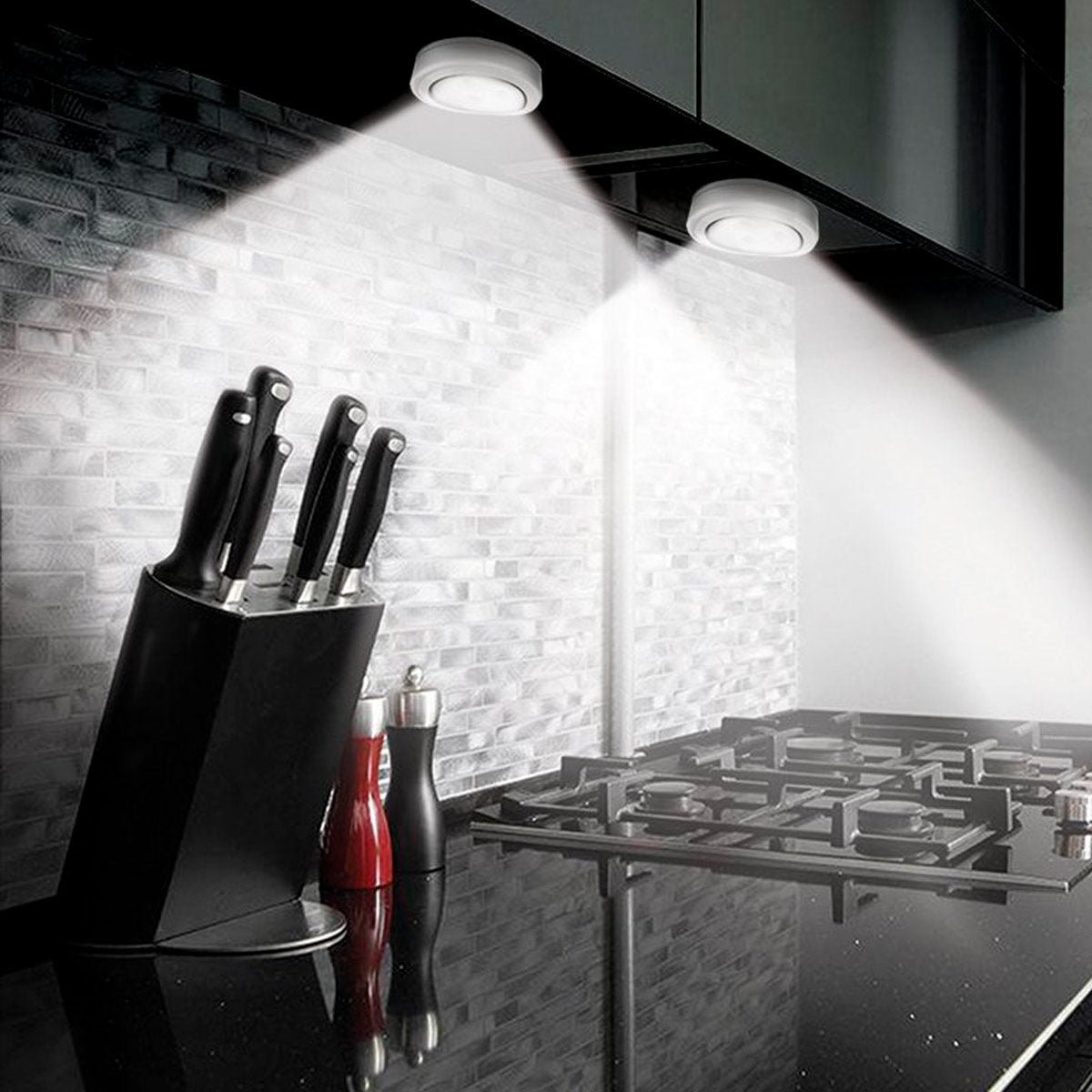
Puck lights are compact, round fixtures that fit beneath cabinets, inside closets, under shelves, and within display cases. They are inexpensive, easy to install, and available with tap controls, remotes, dimmers, timers, and motion sensors.
In a kitchen, place them beneath upper cabinets to illuminate countertops that overhead fixtures leave in shadow. In a closet, position them above clothing rods or shelving. They can also brighten a pantry, linen cabinet, bar cart, craft station, or the mysterious cabinet where appliance manuals go to retire.
Position Puck Lights Carefully
Space multiple lights evenly to prevent bright circles separated by dark gaps. Under kitchen cabinets, placing the lights closer to the front edge usually spreads illumination more effectively across the work surface. Hiding them slightly behind the cabinet trim keeps the fixtures out of sight while allowing the light to remain visible.
Adhesive mounting works well on clean, smooth surfaces, but screws provide greater security. Magnetic designs are particularly convenient because the fixture can be removed for charging while the mounting plate stays in place.
3. Use Motion-Sensor Light Bars in Dark Passageways
Rechargeable motion-sensor light bars are excellent for spaces that need illumination only briefly. Common locations include stairways, hallways, closets, laundry rooms, garages, under-bed areas, and bathroom entrances.
Most models detect movement and activate automatically when ambient light is low. This saves battery power and prevents you from fumbling for a switch while carrying laundry, groceries, or a sleepy child. It also eliminates the midnight dilemma of choosing between complete darkness and a ceiling light bright enough to interrogate everyone in the house.
Adjust the Sensor Before Permanent Installation
Test the fixture with temporary tape before attaching it permanently. A sensor placed too close to a busy doorway may activate constantly, while one hidden behind a cabinet edge may fail to detect movement. The ideal location provides a clear view of the approaching person without shining directly into anyone’s eyes.
For stairs, several low-output lights usually work better than one intensely bright fixture. The goal is to reveal each step, not recreate a stadium entrance.
4. Mount Battery-Operated Wall Sconces
Wall sconces add height, symmetry, and architectural character to a room. Traditional sconces require electrical boxes and hardwiring, but battery-operated versions can be mounted with screws or heavy-duty removable hardware.
Install a matching pair beside a bed, mirror, fireplace, console table, or piece of artwork. A single adjustable sconce can also create a practical reading area beside a chair. Because there is no visible cord, the finished arrangement often looks more intentional than a plug-in fixture running down the wall.
Try the Puck-Light Sconce Technique
Some decorators convert ordinary decorative sconces by placing a rechargeable puck light where the bulb would normally sit. This approach allows you to choose from a wider selection of fixture styles. The light can be attached with a compatible socket adapter, magnetic plate, or removable adhesive, depending on the design.
Use this method for accent lighting rather than demanding tasks. A small puck light may create a beautiful glow but rarely produces the same output as a hardwired bulb. Before mounting anything, confirm that the wall hardware can safely support the fixture.
5. Highlight Artwork With Cordless Picture Lights
Battery-powered picture lights provide focused illumination above paintings, photographs, maps, bookshelves, and gallery walls. They add polish while helping important decorative pieces stand out after sunset.
Many cordless picture lights include adjustable arms, dimming controls, timers, and remote operation. A timer is especially useful because accent lights are easy to forget. Programming the fixture to shut off after several hours extends battery life and saves you from discovering that your landscape painting has been enjoying a private spotlight all night.
Match the Fixture to the Artwork
Select a picture light that is proportionate to the frame. A very narrow fixture above a large painting may create an uneven pool of light, while an oversized fixture can dominate a small print. Position the beam so it washes across the artwork without producing distracting glare.
Choose high-quality light with good color rendering when illuminating colorful art, textiles, or photographs. Accurate color rendering helps reds, blues, skin tones, wood, and fabric appear natural instead of dull or strangely tinted.
6. Apply Battery-Powered LED Strip Lights
Wireless LED strips are flexible enough to fit behind televisions, beneath shelves, inside cabinets, under bed frames, along headboards, and around display niches. They are particularly effective when the strip itself is hidden and only the reflected light is visible.
For example, attach a strip beneath a floating shelf to create a soft wall wash. Place one behind a television to reduce the visual contrast between the bright screen and a dark room. Add a short strip inside a glass cabinet to highlight dishes, collectibles, or the fancy glasses everyone owns but apparently never uses.
Prepare the Surface First
Adhesive strips perform best on clean, dry, smooth surfaces. Remove dust and grease before installation, especially beneath kitchen cabinets. Avoid sharp bends that can damage the conductive path. For a more professional result, place the strip inside a diffuser channel, which softens individual LED points and creates a continuous line of light.
RGB color-changing strips are entertaining, but warm white or tunable-white models usually integrate more naturally with everyday home lighting. Choose color effects intentionally unless your bookshelf has always dreamed of becoming a nightclub.
7. Decorate With Battery-Operated String Lights
Battery-powered string lights offer an inexpensive way to create atmosphere. Thin-wire fairy lights can be wrapped around mirrors, arranged inside glass jars, woven through wreaths, placed along mantels, or tucked into bookcases. Larger battery-operated strings can define a balcony, pergola, headboard, or reading nook.
Because LED strings generate little heat compared with old incandescent holiday lights, they are suitable for many decorative arrangements when used according to the manufacturer’s instructions. Models with automatic timers are especially convenient for seasonal displays and hard-to-reach locations.
Avoid the Tangled-Wire Look
Even cordless string lights still have a thin wire connecting the bulbs. Hide the battery pack behind a frame, beneath foliage, inside a decorative container, or under the edge of furniture. Secure loose sections with transparent clips rather than covering them with tape that may damage painted surfaces.
Outdoors, use only lights specifically rated for exterior conditions. Place the battery compartment where rainwater cannot collect around it, even when the product is described as weather-resistant.
8. Create a Safe Glow With Flameless Candles and Lanterns
Flameless LED candles reproduce the warmth and flicker of traditional candles without an open flame. They work well on dining tables, mantels, bathroom shelves, windowsills, stair landings, and inside decorative lanterns.
They are particularly practical in homes with children, pets, flowing curtains, crowded tables, or forgetful adults. Real candles require constant attention and generous separation from combustible materials. Battery-operated alternatives provide a similar visual effect without smoke, dripping wax, or the possibility of a curious cat redesigning the evening.
Combine Several Heights
For a convincing arrangement, group flameless candles in different sizes rather than lining up identical pieces. Mix pillars, tapers, and small votives on a tray or inside lanterns. Warm-colored LEDs create the most candlelike appearance.
Remote-controlled models make large displays easier to manage. A built-in daily timer can automatically illuminate the candles at the same hour each evening and turn them off later.
9. Bring Cordless Lighting Outdoors With Solar Fixtures
Solar lighting is the outdoor champion of wire-free installation. Solar path lights, deck lights, fence lights, spotlights, string lights, and wall-mounted fixtures collect energy during the day and illuminate automatically after dark.
Use path lights to reveal changes in elevation and guide visitors toward entrances. Attach solar deck lights to steps, rails, or posts. Aim solar spotlights at trees, textured walls, address signs, or architectural details. Decorative solar lanterns can add atmosphere to patios and garden beds without increasing household electricity use.
Give the Solar Panel Enough Sun
Solar fixtures perform best when their panels receive several hours of direct sunlight. A beautiful location beneath a dense tree may produce disappointing nighttime results. Before installing a full set, test one light in the proposed area for several days, including cloudy weather.
Keep solar panels clean and remove leaves, snow, and dirt that block sunlight. For outdoor comfort and reduced glare, aim light downward and use only as much brightness as the space requires. Warm-colored outdoor light generally feels more inviting than harsh blue-white illumination.
10. Keep Portable Lanterns and Task Lights Ready
Portable rechargeable lanterns are not limited to camping trips and power outages. A stylish lantern can serve as a reading light, bedside lamp, patio centerpiece, workshop light, or temporary solution in any unfinished space.
Rechargeable task lights with folding stands or magnetic bases are useful in garages, utility rooms, attics, and beneath sinks. They provide stronger, more directional illumination than decorative cordless lights and can be moved from one project to another.
Build a Small Cordless Lighting Kit
Keep one lantern, one focused task light, and the appropriate charging cables together in an accessible cabinet. Charge them periodically rather than discovering during a blackout that every battery is empty. Some lanterns also include USB power-bank functions, but using them to charge a phone will reduce lighting runtime.
Do not store rechargeable lighting in extremely hot locations, and stop using any product that becomes unusually hot, swells, leaks, smells strange, or shows battery damage. Purchase products from identifiable manufacturers and follow the supplied charging instructions.
How to Layer Wire-Free Lighting Successfully
A room rarely looks its best when it depends on one bright source. Better lighting usually combines three layers: ambient lighting for general visibility, task lighting for specific activities, and accent lighting for visual interest.
In a bedroom, a cordless table lamp might provide ambient light, battery sconces can support reading, and a picture light can highlight artwork. In a kitchen, puck lights can illuminate counters while a rechargeable lamp adds warmth to an island. Outdoors, path lights improve navigation while solar spotlights emphasize landscaping and string lights establish a comfortable gathering area.
Keep the color temperatures reasonably consistent within each sightline. A warm 2700K table lamp beside a cold blue strip light can make the room feel disconnected. You do not need every fixture to match perfectly, but they should look like members of the same family rather than strangers sharing an elevator.
Common Cordless Lighting Mistakes to Avoid
Expecting Accent Lights to Illuminate an Entire Room
Small battery fixtures are best for focused tasks, safety, and atmosphere. Using one tiny puck light as the primary source in a large room is optimistic in the same way that one potato chip is technically a snack.
Ignoring Battery Access
Before mounting a light, determine how it will be charged or how its batteries will be replaced. A fixture installed on top of a tall cabinet may become far less charming when it requires a ladder every four days.
Using Weak Adhesive on Textured Surfaces
Adhesive mounting pads can fail on dusty, porous, uneven, or warm surfaces. Use mechanical fasteners when appropriate, and never mount a heavy fixture above a bed or seating area with adhesive alone.
Buying Only by Appearance
Read specifications for lumen output, runtime, charging time, color temperature, weather rating, sensor range, and warranty. A beautiful cordless lamp is not especially useful when it provides twenty minutes of light and then enters an eight-hour charging meditation.
Forgetting Battery Safety
Keep button and coin cell batteries away from children and pets. Use the charger supplied or recommended by the manufacturer, inspect rechargeable devices regularly, and follow local requirements for battery recycling or disposal.
Real-World Experiences With Cordless Lighting
Living with cordless lighting teaches several lessons that product photographs rarely mention. The first is that convenience depends less on maximum brightness than on how naturally the light fits into a daily routine. A moderately bright motion-sensor bar that activates every time you open a pantry is usually more valuable than a powerful fixture that requires three button presses and monthly battery replacement.
One of the most successful applications is under-cabinet kitchen lighting. A few rechargeable magnetic bars can transform a shadowed countertop immediately. The magnetic mounts are important because the lights can be removed and charged without disturbing the adhesive plates. After using them for a while, it becomes obvious that placing the fixtures near the front of the cabinet produces better coverage than pushing them against the back wall. The latter creates a bright backsplash and leaves the cutting board wondering what it did wrong.
Motion settings also require experimentation. In a closet, automatic mode feels wonderfully effortless. In a busy hallway, an overly sensitive sensor can turn the light into an enthusiastic greeter that activates every time someone walks through the next room. Temporarily mounting the fixture before committing to a location prevents many frustrating adjustments.
Rechargeable table lamps tend to become household nomads. A lamp purchased for a patio may migrate to the dining table, then the guest room, then a desk during a video call. Portability is their greatest strength, so lightweight construction and simple touch controls matter more than expected. However, very narrow lamps can tip easily outdoors, especially on uneven tables or windy evenings. A weighted base is worth choosing.
Battery-powered sconces can produce a surprisingly polished result when viewed from across the room. Up close, the difference between a small rechargeable light and a hardwired bulb becomes more noticeable. For decorative bedroom lighting, that compromise is often acceptable. For serious reading, a brighter adjustable fixture is preferable. The most attractive sconce in the world loses points when reading beneath it feels like examining an ancient manuscript by moonlight.
Solar lights reveal another practical truth: placement is everything. Two fixtures from the same package can perform very differently when one receives full afternoon sun and the other sits beneath a shrub. Testing locations before pushing stakes firmly into the soil saves time and reduces disappointment. Cleaning the small solar panels every few weeks also improves consistency, especially in dusty areas or during pollen season.
Timers are among the most underrated features. String lights, picture lights, and flameless candles become much easier to enjoy when they switch on automatically and shut down without assistance. Without timers, decorative fixtures are often left off because operating several separate switches becomes a tiny daily chore. Good lighting should make a home easier to use, not create a new evening checklist.
Finally, standardizing batteries and charging cables simplifies ownership. A collection of fixtures requiring five battery sizes, three proprietary chargers, and one mysterious cable that disappears whenever needed can become irritating. Choosing rechargeable products that use USB-C and replaceable-battery lights that share a common battery size keeps maintenance manageable. Cordless lighting works best when charging and replacement are predictable rather than an archaeological search through the junk drawer.
Conclusion
Learning how to add lighting without wires or cords opens possibilities in places traditional fixtures cannot easily reach. Rechargeable table lamps can illuminate floating furniture arrangements, puck lights can brighten cabinets, motion-sensor bars can improve nighttime safety, and solar fixtures can transform outdoor spaces without trenching or electrical work.
The best results come from matching each fixture to a specific purpose. Consider how much brightness is needed, how often the light will operate, where it will be charged, and whether it requires weather protection. Layer several modest sources instead of relying on one dazzling fixture, keep color temperatures coordinated, and test placement before permanent installation.
With thoughtful planning, cordless lighting can look deliberate rather than temporary. Your home becomes brighter, outlets become less important, and extension cords can finally return to their natural habitat: a tangled box in the garage.













