
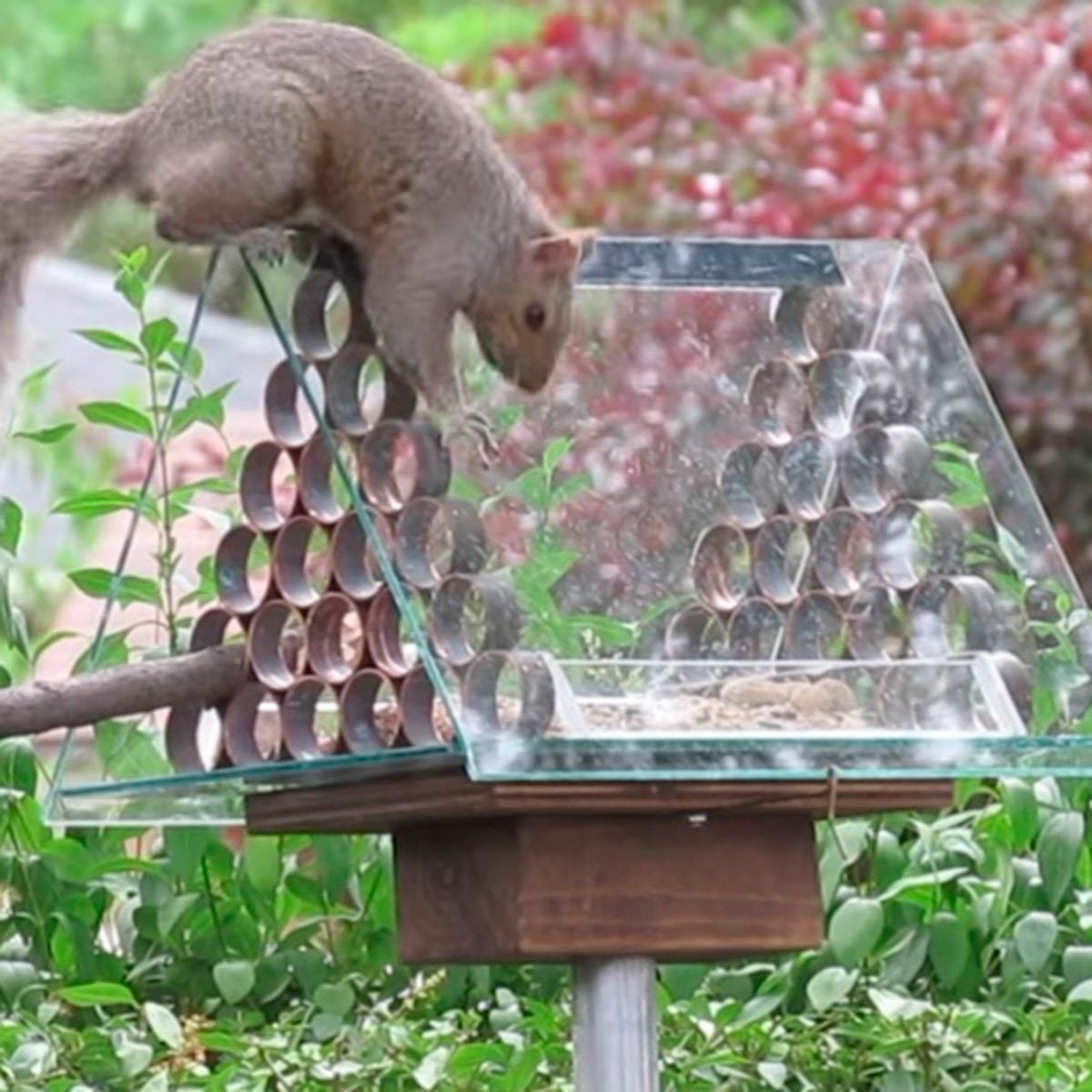
Squirrels are charming until one appears upside down on your bird feeder, eating premium sunflower seed like it personally paid the bill. These agile, persistent problem-solvers can climb poles, cross wires, leap from roofs, and chew through surprisingly tough materials. A feeder placed without a plan is less a bird-feeding station than an open invitation to the neighborhood squirrel buffet.
Fortunately, you do not need traps, poisons, or a backyard obstacle course designed by an action-movie director. The best squirrel deterrents use three principles: eliminate access routes, create physical barriers, and make the reward less appealing. Combining several methods is usually more effective than relying on one clever gadget.
Why Is It So Difficult to Keep Squirrels Out of Bird Feeders?
Tree squirrels are excellent climbers and powerful jumpers. They can approach a feeder from the ground, a nearby fence, an overhanging branch, a deck railing, or even outdoor furniture that was moved a few inches during a cookout. Once they discover a reliable food source, they tend to revisit it and experiment with new routes.
Birdseed is worth the effort because many popular varieties are rich in calories. Black oil sunflower seeds, peanuts, cracked corn, and mixed seed blends are especially tempting. Squirrels may also chew plastic ports, loosen lids, or shake feeders until seed falls to the ground.
The realistic objective, therefore, is not to make your property invisible to squirrels. It is to make birdseed difficult enough to reach that the animals spend their energy looking for easier, natural food elsewhere.
10 Effective Ways to Prevent Squirrels from Reaching Birdseed
1. Place the Feeder in an Open Area
Location is the foundation of squirrel-resistant bird feeding. A beautifully engineered feeder will still fail if it hangs beside a tree trunk that functions as a furry on-ramp.
As a practical starting point, place a pole-mounted feeder approximately five feet above the ground and at least 10 feet from trees, fences, roofs, railings, sheds, and other possible launching surfaces. Examine the space above the feeder as well. A high branch can provide a direct aerial route even when the pole looks perfectly isolated.
Do not forget movable objects. Patio chairs, grills, ladders, planters, and stacked firewood can become launch platforms. Watch the squirrels for a few days after relocating the feeder. They will reveal access routes you never knew your yard possessed.
2. Mount the Feeder on a Smooth, Secure Pole
A freestanding metal pole is generally easier to defend than a tree, wooden post, porch, or fence. Choose a strong pole that will not bend or topple when a squirrel climbs it. Install it firmly in the ground and avoid decorative brackets that provide convenient footholds.
Whenever possible, dedicate the pole to bird feeders rather than attaching it to another structure. A shepherd’s hook placed beside a deck may look elegant, but the deck railing can defeat the entire setup. An isolated pole lets you control the animal’s route and block it with a properly installed baffle.
Check the pole periodically for leaning, loose fittings, or new footholds. A clamp, hook, or forgotten garden tie can become the squirrel equivalent of a climbing hold.
3. Install a Pole-Mounted Squirrel Baffle
A baffle is one of the most reliable ways to keep squirrels out of bird feeders. Cone-shaped and cylindrical stovepipe-style models create a smooth barrier that prevents an animal from continuing up the pole.
For good results, select a wide metal baffle and mount its upper edge roughly four to five feet above the ground, following the manufacturer’s directions. If the baffle is too low, a squirrel may jump onto its top. If it is too high, the animal may leap past it and grab the pole above.
The baffle should move or tilt when appropriate rather than provide a stable landing platform. Make sure there are no gaps between the pole and mounting hardware that allow a squirrel to squeeze through. Metal generally resists chewing and weather damage better than thin plastic.
4. Protect Hanging Feeders with an Overhead Baffle
When a feeder must hang from a branch or support, place a large dome-shaped baffle above it. The dome should extend far enough beyond the feeder to prevent squirrels from reaching around its edge.
This method works only when the hanging point is well away from the tree trunk and surrounding branches. A squirrel that can approach from the side may simply bypass the dome. Keep the feeder several feet below its support and remove nearby twigs that provide alternate landing spots.
For feeders suspended on a horizontal cable, commercial rolling sleeves or smooth line guards can prevent squirrels from walking across. Keep the system taut and inspect it for snagging hazards. Avoid improvised materials with sharp edges or loops that could injure wildlife.
5. Use a Weight-Activated Feeder
Weight-sensitive feeders exploit the considerable difference between a songbird and an adult squirrel. When a heavier animal steps onto the perch or outer housing, a spring-loaded mechanism lowers a shield over the seed ports. When the squirrel leaves, the ports reopen.
Choose a model with an adjustable tension setting if your yard attracts birds of different sizes. A setting appropriate for chickadees and finches may also exclude cardinals, grosbeaks, or woodpeckers. Test the feeder gently by pressing the perch and confirming that every port closes completely.
Place the feeder where a squirrel cannot hang from a nearby branch while reaching around the mechanism. Some particularly athletic individuals learn to avoid a trigger perch, so weight activation works best when combined with good placement and a baffle.
6. Choose a Caged or Chew-Resistant Feeder
A caged feeder surrounds the seed tube with an outer metal grid. Small birds can pass through the openings, while squirrels and many larger birds cannot reach the feeding ports. This design is especially useful for serving finches, chickadees, titmice, and nuthatches.
Confirm that the gap between the cage and seed reservoir is large enough to prevent a squirrel from stretching through. Inspect the openings for sharp edges, and choose a design that can be taken apart for cleaning.
If you prefer an uncaged feeder, look for sturdy metal construction, reinforced lids, and metal guards around the ports. Thin plastic is no match for persistent incisors. A durable feeder may cost more initially, but replacing several chewed models is not exactly a bargain.
7. Offer Seeds Squirrels Find Less Appealing
Changing the menu can make a successful raid less rewarding. Many squirrels are less interested in safflower seed than in sunflower kernels, peanuts, or cracked corn. Cardinals, chickadees, mourning doves, and several other birds may still eat safflower readily.
Nyjer seed served in a fine-mesh finch feeder is another option. Its small size and specialized feeder design make it less attractive and less accessible to squirrels while appealing to goldfinches, siskins, and redpolls.
No seed is universally squirrel-proof. A hungry or experienced squirrel may eventually sample safflower, particularly when it is mixed with sunflower seed. Introduce the new food gradually, monitor which birds use it, and adjust your feeder selection accordingly.
8. Consider Commercial Hot-Pepper Birdseed
Capsaicin, the compound responsible for the heat in chili peppers, affects mammals differently from birds. Commercial seed products coated with capsaicin are designed to discourage squirrels while remaining acceptable to feeder birds.
Results vary, so treat hot-pepper seed as an additional deterrent rather than a replacement for physical barriers. Select a product specifically manufactured for wild-bird feeding and follow its handling instructions. Wear gloves, avoid touching your eyes, and keep the product away from children and pets.
Loose homemade pepper dust can blow into human or animal eyes and irritate the respiratory system. A professionally prepared coating is cleaner, more consistent, and less likely to drift around the yard every time the wind develops a sense of humor.
9. Reduce Spilled Seed and Easy Ground-Level Meals
Squirrels do not have to conquer the feeder if birds scatter half the contents onto the lawn. Install a seed-catching tray beneath the feeder, but keep it compact enough that it does not become a comfortable squirrel perch.
Offer one high-quality seed type per feeder instead of a mix filled with ingredients birds repeatedly toss aside. Sunflower hearts create less shell debris, although they must be protected from moisture because shelled seed spoils more quickly.
Rake or sweep beneath feeders regularly, remove wet clumps, and discard spoiled seed. This routine also discourages rats, mice, raccoons, and other animals attracted to ground-level food. Store the main supply indoors or in a tightly closed, chew-resistant metal container rather than leaving a thin plastic bag in the garage.
10. Interrupt the Food Supply and Build a More Natural Bird Habitat
If squirrels have turned a feeding station into their daily breakfast club, temporarily remove the feeder. A pause of about a week can disrupt the routine and encourage them to forage elsewhere. Before reinstalling it, change the location and correct the access route they previously used.
You can also reduce dependence on feeders by planting native seed-bearing flowers, grasses, shrubs, and trees appropriate for your region. Native plants provide fruit, seeds, shelter, and insects for birds without concentrating all the food inside one easily raided container.
In regions with bears or other large wildlife, seasonal feeder removal may be recommended or required. Check guidance from your state wildlife agency or local extension office. Natural landscaping is often the safer long-term solution when a conventional bird feeder attracts more wildlife than your yard can responsibly accommodate.
Squirrel Deterrents You Should Avoid
Do not coat poles or wires with petroleum jelly, grease, oil, or other sticky substances. These materials can transfer to feathers or fur, interfere with insulation, and expose animals to harmful chemicals. The coating also collects dirt and usually loses its effectiveness.
Avoid poison, glue traps, exposed snap traps, mothballs, and devices that can shock, entangle, or injure wildlife. Relocating trapped squirrels may be restricted by state or local law, and it rarely solves the underlying access problem. Another squirrel can simply move into the available territory.
Plastic owls, ultrasonic repellents, and strong-smelling household remedies tend to produce inconsistent results. Squirrels quickly learn when a motionless “predator” is merely lawn décor with an impressive résumé.
Conclusion
The most effective way to prevent squirrels from reaching birdseed is to combine smart feeder placement with a sturdy pole, correctly positioned baffle, and squirrel-resistant feeder. Menu changes, seed trays, secure storage, and regular cleanup provide additional layers of protection.
Expect to make small adjustments. Squirrels learn through persistence, and every yard presents different trees, fences, and launch points. Observe where they begin each attempt, block that route, and reassess the setup after storms or landscaping changes. The goal is not to defeat nature in a dramatic final showdown. It is simply to make the bird feeder more trouble than the meal is worth.
Practical Experiences and Lessons from Real-World Feeder Setups
The following experiences reflect common patterns reported by backyard bird enthusiasts and wildlife specialists. They demonstrate why observation and layered defenses matter more than buying one product labeled “squirrel-proof.”
Experience 1: The Baffle That Was Installed Too Low
A homeowner installed a cone baffle beneath a pole-mounted feeder and expected immediate peace. Instead, the squirrels jumped directly onto the cone, balanced on its upper surface, and continued climbing. The equipment was not defective; its position was.
Raising the baffle so its upper edge sat approximately five feet above the ground removed the landing opportunity. Moving a nearby planter eliminated a second launch point. The important lesson was that a baffle must be installed at the correct height and considered in relation to everything around it.
Experience 2: The Perfect Feeder in the Wrong Place
Another feeding station used an effective weight-activated design. Whenever a squirrel stepped on the perch, the seed ports closed exactly as advertised. Unfortunately, the feeder hung beside a wooden fence. One squirrel learned to sit on the fence and reach the seed port without touching the weighted perch.
Moving the feeder into an open section of the yard solved the problem. The birds found the new location within several days, while the squirrel lost its convenient side entrance. This example shows why feeder design cannot compensate for poor placement.
Experience 3: The Seed Mix That Created a Mess
In another yard, birds searched through an inexpensive seed blend for the sunflower seeds they preferred. Millet, cracked corn, and shells accumulated below the feeder, creating a dependable ground meal for squirrels and other rodents. Even after a baffle stopped the squirrels from climbing, they remained beneath the station because food continued to rain from above.
Switching to a single, higher-quality seed reduced sorting and waste. A modest catch tray collected most of the remaining debris, and daily sweeping removed the rest. The squirrels visited less often because the ground-level reward had disappeared.
Experience 4: The Backyard Arms Race
Some people respond to each squirrel victory by adding another spinning object, noise-making device, or homemade obstacle. The result may look spectacular while failing to address the basic problem: an overhanging branch or nearby structure still gives the animal direct access.
A simpler reset often works better. Remove the feeder temporarily, study the yard, choose an isolated pole location, install one correctly sized baffle, and return with a durable feeder. Starting over can be more effective than endlessly modifying a fundamentally vulnerable setup.
Experience 5: The Solution That Changed with the Season
A setup that works in summer may fail after leaves fall, snow accumulates, or patio furniture is stored in a different location. Snow can raise the effective ground level beneath a baffle. Wind may move a feeder closer to a branch, and growing shrubs can create new jumping routes.
A quick seasonal inspection prevents these surprises. Measure clearances, tighten mounting hardware, remove accumulated seed, and confirm that weight-sensitive parts still move freely. Treat squirrel prevention as routine feeder maintenance rather than a one-time installation.
Together, these experiences point to one dependable strategy: watch first, identify the route, and apply the simplest humane barrier that blocks it. Squirrels are talented, but they are also practical. When your birdseed becomes difficult to obtain and the ground beneath it offers no consolation prize, most will eventually search for an easier meal.













