
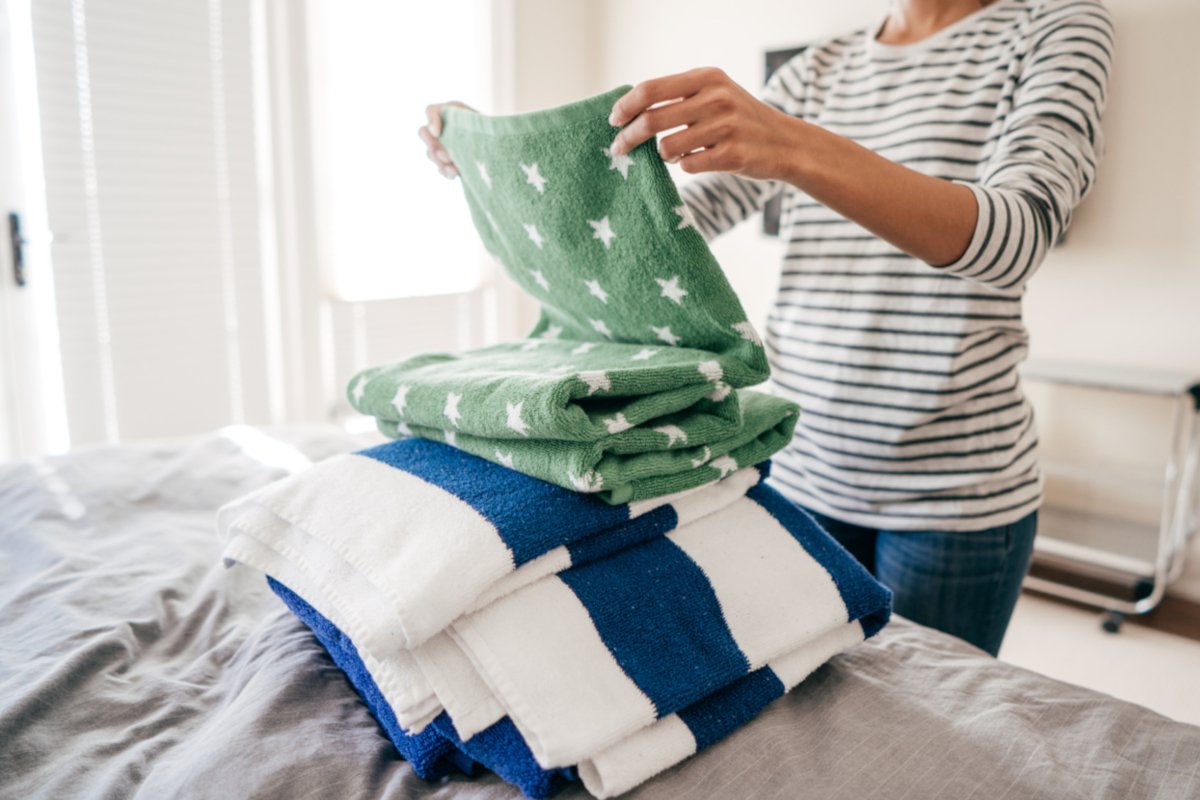
Laundry has a remarkable talent for completing 90 percent of its journey and then establishing permanent residency in a basket. The clothes are clean. They are dry. Yet somehow, folding them feels like the household equivalent of climbing a small, sock-covered mountain.
The good news is that folding laundry faster does not require superhero reflexes or a closet that resembles a luxury boutique. The real solution is to remove bottlenecks: tangled garments, oversized loads, missing socks, inconvenient work surfaces, and the dangerous belief that you will “fold everything later.” Later, as experienced laundry operators know, is where wrinkles are born.
These 13 laundry folding tricks combine practical garment-care guidance, organizing strategies, and realistic shortcuts. Use all of them or choose the ideas that fit your household. Either way, your clean clothes should spend less time touring the house in a plastic basket.
Why Does Folding Laundry Take So Long?
The actual folding motion is rarely the biggest problem. Time disappears while you search for sock partners, turn shirts right side out, separate family members’ clothing, clear a work surface, and carry finished stacks to five different rooms.
Wrinkles make matters worse. Clothes left cooling in the dryer or compressed in a basket develop creases that must be smoothed, steamed, or ironed later. Both the American Cleaning Institute and Tide recommend folding or hanging dry garments promptly. One small change in timing can therefore eliminate an entire second chore.
The fastest laundry routine begins before the first shirt reaches the folding table. Think of it as a simple assembly line: sort, wash, dry, fold, distribute, and put away. When each step leads naturally to the next, the basket stops becoming a storage system with handles.
13 Tricks for Folding Laundry Faster
1. Sort Clothing Before It Reaches the Washer
Presorting reduces the number of decisions you must make later. Use a divided hamper for whites, darks, towels, and delicate items, or assign a basket to each family member. Sorting by person can be especially efficient because an entire finished load may have only one destination.
If children are old enough to operate a hamper, they are old enough to place clothes in the correct compartment. Color-coded or labeled baskets make the system easy to follow. Professional organizers cited by Martha Stewart also recommend individual baskets to speed up distribution and encourage family participation.
2. Wash Smaller, More Manageable Loads
A heroic attempt to wash every garment in the house may save one machine cycle, but it can create an intimidating folding marathon. Smaller loads are easier to shake out, sort, fold, and put away in one session.
A less crowded dryer also gives clothing room to tumble. Better airflow promotes more even drying and helps prevent sheets and garments from twisting into textile burritos. According to Whirlpool’s bedding guidance, overloaded dryers can contribute to tangled, damp, and wrinkled laundry.
3. Shake Out Every Item Before Drying
Spend a few seconds separating and shaking garments as they leave the washer. Unroll pant legs, pull sleeves free, and open sheets before placing them in the dryer.
This quick shake allows warm air to circulate around more fabric. It can reduce damp pockets, tangled clothing, and wrinkles that slow down folding. Testing guidance from the Good Housekeeping Institute notes that shaking and separating wet items can also help protect garment shape and release trapped lint or pet hair.
4. Time the Dryer for When You Are Available
Do not start a load ten minutes before leaving for work unless your dryer has agreed to fold it. Run the cycle when you expect to be home and available at the finish. A phone timer can remind you if the appliance signal is too quietor if you have become impressively skilled at ignoring it.
If your machine offers an extended-tumble or wrinkle-prevention setting, use it when immediate unloading is unlikely. These settings periodically move dry garments so they do not sit compressed in one position. They provide breathing room, although they should not become a long-term substitute for emptying the dryer.
5. Fold Clothes While They Are Still Warm
Warm fabric is generally easier to smooth than fabric that has cooled in a heap. Remove the load promptly, flatten each item with your hands, and fold it before deep creases have time to form.
Prompt handling may reduce the need for ironing or steaming. If clothing has already cooled into a crumpled pile, Whirlpool suggests using a brief dryer cycle with a clean, damp towel when the care labels permit it. Remove the refreshed garments immediately rather than beginning the wrinkle cycle all over again.
6. Create a Permanent Folding Station
A clean, flat surface makes folding faster and more consistent. A countertop over front-loading machines, a wall-mounted drop-down table, or a cleared section of a bed can all work. The goal is to eliminate the five-minute ritual of moving mail, toys, and yesterday’s snack plate before touching the laundry.
Bob Vila’s laundry-room guidance emphasizes the value of a nearby flat surface for systematic folding and sorting. Keep the station free of detergent spills and household clutter so clean clothing can go directly from the dryer to the table.
7. Sort the Load as You Unload It
Turn unloading into the first stage of folding. Place towels in one group, shirts in another, pants in a third, and socks or underwear in a small basket. In a multi-person household, sort by owner at the same time.
This approach prevents constant switching between folding methods. Your hands learn the rhythm of one category: towel, towel, towel; shirt, shirt, shirt. It is the laundry equivalent of batch cooking, except nobody asks whether the T-shirts need more salt.
8. Hang Hanging Clothes First
Keep empty hangers at the folding station and remove dresses, dress shirts, uniforms, and wrinkle-prone garments first. Smooth each item and place it directly on a hanger. You will reduce the size of the folding pile while protecting clothing that creases easily.
A wall-mounted rod, over-the-door rack, or foldable garment rack works well in a compact room. Storage ideas from Martha Stewart and HGTV show how nearby hanging and folding zones can make a laundry area more functional without occupying much floor space.
9. Use One Simple Folding Method for Each Category
Speed comes from repetition, not from reinventing the T-shirt every Tuesday. Choose one method for shirts, one for pants, and one for towels. Unless you are preparing a department-store display, the folds need to be consistent and functionalnot audition-ready.
For a basic T-shirt fold, place the shirt face down, fold both sides toward the center, tuck in the sleeves, and fold the rectangle in half or thirds. Pants can be folded leg over leg and then in halves or thirds. Towels are quickest when folded lengthwise first and then divided into equal sections.
10. Match the Fold to the Storage Space
Before folding an entire load, check the height and depth of the drawer or shelf. One correctly sized garment can serve as a template for everything else. This prevents the frustrating discovery that your beautiful stack is two inches too tall to fit.
File foldingstoring garments vertically instead of stacking them flatcan improve visibility and make individual pieces easier to remove. Better Homes & Gardens recommends folding garments into compact rectangles and arranging them upright in rows. Drawer dividers can keep lightweight items from collapsing.
File folding is excellent for T-shirts, pajamas, leggings, and children’s clothes. Traditional horizontal stacks may remain faster for towels, sheets, and bulky sweatshirts. The best method is the one that fits the destination without requiring advanced fabric origami.
11. Corral Socks and Small Items in Mesh Bags
Place each person’s socks, baby clothes, or other small items in a separate zippered mesh laundry bag before washing. The bag can move from washer to dryer when its label permits, keeping tiny pieces together throughout the cycle.
This shortcut eliminates much of the detective work at folding time. Reviewed recommends mesh bags for organizing small items and reducing the chance that socks will become trapped in appliance components or hide inside larger garments.
You can also buy one style of everyday sock for each household member. When the socks are identical, matching becomes unnecessary. Any two socks are a pair, and laundry suddenly contains fewer unresolved mysteries.
12. Stop Correcting Everyone’s Inside-Out Clothes
Turning every shirt, sock, and pair of pants right side out can consume a surprising amount of time. Establish a house rule: clothing will be returned in the condition in which it entered the hamper.
If someone prefers neatly folded, right-side-out shirts, that person can reverse them before washing or when getting dressed. This boundary is particularly useful in a busy family. Apartment Therapy has highlighted the same delightfully practical strategy: simply fold inside-out clothing as it is.
13. Make “Put Away” Part of the Folding Job
Folding is not finished while six neat stacks remain on the couch. Use baskets labeled by room or person, place finished stacks directly into them, and deliver everything as soon as the load is complete.
Better yet, give each family member responsibility for collecting and storing a personal basket. Even young children can place pajamas, underwear, or towels in low drawers. The folds may not remain showroom-perfect, but the clothes will be off the sofa, which is a victory worth celebrating.
Pair the task with something enjoyable: a podcast, audiobook, favorite playlist, or one television episode. A small reward makes it easier to begin, while a 10- or 15-minute timer keeps the chore from feeling endless. The objective is a repeatable household routine, not a speed-folding championship.
A Faster Folding Workflow from Dryer to Drawer
For the fastest overall routine, place a clean basket, empty hangers, and any family-specific bins near the dryer before the cycle ends. Shake and separate wet clothing during transfer, then return when the drying cycle finishes.
Hang delicate and wrinkle-prone pieces immediately. Sort the remaining laundry into broad categories on the folding surface. Fold one category at a time, placing each finished item directly into its destination basket. Pair socks last, but keep unmatched socks in one small container rather than restarting a house-wide search.
Only fold garments when they are completely dry. The American Cleaning Institute advises storing clean laundry promptly and neatly, but damp clothing should not be folded and enclosed. If a waistband, pocket, towel edge, or sheet corner still feels moist, return the item to the dryer or air-dry it fully.
Finally, put the load away before starting another folding session. This closes the laundry loop and prevents multiple clean loads from merging into one enormous pile with its own weather system.
Real-World Experience: What Happens When You Use These Tricks
Consider a typical family laundry session involving two adults, two children, several bath towels, and enough socks to suggest that everyone has secretly grown extra feet. The old routine is familiar: wash a giant mixed load, transfer a tangled bundle to the dryer, dump everything on a bed, and promise to return after dinner. Two days later, the basket is still there, and everyone is selecting outfits through a process best described as textile archaeology.
Now imagine changing the process without purchasing a complicated organizing system. The household begins with three hampers: adult clothing, children’s clothing, and towels or bedding. Small socks go into labeled mesh bags. Loads become slightly smaller, but every load contains fewer destinations and fewer fabric types.
During the washer-to-dryer transfer, each garment receives one quick shake. It feels like an extra step during the first load, yet the benefit becomes obvious when shirts emerge with their sleeves outside rather than tucked into damp knots. Towels dry more evenly, and sheets are less likely to swallow pillowcases.
A phone timer is set for five minutes before the dryer is expected to finish. When it sounds, the folding surface is cleared and several hangers are placed nearby. As the dry load comes out, dress shirts and school uniforms go immediately onto hangers. Towels land in one stack. Shirts, pants, and small items form separate groups.
The first noticeable improvement is psychological: the pile looks smaller because part of it is already hanging. Folding by category creates a steady rhythm. Every towel receives the same three folds. Every shirt becomes the same drawer-sized rectangle. Nobody pauses to decide whether a child’s pajama top deserves a boutique-quality presentation. It does not. The child intends to wear it while eating cereal.
Next, finished clothing goes directly into individual baskets. The adults put away their own items, while the children handle pajamas, socks, and play clothes. A parent may need to accept that some garments will enter drawers at unusual angles. This is a reasonable price for shared responsibility.
After several loads, the biggest time savings does not come from moving the hands faster. It comes from eliminating repeated handling. Clothing is no longer moved from dryer to basket, basket to bed, bed back to basket, and basket to drawer. Each item travels through the house once.
The second major improvement is fewer wrinkles. Folding warm clothing promptly means less smoothing, steaming, and ironing before it can be worn. File-folded shirts are also easier to see, so nobody destroys an entire stack while searching for one specific gray tee among eight nearly identical gray tees.
The experience is not magically chore-free. Fitted sheets may continue to resist authority, and an unmatched sock may occasionally appear with no credible alibi. Still, the routine becomes shorter, more predictable, and easier to repeat. That is the real secret of getting laundry folded faster: reduce decisions, reduce handling, and never give a warm load enough time to become furniture.
Conclusion
Fast laundry folding is less about mastering fancy techniques and more about designing a smoother system. Presort clothing, avoid oversized loads, shake out wet garments, fold them while warm, and use a clean work surface. Batch similar items, keep socks contained, hang wrinkle-prone clothing first, and match each fold to its drawer or shelf.
Most importantly, finish one load completely. A folded stack that never reaches the drawer is simply a tidier form of clutter. Build a routine in which every garment has a clear destination, invite the household to participate, and let “good enough” win when perfection tries to turn a 12-minute task into an evening event.














