
America’s landscapes are packed with botanical overachievers. Some shade our homes, feed pollinators, and make hiking trails look like postcards. Others quietly manufacture chemicals capable of causing blistering skin, irregular heart rhythms, seizures, organ damage, or worse. Nature, apparently, enjoys keeping gardeners humble.
The most dangerous plants in America are not always exotic jungle specimens. Several grow beside roads, along fences, in pastures, around wetlands, and inside carefully maintained flower beds. A few resemble edible herbs or berries, while others are deliberately cultivated because their flowers and foliage are beautiful.
Recognizing these toxic plants is therefore more useful than simply fearing them. The following guide explains where 14 hazardous species grow, how to identify them, what makes them dangerous, and what to do when one appears on your property.
Safety note: Never taste an unknown plant or use this article as the sole basis for identification. When poisoning is suspected in the United States, contact Poison Help at 1-800-222-1222. Call 911 immediately for breathing difficulty, seizures, unconsciousness, collapse, or another life-threatening reaction.
Why Some Attractive Plants Are So Dangerous
Plants cannot run from hungry animals, curious children, lawn mowers, or weekend gardeners armed with suspiciously powerful pruning tools. Instead, many species defend themselves chemically. Their leaves, roots, seeds, berries, sap, or flowers may contain toxic proteins, cardiac glycosides, alkaloids, skin allergens, or light-activated compounds.
Exposure does not always require swallowing the plant. Poison ivy and its relatives transfer an allergenic oil called urushiol to skin and contaminated objects. Giant hogweed and wild parsnip release sap that can make exposed skin intensely sensitive to sunlight. Burning hazardous vegetation can create an additional inhalation risk, particularly when poison ivy, poison oak, or poison sumac is mixed into a brush pile.
Danger also depends on dose, plant part, preparation, and the person or animal exposed. A berry may be less toxic than a root, while a crushed or chewed seed can release compounds that an intact seed coat would have contained. Children and pets face special risks because they have smaller bodies and an admirable willingness to put questionable objects in their mouths.
14 of the Most Dangerous Plants in America
1. Poison Ivy (Toxicodendron radicans and related species)
Poison ivy grows throughout much of the United States as a ground-hugging plant, shrub, or climbing vine. Its famous three-leaflet arrangement inspired the warning “leaves of three, let it be,” although leaf size, shape, and color vary considerably.
The plant contains urushiol, an oily allergen capable of producing redness, swelling, severe itching, and blisters. Exposure can occur directly or through contaminated gloves, clothing, garden tools, pet fur, and outdoor equipment. Urushiol may remain active on objects long after the plant itself has disappeared.
Never burn poison ivy. Smoke particles can carry the allergen into the eyes and respiratory tract, potentially causing a serious reaction. Wash exposed skin promptly with plenty of water and an appropriate cleanser, then clean clothing and tools separately.
2. Poison Oak (Toxicodendron diversilobum and Toxicodendron pubescens)
Poison oak is especially common in the western and southeastern United States. It may form a shrub, trail along the ground, or climb neighboring vegetation. The leaves often appear in groups of three and may have rounded lobes resembling those of an oak tree, although poison oak is not a true oak.
Like poison ivy, it contains urushiol throughout the plant, including bare winter stems. Contact can trigger allergic dermatitis with intense itching and blistering. Gardeners may also be exposed indirectly through tools, boots, pets, and cut vegetation.
Do not assume a leafless plant is harmless. When removal is necessary, wear long sleeves, long pants, eye protection, boots, and suitable disposable gloves. Large infestations are often safer in the hands of a trained vegetation-management professional.
3. Poison Sumac (Toxicodendron vernix)
Poison sumac usually grows as a woody shrub or small tree in wetlands, bogs, and swampy areas, particularly in the eastern United States. Each stem typically carries several paired leaflets and one terminal leaflet. Its loose clusters of pale gray or whitish berries help distinguish it from harmless sumacs that produce upright red fruit.
This species also contains urushiol and can cause a severe allergic rash. Because poison sumac often grows in wet terrain, people may encounter it while clearing drainage areas, exploring wetlands, or maintaining rural property.
Avoid cutting or burning unidentified sumac. The dramatic red foliage of fall may be photogenic, but the resulting rash will not improve the vacation album.
4. Giant Hogweed (Heracleum mantegazzianum)
Giant hogweed is an invasive member of the carrot family found in scattered parts of the northern United States. Mature plants can tower over a person, producing enormous deeply divided leaves, thick stems with purple blotches and coarse hairs, and umbrella-shaped clusters of white flowers.
Its watery sap contains furanocoumarins. When contaminated skin is exposed to sunlight, these chemicals can cause phytophotodermatitis, a reaction involving redness, painful burns, large blisters, and long-lasting discoloration or scarring. Sap in the eyes may threaten vision.
Do not use a string trimmer or mower on giant hogweed because powered equipment can spray sap in every direction. Photograph the plant from a safe distance and contact the relevant state or county invasive-species authority for identification and control instructions.
5. Wild Parsnip (Pastinaca sativa)
Wild parsnip is common along roadsides, trails, railroad corridors, fields, and other sunny disturbed areas. It usually has yellow, umbrella-shaped flower clusters and compound leaves with toothed leaflets. The plant is much smaller than giant hogweed but relies on a similar chemical defense.
Its sap contains light-activated furanocoumarins. Skin contact followed by sunlight can produce a burn within a day or two, sometimes leaving dark marks that persist for months. The reaction may occur without the itching normally associated with poison ivy, so victims may not immediately realize what happened.
Wear protective clothing when working around wild parsnip, particularly during hot weather when bare arms and legs are exposed. If sap reaches the skin, wash promptly and keep the area away from sunlight.
6. Poison Hemlock (Conium maculatum)
Poison hemlock is a tall invasive plant found across much of the country in pastures, ditches, roadsides, vacant lots, and stream banks. It produces finely divided, fernlike leaves and clusters of tiny white flowers. Smooth hollow stems marked with purple spots or streaks are an important identifying feature.
Every part of poison hemlock is highly toxic when ingested. Its alkaloids interfere with the nervous system and can lead to weakness, tremors, respiratory failure, coma, and death. The plant is sometimes confused with parsley, wild carrot, or other edible members of the carrot family.
Never crush an unknown carrot-family plant to identify it by smell. Wear protective clothing during removal, avoid inhaling plant particles, and keep cut material away from livestock, children, and pets.
7. Water Hemlock (Cicuta species)
Water hemlock grows in marshes, wet meadows, stream edges, irrigation ditches, and other damp locations. It has white flower clusters and compound leaves, which can make it look deceptively similar to several edible or harmless plants.
The roots and lower stem are particularly dangerous because they contain cicutoxin, a compound that attacks the central nervous system. Ingestion can rapidly cause nausea, abdominal distress, tremors, violent seizures, breathing problems, and death.
Water hemlock is frequently described by extension specialists as one of North America’s most poisonous native plants. Foragers should treat every unidentified wetland member of the carrot family as strictly off-limits. This is not the plant on which to test your “pretty sure” identification skills.
8. Castor Bean (Ricinus communis)
Castor bean is grown ornamentally for its large, star-shaped leaves, rapid growth, and colorful spiny seed capsules. In warm regions, it may escape cultivation and behave like a weed. Depending on the variety and climate, the plant can grow into an imposing shrub-like specimen.
Its seeds contain ricin, a highly toxic protein that prevents cells from producing essential proteins. Intact seeds may pass through the digestive system, but chewing or crushing them can release the toxin. Severe exposure may result in vomiting, diarrhea, dehydration, organ damage, and death.
Households with small children or seed-chewing pets should choose a safer ornamental. Decorative seed pods may look like something from an expensive garden catalog, but the contents deserve considerably less admiration.
9. Oleander (Nerium oleander)
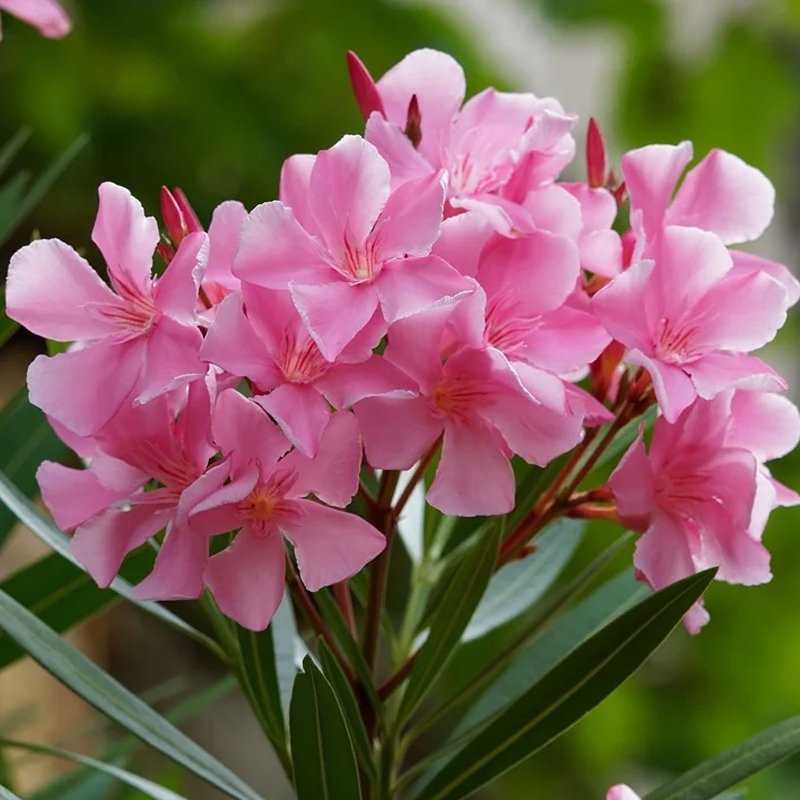
Oleander is a drought-tolerant evergreen shrub commonly used in warm parts of the United States, especially in the South and Southwest. It produces narrow leathery leaves and showy clusters of pink, red, white, or yellow flowers.
All parts of the plant contain cardiac glycosides that can disrupt heart function. Ingestion may cause nausea, vomiting, weakness, dizziness, abnormal heart rhythms, collapse, and death. Toxic compounds remain present in dried leaves and cut branches.
Do not use oleander branches as cooking skewers, allow children to play with the flowers, or leave pruned material where pets or livestock can reach it. Wear gloves while pruning and wash tools afterward.
10. Deadly Nightshade (Atropa belladonna)
Deadly nightshade is a branching perennial with dull green leaves, bell-shaped purple-brown flowers, and glossy dark berries. It is native to Eurasia but may occur in North America in disturbed sites, gardens, or naturalized populations.
The plant contains tropane alkaloids, including atropine and scopolamine. Poisoning can cause dry mouth, dilated pupils, blurred vision, rapid heartbeat, confusion, delirium, hallucinations, seizures, coma, and death.
The shiny berries create the greatest concern for children because they can resemble edible fruit. Any suspected ingestion warrants immediate professional poison-control guidance rather than a home remedy or an optimistic internet search.
11. Bittersweet Nightshade (Solanum dulcamara)
Bittersweet nightshade is a sprawling or climbing vine found in many parts of the country. It produces small purple flowers with swept-back petals and clusters of berries that change from green to yellow, orange, and finally bright red.
All parts are potentially toxic, with unripe berries generally posing a greater hazard. Ingestion may cause nausea, vomiting, abdominal pain, diarrhea, weakness, drowsiness, changes in heart rate, breathing problems, and other neurological symptoms.
Because birds eat and distribute the berries, the plant often appears beneath fences and shrubs. Remove it before fruit matures, using gloves and ensuring that every berry is collected instead of scattered around the yard like toxic confetti.
12. Jimsonweed (Datura stramonium)
Jimsonweed grows in fields, barnyards, roadsides, vacant lots, gardens, and disturbed soil. It has coarse toothed leaves, trumpet-shaped white or purple flowers, and distinctive spiny seed capsules.
Every part contains atropine, scopolamine, hyoscyamine, and related tropane alkaloids. Ingestion can produce extreme thirst, hot flushed skin, dilated pupils, fever, rapid pulse, agitation, hallucinations, delirium, seizures, coma, and death.
Its hallucinogenic reputation sometimes encourages intentional misuse, which can quickly become a medical emergency. The concentration of toxins varies unpredictably between plants and plant parts, making experimentation especially dangerous.
13. Pokeweed (Phytolacca americana)
Pokeweed is a large native perennial found along woodland edges, fence lines, pastures, vacant lots, and gardens. Mature plants have thick reddish-purple stems and drooping clusters of dark purple berries that stain almost everything they touch.
All parts are toxic when eaten, with the roots considered especially hazardous. Symptoms may include burning in the mouth, vomiting, diarrhea, abdominal cramps, weakness, changes in heart rate or blood pressure, and breathing difficulties.
Birds can eat the berries and spread the seeds, but that does not make the fruit safe for humans. Traditional preparation of young shoots involved specialized knowledge and repeated processing. Modern homeowners should not improvise a pokeweed recipe based on something remembered from a distant relative’s distant relative.
14. Manchineel (Hippomane mancinella)
Manchineel is a rare coastal tree native to southern Florida, the Caribbean, Mexico, and parts of Central and South America. It grows near beaches and mangrove habitats and produces glossy leaves and small green fruits that resemble apples.
Milky sap from its bark, leaves, and branches can cause severe skin inflammation and blistering. Rainwater dripping from the canopy may carry diluted sap, while smoke from burning wood can injure the eyes and respiratory system. Eating the fruit may cause intense burning, swelling, gastrointestinal injury, and potentially life-threatening complications.
Manchineel trees may be marked with warning signs or painted bands in areas where people could encounter them. Do not touch the tree, eat its fruit, shelter beneath it during rain, or collect its wood for a beach fire. It is the rare tree capable of ruining a picnic without dropping a single branch.
How to Handle a Dangerous Plant Safely
Confirm the Identification
Photograph the whole plant, leaves, stem, flowers, fruit, and surrounding habitat without touching it. Compare the images with information from a state agriculture department, cooperative extension office, poison-control resource, or invasive-species agency. Plant-identification apps can suggest possibilities, but they should not be treated as the final authority when human health is involved.
Keep People and Animals Away
Temporarily mark the area and supervise children and pets until the plant has been identified or removed. Do not leave pulled plants, berries, roots, or seed pods where they can be investigated by a curious dog.
Use the Correct Protective Equipment
For lower-risk removal, wear long sleeves, long pants, closed boots, eye protection, and chemical-resistant or disposable gloves. Avoid touching your face. Bag contaminated disposable gear and wash reusable clothing separately.
Do not personally handle giant hogweed, a large poison-hemlock infestation, manchineel, or another plant when identification and control requirements are uncertain. Professional removal is cheaper than emergency medical care and considerably less embarrassing than explaining that a weed defeated you.
Never Burn Unidentified Vegetation
Burning poison ivy, poison oak, or poison sumac can spread urushiol on airborne particles. Other toxic plants may also release irritating smoke. Follow local waste-disposal and invasive-species rules rather than tossing hazardous cuttings onto a bonfire.
What to Do After Plant Exposure
For suspected poison ivy, poison oak, or poison sumac contact, wash exposed skin promptly with plenty of water and an effective cleanser. Clean beneath fingernails and wash contaminated clothing, footwear, tools, and pet fur while wearing gloves.
After contact with giant hogweed or wild parsnip sap, wash the skin immediately and protect it from sunlight. Seek medical advice for blistering, extensive exposure, eye contact, or severe pain.
Do not induce vomiting after someone swallows a poisonous plant unless a medical professional specifically directs you to do so. Remove remaining plant material from the mouth, save a sample or clear photograph for identification, and call Poison Help at 1-800-222-1222.
Emergency symptoms include difficulty breathing, throat swelling, repeated vomiting, abnormal heartbeat, severe confusion, seizures, fainting, or unconsciousness. Call 911 immediately when any of these occur.
Field Lessons and Real-World Experiences With Dangerous Plants
Real encounters with dangerous plants rarely begin dramatically. There is usually no ominous music, glowing warning label, or botanist emerging from the bushes to shout, “Please reconsider that berry.” Most incidents begin with an ordinary task: clearing a fence, trimming an overgrown ditch, chasing a ball into the weeds, or pulling an unfamiliar plant without gloves.
The Delayed Rash Surprise
One of the most common homeowner experiences involves poison ivy that was not recognized until after the yardwork ended. A person cuts vines from a tree, stacks the debris, wipes sweat from a forehead, and later handles the same gloves while putting tools away. The rash may not appear immediately, making it difficult to connect each irritated area with the original exposure.
The lesson is that the plant itself is only part of the problem. Urushiol can hitch a ride on clothing, tools, boots, and pets. A careful cleanup routine matters as much as avoiding the leaves. Gloves should be removed without touching their outer surfaces, tools should be cleaned, and work clothes should go directly into the wash rather than onto a bedroom chair.
The Roadside Plant That Looked Harmless
Wild parsnip exposure often feels mysterious because the burn develops after sunlight activates chemicals left on the skin. Someone may brush through tall roadside vegetation in shorts and feel perfectly fine. A day later, red streaks or blisters appear exactly where stems scraped the legs.
This experience teaches a practical rule: unknown sap plus sunlight is a poor combination. Long pants and sleeves are worthwhile when walking or mowing through dense roadside growth. When plant sap reaches the skin, prompt washing and sun protection can make a major difference.
The Parsley-Lookalike Problem
Poison hemlock and water hemlock illustrate why wild-food identification must be exact rather than enthusiastic. Several members of the carrot family share white umbrella-shaped flowers and divided leaves. A beginner may notice similarities to parsley, carrot, or parsnip while overlooking the habitat, stem markings, leaf structure, or root system.
Experienced foragers do not eat a plant because it “looks about right.” They confirm multiple diagnostic characteristics and understand the toxic look-alikes found in that region. When uncertainty remains, the plant stays where it is. Dinner should not require a neurological consultation.
The Ornamental Plant Blind Spot
Homeowners often assume that a plant sold by a nursery must be safe. Oleander and castor bean prove otherwise. Garden centers sell plants for horticultural value, not because every leaf and seed has passed a toddler-tasting test.
A safer landscaping experience starts with matching plants to the household. A fenced adult garden may accommodate species that would be inappropriate beside a playground, dog run, or preschool entrance. Reading toxicity information before planting is easier than removing a mature shrub after discovering that every fallen leaf poses a concern.
The Best Experience Is the Uneventful One
Knowledge changes how people move through a landscape. They notice three-leaflet vines before grabbing a tree trunk, recognize purple-blotched hemlock stems beside a ditch, and give towering hogweed-like plants a generous amount of personal space. They photograph before touching, ask an expert before removing, and keep children and pets away from unfamiliar berries.
That may not sound adventurous, but uneventful plant encounters are highly underrated. The ideal story is not about surviving a spectacular poisoning. It is about recognizing the hazard, stepping around it, and continuing the day with skin, heartbeat, and dignity intact.
Conclusion
The most dangerous plants in America are not confined to remote forests. They grow in backyards, parks, wetlands, pastures, roadside ditches, coastal habitats, and ornamental gardens. Some injure through skin contact, some become hazardous in sunlight, and others can cause severe poisoning when eaten.
Learning to recognize poison ivy, poison oak, poison sumac, giant hogweed, wild parsnip, hemlocks, toxic nightshades, and poisonous ornamentals makes outdoor work safer without turning every garden into a botanical crime scene. Avoid tasting unknown plants, use proper protective equipment, never burn suspicious vegetation, and consult qualified local experts when identification or removal is uncertain.
Plants deserve respect, especially the attractive ones that appear to have hired excellent publicists.










